
The term sheets arrived on the same Tuesday. Priya had been building her sustainable skincare company for four years, and she had spent most of that time saying no to investors who wanted her to move faster than her supply chain could sustain. These two were different. Both had real industry experience. Both had read the room on her values. Both had made numbers that worked. She had two weeks to decide, and she was holding the two folders side by side on the desk in front of her, still feeling unsettled about both.
She booked the reading because she said, in her intake note, that she had done every rational analysis she could think of and the answer was still not obvious. She wanted to understand how she would actually feel working closely with each of these people for the next five to seven years, across a European launch, across good quarters and harder ones, across the moments when founders and investors see the same situation differently.
I will call her investors Marcus and Julian. Both had sent their birth details willingly when she asked, which was itself information: investors who find the request unusual are sometimes investors who are not used to being evaluated. Both of these men had been asked the question before. I read all three charts and came back to her within four days.
Priya's natal chart: the founder's wiring
Before I read either investor I read Priya, because the compatibility question is always relative to the person at the center of it. An investor who suits one founder completely may suit another not at all. The charts of Marcus and Julian only become meaningful once I know what Priya's chart is asking for.
Priya's Sun is in Aquarius. An Aquarius Sun is driven by a clear and strongly-held vision of the way things should be, and it stays clear when outside voices suggest a different course. This is the quality that let her say no to investors for four years. It is also the quality that makes her a formidable brand builder: she knows exactly what the company stands for and she does not blur it. An Aquarius Sun works best with partners who share the broad direction rather than those who want to redirect it.
Her Moon is in Capricorn. The Moon is the private emotional register, how a person actually feels when they are not presenting their best case, and Capricorn Moon is steady, self-contained and very serious about long-term commitments. Priya does not make decisions emotionally or change course quickly. When a situation calls for careful thought she takes the time she needs. She assesses, she plans and she moves when she is ready. An investor who interprets this composure as detachment would misread her completely.
Her Mercury is in Capricorn alongside the Moon. Mercury in Capricorn thinks in outcomes, speaks precisely and dislikes meetings that do not produce a next step. Her board updates will be clear, evidence-based and concise. She expects the same from the people in the room. An investor who likes open-ended strategy discussions will find her too direct. An investor who likes direct will find her excellent.
Her Venus is in Pisces, which is the one soft placement in an otherwise very structured chart. Pisces Venus values the quality of a relationship at a level that operates below the rational analysis. It is the reason she trusted her gut when something felt off about earlier investors even when the numbers were fine. Her instinct about people is reliable, and the chart confirms it should be listened to.
| Placement | Plain meaning | What she needs from an investor |
|---|---|---|
| Sun in Aquarius | Vision-driven, principled, not easily redirected | Alignment someone who backs the direction, not reshapes it |
| Moon in Capricorn | Steady, private, long-term in her commitments | Patience someone who reads composure as strength, not absence |
| Mercury in Capricorn | Precise, outcome-focused, concise | Directness someone who brings clear positions to a meeting |
| Venus in Pisces | Relational instinct operating below the rational layer | Warmth not a requirement but a real bonus; her gut reads people well |
| Saturn in Aries | Discipline applied to initiating and leading | Autonomy she leads; the best investor stays a step behind and lets her set the operational direction |
Marcus: the first investor, read plainly
Marcus had been in consumer goods investment for fifteen years. His track record was strong. His first meeting with Priya had been full of energy, and he had followed up with a detailed memo within twenty-four hours that showed he had read everything carefully. On paper he was impressive.
His Sun is in Aries. An Aries Sun moves fast, backs itself completely and has a very strong instinct about when to push. In the right context this is excellent. In a founder-investor relationship it creates a specific dynamic that is worth naming: Aries Sun investors tend to have strong opinions about the direction of the companies they back, and they express those opinions directly. Some founders find this energizing. Priya's Aquarius Sun, which is driven by its own vision and is not naturally persuaded by confidence alone, would find it wearing over time, particularly if the opinions arrived frequently and without invitation.
His Moon is in Gemini, which processes through conversation and ideas and is comfortable with a fast-moving, high-information environment. Priya's Capricorn Moon processes through stillness and deliberation. These two Moon signs in a close working relationship tend to produce a specific pattern: Gemini Moon brings new ideas and perspectives to every interaction, Capricorn Moon wants to think them through before responding, and Gemini Moon often interprets the pause as resistance rather than consideration.
His Mercury is in Aries, meaning his communication is fast, direct and occasionally moves ahead of the evidence. This is not a flaw. For many investors it is a real strength, because fast pattern recognition is part of the job. Against Priya's Mercury in Capricorn, which is thorough and evidence-first, their natural communication styles would require conscious effort to stay in sync. That effort is manageable, and it is the kind of thing that needs to be named explicitly in a working agreement rather than discovered mid-deal.
Marcus's Saturn, the planet of structure and long-term patience, is in Sagittarius, which leans toward broad strokes and large-scale thinking rather than incremental building. Priya's company grows through careful supply-chain expansion, brand trust built over time, and values-led decisions that sometimes say no to a faster revenue path. Marcus's Saturn would be most comfortable with bolder, faster moves. That is not incompatible, but it requires explicit agreement on pace at the outset, and it means pace will be a recurring conversation in the relationship rather than a settled one.
| Marcus | Priya | Compatibility note |
|---|---|---|
| Sun in Aries: direct, fast, opinionated | Sun in Aquarius: vision-driven, principled | Manageable both strong-willed; direction disagreements possible |
| Moon in Gemini: talks to process, fast-paced | Moon in Capricorn: private, deliberate | Needs agreement pace mismatch needs a named working rhythm |
| Mercury in Aries: fast, pattern-first | Mercury in Capricorn: thorough, evidence-first | Watch point update cadence and meeting format need to be set explicitly |
| Saturn in Sagittarius: broad, expansive | Saturn in her chart: incremental, careful | Pace gap both will need ongoing agreement on growth speed |
Julian: the second investor, read plainly
Julian ran a specialist fund focused on sustainable consumer brands. He had fewer portfolio companies than Marcus but had held them for longer. His first meeting with Priya had been less immediately exciting than Marcus's, and she had said in her intake note that she found him harder to read. That observation was useful before I even opened his chart.
His Sun is in Taurus. A Taurus Sun is patient, steady and strongly committed to building things that last. It is the investor's version of what Priya is doing as a founder: accumulating real value rather than performing growth. A Taurus Sun does not excite a room the way an Aries Sun does. It earns trust over time, and it tends to honor the commitments it makes. The reading Priya had of him as harder to read is consistent with this: Taurus Sun does not show its hand quickly, and it does not need to impress. That can read as inscrutability until you understand the pattern.
His Moon is in Virgo, which is a particularly good alignment with Priya's working style. A Virgo Moon processes through analysis, attention to detail and a consistent interest in how things actually work rather than how they look. Julian had asked Priya, in their second meeting, to walk him through her supplier audit process. Not the summary. The actual process. That is Virgo Moon. He wanted to understand the infrastructure because he knew the infrastructure was the business. Priya had found that question one of the most satisfying she had been asked.
His Mercury is in Taurus, which is slow and deliberate and builds a view rather than jumping to one. In a first meeting this can seem less sharp than Marcus's Aries Mercury. In a board meeting eighteen months in, when the topic is whether to accelerate the European launch or wait for supply confirmation, Taurus Mercury is the one who has thought it through from every angle and is not moved by the pace of the moment. This is very close to what Priya's Capricorn Mercury does, and it means their communication style is naturally compatible.
His Venus is in Gemini, the one placement that invites a specific written agreement. Gemini Venus enjoys variety and connection and is drawn toward new possibilities. For a relationship built on a steady, long-term commitment, a Gemini Venus investor works best when the commitment horizon is spelled out clearly: the expected holding period, the board involvement level, and the conditions under which either party can revisit the terms. These are good things to have in any investment agreement, and for this particular pairing they are worth putting at the top of the list.
| Julian | Priya | Compatibility note |
|---|---|---|
| Sun in Taurus: patient, steady, builds lasting value | Sun in Aquarius: vision-driven, principled | Strong both think in the long term; direction aligned |
| Moon in Virgo: detail-oriented, understands the infrastructure | Moon in Capricorn: thorough, private, committed | Very strong naturally aligned operating style |
| Mercury in Taurus: deliberate, builds views carefully | Mercury in Capricorn: precise, evidence-first | Natural will communicate well in real working moments without extra calibration |
| Venus in Gemini: values variety, can be drawn to novelty | Venus in Pisces: relational instinct, values depth | One watch point commitment horizon and board involvement need to be explicit |
| Saturn in Taurus: patient with growth, values accumulation | Saturn in Aries: structured leadership, values autonomy | Complementary he will not step in front of her; she will not need to defend her pace |
The tarot spread: six cards on the investment decision
With both investor charts read and compared, I pulled a six-card spread. Two rows of three: the top row reading the decision itself, the two options and the likely direction. The bottom row reading practical structure, what needs to be agreed before the term sheet is signed regardless of which investor she chooses.
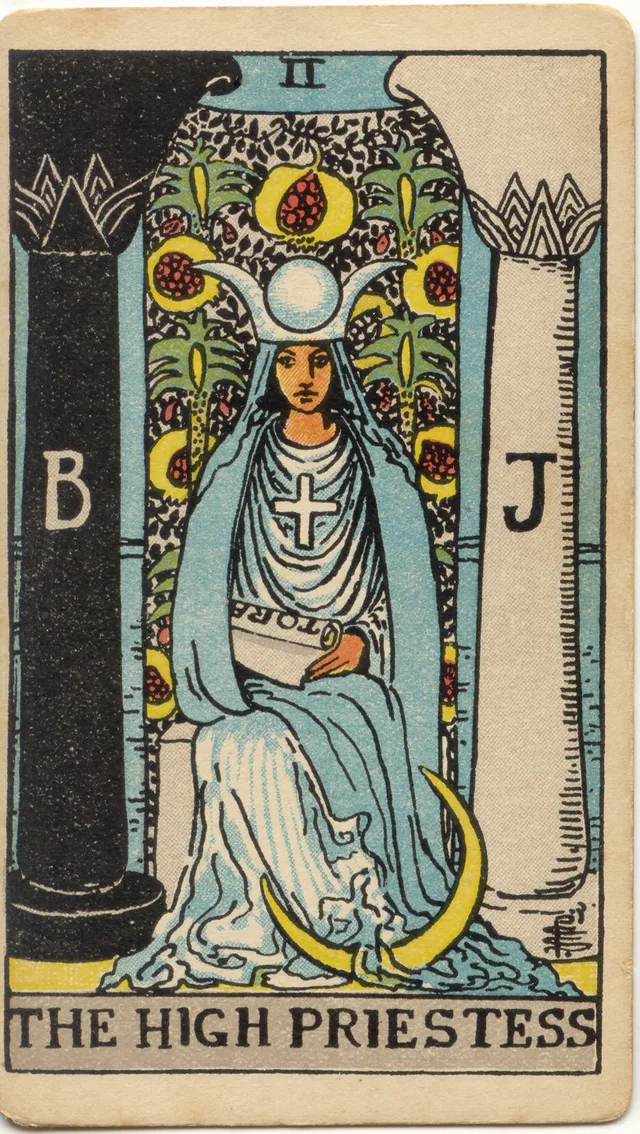
Trust what you already know. The High Priestess at the opening of a decision spread is asking the person to stop searching for more information and to trust the knowledge they have accumulated. Priya had been doing the rational analysis for two weeks. The card said: you know enough. The question now is what your instinct is telling you, and whether you are listening to it.
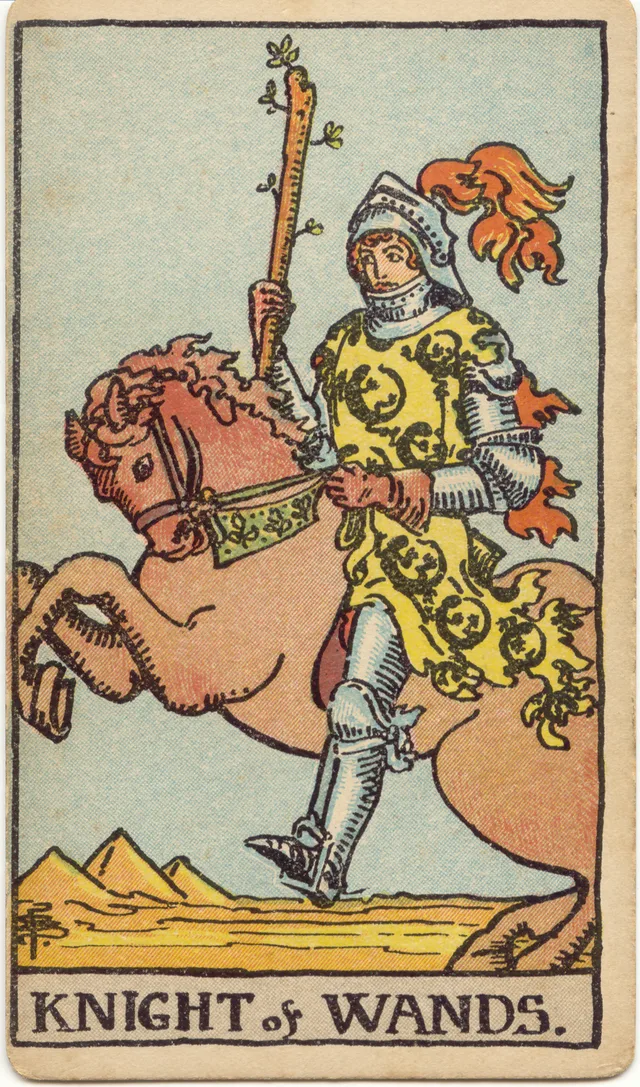
Energy, momentum, the instinct to act before the full picture is clear. The Knight of Wands is not a negative card. In a different reading, for a different founder, this card in this position would be excellent news. For Priya's Capricorn Moon and Aquarius Sun, the Knight's pace is not the pace that protects her company's values. He will not wait for the supply chain. He will ask why the supply chain needs to be waited for.
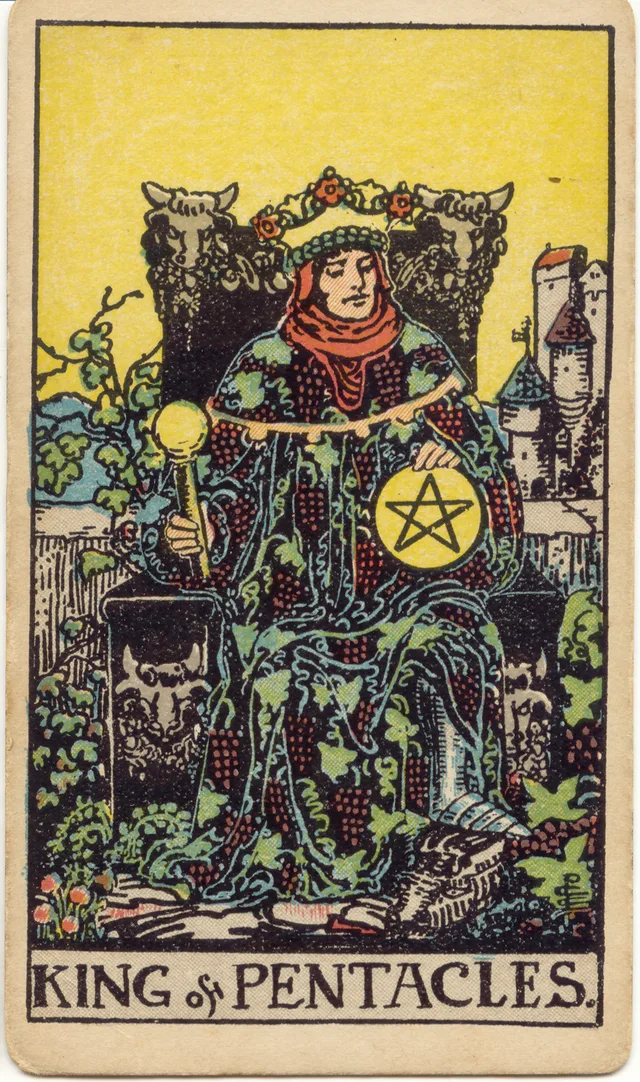
The established builder: patient, practical, sincerely interested in how the foundation holds. The King of Pentacles is Julian without the name. He knows what real assets look like, he can wait for a return because he understands why waiting is sometimes the most intelligent move, and he does not mistake steadiness for lack of ambition. This card in this position, read alongside Julian's Taurus Sun and Virgo Moon, was one of the clearest confirmations I have pulled in an investor reading.
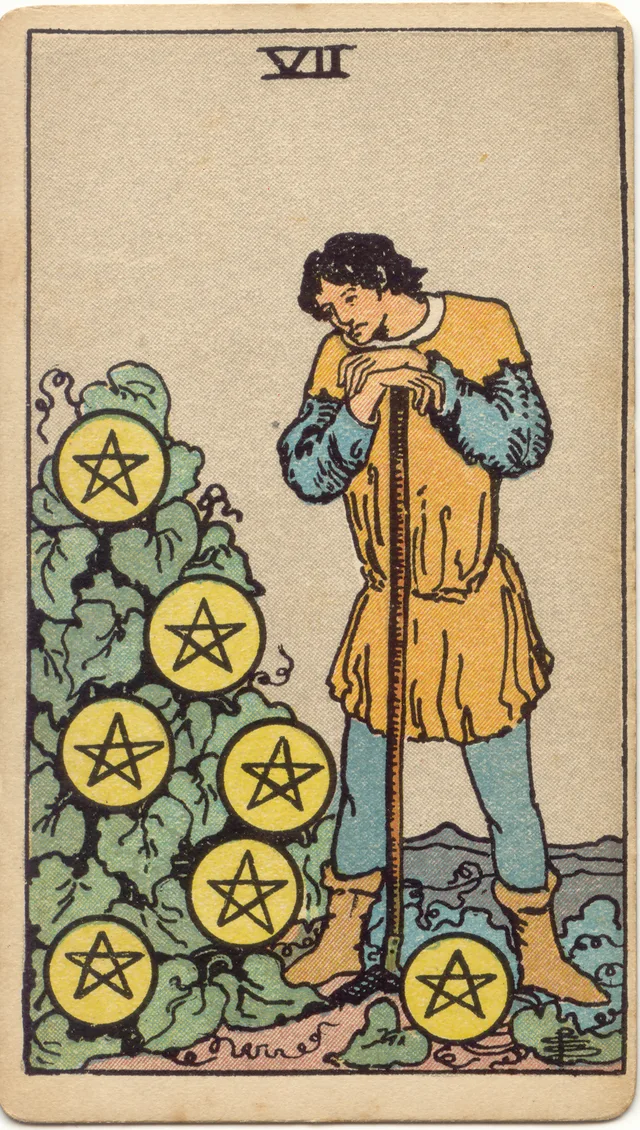
The long-term investment, the careful tending and the patient assessment of growth. Seven of Pentacles in the practical row is asking for a written agreement about the timeline, specifically when results will be assessed, by what measures and over what period. It is a card about being clear on what you are growing toward and not evaluating too early.
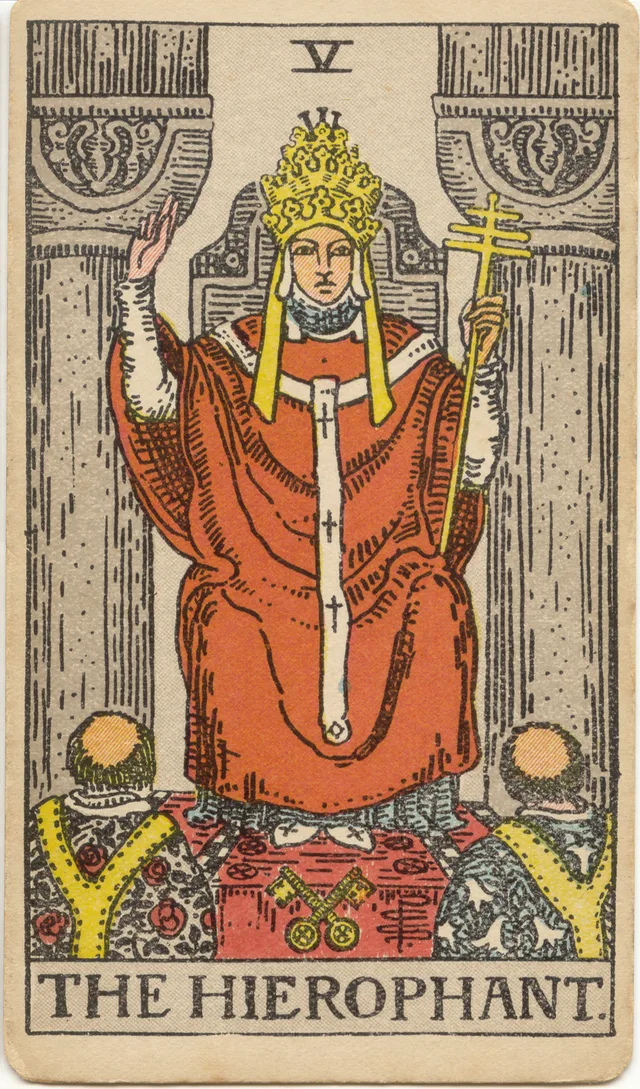
Structure, institution, the value of clear roles within a formal relationship. The Hierophant here is asking for the board structure and the investor's involvement level to be written into the agreement before signing. Observer seat or voting board member. Monthly update or quarterly. The card is saying: the relationship will be better if the roles are defined at the start rather than evolved informally.
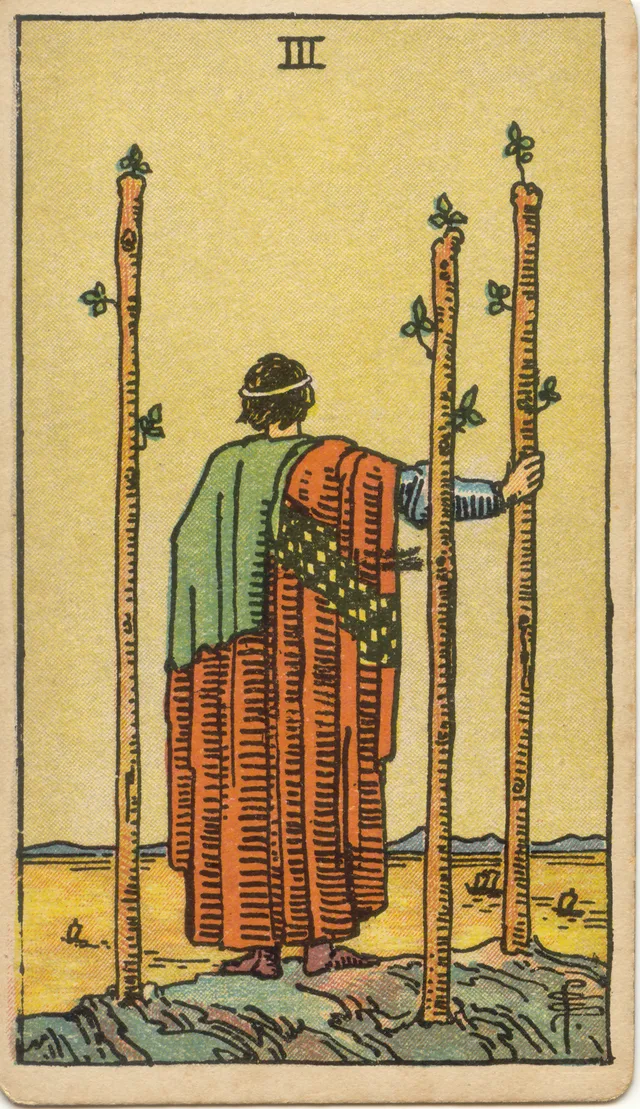
The founder on the shore, watching the ships go out. A card of expansion already in motion, of plans that are working, of a horizon that is real and reachable. Three of Wands at the end of this spread was the clearest possible confirmation that the European launch is the right next move and that the right support for it is patient and steady rather than fast. The ships go out when they are ready, not before.
The King of Pentacles appearing for Julian and the Knight of Wands for Marcus was not a verdict on either person. It was a verdict on fit. Priya's company is a King of Pentacles business: built carefully, valued for what it actually is. It needed an investor who could see that and sit with it, not one who would bring a different energy and need her to match it.
The board and update boundaries
The Seven of Pentacles and The Hierophant in the practical row of the spread were pointing at the same thing: the agreement needed to be explicit about three things before anything was signed. I gave Priya these as a short brief to take into the final negotiation with Julian.
| Area | What to agree | Why it matters for this pairing |
|---|---|---|
| Board seat structure | Observer seat in year one, with an option to move to advisory board in year two at Priya's invitation | Julian's Taurus Sun will be comfortable with this pace. Priya's Saturn in Aries needs to remain the operational lead without a competing authority at the table |
| Update cadence | Written quarterly report, brief monthly check-in by message, no ad hoc calls without a named agenda | Julian's Virgo Moon will appreciate the written detail in the quarterly. Priya's Capricorn Mercury will produce exactly that quality of report naturally |
| European launch timeline | 18-month plan, assessed at month 12 against named supply and revenue markers, with a shared right to extend by 6 months | Seven of Pentacles: the growth period needs a clear measurement horizon so neither party is evaluating against an implicit expectation |
| Values commitments | Written statement in the shareholders' agreement that supply-chain integrity is a protected operating principle, reviewed only by mutual consent when margin decisions arise | Priya's Aquarius Sun: the thing she has held for four years needs to be protected in writing, not trusted informally. Julian's chart confirms he will honor this. The document is for every scenario, not just this one |
Action plan: from reading to signed agreement
The reading happened on a Thursday. The deadline to respond to both term sheets was the following Friday. This was the plan I gave Priya for the ten days between.
- Day 1
Confirm the direction
Priya read the full reading, including both chart comparisons and the tarot notes, and sat with it for twenty-four hours before responding to me. She wanted to be sure the reading was confirming something she actually felt rather than replacing her own view. This is the right way to use a reading. She came back and said it confirmed what she had been circling for a week without being able to say it.
- Days 2 and 3
Prepare the board structure request
She drafted the observer-seat proposal based on the framework in the reading, framing it as a natural progression model that she had been planning to offer regardless of investor. Not as a negotiating position but as how she preferred to build board relationships. Julian's team accepted it on the second day.
- Day 4
Draft the values statement
With her solicitor, Priya drafted a one-paragraph statement of supply-chain integrity as a named operating principle, and proposed adding it to the shareholders' agreement. Julian's team came back with a minor amendment on wording that Priya accepted. The statement was in the final document.
- Days 5 and 6
Agree the update cadence
She proposed the quarterly report and monthly message format directly in the term sheet discussion rather than leaving it to be established informally after signing. Julian's team asked no questions about it. The cadence was confirmed as written terms.
- Days 7 and 8
Set the European launch milestones
She attached a named milestone framework to the investment brief: month 12 review markers, supply confirmation requirements and the shared 6-month extension right. This became an appendix to the final agreement and gave both parties a shared reference for assessing progress.
- Days 9 and 10
Choose Julian and let Marcus know
Priya wrote a kind and specific note to Marcus, acknowledging his work and being clear that the decision was about fit with her company's stage and pace rather than any assessment of his capabilities. She signed with Julian on day ten, the day before the deadline. The agreement contained every boundary from the reading.
The outcome: a supportive relationship and a European launch
I heard from Priya at fourteen months, just after the month-twelve review she and Julian had agreed on. The review had gone well. The European launch was operating in three countries with a fourth in preparation. Julian had asked three questions at the review and all three were questions about how the supply chain was holding up, not questions about when revenue would accelerate. She said he had read the quarterly reports carefully enough to ask about a specific supplier note from month eight, which was the kind of attention that told her he was paying attention to the right things.
The monthly message format had become something closer to a short written note from each of them, Priya sharing one thing that was going well and one thing she was watching, Julian responding with a thought or a useful contact when he had one and simply confirming he had read it when he did not. She said it was the least intrusive investor relationship she had had, and that was not an accident. It was what the reading had asked her to build.
The values statement had been referenced once, when a large retailer approached with a margin requirement that would have required a supplier change. Priya chose to keep her trusted supplier and mentioned the shareholders' agreement clause in her response to her own board. Julian's note back had been four words: good call, well handled. That was the moment she felt most certain the reading had pointed her in the right direction.
What makes an investor compatible: the plain version
The full chart comparison is the precise tool. The questions below give you a useful approximation before you book a reading, and they are worth working through with any serious prospective investor regardless of what you know about their chart.
Self-check: how compatible is your investor?
Work through this list before the term sheet is on the table. These are the questions the chart comparison answers in detail, and you can start answering them from observation before you have a reading.
- Does your investor's natural communication pace feel like something you could sustain for five years, not just in a first meeting where both of you are presenting well?
- When you described your supply chain, values commitments or growth timeline, did they ask clarifying questions or start suggesting alternatives?
- Have you discussed what a difficult quarter looks like, and do you have a shared picture of how you would both respond to one?
- Does your agreement specify the update cadence, or is it something you are planning to work out once the relationship is established?
- Is the operating principle that matters most to you in the shareholders' agreement, or is it protected only by the understanding you have built so far?
- Has your investor described what a good outcome looks like in terms that match how you describe one, or do the two descriptions sit slightly apart?
- Is the board or advisory structure written down, including what the investor's role is in year two and year three, not just at signing?
If several of these prompted a pause rather than an immediate yes, that is useful information. A chart comparison gives you the structural picture behind the pause: whether it is something the relationship can be built around with the right agreements, or whether the two of you are simply pointed at different things and would each be better served by a different pairing.