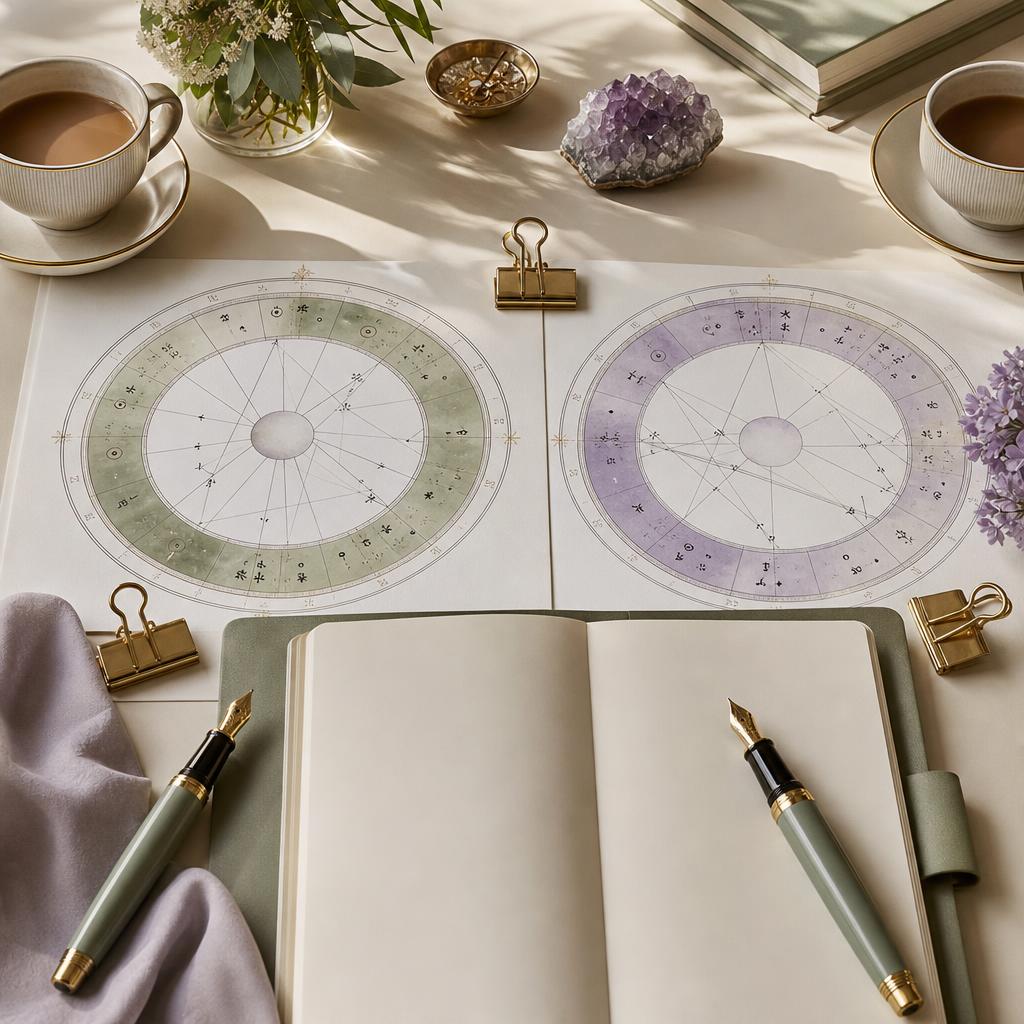
Amara and Beth built their interior-design studio from a shared table and a single client referral. Six years later they had a twelve-person team, a waiting list that ran three months deep, and a second location signed and ready to open. They also had something that had been accumulating in the background: a pile of decisions that neither of them was sure who owned, a set of responsibilities that both of them touched, and a recurring Friday feeling that someone, neither could say who, was supposed to have sorted something out by now.
They came to me because opening the second studio felt like the right moment to get things clear. They were smart enough to know that what works for twelve people in one building does not automatically work for twenty people in two. They booked a Business Partner Compatibility Reading and sent their birth details with a note that said: we want to know who should be doing what, and we want it written down so we can actually use it.
The opening brief: what they brought to the table
Before I read a single placement I asked them each, separately, to list the tasks they spent the most time on and to mark the ones they loved, the ones they did fine, and the ones they did mainly because someone had to. The lists came back within a day. They were strikingly similar in content and almost opposite in the markings.
- Loved: client presentations, concept sessions, press appearances
- Did fine: team briefings, supplier introductions
- Did because someone had to: invoice approvals, vendor contracts, budget reviews
- Loved: project schedules, pricing models, supplier negotiations
- Did fine: studio layout decisions, hiring logistics
- Did because someone had to: pitching new clients, media interviews, social media presence
Even before I opened either chart, this was a clean picture. One partner was energized by the visible, client-facing, creatively expressive side of the business. The other was energized by the infrastructure that made the visible work possible. The charts would tell me why, and they would tell me exactly where the edges were, which is the part that is harder to see without them.
Amara's natal chart: wired for the room
Amara's Sun is in Leo. I say this without drama: a Leo Sun is the clearest marker in the chart for someone who does their best work when people can see and respond to it. This is not about ego. It is about where the energy comes from. Leo is fueled by contact, by creative expression that lands, by the specific feeling of having communicated something and watched it register on someone else's face. Put Amara in front of a client and her chart is running at full power.
Her Venus, the planet of what she values and how she connects with others, is in Libra, the sign Venus is most comfortable in. Libra Venus builds relationships through warmth, reciprocity and a real interest in what the other person wants. She does not just present well. She makes clients feel heard, and that is the quality that turns a first project into a ten-year relationship. Her seventh house, which governs one-to-one partnerships and client relationships, has Jupiter in it, the growth and luck planet. Her chart is set up to attract good partners and to make the most of them.
Her Mars, the drive and action planet, is in Aries, the sign it rules. That is directness and momentum in their most concentrated form. When Amara wants something to happen, it happens fast, and when a creative direction is right she can feel it immediately and say so with complete clarity. In a client room, that quality is worth a great deal. It is the energy that makes a presentation feel like a conversation rather than a pitch.
| Placement | Plain meaning | Business strength |
|---|---|---|
| Sun in Leo | Energized by visibility, creative expression and recognition | Client facing at her best when the room can see her |
| Venus in Libra | Builds relationships through warmth and active reciprocity | Retention clients become long-term partners |
| Mars in Aries | Fast, direct, decisive when the creative call is right | Creative direction reads a brief quickly and commits |
| Jupiter in the 7th | Growth and luck through one-to-one relationships | Referrals her client network expands naturally |
| Saturn in Capricorn | Steady ambition, respects structure when she chooses it | Boards and strategy can do it, prefers it shared |
Her one edge worth noting: her Saturn is in Capricorn, which gives her a real grasp of ambition and long-term thinking, but it sits in her sixth house of daily work and routine rather than her financial house. She understands strategy. She finds the granular budget review less energizing than the vision behind it. That is useful information. She understands the financial side, while her chart points her daily energy toward the client and creative work that comes most naturally.
Beth's natal chart: wired for the architecture
Beth's Sun is in Virgo. A Virgo Sun runs its engine on precision, on the satisfying click of a process that works, on the knowledge that the thing is done correctly. Where Amara's energy peaks in the room with a client, Beth's peaks when a project schedule is solid, a supplier contract is airtight, and the margin on a job is exactly what she said it would be. She is not behind the scenes in any diminished sense. She is the person the business stands on.
Her Mercury, the thinking and communication planet, is in Virgo alongside her Sun. Mercury in Virgo is the analyst of the zodiac: thorough, methodical, able to read the small print without losing the thread of the larger argument. When Beth reads a vendor contract, she catches the clause on page eight that matters. She does not miss things. She is also, notably, a very good writer: her project communications to clients and suppliers are clear, specific and leave no room for misunderstanding. That is Mercury in Virgo at work.
Her Mars is in Capricorn, which is one of the most steady and strategically patient drive placements in the chart. Mars in Capricorn does not hurry. It builds a case, picks the right moment, and moves with complete conviction when the time is right. In pricing negotiations, that quality is almost unfair. She does not get drawn into a back-and-forth. She knows what the number is, she can explain exactly why, and she waits comfortably for the other side to catch up.
Her Venus is in Scorpio, which values depth, loyalty and complete transparency over surface pleasantries. Beth wants to know the real terms of a relationship, not the polished version. That is why she is the right person to be in the room when a contract is being finalized. She does not relax until the thing is actually clear.
| Placement | Plain meaning | Business strength |
|---|---|---|
| Sun in Virgo | Energized by precision, clean process and correct execution | Operations the business runs because of her |
| Mercury in Virgo | Analytical, thorough, catches the detail others miss | Contracts and pricing nothing gets through unchecked |
| Mars in Capricorn | Patient, strategic, moves with conviction at the right moment | Negotiations holds a number and wins |
| Venus in Scorpio | Values depth, loyalty and full transparency over surface ease | Supplier relationships builds trust through transparency and follow-through |
| Jupiter in Taurus | Growth through steady resource-building and practical accumulation | Financial growth knows when a business can afford to expand |
The synastry: how they work together
Reading each chart alone tells me what each person is suited to. Reading the charts together, which astrologers call synastry, tells me how those two sets of wiring interact when they share a table, a project and a decision. This is the part that explains why Amara and Beth have lasted six years and why they ran into the ownership question at the same time.
The most notable connection between their charts is a strong Venus-Mercury contact. Amara's Libra Venus and Beth's Virgo Mercury form a close angle that translates, in everyday terms, as: they communicate well, they enjoy talking through ideas together, and disagreements tend to resolve into something better than either person started with. This is why the studio has a good creative culture. The two of them model productive difference for everyone who works for them, and the team can see it.
Their Moon signs tell a more nuanced story. Amara's Moon is in Gemini, which processes feelings by talking them through, gathering perspectives and staying in motion. Beth's Moon is in Taurus, which processes by settling, sitting with something and arriving at a considered position. When a decision needs to be made quickly, Amara is ready to move and Beth wants another day. When a decision needs to be right, Beth is still thinking when Amara has already committed. Both approaches are correct for different decisions, and the role charter needed to account for this directly.
| Synastry point | What it means | Business implication |
|---|---|---|
| Venus-Mercury contact | Easy, productive communication; disagreements find resolution | Culture they model healthy difference for the team |
| Sun-Saturn trine | One person's ambition is supported by the other's structure | Longevity the partnership holds over years and growth |
| Moon tempo difference | One processes by talking; the other by sitting with it | Decision rhythm needs an agreed process, not improvised |
| Mars square | Their drive energies move at different speeds toward different goals | Pace clear lanes prevent the sense of being held up |
The Sun-Saturn trine between their charts is worth naming because it is the structural reason this partnership can sustain a second location. Amara's Sun and Beth's Saturn form a supportive angle that, translated plainly, means Beth's organizational backbone supports Amara's ambition and visibility rather than restraining it, and Amara's forward energy gives Beth's careful structures something meaningful to support. They are not pulling in opposite directions. They are pointing in the same direction at different layers of the same business.
The tarot spread: six cards on the partnership
After reading the charts I always pull cards, because the astrology tells me the structure and the tarot tells me the energy of the present moment. I used a six-card partnership spread: two rows of three. The top row covers the partnership itself, its current state and its direction. The bottom row covers practical action, the specific next moves each person can make to strengthen what the charts have shown.

Two things being kept in balance with skill and care. The studio has been managing the juggle well. The card confirms that the current overlap is not the result of poor planning but of two capable people keeping everything moving in a period of growth. The message is: this was the right way to run things at twelve people. It is time to update the model for twenty.

Clarity, warmth, and the natural ability to make others feel good about being in the room. The Sun here confirms what the chart showed: Amara is at the front of the studio, in the light, where clients can see and feel her creative authority. This is not a role she performs. It is who she is when she is working at her best.
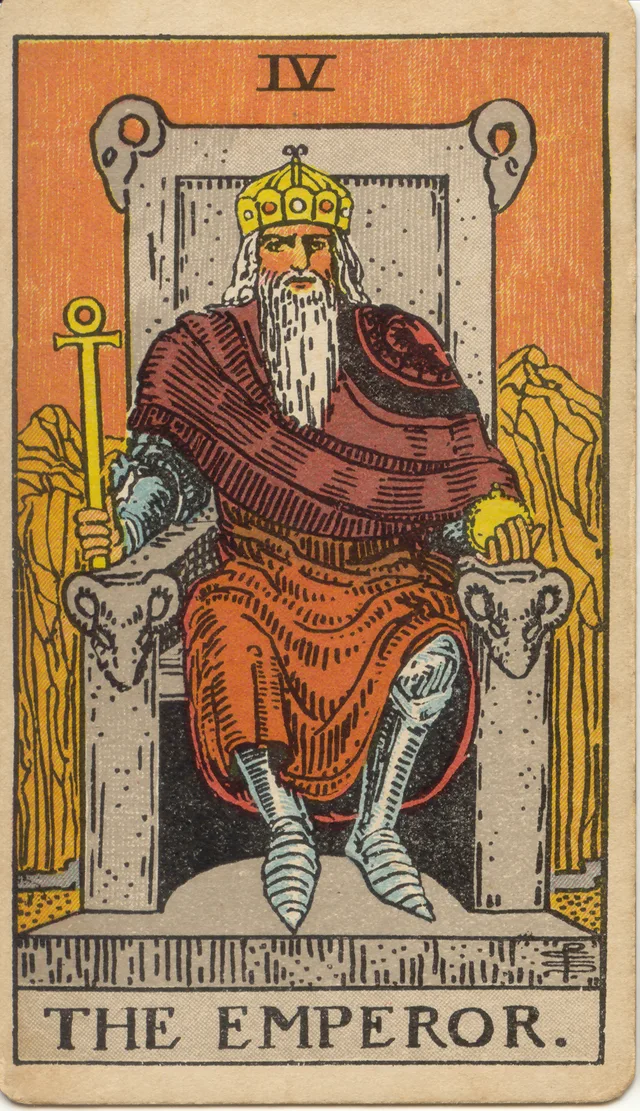
The builder of structures, the person who makes the institution stand. The Emperor is not behind Amara. He is the reason the stage she stands on holds. This card placed here is an excellent confirmation of Beth's operations and financial ownership. The second studio opens because Beth has made sure the foundations are there.
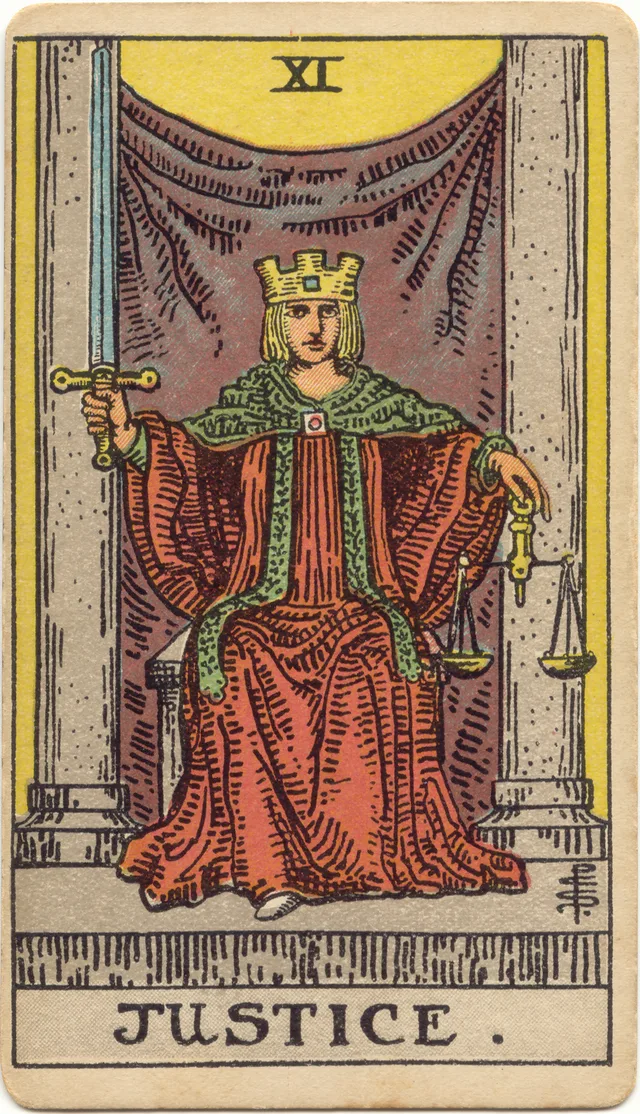
A clear agreement, fairly made and written down. Justice in the action row is asking for a role charter that both partners can read and sign. Not a lengthy legal document, but a specific written statement of who owns which decisions, so neither person ever has to wonder mid-project. This card does not appear unless the agreement is overdue.
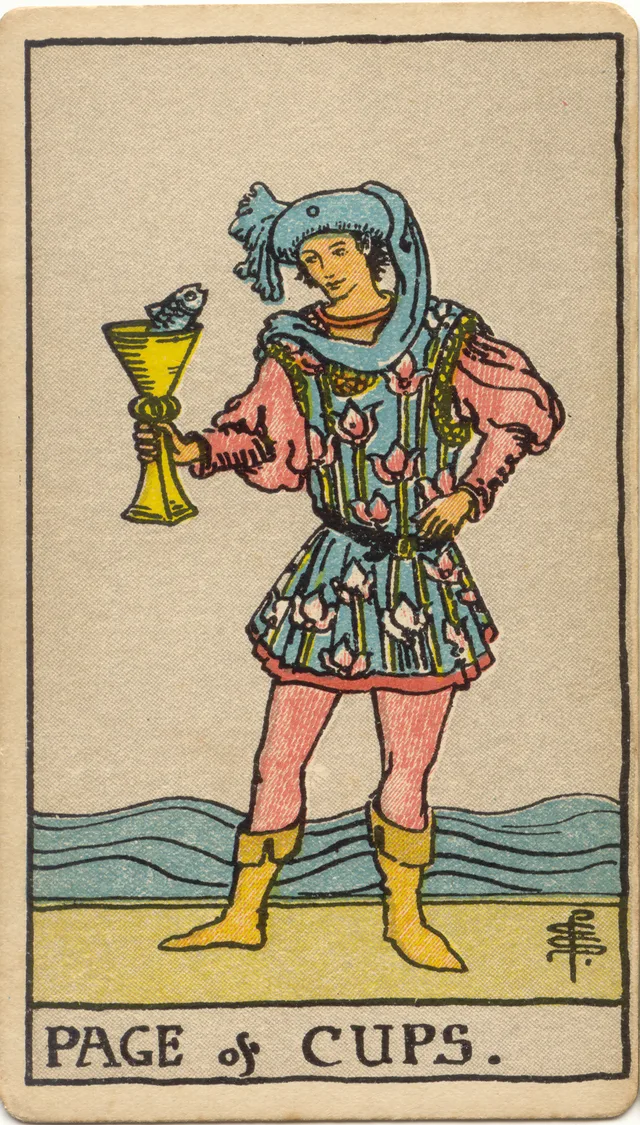
An invitation to keep the creative and the operational sides of the business in conversation with each other, warmly and regularly. The Page of Cups here is asking for a weekly rhythm: a short check-in where both partners stay informed without either one having to carry everything. Information shared early costs much less than a surprise discovered late.
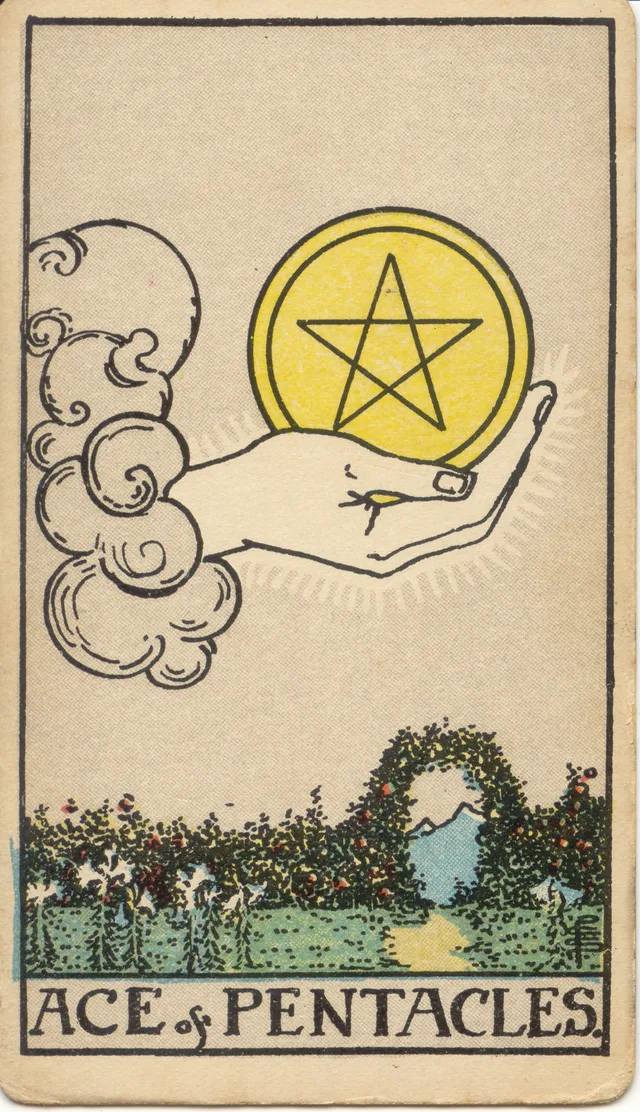
A new and real opportunity, grounded and ready to grow. The Ace of Pentacles at the end of a partnership spread is a strong green light. It says the second studio is not just viable, it is the right next thing. The conditions are there. What it asks for is the clarity that turns a good opportunity into a lasting one.
The tarot confirmed the charts at every position. The Two of Pentacles showed where they were, The Sun and The Emperor showed where each of them belongs, and Justice made it plain that the agreement needs to be written, not just understood. The Ace of Pentacles at the close was the most encouraging card I could have pulled for a second-studio opening. It said: go.
The role charter: written, specific, usable
A role charter is only useful if it is specific enough to answer a real question on a Tuesday afternoon. I wrote theirs from the chart and card findings, then sent it for them to adjust. The version below is the shape of it, with details changed to keep them anonymous.
| Area | Owner | What this means in practice |
|---|---|---|
| New client proposals and presentations | Amara | She leads, Beth reviews the scope and pricing before anything leaves the studio |
| Creative direction on all projects | Amara | Amara's call. Beth's input is welcome; her veto is reserved for budget overruns |
| Press, media and brand visibility | Amara | She is the face of the studio. Beth is available for any appearance she actively wants |
| Project pricing and margin review | Beth | Beth sets the number. Amara can flag if a price risks a client relationship, once |
| Vendor contracts and supplier terms | Beth | Beth signs. No exception. Amara does not need to read these unless asked |
| Studio operations and project scheduling | Beth | Beth owns the system. Amara flags client-facing timing needs; Beth integrates them |
| Hiring decisions | Both | Both interview for culture fit; Beth assesses operational capability; Amara assesses creative sensibility. Unanimous approval to hire |
| Studio expansion decisions (including the second location) | Both | Beth leads the financial analysis; Amara leads the creative and positioning case. Shared final call |
The spending rules and weekly decision rhythm
Beyond the role charter, two practical structures made the biggest difference in the first three months after the reading.
Spending rules
They agreed on three tiers. Below a set threshold, each partner could spend without approval within her own domain: Amara on client-facing items and creative materials, Beth on operations and supplier costs. Between the lower and upper thresholds, a quick message to the other partner before spending. Above the upper threshold, a brief written rationale and a shared yes before the commitment was made. The thresholds were set by Beth, who knows their margins, and agreed by Amara. This ended a specific recurring situation where neither of them was sure whether a purchase needed a conversation, so both spent a beat second-guessing every medium-sized decision before making it.
The weekly decision rhythm
Every Monday, thirty minutes. Not a catch-up, not a status meeting, a decision meeting. Any decision that had been hovering unsettled from the previous week went on a shared list on Friday afternoon. On Monday they worked through the list, each item owned by whoever the charter said should own it, with the other partner's input available if wanted. Decisions that did not appear on Monday's list and were not urgent enough to need an immediate message could wait for the following Monday. This alone reduced the background hum of unsettled questions by a significant margin in the first month.
Action plan: the six weeks before opening
The reading happened eight weeks before the second studio's planned opening date. I gave them a sequenced plan so the role clarity had time to settle before they were managing two buildings at once.
- Week 1
Sign the role charter
Both partners read, amend and sign the written charter. Any area where they disagree on ownership is discussed in a single session, with the chart reading as the reference point. The charter goes into a shared document both can open on any device.
- Week 2
Set the spending thresholds
Beth prepares the three tier numbers based on current margins. Amara reviews and confirms. Both write the numbers somewhere they will see them. The amounts do not need to be large to be useful. The point is that the rule exists.
- Week 3
Run the first Monday meeting
Use any currently open decisions as the first real agenda. Notice how long the meeting takes. Adjust the format, not the day or the purpose, if anything feels off. A thirty-minute meeting that runs to forty-five is still a very good meeting.
- Weeks 4 and 5
Apply the charter to the second studio setup
Beth leads all vendor and operational contracts for the new location. Amara leads the creative brief and the client-facing opening event. Both share updates at the Monday meeting. No other cross-checking is needed unless a decision hits the upper spending threshold.
- Week 6
Open, then review
The second studio opens. One week after opening, a thirty-minute review: what did the charter help with? What question came up that the charter did not cover? Add any missing items. The charter is a living document, not a finished one.
The outcome: a smooth opening and a partnership where both feel recognized
Amara and Beth opened the second studio on schedule. I heard back from them six weeks after the opening date. The things they mentioned were specific: Beth had negotiated the fit-out contractor fee to a figure that covered a full month of extra running costs, a saving she attributed directly to knowing it was her call to make and her number to hold. Amara had landed a significant new client through a press feature that ran the week of the opening, and the relationship had moved quickly because Amara was fully focused on it without checking in about whether the logistics were handled.
The thing they said most clearly was that the Monday meeting had changed the texture of the week. The background noise of unresolved questions had gone. Both of them knew that if something needed addressing it would have a moment, and if it was not on the Monday list it was either handled or it could wait. That kind of low-level certainty is hard to put a number on and very easy to feel its absence.
When two capable people overlap on the same tasks, the answer is almost never to remove one of them. It is to be specific about which part of the task each person owns, so both can do their part fully rather than doing all of it partially. A role charter is not a ceiling. It is a foundation.
Your self-check: is your partnership running on clear roles?
You do not need a reading to start asking these questions. Work through this list and see where the answers come quickly and where they take a moment to form. The ones that need a moment are where the clarity is waiting.
- Can you list, right now, the three decisions that are clearly and entirely yours to make, with no consultation needed?
- Can your partner list the same three for their side, without you helping to fill in the list?
- Is there a spending threshold below which either of you can commit without a message? Is that threshold written down anywhere?
- When a decision hovers unresolved for more than a week, is there a clear place it goes so it actually gets resolved?
- Does each partner have at least one area of the business that is entirely theirs, where the other does not routinely second-check?
- If a new team member asked who to go to about a supplier payment, would both of you give the same answer immediately?
- Have you had a conversation in the last six months about what is working well in your partnership, not only what needs fixing?
If three or more of these prompted a moment of thought rather than an immediate answer, that is completely normal for a growing partnership, and it is exactly what a reading addresses directly. The charts do not produce the answers on their own. They show you where the specific conversations are, in terms precise enough to act on right away.