
Dear Sam,
Thank you for trusting me with such a big question. I've been looking at your three places side by side. I know you want a fresh start, but you also want to feel settled and have people around you who matter to you. Let's look at each place with those hopes in mind.
What an astrocartography line is
Astrocartography is a way of drawing your birth chart onto a world map. Each line shows where a planet was rising in the east, setting in the west, or crossing the upper or lower part of the local meridian at the moment you were born. The meridian is an imaginary north–south line through the sky. Astrologers call these four positions the Ascendant, the Descendant, the Midheaven and the IC.
Traditionally, living near a line is read as bringing that planet's themes into the part of life its angle describes. These are interpretive meanings to reflect on, not scientific effects or guarantees. Sam's lines below are hypothetical placements I chose for teaching. They are not calculated from a real birth time, and they say nothing about these cities for anyone else. Your report would use lines calculated from your own birth details.
The question behind this example
"I'd like a change, but I also want close friendships and enough time away from work. How can I think about these three places?"
How I calculate the numerology for each city
For this example, I use the Pythagorean letter-to-number method. The letters A to I have values 1 to 9, and the pattern repeats through the alphabet. I add every letter in the city name and reduce the total to one digit.
I use the English spellings Bristol, Lisbon and Edinburgh, without adding a country or street address. A different spelling, such as Lisboa, can give a different result. Some readers keep 11, 22 and 33 as master numbers. Here I reduce every total to one digit, so the same rule applies to all three places.
Our fictional Sam was born on 14 May 1992. The date adds up to 1 + 4 + 0 + 5 + 1 + 9 + 9 + 2 = 31; 3 + 1 = 4. I compare each city's name number with this Life Path 4. The arithmetic is shown below; the meanings are a numerology tradition, not measured effects of living in a city or a compatibility score.
Bristol: the friendships you already have
Bristol isn't only the place you'd be leaving. You have routines and people here, so I read it with the same care as the other two.
Venus on the Descendant
The planet: In astrology, Venus stands for love, friendship, pleasure and the things and people you value. It describes how you give and receive affection.
The angle: The Descendant is the point where a planet was setting on the western horizon at the moment you were born. It describes the people you meet one to one: partners, close friends and anyone you work with as an equal.
What this line can mean: Traditionally, a Venus–Descendant line is read as a place where other people may respond to you with warmth, and where partnerships and close friendships can take up more of your attention. This is a possibility to look at, not a promise that relationships will be easy there.
What it could look like for you: For you, Sam, this could show up as friends in Bristol who still make an effort with you, or as the feeling that your best moments there happen in company rather than alone at your desk. If you work remotely and spend most days on your own, the line asks whether you are using the warmth that is already available to you.
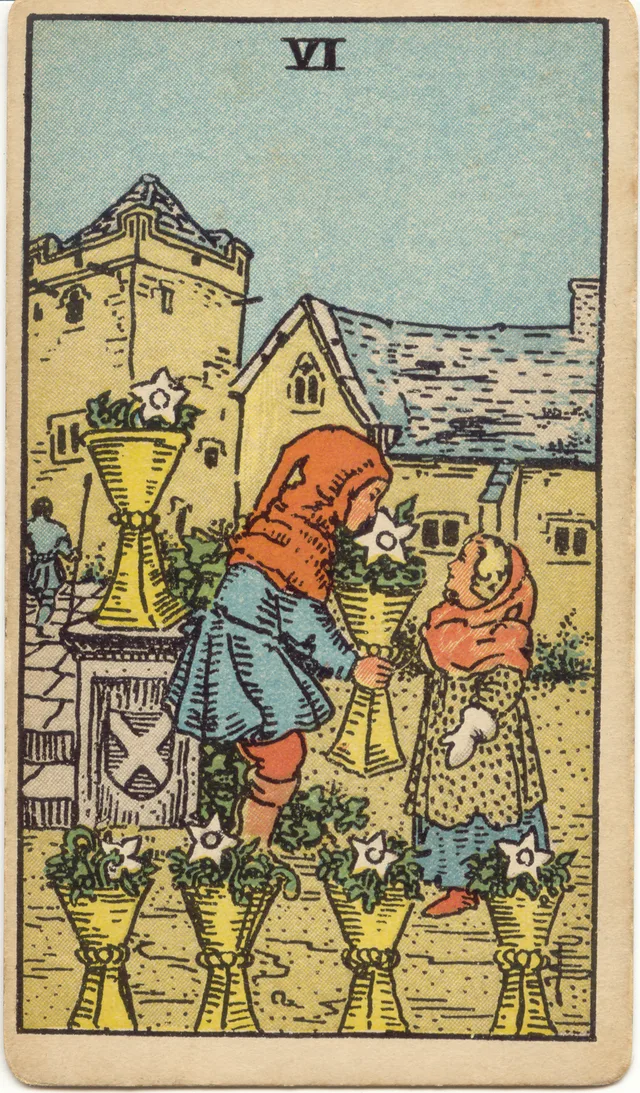
The card: Six of Cups
In this card an older child hands a smaller one a cup filled with white flowers, in a sheltered courtyard that looks lived in for years. Nobody is going anywhere. I chose it for Bristol because it shows what you already have there: people who know your history and offer kindness without being asked. It also asks whether those flowers are being handed to you now, or whether the card is pointing to a friendship that mostly lives in memory.
The rune: Wunjo joy, fellowship, belonging
Wunjo is the rune of shared joy and fellowship, the pleasure of belonging to a group that is glad you turned up. Next to the Six of Cups, it asks a pointed question about Bristol: when did you last feel that pleasure with your friends there, rather than catching up between work calls?
Numerology for Bristol: 5
Each letter's value: B = 2 · R = 9 · I = 9 · S = 1 · T = 2 · O = 6 · L = 3
Add the values: 2 + 9 + 9 + 1 + 2 + 6 + 3 = 32
Reduce the total: 3 + 2 = 5
What this number represents: In this method, 5 is associated with variety, freedom and trying new experiences. For a place name, I use it to explore how much room there is for change in your everyday life.
How I would read it alongside your Life Path 4: Sam, your Life Path 4 gives us a theme of structure to consider alongside Bristol's 5. These are different needs, but they can work together. A familiar home and regular working hours could give you the security to try something new each week. I would ask whether you want to leave Bristol itself, or whether you miss having choices outside your usual routine.
How it connects with your line, card and rune: The Venus–Descendant example, Six of Cups and Wunjo bring our attention to the people you already know. The 5 adds a different question: could those friendships include new experiences, instead of repeating the same plans? Invite a friend to an activity neither of you has tried, and notice whether the familiar city starts to feel different.
Line, card and rune together: The Venus–Descendant line, the Six of Cups and Wunjo all point to the same subject: the people you already have. The line describes where relationships take focus, the card shows kindness from people who know you, and the rune describes the joy of belonging to a group. Put together, the card and rune say Bristol's friendships are real, but they may have drifted into routine. Part of the fresh start you want might be a fresh arrangement with the people you already love, rather than a new postcode.
- Message the two friends you would miss most and book one evening with each in the next fortnight. Notice whether you leave feeling restored or tired.
- For four weeks, close your laptop at 6pm on two weekdays and keep those evenings for people. Afterwards, ask yourself what you still miss about life in Bristol. Your answer will help us separate the wish for a new place from the need for more time with friends.
Lisbon: opportunity, and the weight of work
Lisbon is the place where work could come forward most. That could bring clients and new contacts, but you told me you want more time away from work, so I read it with that tension in mind.
Sun on the Midheaven
The planet: In astrology, the Sun stands for your sense of self, your energy and the part of you that wants to be seen and recognised.
The angle: The Midheaven, also called the upper meridian, is the point where a planet was at its highest in the sky at the moment you were born. It describes your career, your reputation and how the wider world sees you.
What this line can mean: Traditionally, a Sun–Midheaven line is read as a place where your work and public profile can come forward. People may notice what you do, and opportunities to lead or be recognised can appear. The same emphasis can also pull your time towards work.
What it could look like for you: For you, Sam, this could mean new clients, invitations to speak, or a stronger sense of purpose in your remote work. It could also mean saying yes to every call and letting your evenings fill up, which is the opposite of what you told me you want.
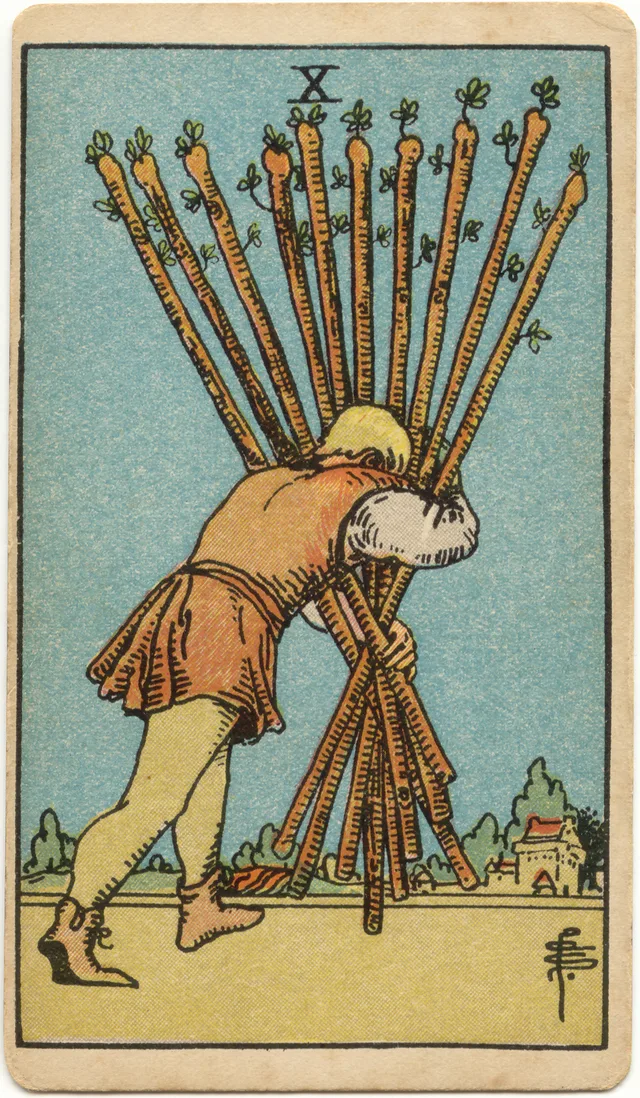
The card: Ten of Wands
A man carries ten heavy staves towards a town. He is so close to the bundle that he cannot see where he is walking, and the houses ahead are within reach but blocked from view. I chose this card for Lisbon in the example because the fictional chart puts work and visibility to the front there. Sam, I would want to explore whether new work contacts would give you the company you miss, or leave you saying yes to more calls when you hoped to have your evenings back.
The rune: Algiz protection, boundaries
Algiz is shaped like raised arms or the antlers of an elk, and it is read as protection and a well-kept boundary. With the Ten of Wands, it says Lisbon could work for you if you decide in advance which staves you are not carrying there.
Numerology for Lisbon: 8
Each letter's value: L = 3 · I = 9 · S = 1 · B = 2 · O = 6 · N = 5
Add the values: 3 + 9 + 1 + 2 + 6 + 5 = 26
Reduce the total: 2 + 6 = 8
What this number represents: In this method, 8 is associated with responsibility, ambition, money and organising resources. For a place name, I use it to discuss what achievement would mean to you and what you are willing to give it.
How I would read it alongside your Life Path 4: Sam, a Life Path 4 and a city-name 8 share an interest in building something that lasts. That could be a useful theme if you wanted to develop your business. But your question is also about having a life outside work. I would ask you to describe success in two parts: the income you need and the time you want to keep for yourself.
How it connects with your line, card and rune: This adds context to the Sun–Midheaven example and Ten of Wands: work may be appealing, but taking on more is not the only way to feel successful. Algiz brings us back to your limits. Before a Lisbon trial, decide what a financially workable week looks like without using the evenings you want to spend with friends.
Line, card and rune together: The Sun–Midheaven line, the Ten of Wands and Algiz describe one pattern. The line points to work and visibility, the card shows what happens when you carry too much of it, and the rune asks you to set limits before you start. Together, these symbols help us ask what you would welcome in Lisbon and what you would leave behind. New work contacts might be part of the appeal, but you also want friends you can spend time with outside work. I would make room for both in the visit, rather than filling your diary with professional events.
- Book a two-week stay that includes a normal working week. Keep a note each evening: hours worked, and whether you had energy to go out.
- Before you travel, write your three non-negotiables, for example no calls after 7pm Lisbon time, one free weekday afternoon, one standing plan with people you meet. Check how many survived by day ten.
Edinburgh: building a home and a circle
Edinburgh is the place in this example that leans most towards home and close relationships, which sits closest to the friendship you said you are missing.
Moon on the IC
The planet: In astrology, the Moon stands for your feelings, your need for comfort and safety, and the habits that help you feel at home.
The angle: IC is short for Imum Coeli. In a chart, it represents home and private life. A Moon–IC line marks places where the Moon was making its lower passage across the local meridian when you were born. The meridian is an imaginary north–south line through the sky. Astrologers connect this part of the chart with family, roots and feeling settled.
What this line can mean: Traditionally, a Moon–IC line is read as a place where home life and emotional belonging take centre stage. You might feel a strong pull to settle, make a nest and find people who feel like family. Feelings can also run deeper there, including homesickness in the first months.
What it could look like for you: For you, Sam, this could mean finally having a home life that feels like a refuge from your laptop, and a small circle you see every week. It could also mean that a dark, lonely first winter feels heavier than it would elsewhere, so the support you build early matters.
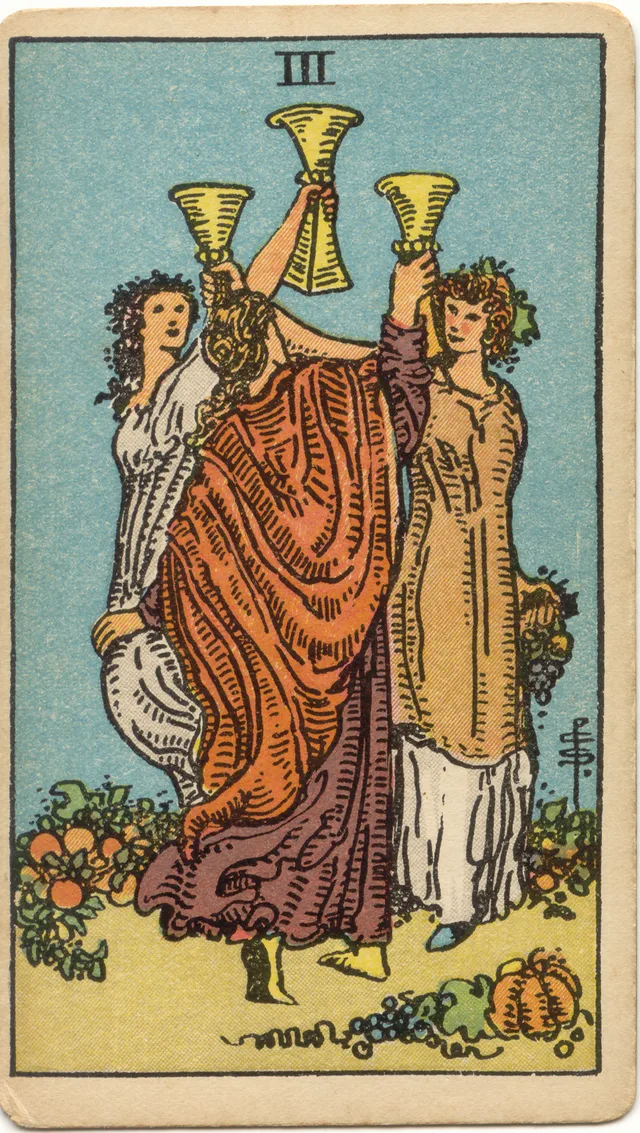
The card: Three of Cups
Three women lift their cups together in a circle, with a harvest of fruit at their feet. No one is leading; they are celebrating as equals. I tied this card to Edinburgh because, in this example, the city emphasised home and close relationships. It describes the kind of friendship you told me you want: regular, mutual, and rooted in shared occasions rather than work.
The rune: Othala home, heritage, belonging to a place
Othala is the rune of the family home and the land you belong to. It is about the slow work of making a place yours. With the Three of Cups, it reminds us that the circle in the card did not form in a week. The harvest at their feet took a season to grow.
Numerology for Edinburgh: 7
Each letter's value: E = 5 · D = 4 · I = 9 · N = 5 · B = 2 · U = 3 · R = 9 · G = 7 · H = 8
Add the values: 5 + 4 + 9 + 5 + 2 + 3 + 9 + 7 + 8 = 52
Reduce the total: 5 + 2 = 7
What this number represents: In this method, 7 is associated with reflection, study, privacy and time to think. For a place name, I use it to ask what helps you feel restored and how much time alone feels good to you.
How I would read it alongside your Life Path 4: Sam, the 7 gives your Life Path 4 a different question to consider. A reliable routine and a home where you can think might suit the life you described. But working remotely already gives you plenty of time alone. I would want to understand the difference between choosing an evening to yourself and wishing someone had invited you out.
How it connects with your line, card and rune: The Moon–IC example and Othala focus on home, while the Three of Cups brings in friendship. The 7 helps us make room for privacy without losing that social life. During your visit, spend one evening at home and another with a group you could return to. Compare how you feel after each, rather than assuming a peaceful home will meet every need.
Line, card and rune together: The Moon–IC line, the Three of Cups and Othala all describe home and belonging. The line points to emotional roots, the card shows friends celebrating as equals, and the rune says a home is built over time. Edinburgh offers the strongest picture of friendship and home in this sample, but the rune is clear that it would be built, not found. That suits someone willing to join things and keep turning up through a dark first winter.
- Pick one weekly group you would enjoy for its own sake, a running club, a choir, a climbing wall, and look up whether it runs year round.
- Visit in November or January, not only in festival season, and spend one evening doing that activity. If you would happily go back the next week, take note.
Your three places, side by side
Here are the three places in one view. There are no scores here: each column shows the teaching line, what the card and rune ask of you, and one test you can run before you decide.
| In the reading | Bristol | Lisbon | Edinburgh |
|---|---|---|---|
| City-name numerology | Bristol: 5, variety alongside Sam's need for structure | Lisbon: 8, ambition alongside Sam's need for free time | Edinburgh: 7, private time alongside Sam's wish for friends |
| Tarot card | Six of Cups: old friendships offering kindness | Ten of Wands: a heavy load carried into a new town | Three of Cups: friends celebrating as equals |
| Teaching line | Venus on the Descendant: relationships and close friends take focus | Sun on the Midheaven: work and being seen take focus | Moon on the IC: home and emotional belonging take focus |
| Viking rune | Wunjo: joy and fellowship | Algiz: protection and firm boundaries | Othala: home built over time |
| What it asks of Sam | Is the fresh start a new city, or a new arrangement with people you love? | Which work commitments will you refuse to carry there? | Would you keep turning up to the same group through a dark first winter? |
| Your test before deciding | Two laptop-free evenings a week for four weeks, kept for friends | Two-week stay with a normal working week and three written limits | A winter visit and one evening at a weekly group you would rejoin |
Stepping back from the cities: your decision as a whole
After each city has its own card and rune, I lay one more spread for the decision itself. This one isn't about a place. It looks at where you stand, what would help, and what you're hoping to reach.
I've chosen every card and rune on this page, and the birth date below, to show you how I write. They are illustrative choices for fictional Sam, not cards drawn for a real client or placements calculated for these cities.
Where you stand, what would help, what you're moving toward
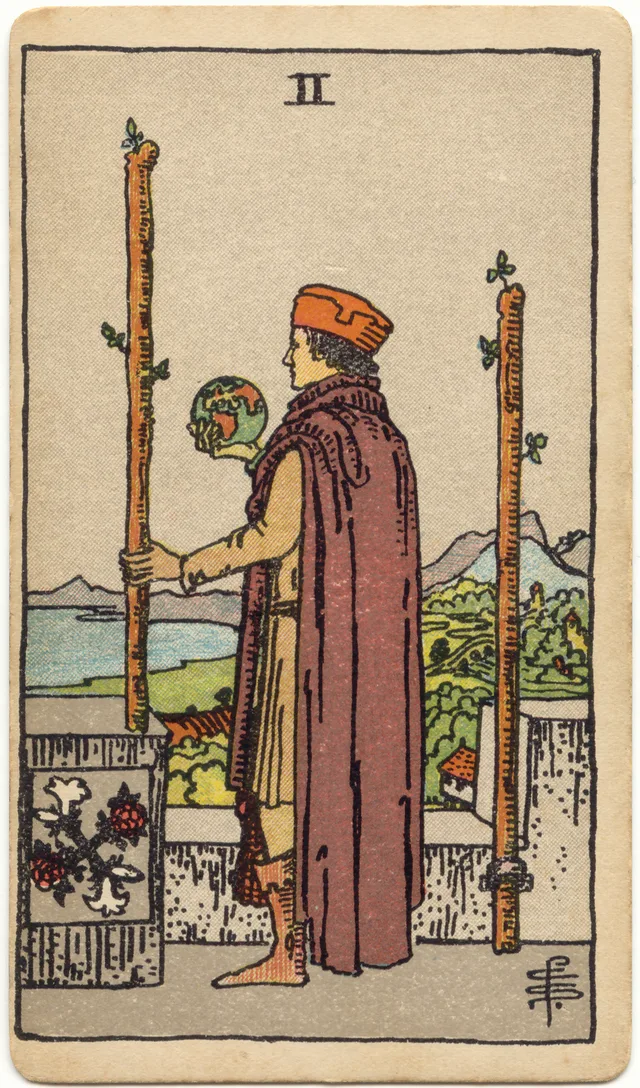
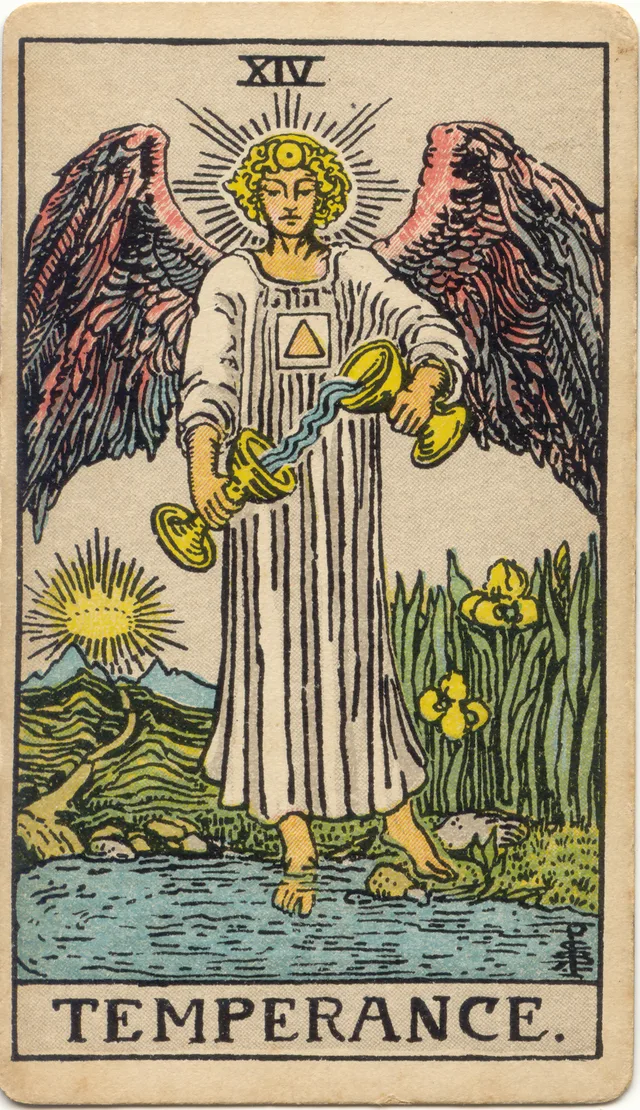
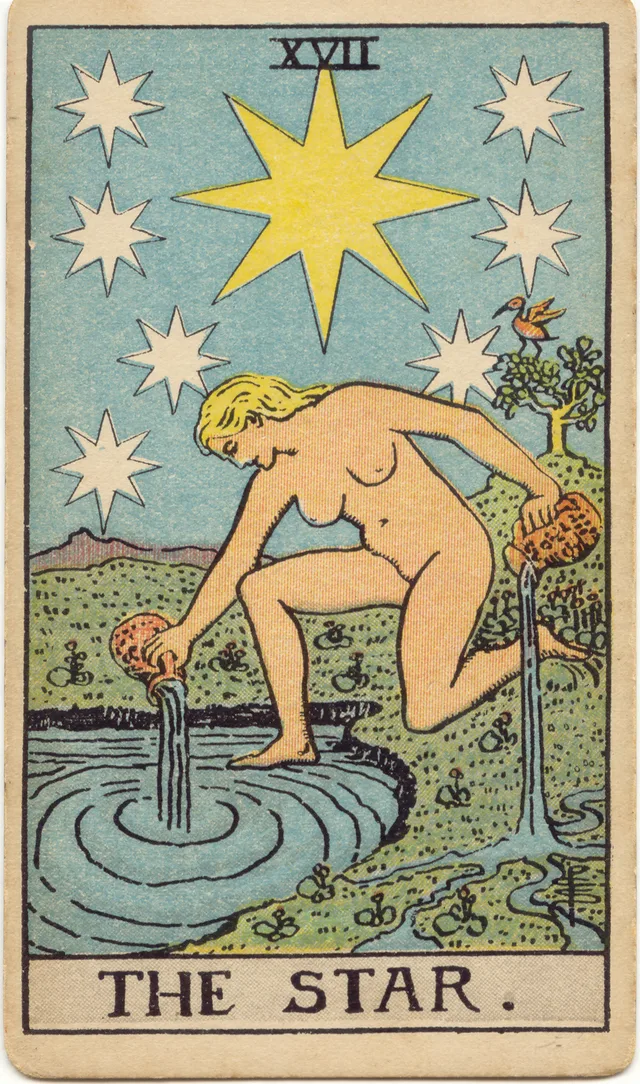
How these three link to the city draws: the Two of Wands is the man who could stay in Bristol's courtyard from the Six of Cups, or set sail. The Star is the opposite of Lisbon's Ten of Wands: the same person with the load put down. Temperance sits between them and says the route is gradual. None of the cards picks a city; together they say the right move is the one that lets you rest.
Raidho: the journey, right timing, riding well
Raidho is the rider's rune. It is less about arriving and more about travelling at a pace the horse can keep. Where Wunjo, Algiz and Othala each spoke to one city, Raidho speaks to how you move between them.
For you, Sam, that means planning the order of your visits rather than the destination. Your work travels with you, which is a gift, but it also means nothing forces you to stop and notice how you feel. Raidho asks you to build those stops in.
What I'd suggest: put three dates in your calendar now: the end of your four-week Bristol test, your Edinburgh winter visit and your Lisbon working fortnight. After each, write half a page on two things only: how many evenings you spent with people, and how many hours you worked. Those six pages will tell you more than any list of pros and cons.
A Life Path 4 example: building a life that supports you
I’m giving our fictional Sam a birth date of 14 May 1992 to show you the calculation. Using the digit-sum method, I add the digits of that date and then reduce the total:
In numerology, 4 is commonly associated with structure, steadiness and building foundations. I’d use that theme to ask what gives you a sense of security, rather than assuming I know your personality from a number.
For you, Sam, that might mean a comfortable place to work, regular time with friends and evenings when you can properly switch off. Bristol's name number 5 asks how you could add variety without losing that structure. Lisbon's 8 asks whether your idea of success leaves enough time for yourself. Edinburgh's 7 asks how you could enjoy privacy and still build the friendships you want. None of those numbers is a better match by itself; each helps us look at a different part of your decision.
How this connects to the cards: Othala, the Three of Cups and Temperance all describe something built over time, and a 4 echoes that. In your notes after each visit, add one line on whether you could picture a steady weekly routine there. The number is a theme to explore, not a score for a city.
Bringing it all back to your question
Sam, you asked for three things: a fresh start, close friendships and time away from work. In Bristol, the Venus–Descendant line, the Six of Cups and Wunjo all say your friendships are worth more attention before you leave them. In Lisbon, the Sun–Midheaven line points to work and recognition, and the Ten of Wands and Algiz say a move there would only feel fresh if you set your working limits first. In Edinburgh, the Moon–IC line points to home and emotional belonging, and the Three of Cups and Othala come closest to the friendship you want, on the condition that you build it week by week. In the general reading, Temperance and Raidho ask you to move in stages, and your Life Path 4 says you settle best when the structure is in place.
So here is my suggestion. Run the Bristol test first, because it costs nothing and tells you whether the problem is the city or the schedule. Then visit Edinburgh in winter and Lisbon for a working fortnight, keeping the same three limits in both. Whichever place still gives you two free evenings with people by the end of the visit is the one worth a longer trial.
With love, Kate