Your Belline Card of the Day
Take a moment for yourself with the Oracle Belline, a French deck of 53 cards. Turn over today's card and I'll explain its meaning, share examples you might recognise and suggest a few small things to try. You don't need to know the cards or astrology to begin. A new card is available each day.
Seven planets, one card a day
The Oracle Belline is a French fortune-telling deck of 53 cards that began in 19th-century Paris. It is still sold by Grimaud, a long-established French maker of playing cards. Tarot and ordinary playing cards sort their cards into suits, families that share a symbol such as hearts or cups. The Belline sorts most of its cards another way: 49 of the 53 belong to one of seven families named after the Sun, Moon, Mercury, Venus, Mars, Jupiter and Saturn. Ancient astrologers called all seven planets, even though modern astronomy counts the Sun as a star and the Moon as Earth's moon. The other four are the three master cards at the start and the separate Blue Card, so every card arrives with a mood as well as a name.
You don't need any astrology to use it. Think of each planet as the weather of the card: bright, changeable, quick, warm, fiery, generous or slow. Here is how the deck is put together.
- Cards 1 to 3
Three master cards
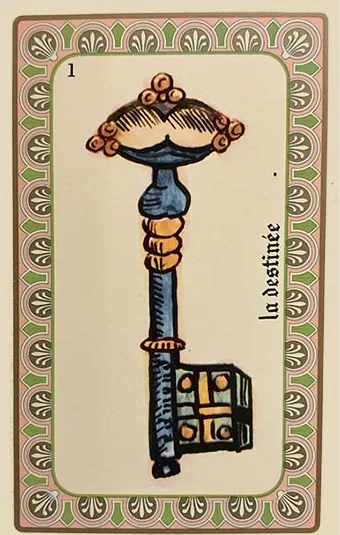
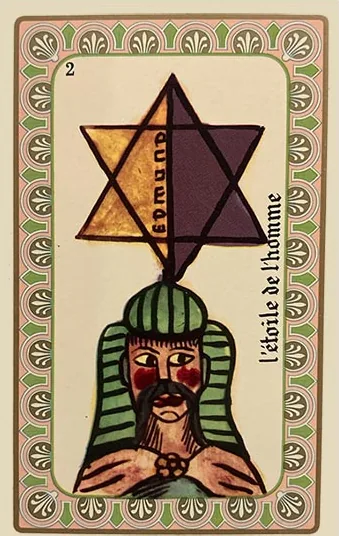
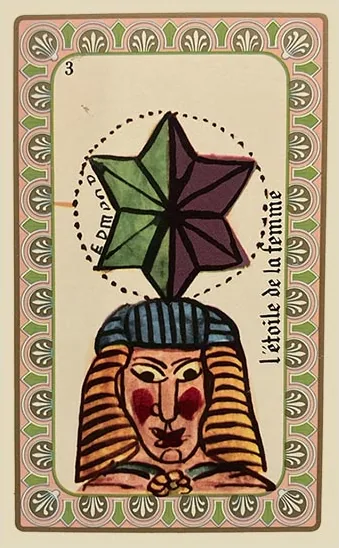
Destiny (1) opens the deck and stands for the bigger pattern in your life. The Man's Star (2) and the Woman's Star (3) are guiding lights, often read as the people at the centre of a question.
- 1. Destinythe larger pattern
- 2. The Man's Starthe masculine principle
- 3. The Woman's Starthe feminine principle
1. Destiny For exampleSuppose you have applied for a job and are waiting for an interview decision. The large key on Destiny (1) gives me a way to discuss the choices still available to you. You cannot decide when the employer replies, but you can prepare examples of your work, check the follow-up date and continue considering other roles. The useful distinction is between someone else's decision and your own next action.
- Cards 4 to 52
Seven planets, seven cards each
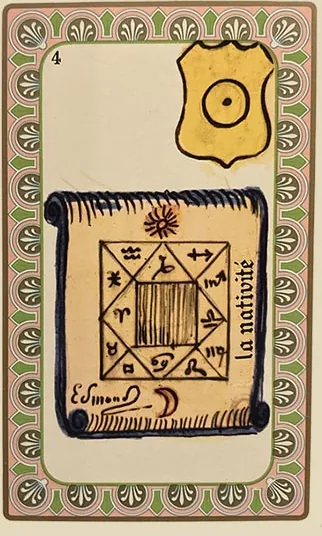
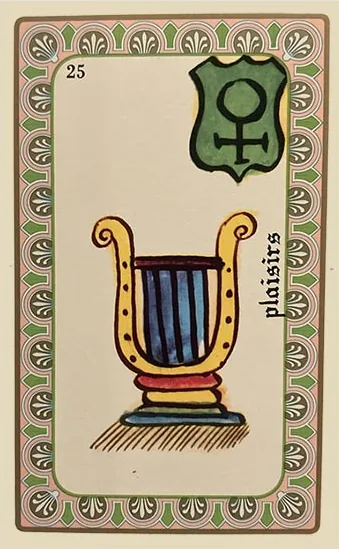
Most of the deck sits in seven series of seven cards. The planet sets the tone and the card's name gives the subject. Nativity (4) belongs to the Sun, so it is a bright beginning. Pleasures (25) belongs to Venus, so it is about enjoyment and affection. Misfortune (46) belongs to Saturn, so it is about slow lessons and endurance rather than doom.
- 4. Nativitybirth
- 25. Pleasuresenjoyment
- 46. Misfortunehardship
Sun
4. Nativitygrowth and recognition, from Nativity (4).
Moon
11. Betrayalmoods and changes of heart, from Betrayal (11).
Mercury
18. Changenews, trade and quick thinking, from Change (18).
Venus
25. Pleasureslove, comfort and enjoyment, from Pleasures (25).
Mars
32. Maliceconflict, energy and courage, from Malice (32).
Jupiter
39. Supportsupport, luck and generosity, from Support (39).
Saturn
46. Misfortunelimits, patience and time, from Misfortune (46).
18. Change For exampleImagine a meeting moves to an earlier time and your original plan no longer works. Change (18) belongs to Mercury's group, associated with communication and movement. I would connect that theme with updating the people involved, checking the new arrangements and deciding what can wait. A short message confirming the time and what you need from everyone is more useful than trying to keep an outdated plan.
- Card 53
The Blue Card
One card carries no number and no planet. The Blue Card stands for a turning point, the unknown and a deeper meaning behind events. Some guides call it card 0; here it is card 53 so every card has a place in the draw.
- 53. The Blue Carda turning point
53. The Blue Card For exampleImagine you have been invited to join a project but have not been told how much time it will take. I use the Blue Card as a prompt to allow space for uncertainty rather than inventing an answer. Ask about the expected hours and when a decision is needed. You can say you are interested while waiting for the details that would make your answer meaningful.
How to use today's Belline card
- Understand the card's group
Most Belline cards belong to a group named after a planet. I explain that group's theme alongside the card: Saturn is associated with patience, while Jupiter is associated with generosity. The three opening cards and the Blue Card sit outside these groups.
For exampleDelay (51) belongs to Saturn's group, associated with time and limits. Suppose a colleague's approval is holding up a piece of work. I would use this card to separate the blocked task from things you can still complete. Agree when to check in, prepare the information they need and work on another part in the meantime. Waiting need not mean repeatedly checking your inbox.
Try thisChoose one useful task you can complete without waiting for someone else's reply.
- Connect the name with its group
The card's name gives you a specific subject to explore. Its group adds context, helping me explain how that subject might relate to your question.
For exampleSupport (39) belongs to Jupiter's group, associated with generosity. Imagine you are organising a family meal and have taken responsibility for shopping, cooking and collecting a relative. I would use the card to help you identify what could be shared. Ask one person whether they can collect the groceries by a specific time, rather than hoping someone notices you are overwhelmed.
Try thisChoose one task you would appreciate help with and make a specific request, such as asking someone to collect the groceries.
- Do one small thing
Every reading on this page ends with a few practical ideas. Choose the one that fits your day and do it before evening.
For exampleNews (24) concerns messages and information. Suppose a friend has asked whether you can attend a gathering, but you are still checking your plans. The practical connection is not that news must arrive; it is that your friend needs an update. Tell them when you can confirm, then put a reminder in your calendar so they are not left guessing.
Try thisReply to the message you've been leaving unread, even if it's only a short note to say you'll answer properly later.
All 53 cards, section by section, and edition notesEvery card in deck order, grouped into its sections, with a link to every card guide, and notes on the edition I use.
Master cards
3 cardsCards 1 to 3Sun series
7 cardsCards 4 to 10Moon series
7 cardsCards 11 to 17Mercury series
7 cardsCards 18 to 24Venus series
7 cardsCards 25 to 31Mars series
7 cardsCards 32 to 38Jupiter series
7 cardsCards 39 to 45Saturn series
7 cardsCards 46 to 52The Blue Card
1 cardCard 53
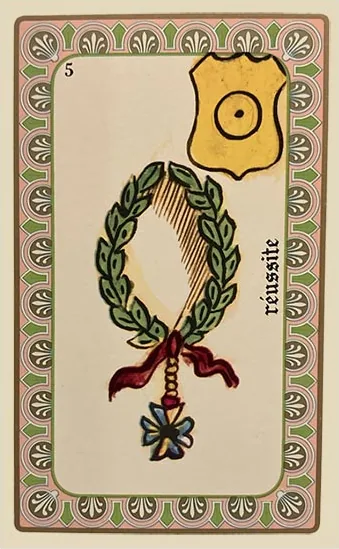
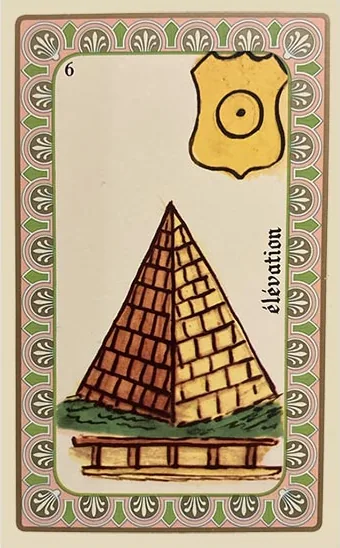
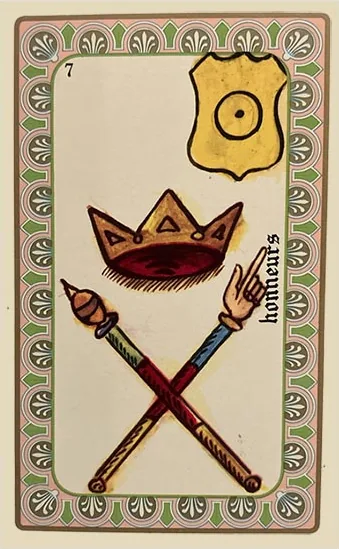
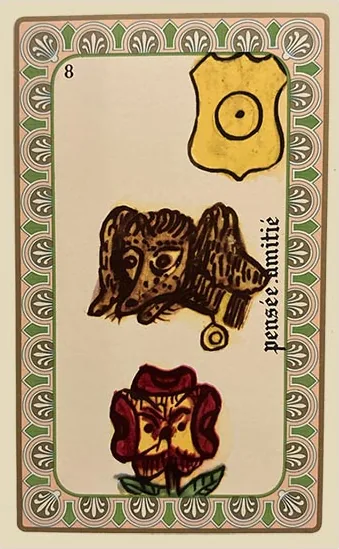
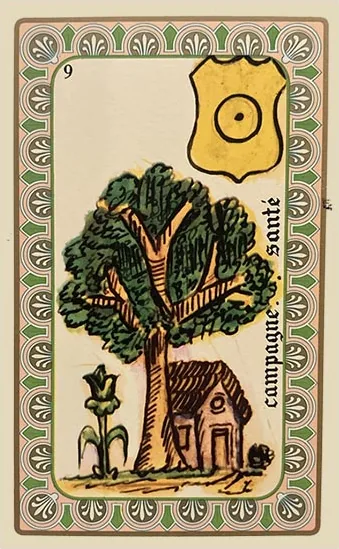
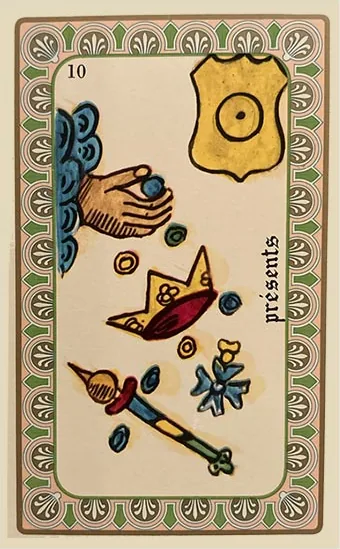
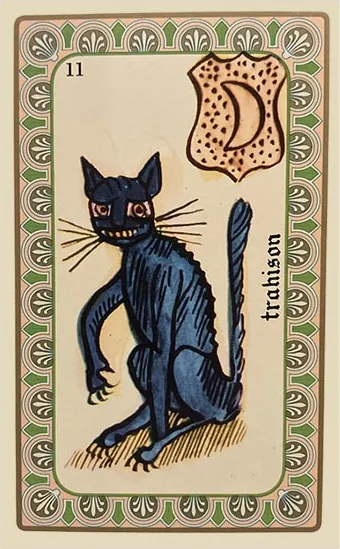
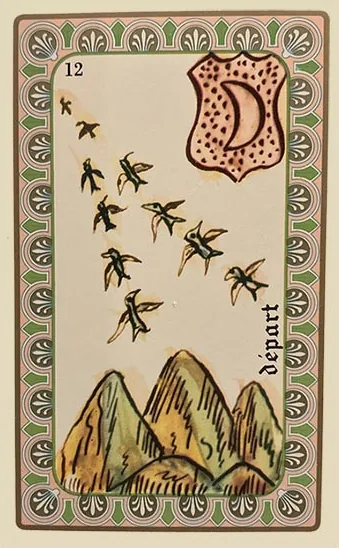
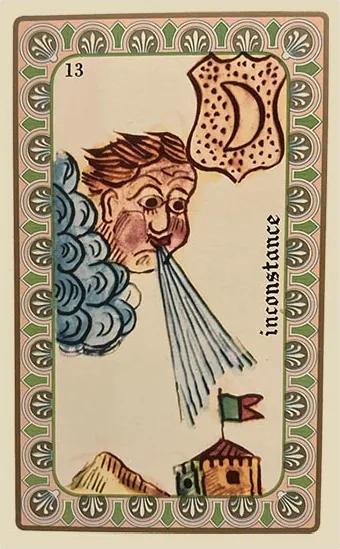
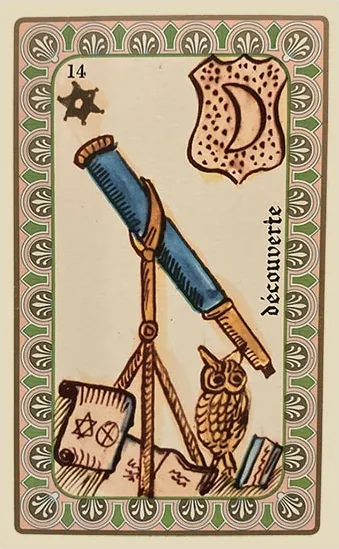
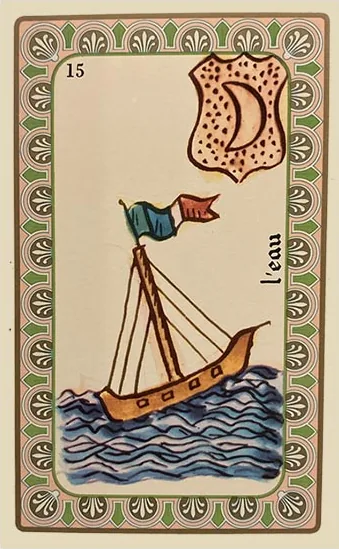
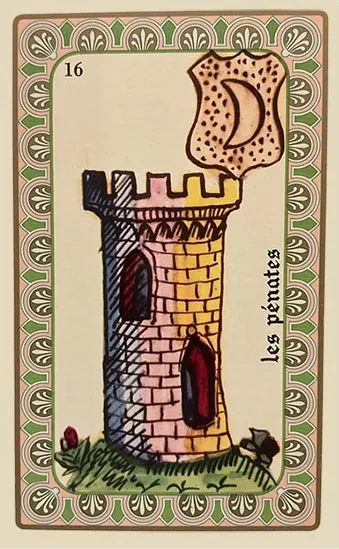
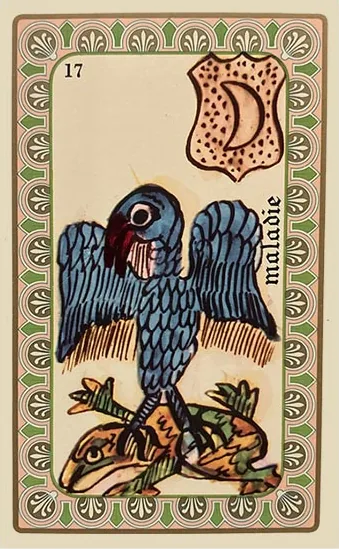
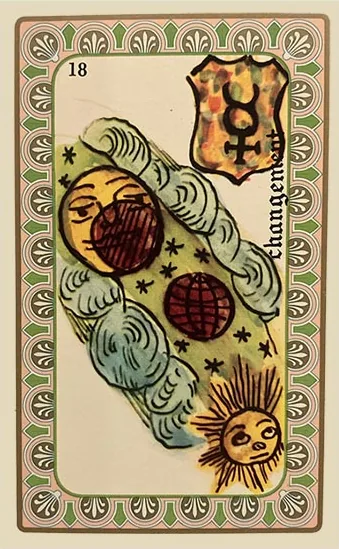
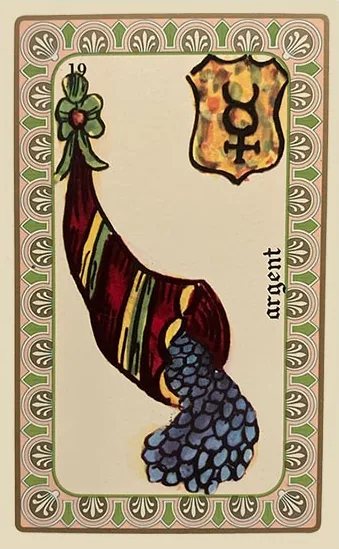
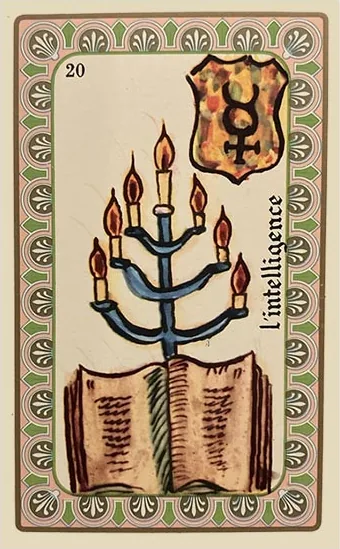
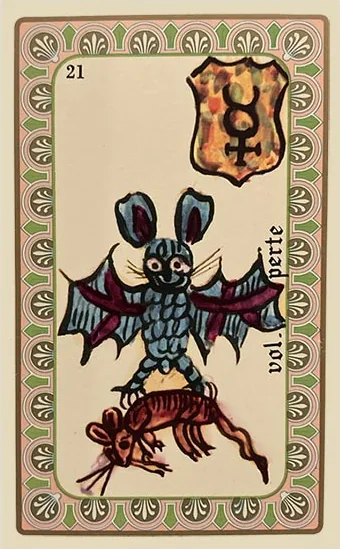
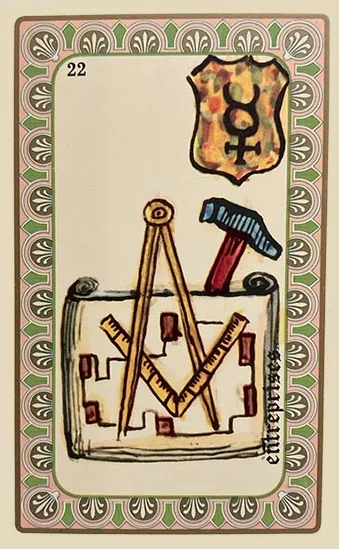
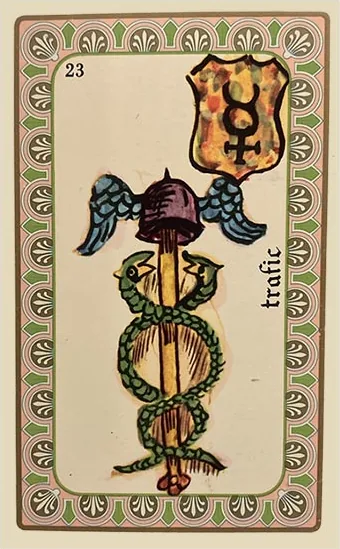
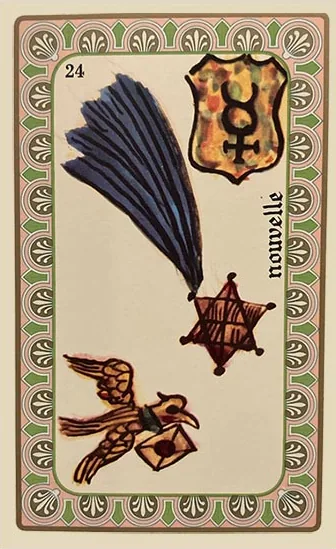
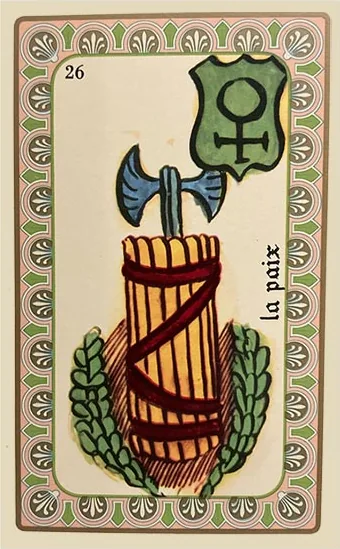
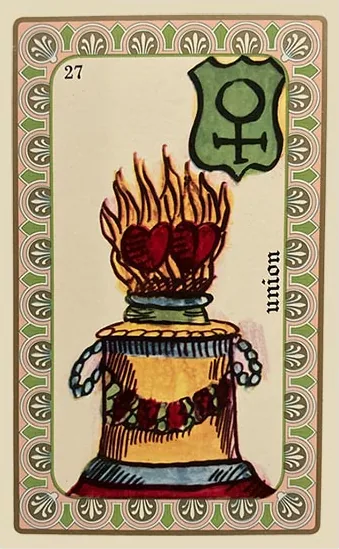
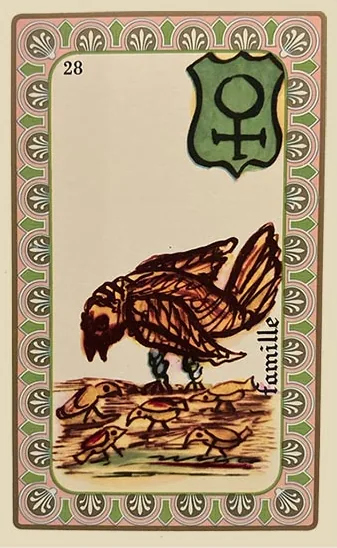
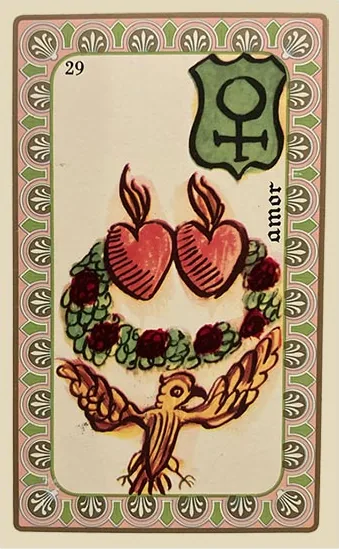
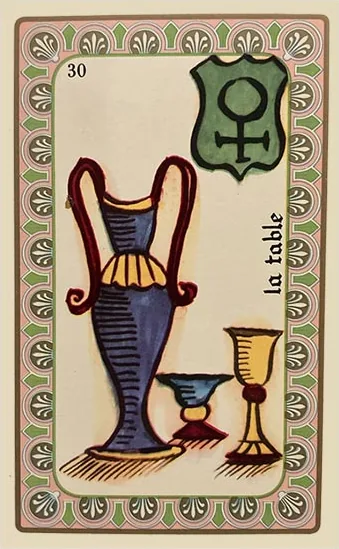
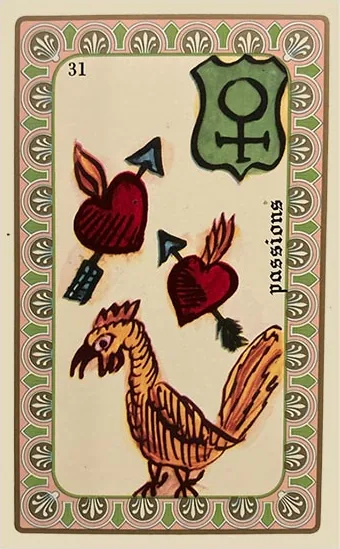
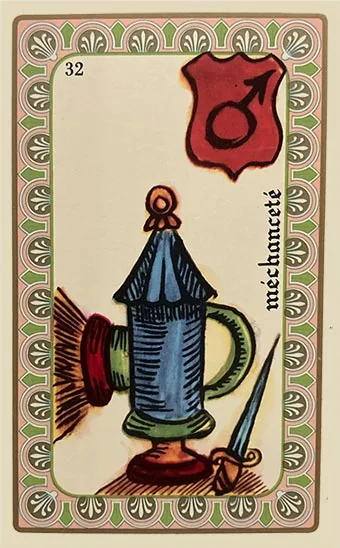
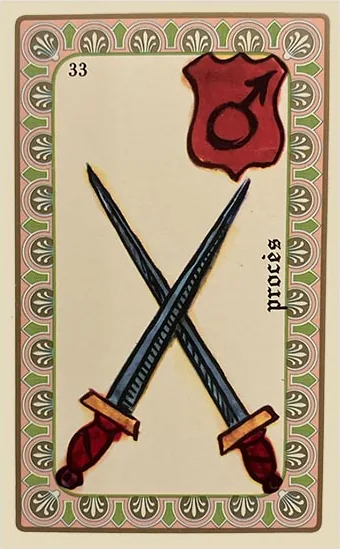
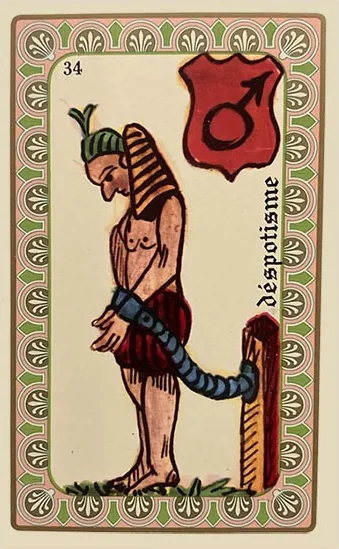
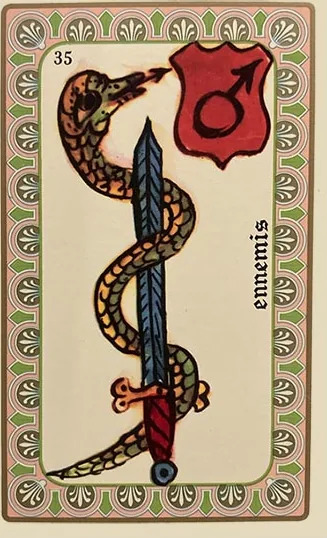
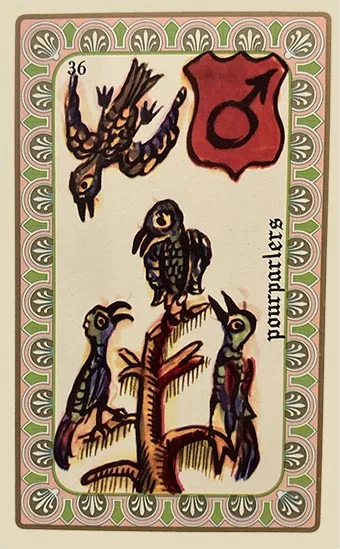
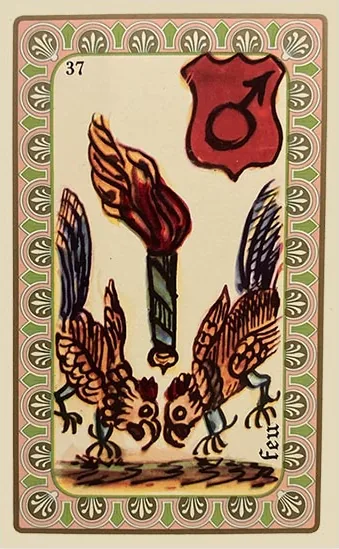
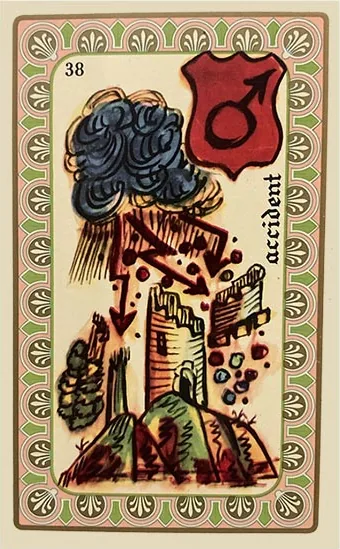
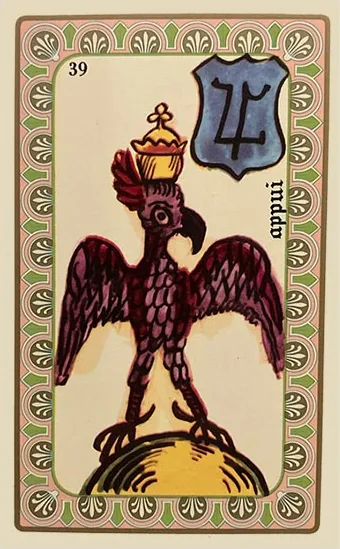
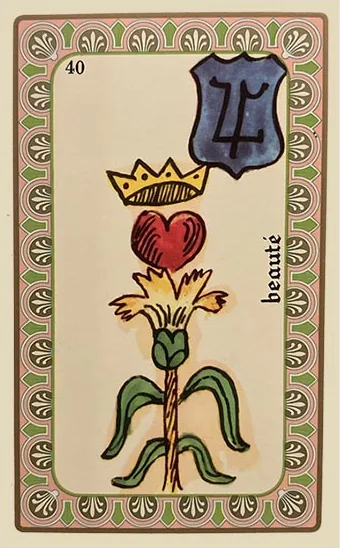
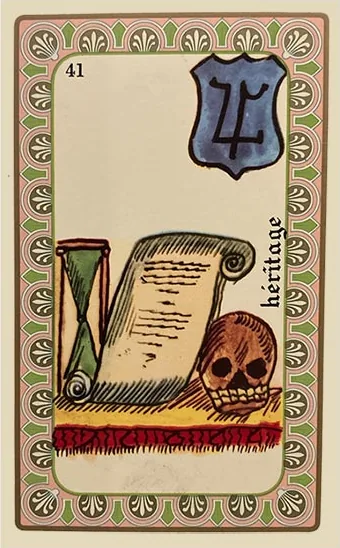
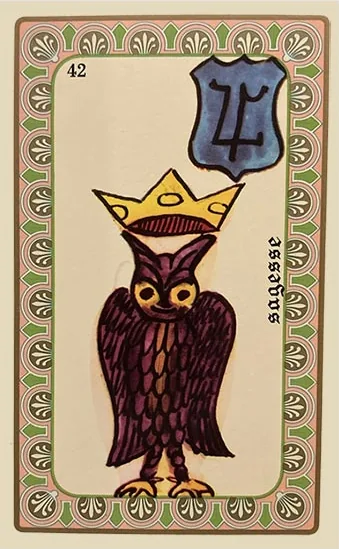
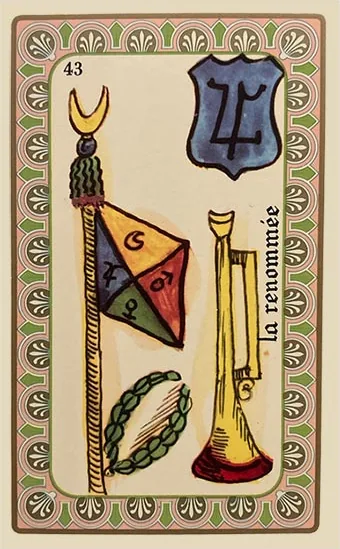
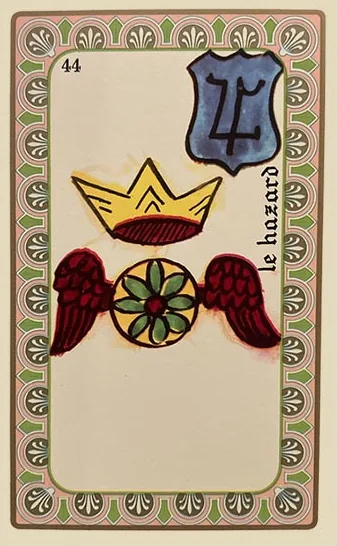
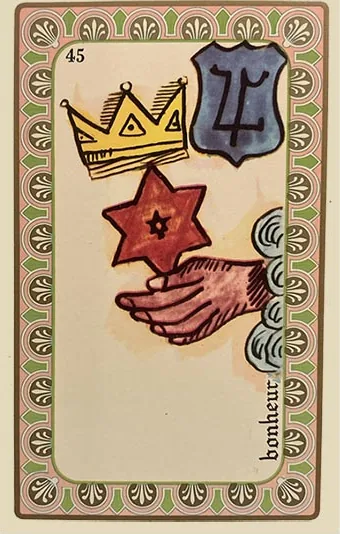
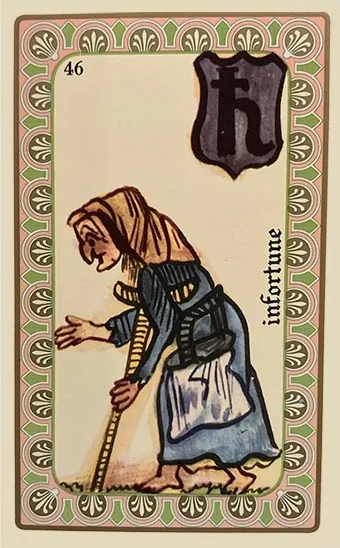
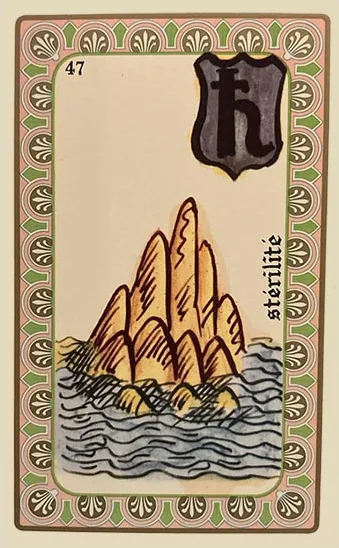
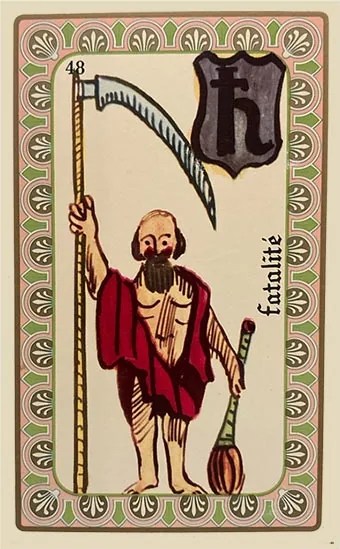
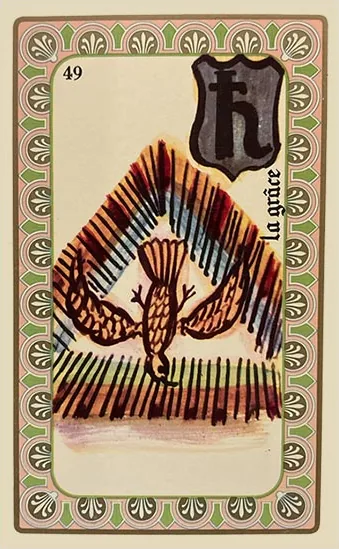
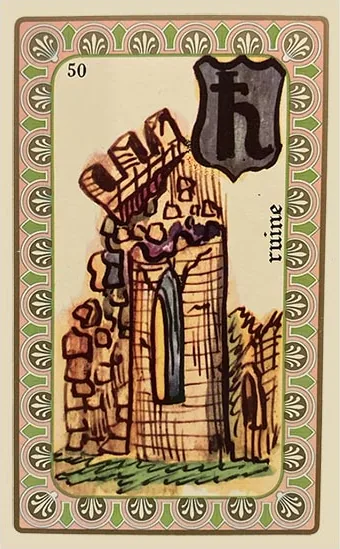
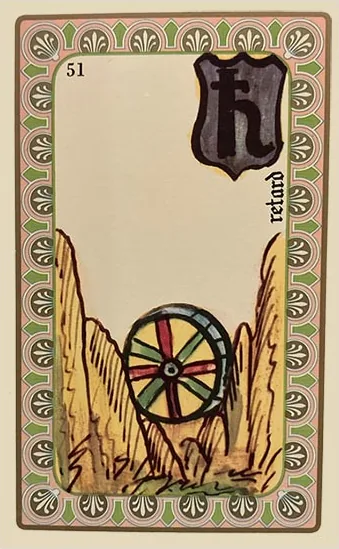
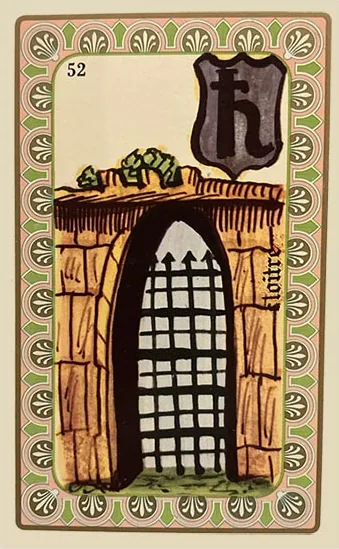
Which Oracle Belline you are drawing from
Deck followed: Grimaud edition: 52 numbered cards in three master cards and seven planetary series, plus the unnumbered blue card.
1. Destiny Destiny: exploring the choices available to you
The Belline is a French deck associated with Edmond, a card reader in 19th-century Paris, and published by Grimaud, a French playing-card maker. Its first three cards are often called the master cards: they help introduce the person or situation being discussed. Destiny, shown here, is the first. Notice the large key in its picture. I use this card to explore the choices available to you. If you are thinking about changing jobs, for example, I might ask what experience you already have, what you would like to learn and who could help you take the next step.
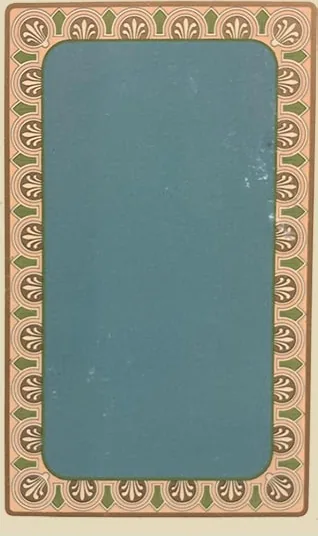
53. The Blue Card The Blue Card: giving yourself time to understand
The Blue Card looks different because it has a blue centre rather than a detailed illustration. It also has no printed number. I list it as card 53 here so you can find it alongside the other 52 cards; some guides call it card 0. In a reading, I use it as an invitation to give yourself time to understand a situation. For example, if you are waiting to hear about a job, you could write down the questions you would like to ask when the employer replies. You can prepare for the conversation while keeping your options open.
4. Nativity Nativity: taking the first step towards something new
Most Belline cards belong to one of seven groups named after the Sun, Moon, Mercury, Venus, Mars, Jupiter or Saturn. These names come from traditional astrology, which grouped the Sun and Moon with the planets. Each group adds a shared theme to its cards. Nativity, shown here, belongs to the Sun group, which is associated with growth and confidence. Its name means birth, but I also read it as the beginning of an idea or project. If you have been wanting to start a creative hobby, for example, I might suggest choosing one beginner's class or setting aside an hour to try it. The card's beginning and the group's theme of growth give you a practical starting point.
- Grimaud is the French playing-card maker that publishes this edition. The publisher's name helps you identify which version a guide is describing. If you have a physical deck, compare its pictures and numbering with the cards shown here so you can follow the explanations more easily.
- The deck contains 53 cards: three opening cards, 49 cards arranged in seven groups, and the extra Blue Card pictured above. The opening cards introduce the person or situation being considered. Most of the other cards have a more specific subject, and their group provides an additional theme to explore.
- Each group is named after the Sun, Moon, Mercury, Venus, Mars, Jupiter or Saturn. These are traditional astrology labels, not a test of your knowledge of astronomy. For example, Venus is associated with relationships and enjoyment, while Mercury is associated with communication and movement. I explain the relevant group alongside each card, so you can learn as you go.
- A group's theme helps you ask a more useful question. When communication is the theme, you might consider whether a message needs a clearer explanation or whether a conversation would be easier in person. Start with the card's own picture and meaning, then use its group to explore another aspect of your situation.
- The Blue Card is included in the total even though it has no printed number. Here it has position 53 so you can find it easily in the illustrated list. If another guide calls it card 0 or simply the Blue Card, it is referring to the same extra card, not a different deck.
Inventory sources
A card of the day from every deck
Each deck has its own daily card. Here's how the others differ, in a sentence or two.
- Waite-Smith deck, 78 cards
Tarot
The tarot most people picture. I like it when you want a rich scene with plenty of symbols to think about.
Draw today's tarot card - Everyday pictures, 36 cards
Lenormand
Simple pictures like a house, a letter or a ship. If you're new to cards, this is the easiest place I know to start.
Draw today's Lenormand card - Old French tarot, 78 cards
Grand Etteilla
A tarot with its own order and a French keyword printed on every card. I use it for a fresh angle on familiar pictures.
Draw today's Etteilla card
Image credits
Tarot: The Star, Rider-Waite-Smith tarot illustrated by Pamela Colman Smith, 1909. Public domain.
Mlle Lenormand: Das Spiel der Hofnung (The Game of Hope), Johann Kaspar Hechtel, Nuremberg, 1799. Johann Kaspar Hechtel. Held by British Museum, via Wikimedia Commons. Licence: Public domain. Cropped from the 36-card sheet to a single card, resized and converted to WebP. No other changes. Das Spiel der Hofnung (The Game of Hope).png
The Grand Etteilla: Le grand Etteilla, ou tarot égyptien, B.-P. Grimaud, Paris, 1875 to 1880. B.-P. Grimaud (publisher). Held by Bibliothèque nationale de France (Gallica btv1b105431857), via Wikimedia Commons. Licence: Public domain. Shown unaltered at Wikimedia's 500px thumbnail size. Le grand Etteilla - jeu de cartomancie dit aussi "tarot égyptien" - jeu de cartes, estampe - btv1b105431857 (023 of 156).jpg
Ask me about your own situation
Everyone visiting this page sees the same daily card. When you book a personal reading, you tell me what you would like help exploring—for example, a change at work, a relationship or your approach to money. I draw cards for your question and email you a written explanation, with practical suggestions to consider.

3-Card Tarot Reading
Send me one question, such as how to approach a job change or a difficult conversation. I draw three cards and explain in writing how I read them in relation to your situation.
See this reading
Full Life Reading
I use ten cards in a layout called the Celtic Cross, where each position explores a different part of your situation. This helps you consider connected questions about love, work and money rather than treating each one separately.
See this reading
Money Tarot Reading
I use three cards to help you examine your spending habits, financial priorities and the pressures behind a decision. For example, we can explore what makes saving difficult or how to approach a large purchase.
See this readingYour questions, answered
Why is the blue card numbered 53 here?
Is the card the same for everyone?
Do I need an account or to share anything?
Try the other free tools
Use your birth date to calculate a Life Path number and explore its themes
Reflect on one card for everyone, every day
One shared card a day from the 36-card Petit Lenormand
One shared card a day from the 78-card Grand Etteilla
Compare two signs across love, communication, and long-term patterns
See where your calculated planetary lines cross the world
Ask me about your own question
If you would like a reading about your own circumstances, tell me what is happening and what you are trying to decide. You might be considering a job with different hours or preparing to talk to a friend about a disagreement. In my 3-Card Tarot Reading, I draw three cards for that question and write an explanation of each, relating the meanings to the details you share. I email the reading to you with questions and practical suggestions to consider.
- Three cards laid for the situation you describe, with what each one suggests
- How the three cards connect, and practical ideas to consider
- Your written reading by email within 48 hours, plus one free follow-up question
Read the transcript
Interviewer: How do you view your relationship with your clients?
Kate: I treat every client like a dear friend I love and care for, and I want to help light up your path with my whole heart and full devotion.
A reading is reflection to help you think things through, not a guaranteed forecast.
Image credits
Edition: Oracle Belline, current Grimaud-pattern edition (53 cards), as photographed by Oracle Belline
Author or publisher: Oracle Belline (oracle-de-belline.com)
Held by: Wikimedia Commons
Licence: CC BY 4.0
Changes: Cropped from the 53-card composite to a single card and converted to WebP. No other changes.
Turn over today's card to see the source file for that card.