Ace of Swords Tarot Card Meaning
The Ace of Swords uses an upright blade to represent clarity, evidence, decisions, and direct conversation. It can prompt you to name a question or test an assumption, but it cannot make a fact undeniable or decide that someone must speak or act. Check the source, context, and consequences before treating a conclusion as settled.

What's pictured on the card
A single hand emerges from a grey cloud, gripping an upright sword whose tip pierces a golden crown wreathed with laurel and palm. Jagged mountains rise below, sharp and bare. Six little yods, drops of light, fall through the air beside the blade. The upright sword can represent clarity, evidence, decisions, and direct conversation, without guaranteeing one clean or victorious truth.
Ace of Swords upright: the core meaning
A hand lifts the Ace of Swords straight and sharp, crowned and cutting cleanly through confusion. Today brings mental clarity, a breakthrough thought, a truth named plainly, a decision that suddenly makes sense. Cut through the fog with honesty. Say the clear thing, see the situation as it really is, and act on it.
Underneath, there may be relief in finally naming something you have been considering. A strong feeling can be useful information, but it is not proof that your interpretation is complete. Notice what you feel, what you can verify, and what question would help before speaking with confidence.
Use precision as a reflection prompt rather than treating directness as automatically best. For a work message, draft the clear version and then check its tone and purpose. If a decision has dragged on, list the three facts that matter and note what remains unknown. In love, one clear sentence may help more than hints when the other person can respond freely. For money, read the actual figures alongside the story you have been telling yourself. Clarity can be kind without pretending that one thought is the whole truth.
Three simple ways to work with this card
- Write one sentence naming the truth you keep dancing around, then read it aloud to yourself before deciding what to do.
- Send the clear message you've been softening for days; keep it kind, but let it actually say the thing.
- List the three facts that matter in a stuck decision, and let the noisy rest fall off the page.
What truth, said plainly, would cut through the confusion today?
Every symbol in the card
The hand from the cloud. A single hand grips the sword from inside a bank of grey cloud, the same motif used for every Ace in the Waite-Smith deck. The cloud gives the image an uncertain setting, while the firm grip draws attention to active attention and decision-making. It does not prove that a situation is becoming clear or tell anyone to act.
The crowned tip. The blade pierces a golden crown garlanded with laurel and palm. Readers commonly associate the crown with authority, the laurel with achievement, and the palm with peace. These details can prompt questions about evidence, responsibility, and consequences; they do not show that someone will be recognised or that facts will produce a win.
The double edge. Both sides of the blade are equally sharp. The detail can represent how information may have helpful and difficult consequences at the same time. The Ace cannot establish that a revelation is accurate or comfortable, so check sources, context, and competing explanations.
The six yods. Six small flame-shaped drops of light scatter beside the blade, a detail also seen in the Tower and the Ten of Pentacles. Some readers use yods to discuss intensity or spiritual attention; numerological traditions may associate six with balance. These are interpretive associations, not evidence that a moment is destined to be important. Ask what information is actually available.
The barren mountains. Below, bare grey peaks have little vegetation or warmth. The landscape shows that clarity and comfort are not the same thing. It can prompt discussion of the effort and emotional cost that may accompany a difficult fact, but it cannot prove that a conclusion is true or that hardship will follow.
The upright meaning in detail
Aces are commonly used to discuss beginnings, and the Sword's beginning concerns a question, distinction, or line of reasoning coming into focus. A person may use the image to examine a relationship pattern or reconsider a defended work choice. The card cannot reveal what a situation actually is; observations, documents, and conversation do that.
It can also raise a question about something held back and whether saying it would be useful. Weigh the purpose, timing, audience, and possible consequences before sending an email or raising an issue in a meeting. Words are the Sword suit's primary tool, but the card is not permission to confront anyone. Read the room, consider safety and power dynamics, and choose a channel that fits the situation.
It can frame a decision that requires a clear distinction rather than endless comparison. That does not mean deliberation is dishonest or that the answer is already known. List the options, evidence, consequences, and unanswered questions; the image can help name the need for clarity while you make the decision yourself.
Clarity is not certainty about outcomes. The blade is an illustration, not a way to know the future. It also is not a licence for bluntness without care: precise words still need context, consent, and attention to their effects.
The reversed meaning
The first reversed reading is clarity being avoided or difficult to express. A person may be postponing a conversation because of inconvenience, conflict, uncertainty, or a safety concern. The card cannot establish what they know or why they are waiting. Identify the information, risk, and support involved before choosing whether to act.
The second is premature certainty: a strong conclusion formed as a reaction rather than from a careful review. Someone may dismiss evidence that challenges their first interpretation. When the Ace reverses beside defensive cards, compare the conclusion with independent sources and invite another perspective before treating it as settled.
The third is word-related trouble: a message sent in haste, an email written to wound, or a fact delivered without regard for the relationship. Reversed here, edit before sending and ask whether the wording serves a clear purpose or only releases anger. Accuracy and care can be held together.
There is also a gentler reading in a position about possibilities: the question or conclusion may still be under development. Sit with what is incomplete, gather the missing information, and avoid assigning a timetable to a breakthrough that the card cannot establish.
In love & relationships
For someone single, the Ace of Swords can focus attention on the difference between an imagined story about someone and their observable behaviour. It cannot expose another person's intentions or establish that a connection is misleading. Notice consistency, communication, boundaries, and how you feel in actual interactions.
In an established relationship it can frame a conversation that has been postponed. That may mean a clear statement of a need, a question about an agreement, or an account of how an interaction affected you. Directness does not guarantee closeness or agreement; choose a safe setting, allow the other person to respond, and stay open to information you do not have.
The Ace becomes unhelpful in love when one person uses a conclusion as a verdict: a technically accurate sentence delivered to cause harm or end discussion. Clear communication still needs empathy and room for another perspective. A partner is a person to talk with, not a problem for the card to solve.
The same impulse towards honesty is the most intimate thing a relationship can hold — or the fastest way to burn it down, depending entirely on how it's used.
- Naming what you actually need in one clear sentence instead of hints
- Comparing impressions of the other person with observable behaviour
- Preparing a direct conversation with a clear, respectful purpose
- Checking a misunderstanding against what each person actually said
- Using precision as a weapon — true, aimed, unkind
- Treating emotional territory like a logical problem to settle
- Delivering clarity without care for how it lands
- Assuming your version of events is the only accurate one
Career
In professional life the Ace brings directness into focus where communication has been vague. It often appears in readings about negotiations, unnamed process problems or interviews where someone is deciding how plainly to speak. The card does not decide whether confrontation is safe or useful; workplace policy, evidence, power dynamics and the likely consequences matter.
It can support reflection on writing, research, law, and analysis, where careful thinking is part of the work. The image may represent a wish for a clearer argument or a better research question. Peer review, sources, results, and professional standards—not the card—show the quality of the work.
On whether to confront something at work — a credit issue, a failing process or a colleague's behaviour — the Ace raises questions about clarity and record-keeping rather than saying yes. Check the facts, the correct reporting route, personal safety and employment advice where needed before choosing whether and how to act.
Money
Financially, the Ace can prompt a move from vague impressions to actual figures: statements, balances, rates and written terms. It cannot tell you what those numbers mean for a decision. Use a realistic budget and qualified financial advice where the stakes or complexity warrant it.
It can frame negotiation about salary, rates, or prices. State what you are asking for and the reasons you can support, while checking the power balance and possible consequences. The card cannot show that a request will be accepted; written terms and the other party's response provide the relevant evidence.
Health & wellbeing
The Ace of Swords is traditionally associated with thought and communication. I do not read any tarot card as a diagnosis. It can reflect a wish for clearer health information rather than vague dread, while a qualified practitioner, tests, and actual symptoms provide that information.
It can also frame the wish for relief from confusion or mental strain. If you are considering a habit, boundary, or routine, treat that wish as one input rather than a deadline. Check what is safe, sustainable, and supported by professional advice; the Ace cannot determine that now is the time to decide.
Life events & big decisions
When the Ace of Swords appears alongside a major decision—a move, a new path, or a significant commitment—it can invite a separate review of reasoning and emotion. Write down the facts, assumptions, feelings, and unanswered questions rather than treating one clear thought as a completed decision. Evidence and trusted counsel, not the card, help you assess the option's strengths, limits, and consequences.
Around news and information—test results, a verdict, or an answer you have been waiting for—the Ace can frame the need for clear questions and reliable information. It cannot show that news is arriving or determine its content. Read the actual result, ask for explanations, and seek appropriate professional help.
On a decision between two paths, the Ace symbolises a desire for a clear resolution. It does not make one option right or turn an inner sense into proof. Keep weighing evidence, consequences, reversibility, and trusted counsel until you have enough information to choose.
Contracts, deals & signatures
The Ace of Swords can make precise written terms the focus of a contract discussion. The image cannot interpret an agreement or establish that it is safe to sign. Read it fully and use qualified legal or professional review where appropriate.
For intellectual property—writing, design, code, or research—check who owns the work after signing, how it may be reused, and whether credit is required. Ownership clauses can be easy to overlook, so obtain advice when the consequences are significant.
In negotiation this card can raise the theme of stating a position clearly rather than hiding it in hedging. Whether naming terms first is useful depends on the negotiation, power balance, and advice available; the image cannot promise a better outcome.
Entrepreneurship & business
For new ventures, the Ace of Swords can provide a practical brief: who is this for, what problem does it address, and can you state both in one sentence? Those questions clarify a plan, but a concise answer does not establish demand. Test customer needs, costs, legal duties, and capacity before spending substantially.
For established businesses it can frame communication problems: a message that is unclear, a brand with competing claims, or priorities that have not been written down. Use one clear message, one stated priority, and one visible decision where those changes fit the evidence and the organisation's needs.
The Ace also speaks symbolically to intellectual work as a product: thinking, writing, advice, strategy, or information. Precision may be useful, but customers, outcomes, accuracy checks, and professional standards determine quality. Ask how limits and uncertainty will be communicated.
How it shows up in practice
The Ace beside Justice can focus a legal or official question on evidence, exact language, and fair process. The pairing cannot settle the matter; the record and qualified advice do that. Beside The High Priestess, private impressions may be worth examining, but they remain prompts for investigation rather than facts.
I often use the Ace when someone has lived with ambiguity for a long time—a slow negotiation, an undefined relationship, or a work arrangement never formalised. I do not use it to predict when ambiguity will end. Instead, we identify what information, conversation, or written term would make the situation clearer and who can realistically provide it.
What does the Ace of Swords mean in tarot?
What does the Ace of Swords reversed mean?
Is the Ace of Swords a yes or no card?
What does the Ace of Swords mean for love?
Does the Ace of Swords mean conflict?
If the Ace of Swords has landed for you, a useful exercise is to write the sentence you think you are avoiding, then test it. What evidence supports it, what challenges it, who is affected and what would make communication safe and proportionate? The card gives no permission to confront, email or decide; that remains yours.
The blade in this image is perfectly vertical, unlike many Sword cards that are tilted or angled. The composition can prompt reflection on precise wording and deliberate attention, but it does not make a conclusion true or remove the need to check evidence. If you'd like a small daily practice, the free daily draw is there every morning.
The Ace of Swords uses a clear blade as a prompt for clear language. Before a difficult conversation, check evidence, timing, and care rather than relying on the card.
Related cards and themes
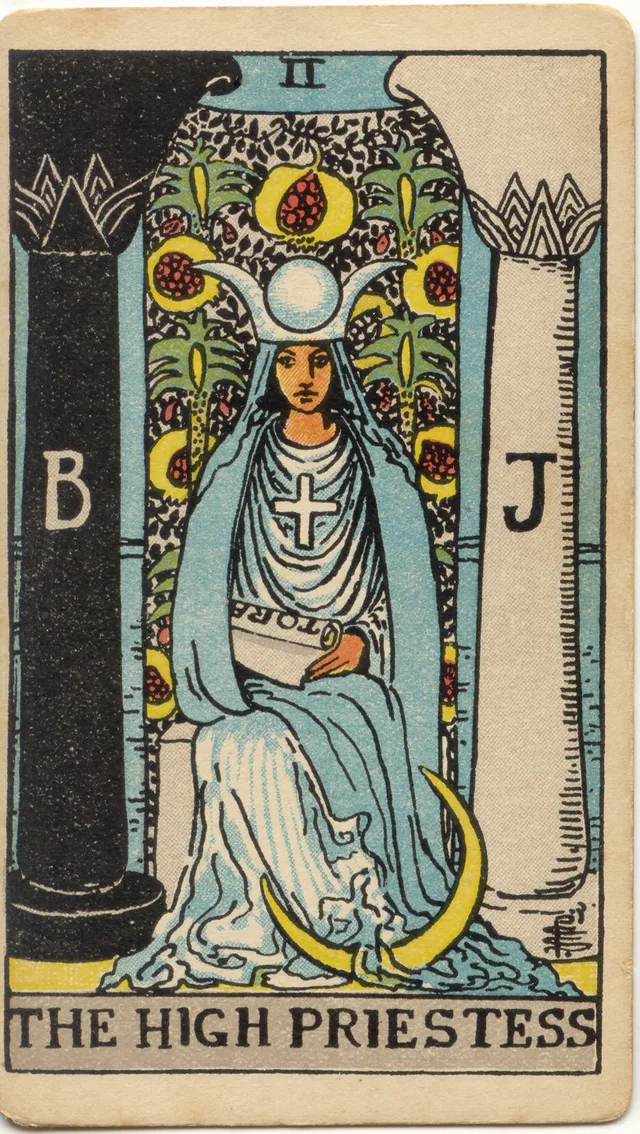
The High Priestess
The High Priestess can add privacy and unanswered questions to the Ace's focus on evidence and direct language.
Read this card's meaning →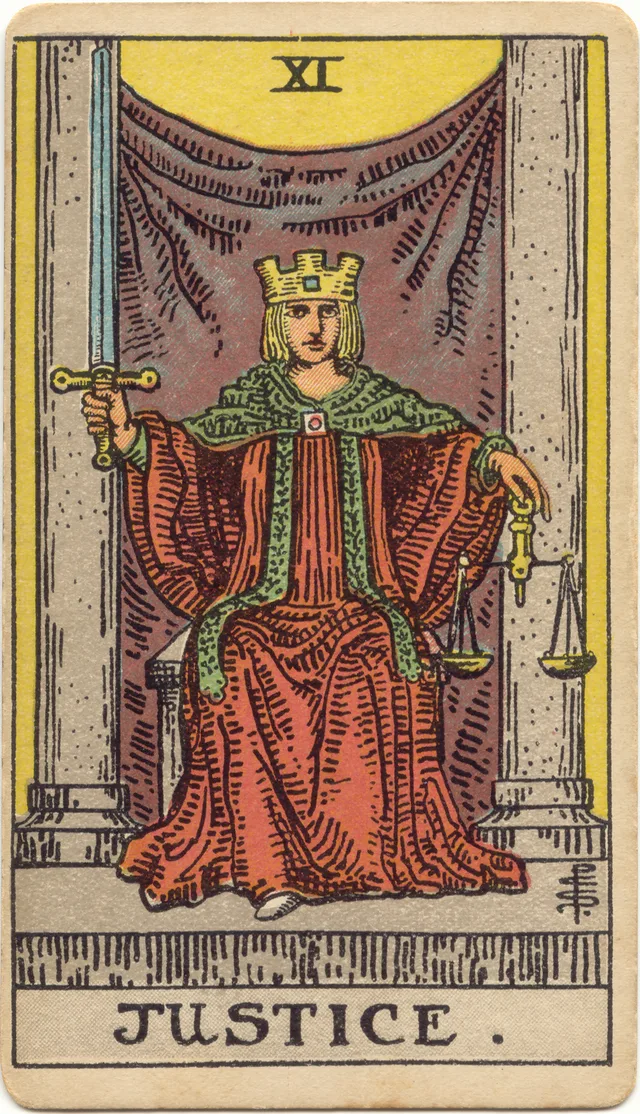
Justice
Justice adds themes of process and accountability to the Ace's focus on exact language; neither card decides a legal or ethical matter.
Read this card's meaning →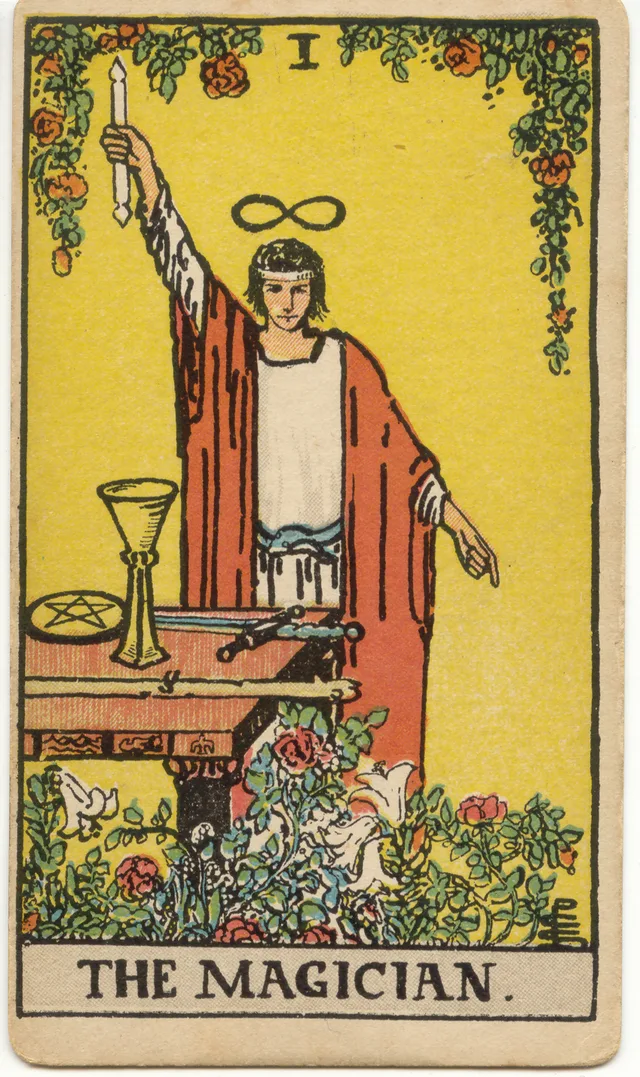
The Magician
The Magician adds themes of skill and communication to the Ace's focus on thought; neither card certifies ability or results.
Read this card's meaning →