Death Tarot Card Meaning
Death is a tarot image for endings, change, and the work of making room for something different. It is not evidence that anyone will die, and it cannot decide that a job, relationship, habit, or identity has finished. Use the image to reflect on what is changing, what needs grieving, and which practical facts would show whether a chapter is actually complete.

What's pictured on the card
A skeleton in black armour rides slowly on a white horse, carrying a black banner marked with a white five-petalled rose. A fallen king lies beneath the hooves while a child, a maiden and a bishop face the rider. In the distance, the sun rises between two towers by a river. Despite its name, the card shows transformation, not literal death, the white rose and rising sun promising that every ending clears the way for new life.
Death upright: the core meaning
Despite the name, Death arrives , marking the close of one chapter so another can begin. Today something is ready to be released, a habit, a role, a way of thinking that has run its course. Let it go without a fight; endings clear the ground for what really wants to grow.
You may feel today that something has run its course, even if you're not ready to say so out loud yet. There can be a bittersweet ache in that, a chapter closing, a version of you being outgrown. Underneath the reluctance to let go sits a truer sense of relief, waiting patiently on the other side. What's ending isn't so much a loss as a making-room, and part of you already knows it's time.
Consider whether an ending is actually supported by the facts before releasing a habit, role, or way of thinking. At work, compare a stale approach with a safer alternative. In love, discuss an old resentment or expectation instead of assuming release is the answer. With money, review terms before closing an account or cancelling a cost. If a family dynamic has shifted, name what changed and set a boundary if needed. Grief and possibility can coexist; a card cannot guarantee what will grow next.
Three simple ways to work with this card
- Name one thing that's clearly over, and let yourself feel the ending fully before you try to move on.
- Release a small habit or belief that no longer fits, and notice the quiet room it frees up.
- Clear out one physical space today, a drawer or your inbox, as a small, hands-on ritual of letting go.
What are you ready to let end so that something new can begin?
Every symbol, explained
The pace of the horse. The white horse walks with its head level and reins loose rather than charging. The measured movement can represent gradual change or a process that needs attention over time. It does not show that an ending has been approaching in your life or set a date for one.
The white rose on the black banner. Five white petals sit on a black banner. The rose also appears with the Fool, and some readers associate five with change. The contrast can support discussion of loss, dignity, and a new perspective, but the banner cannot establish pure intentions, motives, or the absence of harm in a real situation.
The four figures on the ground. A fallen king, a bishop, a kneeling maiden, and a child with flowers respond to the rider in different ways. The scene can represent social position, belief, fear, and curiosity as different responses to change. It does not prove that any person will react in a particular way; ask what response the reader recognises and what support is available.
Black armour, and the sun between two towers. A skeleton wears black armour, while the sun sits between two towers with a river running towards it. The contrast places stark change beside a distant source of light. It can help a reader discuss what may become possible after a transition, but the image does not promise relief or an outcome.
Thirteen, and Scorpio. Death is card XIII. Some numerological traditions use thirteen to discuss a change after a completed cycle, and astrological traditions associate the card with Scorpio. These are symbolic systems, not evidence that a chapter is finished, fixed, or beyond discussion. The reader still needs practical facts about what is changing.
The upright meaning in detail
The central theme is that an ending can be worth examining without calling it a failure. A marriage, business, role, or identity may change for many reasons, but the card cannot show that it has completed or that continuing is impossible. Review what is ending, what remains open, and what practical evidence supports the description.
When Death appears, people may recognise their own concern about change. That recognition is not confirmation that an ending is underway. Ask what the reader has observed, what has been communicated, and what remains uncertain rather than treating the image as an announcement.
It can also provide language for the work around a transition: redirecting post, separating accounts, updating records, changing routines, or renegotiating friendships. Some practical tasks take an afternoon and others take months. The card cannot set that duration; make a list of responsibilities and seek support where needed.
Death is not evidence that anyone will die. In twenty-five thousand readings, I have never read this card as a physical death, and responsible tarot practice should not use an image to make a claim about someone's lifespan. It can be a symbol for change, grief, and release, while the reader decides what the facts of their situation show.
The reversed meaning
A common reversal theme is resistance to change. A relationship, role, or friendship may feel unsustainable, but the card cannot establish that everyone agrees or that ending it would cost less. Identify what has actually been said, what obligations exist, and what alternatives or support are available.
The second is an ending that was acknowledged formally but not emotionally processed. Papers may be signed and a desk cleared while grief, anger, or relief still needs attention. The card cannot predict that feelings will surface later; give them space through supportive conversation or qualified care if they interfere with daily life.
The third is a stalled transition: change began but practical steps remain unfinished. Belongings may be in storage, a business may be neither closed nor restarted, or a new identity may have been announced without support for living it. Make the remaining decisions specific instead of assuming the card explains the delay.
A gentler reading is a change in how someone is relating to an ending. The person may now be able to describe it with less resistance, though the card cannot establish acceptance or recovery. Look for the reader's own words and behaviour rather than treating the reversal as proof.
I read reversals as prompts for context rather than fixed answers. If someone is frightened, the card does not show that the worst has passed. If a decision has been revisited for years, ask about barriers, obligations, and support rather than assuming refusal. In a past position, it can support reflection on a loss that still affects the present, without diagnosing how it was processed.
In love & relationships
If you're single, Death can frame a review of dating patterns, expectations, or a previous relationship. It cannot establish that a pattern has ended or that an ex will change. Compare what you have observed, what you want now, and what boundaries would support future connections.
In an established relationship, Death does not automatically mean a breakup. It can provide language for a changed routine, role, city, parenting stage, or understanding of the partnership. The card cannot show that a relationship can adapt or that both people want the same changes; discuss needs, consent, and practical choices directly.
If a relationship may be ending, the card cannot reveal that fact or explain either person's motives. Look at explicit conversations, repeated behaviour, safety, and the practical consequences of staying or separating. Two people may need support to discuss a relationship that no longer meets their needs without turning the reading into a verdict.
A difficult conversation may need clear language about what has changed and what each person wants next. That does not require an immediate final decision or a confrontational setting. If safety is a concern, use appropriate support and do not treat the card as permission to confront someone.
Change can bring relief, grief, or both; the question is what the facts and the people involved are ready to acknowledge.
- Naming what has changed instead of relying on implication
- Making room for grief, relief, or uncertainty without a deadline
- Reviewing a dating pattern before repeating it with someone new
- Discussing who each person is now and what the relationship requires
- Trying to restore an arrangement without checking whether everyone still wants it
- Replacing a changed arrangement quickly just to avoid uncertainty
- Staying because of the years invested rather than the years ahead
- Cutting someone off in a temper and calling it a clean ending
Career
On a job hunt, Death can frame a change in professional direction or a need to stop pursuing roles that no longer fit. It cannot show that an industry is finished for you or predict how an interview will go. Compare skills, finances, training, values, and actual openings before changing course.
In a workplace, Death can help a reader discuss restructures, redundancies, a dissolved team, or a rewritten role as possibilities that require evidence. It cannot show that a change is coming months before an announcement. Keep work documented, contacts current, and finances reviewed when those are sensible precautions, not because the card has predicted a change.
On quitting, the card is not a yes or no. One reflective test is to picture the role in eighteen months and record the concerns that arise, then compare them with finances, alternatives, workplace facts, and support. A strong feeling is information to examine, not proof that leaving is right.
Money
In money questions, Death can prompt an audit of recurring costs that no longer serve your current life: subscriptions, storage, unused classes, or an expensive arrangement. The card cannot show that a cost is unnecessary. Review statements, cancellation terms, replacement needs, and financial priorities before changing anything.
On debt, it can frame practical questions about repayment plans, consolidation, settlement, or the formal end of an arrangement. It cannot establish that a plan is affordable or appropriate. Check written terms, fees, credit effects, and qualified debt advice, and keep any agreed dates documented.
Because Scorpio is associated with shared resources in some astrological traditions, readers may discuss inheritance, insurance, settlement, or a buyout. The card cannot show that money is arriving or predict a person's feelings about it. Verify documents, tax duties, deadlines, and professional advice before deciding how to use funds.
Health & wellbeing
Death is not a health prediction and should not be used to infer illness, recovery, or lifespan. As a reflection theme, it can help someone review a habit, schedule, or coping method that no longer fits their life. Symptoms, risk, and qualified clinical guidance—not the card—show what needs to change.
For emotional wellbeing, the image can support reflection on grief, fatigue, and the strain of a transition. It cannot explain sleep, appetite, energy, or mood changes, and cannot promise that they will pass. If something in your body or mind worries you, contact a qualified practitioner and use practical support.
Life events & big decisions
On a move, Death can frame the emotional and practical work of leaving a family home, selling a property, or relocating. The card cannot establish that a move is one-way or advisable. If a ritual helps, choose one that fits you; also review housing, finances, immigration rules, support, and a fallback plan.
Around weddings, Death can symbolise changes in name, household, routines, or family roles; it is not a bad sign or a prediction about the marriage. Around divorce, it can prompt attention to clear communication and formal arrangements, while legal advice, safety planning, and each person's consent determine how to proceed.
In bereavement, the image can give language to grief and the changes that follow a death. It does not offer a timetable, lesson, or promise that missing someone will stop. Support from trusted people, grief professionals, and practical services may help; allow the bereaved person's experience to guide the pace.
Contracts, deals & signatures
Death can make an existing agreement the focus rather than a new signature: notice, a surrendered lease, or a dissolved partnership. The practical question is how to finish it formally. Record termination dates, final invoices, continuing clauses, and any required notice in writing, and obtain legal advice where appropriate.
When signing something new, review what it changes: exclusivity may limit other work, an ownership clause may transfer what you built, and an exit term may restrict later choices. The card cannot identify the cost; list it from the agreement and ask a qualified adviser about important consequences.
Some traditions associate Death with one to three months, but the card cannot set that window or show that another matter will close first. Review actual deadlines and dependencies. Do not sign an agreement that depends on ending something until the existing arrangement is formally understood and any required termination is documented.
Entrepreneurship & business
For starting something, Death can frame the practical question of whether an older venture or project needs to be closed, paused, sold, or resourced differently. It cannot show that the older project is failing or that stopping it is right. Review revenue, obligations, capacity, and alternatives before making a change.
For growth, it can prompt an audit of products, clients, locations, or processes that use resources without meeting their purpose. Do not treat the image as a command to cut. Review sales, margin, obligations, staff impact, customer needs, and the cost of stopping before changing the business.
On hiring, the card can frame changes to roles and staffing, including whether a position still matches the business. It cannot tell an owner to dismiss someone or establish that delay is harmful. Follow employment law, document performance and business reasons, and obtain qualified HR or legal advice before acting.
How it shows up in real readings
Neighbouring cards can show which questions to explore, not what kind of ending is certain. Beside The Tower, discuss disruption and what is outside the reader's control without assuming a forced event. With Temperance, discuss adjustment and balance without promising recovery. Following The Hanged Man, examine waiting, perspective, and any information still needed.
A man I read for one autumn went white when this card came out; his mother was ill and he assumed the worst. We discussed the rest of the spread and his own account rather than treating Death as a statement about her health. The surrounding themes led him to consider a family firm he had taken over at twenty-four and run for nineteen years out of duty. He later wound it down that spring, kept two staff for a smaller business he wanted to develop, and said it was the first winter in two decades he had not dreaded January. His mother, for the record, is still going.
What does Death mean in tarot?
What does Death reversed mean?
Is Death a yes or no card for love?
How soon do things happen with Death?
Does the Death card mean someone will die?
If Death has found you, try writing one sentence about what you believe has changed or may be ending. Do not treat the exercise as proof that a chapter is over. If the facts support closure, choose one practical act such as reviewing a notice, returning an item, or sending a respectful message, with safety and consent in mind.
After a change, it may help to leave room for uncertainty rather than immediately replacing one arrangement with another. The sun in the illustration is a visual detail, not a timetable or promise of relief. If you want a short reflective practice, the free daily draw is there each morning.
The Death card can symbolise an ending or transition, not a literal death or guaranteed outcome. If something no longer fits, name what is changing and choose whether to release, revise, or grieve it.
Related cards and themes
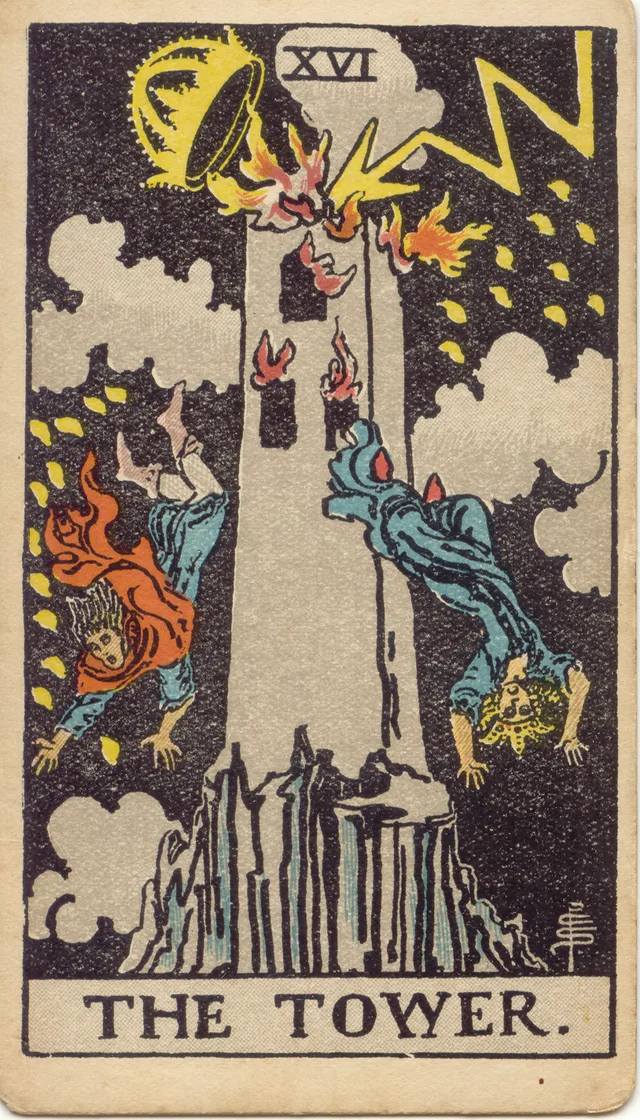
The Tower
Death is commonly read through gradual change and release; the Tower is commonly read through disruption. Neither card establishes how an event will unfold.
Read this card's meaning →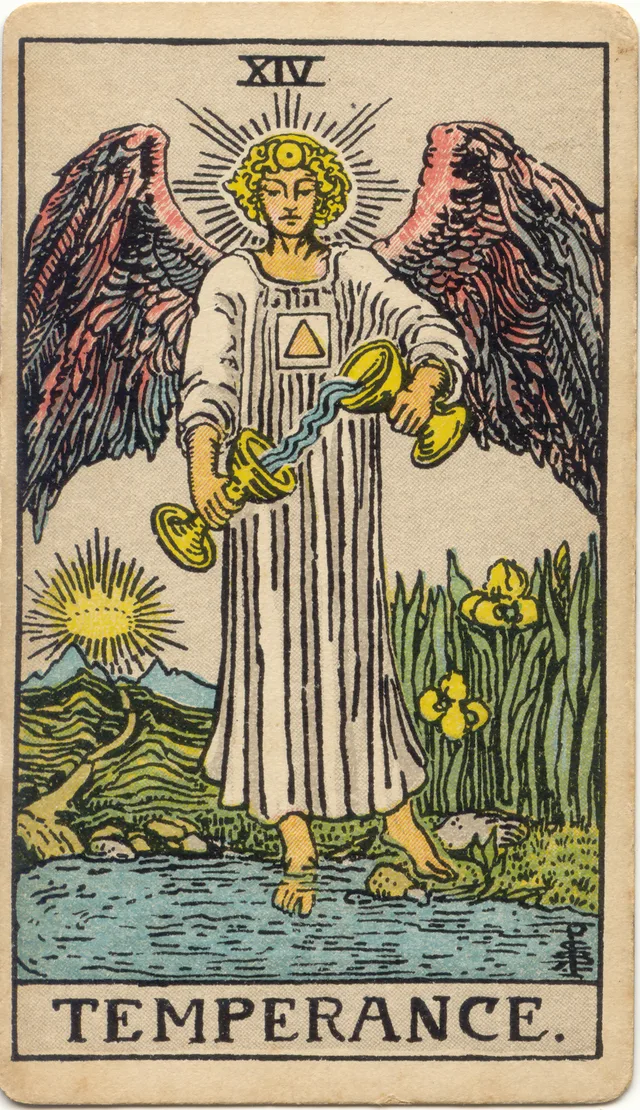
Temperance
Temperance is card XIV and is often paired with Death to discuss adjustment after change, without assuming an ending or recovery is complete.
Read this card's meaning →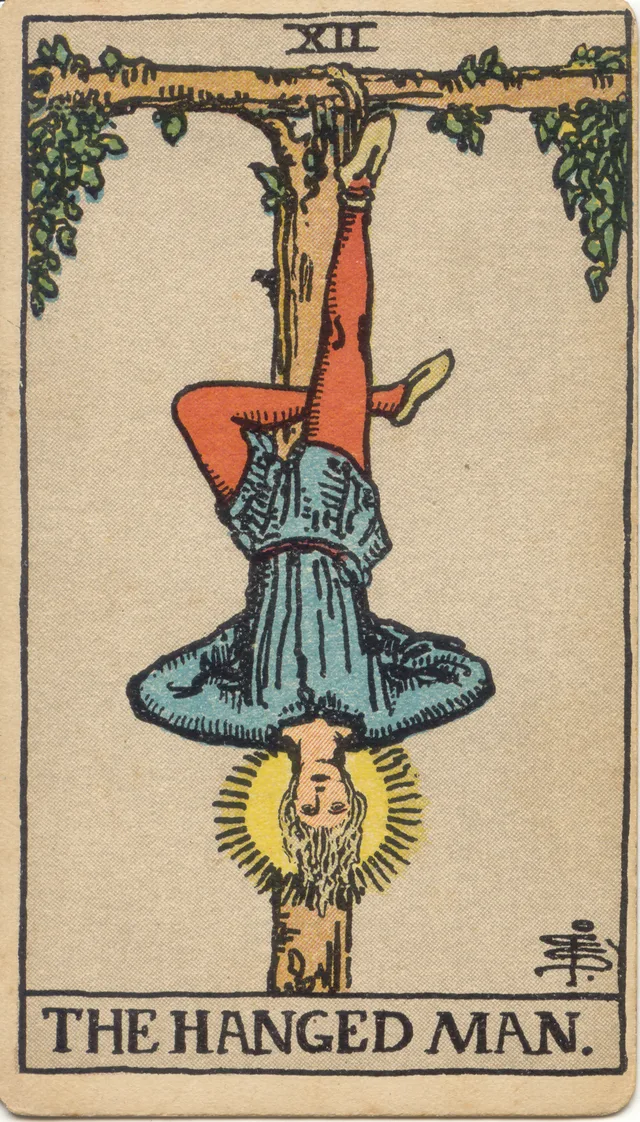
The Hanged Man
The Hanged Man is often paired with Death to discuss waiting, changed perspective, and the question of whether a decision is still unresolved.
Read this card's meaning →