Strength Tarot Card Meaning
Strength uses the careful handling of a lion to explore patience, courage, and self-regulation. It can prompt reflection on a difficult conversation, recurring reaction, or demanding situation, without proving what another person intends or what will happen next. Consider which response is both kind and firm, and what support or boundary the situation requires.

What's pictured on the card
A woman in a white gown, crowned with flowers and a lemniscate of infinity above her head, closes the jaws of a great tawny lion with steady hands. She isn't wrestling it; her touch is soft, almost tender, and the lion leans into her hands without a fuss. A garland of roses loops around them both. The scene shows that true strength is inner, patience, compassion, and quiet courage taming raw instinct far more surely than brute force ever could.
Strength upright: the core meaning
In Strength, a woman closes the lion’s jaws with a soft hand, not brute force. Today's real power is quiet: patience over temper, kindness over control. Whatever feels wild or frightening in your day will settle faster if you meet it with a light touch and keep steady rather than trying to force the outcome.
Something today may be testing your patience, a person, a feeling, a frustration that flares hotter than you'd like. Underneath the urge to react, there's a steadier part of you that knows softness will win where force won't. You might be gentler than you're giving yourself credit for. That flash of temper or fear isn't the enemy; it wants you to meet it with steady breath and clear eyes, not squash it or feed it until it grows.
Meet today's challenges with a soft hand and a steady heart. When something feels provoking, breathe and give yourself room before responding; calm does not guarantee that the situation will settle. At work, answer friction with patience while keeping a firm boundary. In love, choose tenderness without abandoning what you need. With money, pause before a reactive move. If family pushes your buttons, breathe before answering. Gentleness can be strength without requiring silence.
Three simple ways to work with this card
- When something provokes you today, pause and take three slow breaths before you say or do anything at all.
- Speak to yourself about a current struggle the way you’d comfort a frightened friend, with soft words and no blame.
- Approach one difficult person with warmth today, and notice how much faster the tension between you eases.
What in your day would feel easier if you met it with a steady breath instead of pushing hard?
Every symbol, explained
Her hands on the lion. The woman places one hand under the lion's chin and the other on its muzzle. She is not shown attacking it or locking its jaws. The lion's half-closed eyes, visible tongue and lowered tail make the animal look calmer than aggressive. The scene can prompt questions about patient contact with fear or anger, but it cannot prove that a real-life impulse is under control.
The white gown. She wears a plain white gown without armour, a shield or a sword. In symbolic readings, white may suggest openness or simplicity, but it does not mean a person has nothing to defend. The contrast with The Chariot's armour invites comparison between forceful protection and a gentler approach.
The chain of roses. A garland loops from her waist around the lion's neck. Roses can symbolise affection or desire, while the soft garland contrasts with a metal chain. The image invites a discussion of limits that are maintained through attention and consent rather than coercion. It cannot establish that a real-life boundary is safe or effective.
The lemniscate. An infinity symbol floats above the woman's head, as it does above The Magician. It can represent continuity or a capacity developed through repeated practice. It does not prove that patience is limitless or that self-regulation can replace practical support, treatment or a safety plan.
Eight, Leo and the ground. Strength is numbered VIII, and many traditions connect it with Leo, the sign represented by the lion. Those references can frame repeated practice, pride, anger and visibility. A blue mountain rises behind the figures in open golden light, giving the scene space; it does not prove that fear is only internal or that a challenge has become manageable.
The upright meaning, in detail
A central theme is the difference between force and steadiness. Force tries to end a reaction immediately; a steady response creates time to observe, set a boundary and choose an action. The lion is an illustration, not evidence that a person, habit or relationship will soften when treated with care. Consider the actual power dynamics, safety needs and available support before using patience.
Some readers find the card reassuring because it does not frame every challenge as a fight; others find patience frustrating when a direct decision is needed. Strength is not a timing instruction and does not mean 'not yet.' Use it to examine the response you can sustain while still naming a limit or taking protective action.
What it is not saying: patience is not permission to tolerate harm. A calm tone can coexist with a firm refusal, distance, reporting, support or urgent safety planning. The woman is in contact with the lion, but the image cannot tell you to stay near a dangerous person or manage another person's behaviour.
The reversed meaning
Reversed, one reading is an intense response taking the lead: an angry message, impulsive spending, substance use or another habit that interferes with daily life. The card cannot diagnose a pattern or establish its cause. Track what happened, what preceded it and what support or professional care is needed.
The second is control turned into self-attack: appearing composed in public while using harsh internal criticism as discipline. The image cannot show hidden distress or predict a physical consequence. Notice sleep, mood, body signals and self-talk, and seek qualified support when distress or impairment persists.
A third theme is loss of confidence: a boundary is not stated, a difficult conversation is avoided or silence is used to prevent immediate conflict. This may reflect fear, exhaustion, power imbalance or a reasonable wish to pause. Ask what support would make a clear response possible rather than treating silence as weakness.
There is also the martyr reading: patience offered to a situation that only takes. Enduring a pattern is not the same as resolving it. Set a review point, define what change would look like and include an exit or support plan; the card cannot assign responsibility for another person's behaviour.
Read reversals in context rather than as fixed diagnoses. Beside pressured cards, exhaustion may be worth discussing; beside The Devil, attachment or compulsion may be a question; in a past position, an earlier fear may be relevant. None of these pairings proves a cause or a completed recovery.
In love & relationships
If you are single, Strength can prompt a review of openness, standards and boundaries. Some people protect themselves by withdrawing; others agree too quickly to avoid rejection. The card cannot diagnose either pattern. Decide what information, pacing and safety you need before becoming more vulnerable.
In a relationship it can frame a recurring disagreement and the way it is handled. Lowering the temperature may make space for each person to speak, but do not use calm communication to minimise coercion, threats or abuse. Name the concrete issue, the need underneath it and the boundary that must be respected.
A hard conversation may concern drinking, spending, rage or another behaviour affecting a relationship. One person cannot regulate another person's behaviour through patience alone. Discuss responsibility, consent, consequences and professional support, and make a safety plan if needed.
Warmth is most useful when it is paired with clear boundaries, mutual responsibility and attention to safety.
- Saying the frightened thing rather than the cutting one
- Returning to a disagreement after both people have enough capacity to speak safely
- Holding a standard warmly, repeating it without escalating
- Giving yourself the patience you hand out so easily
- Calling prolonged endurance love while the underlying harm remains unchanged
- Winning the argument at the price of the person
- Managing another person's moods so they avoid responsibility for their conduct
- Falling silent and calling that keeping the peace
Career
On a job hunt, Strength can frame composure and self-advocacy alongside practical tactics. Apply for roles where the requirements fit, ask about salary and follow up within professional norms. A rejection is information about one process, not a verdict on your worth, but the card cannot establish why a decision was made.
In the workplace it can frame a difficult interaction. Use a clear repeated boundary, document conduct and involve a manager, union, HR team or other support when appropriate. Calmness does not make someone responsible for managing bullying alone, and the card cannot identify a colleague's motive.
For promotions or resignation, state your request with evidence, a clear ask and appropriate notice. You may choose not to send an angry final message, but do not suppress documentation of mistreatment when reporting is needed. Review rights, finances and support before leaving.
Strength at work also includes knowing when composure is not enough. If a meeting becomes threatening, discriminatory or unsafe, end the interaction, record what happened and use the appropriate reporting or safeguarding route. Calm communication can support an ordinary disagreement; it should not be used to place responsibility for serious misconduct on the person affected.
Money
Money under Strength can frame impulse and the story attached to it. A late-night purchase after a difficult day may be linked to stress, fatigue or habit, but the card cannot establish a cause. Use practical friction, track triggers and seek financial or mental-health support when spending is causing harm.
Possible tools include removing saved cards, waiting a day before purchases over a set amount and keeping an affordable pleasure budget. Test one change against actual spending and revise it without shame. A symbolic image cannot determine which budget or safeguard is appropriate.
For debt, list balances, interest, fees and due dates, then seek qualified debt advice where needed. A regular repayment may be useful, but its amount must fit the actual budget. For a windfall, consider a pause before spending while checking tax, debt and savings needs; the card cannot choose the right allocation.
Health & wellbeing
Traditional associations connect Leo with the heart and spine, but tarot symbolism is not a medical assessment. Stress can affect sleep, muscle tension, heart rate and mood for many reasons. Light movement or breathing may help some people, but persistent or concerning symptoms need qualified medical advice.
For habits, make the plan workable on an ordinary tired day. A short routine may be easier to repeat than an ambitious one, and a missed day can provide information rather than a reason for shame. If you have been overriding symptoms, arrange qualified care instead of using determination as treatment.
For emotional regulation, write down the trigger, the first physical sign, the action you wanted to take and the action you chose. This is not a demand to control every feeling. It is a way to identify patterns and choose support, a boundary or a pause earlier next time. If anger, panic or urges create risk, seek immediate qualified help.
Life events & big decisions
On moves, Strength can frame fear, pacing and practical preparation, but it cannot show that a relocation is right. Review housing, finances, legal status, support and safety. Fear may accompany a good option or a risky one; use evidence and qualified advice rather than treating the feeling as proof.
Around weddings and family occasions, make a plan for difficult interactions: decide what you will discuss, who can support you and when you will leave. A calm response is optional, not a duty to tolerate abuse. You cannot control another person's conduct, but you can choose boundaries and practical protection.
After a loss, Strength can frame the coexistence of grief and daily tasks. You do not have to appear composed to be coping. Let grief be described in your own terms, accept practical support and seek qualified help if symptoms, risk or functioning become concerning. The card cannot set a timetable for mourning.
Contracts, deals & signatures
Strength can prompt a pause between emotion and signature. Excitement, flattery or a sudden deadline may affect judgement, but the card cannot establish that a salesperson is pressuring you. Request time to read, check costs and obligations, and obtain legal or professional advice when needed.
In negotiation, a pause can create room to think, but silence is not always safe or effective. State the request, listen to the answer, record commitments and identify what you will do if no agreement is reached. Do not rely on the card to assess the other party.
For timing, the image can prompt a pause rather than a fixed wait. Read every clause, ask questions and obtain an unpressured review. An offer that expires quickly may still be legitimate or may be unsuitable; verify the terms instead of inferring motive from a deadline.
Entrepreneurship & business
For starting something, Strength can frame acting with uncertainty while keeping the plan practical. A first sales call, price discussion or rejection may feel uncomfortable. Test the idea with evidence, protect finances and capacity, and do not treat discomfort as proof to continue or stop.
A steady business response also includes limits: a response time you can meet, a refund or complaint policy you can apply consistently and a clear point where a client relationship needs mediation. Warmth without a boundary can create overwork, while a boundary without explanation can create confusion. Use the written policy and the facts of the case.
When capacity is low, a calm message can be as simple as naming the delay, the next update and what cannot be done. Clear expectations are kinder than reassuring language that cannot be honoured. Strength is not a promise to remain available; it is a prompt to match care with an honest limit.
That limit can be reviewed when the facts change. Note what was agreed, what was delivered and what support is needed next, then adjust the boundary openly rather than expecting others to guess.
For growth, consistency can be compared with intensity: set a realistic delivery and communication schedule, then review revenue, workload and customer feedback. With a complaint, acknowledge the issue, check the facts and follow the service policy. Calmness may help a conversation, but the card cannot predict retention or numbers.
For hiring and risk, consider skills, references, role fit and how a person handles pressure rather than relying on temperament alone. Set a risk limit that the business can survive and review it with actual figures. If a team is difficult, examine workload, leadership, policies and support before attributing the issue to personality.
How it shows up in real readings
In a spread, Strength can add questions about response style. Next to The Chariot, compare force, direction and patience; the pairing does not prove that patience will change a situation. Next to The Magician, compare skill, preparation and confidence. Beside conflict-heavy cards, discuss communication and boundaries without assuming that staying is safe.
A useful practice example is a parent wondering how to reopen communication with a quiet teenager. A symbolic reading cannot reveal the teenager's motives or promise disclosure. Practical steps might include reducing pressure, offering a private chance to talk, respecting boundaries and involving appropriate family or safeguarding support when there are safety concerns.
What does Strength mean in tarot?
What does Strength reversed mean?
Is Strength a yes or no card for love?
How soon do things happen with Strength?
What's the difference between Strength and The Chariot?
If Strength has appeared, notice the moment before you raise your voice, send a message, spend money or leave a conversation. A three-breath pause can create room to choose, but it is not a substitute for a safety plan or professional support. Review what happened and try again without turning practice into self-criticism.
Extend the same care to yourself without assuming you must cope alone. If you'd like a daily prompt while practising a pause, the free daily draw is there each morning. Keep the prompt alongside real support, boundaries and evidence about what helps.
Strength can frame patience and warmth as alternatives to force, whether the difficulty is another person, a feeling, or a task. Test what actually helps, and remember that the card cannot guarantee control or success.
Related cards and themes
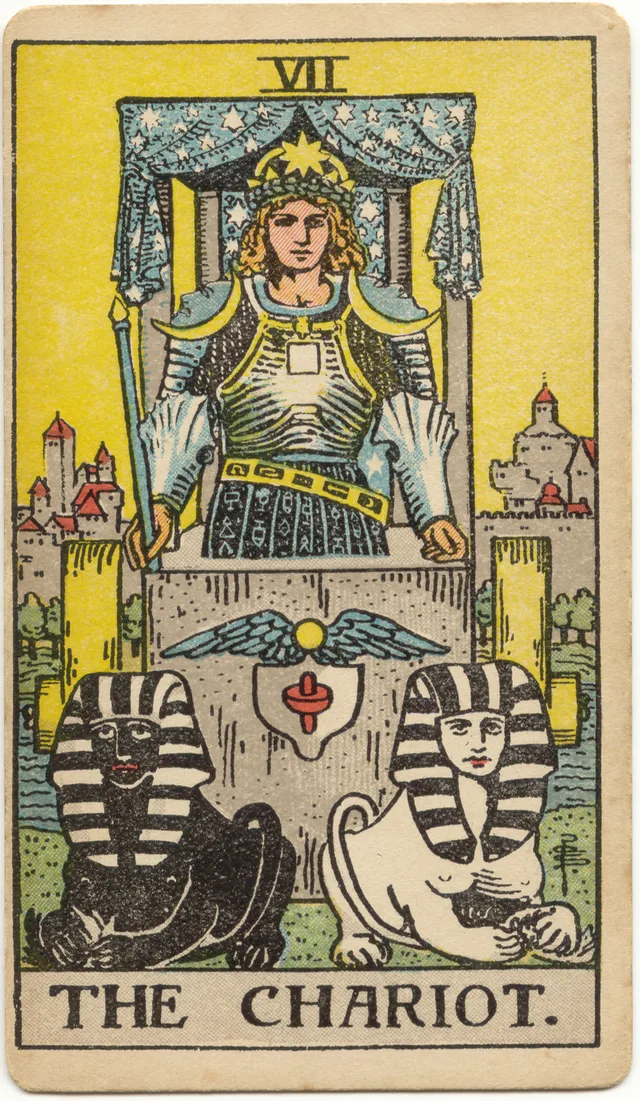
The Chariot
The Chariot examines directed will and visible control; Strength examines patience, self-regulation and a response that does not rely on force.
Read this card's meaning →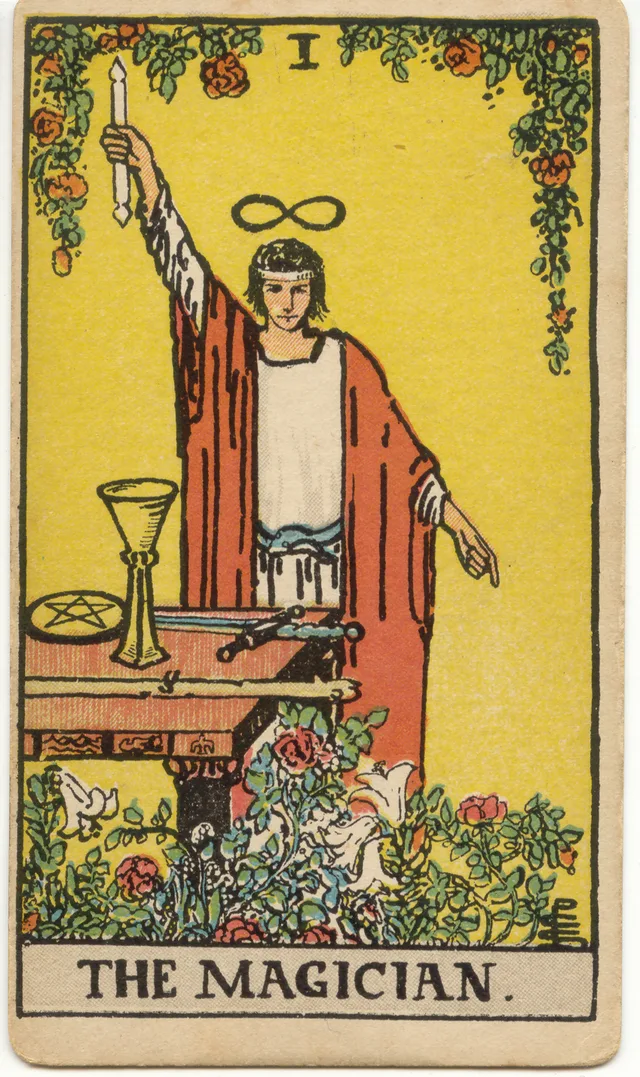
The Magician
Both cards use the infinity symbol in the Waite-Smith deck; The Magician focuses on using tools, while Strength focuses on regulating a strong response.
Read this card's meaning →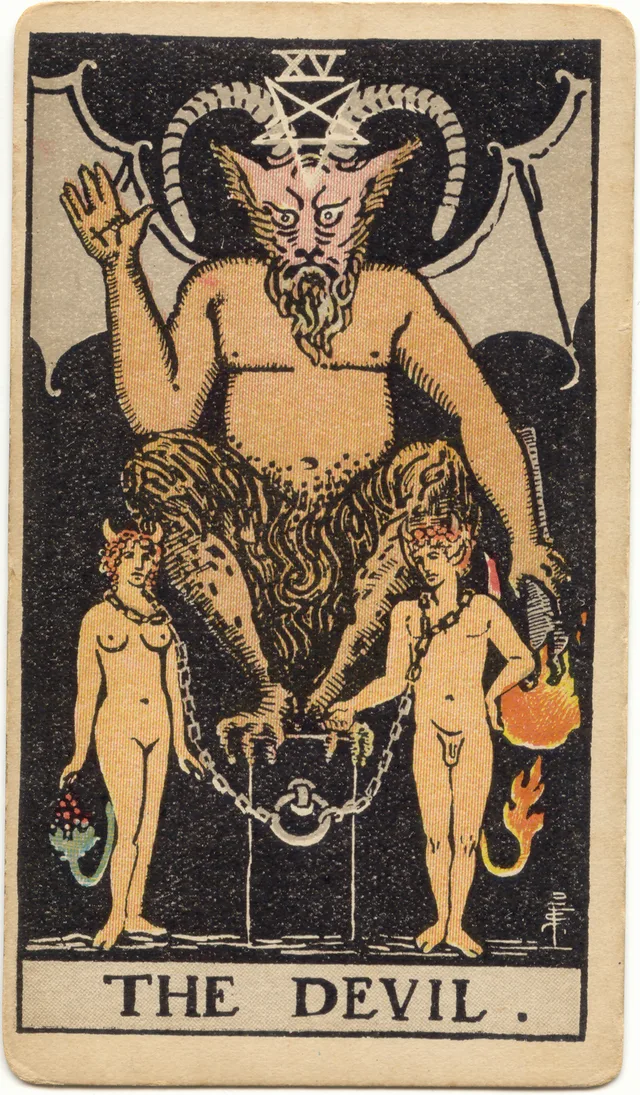
The Devil
The Devil explores attachment and compulsion; Strength explores how a person can notice an intense impulse without treating it as an instruction.
Read this card's meaning →