Queen of Cups Tarot Card Meaning
The Queen of Cups holds a covered cup at the water's edge, combining emotional awareness with deliberate boundaries. The image can prompt reflection on empathy, intuition, and how you care for yourself while supporting others. It cannot establish another person's feelings; notice what is communicated, ask directly, and protect your own capacity.

What's pictured on the card
Enthroned right at the water's edge, the Queen of Cups gazes intently at an ornate golden cup, its handles shaped like little angels. Unlike the other cups in the suit, hers is closed and lidded, her deepest feelings held safe within. Her throne, carved with cherubs and sea imagery, sits on a shore of smooth, colourful pebbles. Sea and sky blur softly behind her. She’s compassion with a face: intuitive, tender, and keenly tuned to the emotional tides around her.
Queen of Cups upright: the core meaning
The Queen of Cups sits by the water, holding an ornate cup, fully tuned to feeling. Today calls on your compassion and emotional wisdom, caring for others while honouring your own tender heart. Trust your intuition; it's especially clear right now. Make room with care, for yourself as much as for anyone who needs you.
You may be feeling everything a little more keenly today, your own moods and other people's alike. Beneath your composed exterior, there's a deep well of feeling and an instinct for what others need before they say it. That sensitivity is a strength, though it can drain you if you tend to everyone but yourself. Part of you longs to be held the way you hold others. Your intuition is unusually clear right now; the trick is trusting it without absorbing every emotion in the room.
Let compassion lead today, for others and especially for yourself. Treat intuition as one perspective to check rather than proof. If someone around you is struggling, ask whether they want listening, practical help, or professional support. At work, read the room while keeping clear boundaries. In love, hold space tenderly only when it is mutual, and let yourself be cared for in return. Notice when you are carrying feelings that are not yours to hold; replenish yourself before offering more.
Three simple ways to work with this card
- Check in with yourself first today, ask what you need, and meet one of those needs before tending to others.
- Offer a struggling friend your full, unhurried listening today, without leaping in to fix, your presence is the gift.
- Notice one feeling you’re carrying that isn’t yours, and set it down instead of holding it all.
How could you show yourself the same compassion you give others today?
What Waite painted and why it matters
The sealed cup. Every other cup in the suit is open, while the Queen's is lidded and held privately, with handles shaped like angels. The detail supports a discussion of privacy and emotional boundaries: not every feeling has to be disclosed immediately. It does not show that a reader's boundaries are healthy or that another person should be excluded.
The gaze. She looks at the cup rather than at the viewer. The inward attention can prompt a pause to identify feelings and needs before responding. It is a visual cue for reflection, not evidence that a person understands an emotional situation or should withdraw from others.
The throne at the water's edge. Her carved stone throne has sea imagery and sits where land meets water. The position can represent holding an emotional experience in awareness while remaining connected to practical circumstances. It cannot establish that someone is grounded, emotionally regulated, or safe in a particular situation.
The blue and white of her robes. Her gown uses deep blue and soft white, colours often associated with water and the Cups suit. The clothing supports the card's visual emphasis on feeling and imagination. It does not establish that a real person is emotionally experienced or comfortable with every feeling.
The pebbled shore. Smooth, coloured pebbles lie around the throne. Their gradual shaping by water can support a symbolic discussion of experience and reflection over time, while the settled shore contrasts with a stormy scene. The image cannot show what a reader has experienced or whether they have recovered from it.
The upright Queen of Cups in detail
The Queen of Cups can represent emotional awareness, empathy, and deliberate boundaries. In practical terms, that means naming your own feelings, listening to what another person actually says, and deciding what support you can offer without taking responsibility for their entire experience. The card cannot establish emotional intelligence, intuition, or another person's feelings.
In a reading, she can describe a person, an approach, or a question about care and communication. Emotional information can sit alongside practical analysis; neither should be treated as a substitute for evidence. Do not use the card to label someone as perceptive, manipulative, safe, or difficult to influence. Ask directly and review observable conduct.
The card can focus attention on self-knowledge when supporting others. A person can listen, offer a defined form of help, and still acknowledge limits on time, money, and emotional capacity. Ask what the other person has requested instead of guessing, and seek professional or emergency support when the situation requires it.
What it is not saying: the Queen is not an instruction to provide unlimited care or to conceal your own needs. Set a clear limit, communicate it, and check whether a request belongs with you or with qualified support. Care that ignores capacity can become unsafe or resentful; the card cannot determine what amount of care is sustainable.
The reversed meaning
The most common reversal can describe giving support beyond available capacity. A person may have difficulty naming fatigue because caring for others has become habitual. Review hours, responsibilities, sleep, money, and available support; persistent exhaustion deserves practical help and qualified health advice rather than a tarot diagnosis.
A second pattern is difficulty separating your own feelings from the feelings you observe in others. Write down what was directly communicated, what you inferred, and what you need; take a break from the situation when possible. The card cannot identify the cause or prescribe a remedy.
The third pattern is interpreting emotional impressions through anxiety: overthinking, anticipating problems, or treating a feeling as proof that something is wrong. Separate observations from interpretations and ask for clarification where safe. The card cannot determine whether an impression is accurate or diagnose anxiety.
The reversal can also prompt a review of emotional information used to control a conversation rather than support mutual understanding. Do not use the card to accuse someone of manipulation. Look for specific conduct, state your boundary, and seek support if the interaction feels coercive or unsafe.
In love & relationships
If you're single, the Queen can prompt clear standards for emotional communication and reciprocal care. Notice whether a potential partner listens, respects boundaries, and responds to what you actually say; the card cannot establish that a person is genuine or emotionally perceptive. Take time to decide what you need rather than accepting less from loneliness.
In an established relationship, the Queen can focus attention on listening through difficult feelings while keeping each person's responsibilities clear. Ask directly for the care, time, or reassurance you need; do not assume a partner can infer what you are carrying. Safety and trust are assessed through consent, communication, conduct, and appropriate support, not through the card.
Emotional attention can support partnership when care, communication, and boundaries are mutual.
- Attentive listening to what a partner chooses to share
- Clear agreements about how feelings and disagreements can be expressed
- Asking what a partner needs instead of assuming
- A willingness to discuss support during difficult periods without promising unlimited capacity
- Giving more than is sustainable and then being depleted into resentment
- Expecting a partner to intuit needs that have never been spoken
- Taking responsibility for the emotional climate of the relationship single-handedly
- Confusing understanding someone with accepting behaviour that isn't working
Career
In career readings, the Queen can prompt research into counselling, therapy, pastoral care, mentoring, teaching, healthcare, creative direction, and other roles involving careful communication. Emotional awareness may be relevant, but the card cannot establish qualification or fit. Compare training, supervision, workload, pay, boundaries, and the actual role requirements.
In a workplace, the Queen can represent attentive listening, respectful de-escalation, and noticing when a colleague has communicated a concern. Do not assume what someone feels or take responsibility for fixing it. Document contributions, clarify role boundaries, and use workplace procedures for serious issues.
In a high-demand people-facing role, review supervision, workload, breaks, working hours, and access to qualified support. Relationships outside work can provide connection, but the card cannot prescribe therapy or establish that a particular schedule is sustainable. Use actual symptoms, capacity, and employment guidance to make changes.
A beginner-friendly way to apply this theme is to separate listening from solving. If a colleague, friend, or relative shares a difficult experience, first ask whether they want attention, practical help, or information about services. Reflect back the request in plain language, offer only the help you can actually provide, and agree when you will check in again. If the subject involves medical risk, abuse, self-harm, or an urgent crisis, contact an appropriate professional or emergency service instead of trying to manage it alone. Emotional sensitivity can guide a respectful question, but the person's words and the relevant service determine the response.
Money
With money, the Queen can prompt a comparison between values and financial facts. A person may wish to support meaningful work or price care-based work fairly, but the card cannot set a fee or prove value. Review costs, time, market information, obligations, and qualified advice before deciding.
It can also prompt a check for financial decisions driven by guilt: paying more than planned, undercharging a client, or absorbing costs to avoid a conversation. State the price and limits in writing, review affordability, and distinguish voluntary generosity from an obligation created by pressure.
Health & wellbeing
In wellbeing readings, the Queen can prompt a review of emotional rest, workload, supportive relationships, and activities that reduce strain. Ask what is currently draining capacity and what practical change is possible. The card cannot establish a health deficit or decide what treatment or routine is appropriate; reported symptoms and qualified care matter.
It can also support consideration of journaling, meditation, art, time in nature, or quiet time if those activities suit the reader. Solitude is not automatically restorative, and the card cannot identify a person's emotional needs. Choose practices based on preference, access, safety, and qualified guidance where relevant.
Life events & big decisions
Around major decisions, the Queen can prompt attention to emotional effects alongside practical facts. A feeling may identify a question or boundary worth investigating, but it is not evidence of another person's motives or a forecast of consequences. Compare it with observable conduct, options, resources, and likely effects.
Around caring decisions, such as supporting someone through illness or family commitments, the Queen can focus attention on consent, role limits, and practical support. Decide how much time, money, and emotional labour you can offer, and involve qualified services when needed. The card cannot determine what another person needs or how long support will last.
Contracts, deals & signatures
The Queen of Cups near a contract can bring care arrangements, therapeutic or coaching work, and artistic collaboration into focus. The card cannot assess whether another person is trustworthy. Treat comfort or discomfort as a prompt for questions, then rely on written terms, references, observable conduct, and independent review.
A welcoming relationship can make written terms feel unnecessary, but feelings do not verify trustworthiness or replace a contract. Put expectations, payment, privacy, duties, limits, and cancellation terms in writing, and use appropriate professional review regardless of the emotional tone.
Entrepreneurship & business
For founders and business owners, the Queen of Cups can prompt a values-led approach to service, communication, and workplace culture. Do not assume clients or employees share those values or that care will produce growth. Use clear policies, feedback, retention data, and financial records to assess the business.
A practical challenge for a care-oriented founder is separating kindness from unpaid or unlimited labour. Set prices, working hours, scope, referral boundaries, and cancellation terms, then review whether accounts support the service. An operations lead or adviser can help, but the card cannot establish that any business model is sustainable.
How this card sits in real spreads
The Queen of Cups alongside The High Priestess can prompt private reflection plus careful attention to feelings; neither card proves that an unseen explanation is correct. With The Empress, compare emotional care with practical or creative support. With Strength, consider patience and self-control without treating the pair as evidence of anyone's character or capacity.
The Queen of Cups can be relevant when a reader reports carrying many emotional responsibilities for family, colleagues, or friends. Rather than treating the card as proof of exhaustion or its cause, list the duties, hours, requests, and available support. The useful question is who can share the work and what boundary can be communicated.
What does the Queen of Cups mean in tarot?
What does the Queen of Cups reversed mean?
Is the Queen of Cups a yes or no card?
What does the Queen of Cups mean for self-care?
Does the Queen of Cups represent a specific person?
If the Queen of Cups has arrived in your reading, ask: what do I feel, what was actually communicated, and what do I need? Write the answers separately so an impression is not confused with evidence. Then decide which boundary, request, or source of support fits your circumstances.
If support is available and welcome, consider accepting a specific offer or asking directly for one. If you'd like a daily moment to note feelings and needs, the free daily draw is there each morning. Use it as reflection, alongside direct conversation and qualified care when needed.
The Queen of Cups can represent emotional awareness with boundaries. The covered cup suggests that care for others need not mean constant access; check your own capacity before offering support, and let generosity include yourself.
Related cards and themes
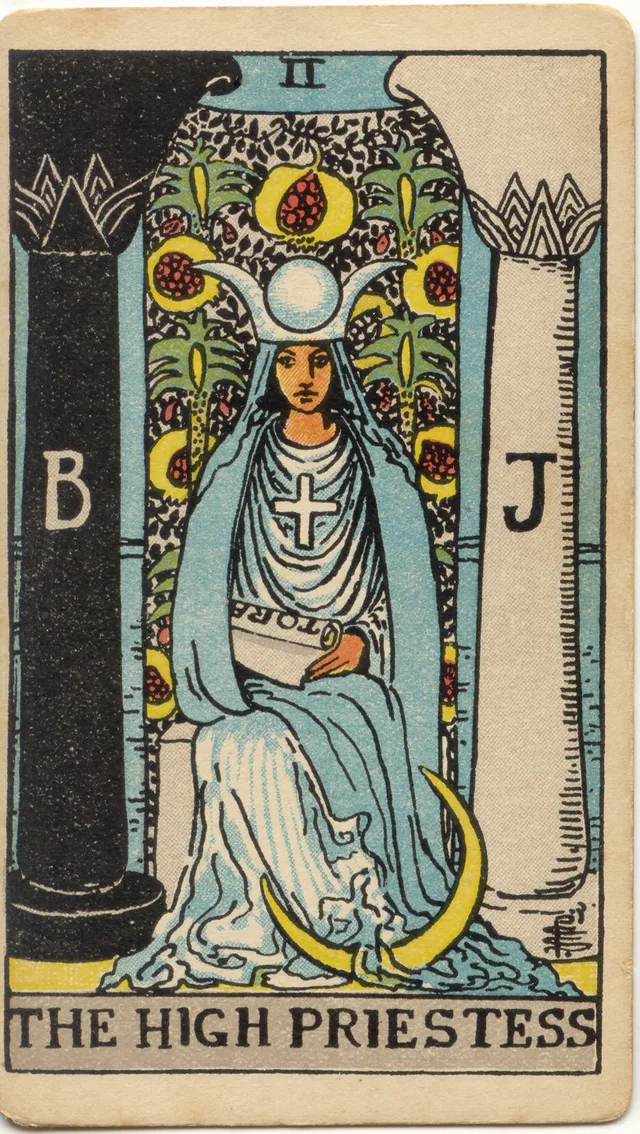
The High Priestess
The High Priestess emphasises private reflection and the Queen of Cups emphasises emotional awareness in relationship. Together they can support a pause to notice feelings without treating intuition as proof about another person.
Read this card's meaning →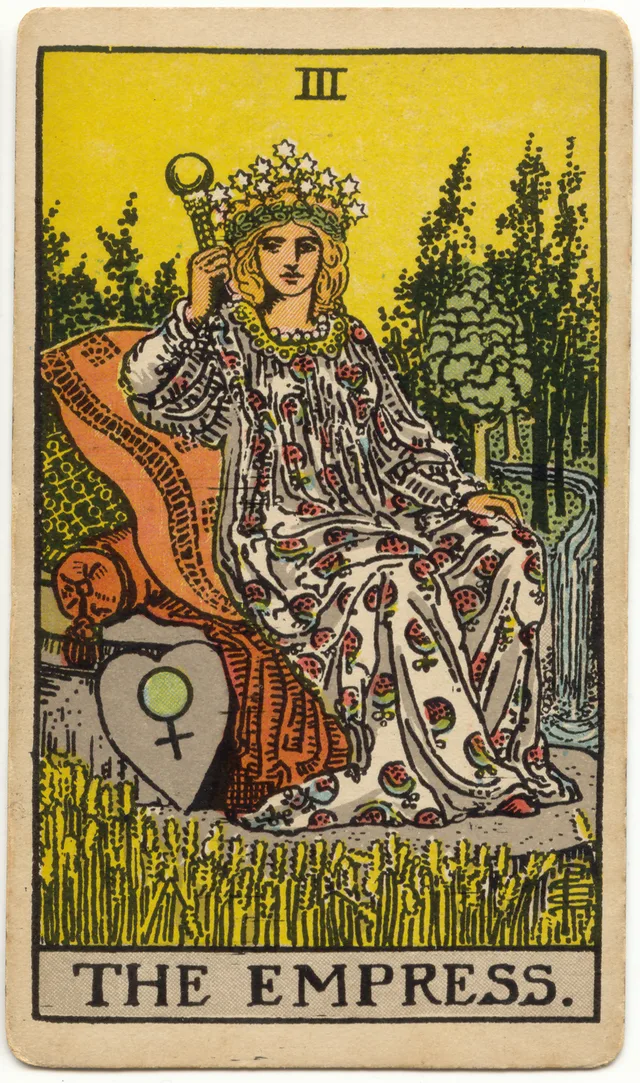
The Empress
The Empress focuses on generative care and the Queen of Cups on emotional attention. Read together, they can prompt questions about both practical support and the feelings involved, without making either card evidence of an outcome.
Read this card's meaning →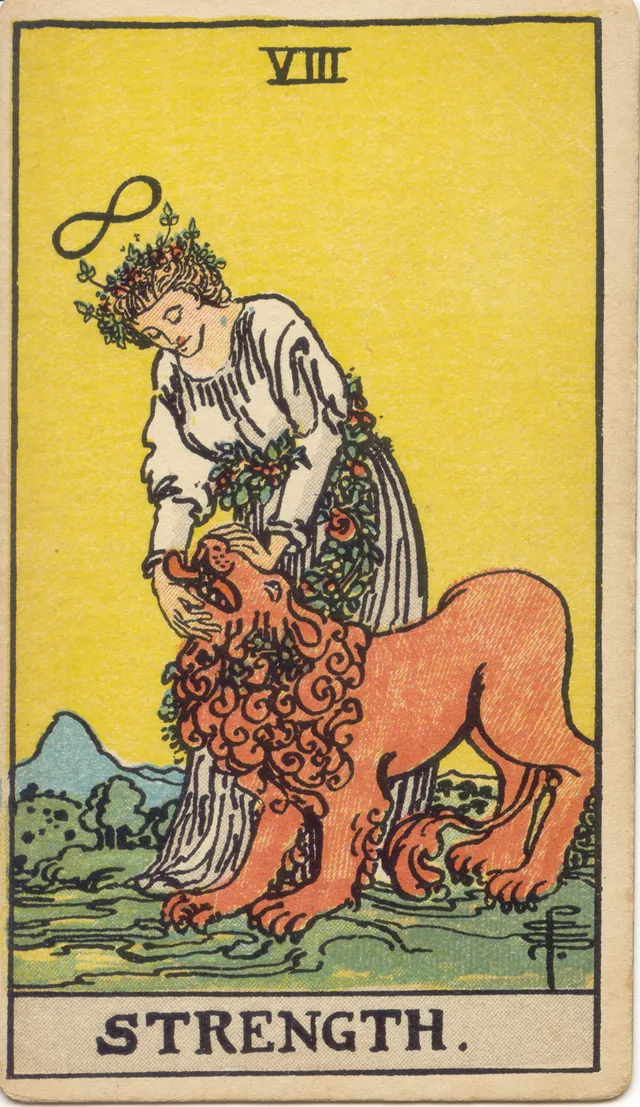
Strength
Strength considers patient self-control, while the Queen of Cups considers emotional awareness and boundaries. Together they can invite reflection on responding to strong feelings without suppressing them or taking responsibility for someone else's feelings.
Read this card's meaning →