Five of Pentacles Tarot Card Meaning
The Five of Pentacles depicts financial, physical, or social hardship alongside a lit window that can represent support. It can help name isolation without treating struggle as a personal failure, but it cannot prove that help is available or assess health, housing, or money needs. Check practical resources and ask for appropriate support.

What's pictured on the card
Two figures make their way through falling snow, ragged and cold, one leaning on crutches with a bandaged leg, the other barefoot and huddled in a thin shawl. Just above them glows a stained-glass church window lit kind from within, marked with five pentacles. They pass beneath it without looking up. The image holds both the ache of hardship and the quiet truth that shelter is nearer than the weary can always see.
Five of Pentacles upright: the core meaning
In the Five of Pentacles, two figures trudge through the snow past a lit, stained-glass window they haven't noticed. Today may feel lean or lonely, but help is nearer than it looks. Don't suffer in silence. Warmth and support are just through a door you've been walking past; it's alright to ask and to lean on someone.
You might be feeling a little left out in the cold, worried about money, health or simply whether you're managing, and reluctant to let anyone see how much you're struggling. There can be a stubborn pride here, a belief that you ought to cope alone or that asking would be a burden. That's a heavy thing to carry . But under the worry is a longing to be kind again, and a part of you ready to be helped.
Be tender with yourself today; hard stretches are not proof that you've failed. Lift your eyes and reach out in a way that is safe: tell a friend the truth, check the support you qualify for, or book an appointment you have delayed. At work, it is all right to admit you are stretched and need a hand. With money, look for one practical resource rather than coping alone. Let people show up for you, and use warmth, food, and rest as care rather than evidence that a difficult season must pass on a particular schedule.
Three simple ways to work with this card
- Tell one trusted person how you're really doing today, even if your instinct is to say you're fine.
- Look up one practical support you've been avoiding, a helpline, a benefit, an appointment, and take the first step.
- Offer yourself one small warmth today, a hot meal, a blanket, an early night, without calling it indulgence.
What support is closer than you think, if you let yourself reach for it today?
What Waite-Smith painted and why it matters
Two figures in the snow. They walk through falling snow in clothing that offers little protection. One uses crutches and has a bandaged foot; the other is barefoot and wears a thin shawl. Neither is lying down, but the image shows physical discomfort, limited resources and continued effort. Their movement can support a discussion about getting through a hard period, without proving what is happening in a reader's life.
The stained-glass window above them. A church window is lit above the figures and marked with five pentacles, while neither person looks towards it. The contrast can raise a practical question about whether a person knows where to seek help or feels able to ask. The painting cannot establish that a service exists, is welcoming, or is accessible in a real situation.
The church setting. Churches in Waite's world could serve as centres of community welfare, where people might seek food or shelter. That historical association makes the window a useful prompt about institutional and community resources, not proof of rescue. In a present situation, identify actual services, eligibility and access directly rather than treating the painted building as a real referral.
The physical disabilities. The crutches and bandaged foot give the scene a bodily dimension as well as a material one. They make the vulnerability specific in the illustration, while the card cannot diagnose an illness, assess a disability or identify what assistance a reader needs. Those questions belong to the person's account and appropriate practical or clinical support.
The number five. In tarot, five is often used for disruption after the relative stability of four. In Pentacles, that convention directs attention to money, physical circumstances, work and belonging. It is a way to frame questions about change, not evidence that a reader is in crisis or that a difficult period will end.
The upright Five of Pentacles in full
The Five of Pentacles gives an image for hardship, exclusion and worry about material circumstances. It does not soften those subjects, but it also cannot establish that they are happening to the reader. Someone may recognise the scene in financial strain, poor health, insecure housing or social isolation; someone else may find it useful for discussing a fear rather than a current fact. Let the reader's account and observable circumstances decide which, if any, fit.
The lit window creates a contrast with the figures outside. It can prompt an inventory of practical support: a community service, a trusted friend, a professional adviser or a benefit that may be relevant. The illustration cannot tell us whether any option exists, whether it is affordable or why someone has not used it. Shame, exhaustion, limited information and access barriers are possibilities to discuss rather than motives the card can reveal.
The image can be applied beyond money, including social exclusion, insecure work, unsupported illness, emotional isolation or distance from a community. In each case, translate the picture into concrete questions: what is difficult, who has been asked, what support is confirmed, and what barrier needs addressing? That keeps the symbol connected to the person's actual circumstances rather than turning the window into an assumed solution.
What it isn't saying: that hardship is a personal failure, that positivity replaces practical help, or that a difficult situation is secretly fine. The figures are visibly exposed to cold, but the painting cannot tell us what a real reader has experienced. It can support a compassionate conversation about needs and possible resources while leaving verification and choice with the reader.
The reversed meaning
Reversed, recovery, changed resources and renewed belonging can be symbolic themes. The card cannot show that support is arriving, health is improving, financial pressure is lifting or a turning point has begun.
A second reversal theme is continued scarcity thinking after circumstances change: avoiding every expense, expecting loss despite stable figures, or finding it hard to trust an improvement. The reader's financial records and reported experience, not the card, show whether circumstances have changed and how anxiety relates to them. This can be compared with the Four of Pentacles' themes of control and conservation.
Another possible theme is changing one's relationship with a community: reconnecting with a family, faith tradition or professional group, or looking for a different group. The card cannot establish that acceptance has occurred. Ask what contact, consent and conduct show about belonging, and whether the reader actually wants renewed involvement.
A shadow reading is difficulty being denied or minimised, either by the person experiencing it or by people around them. The reversed image can prompt the question, 'What has not been named yet?' It cannot establish hidden suffering or a recovery phase. Ask permission, listen to what the person reports and use appropriate support if there is a concrete concern.
In love & relationships
For someone single, the Five can provide language for loneliness or feeling excluded while others appear partnered. It does not establish that isolation is present or suggest that a relationship is the remedy. Ask what connection the person wants now—friends, family, community or dating—and what forms of support are actually available.
In an established relationship, the Five can evoke distance, unequal access to support or the strain of a financial or health crisis. It cannot establish either partner's feelings or say whether the relationship is safe or supportive. Ask directly about needs, resources, communication and consent, and take concrete concerns seriously.
Financial difficulty can affect a relationship through arguments, withdrawal, shame or practical disagreements. Those are possibilities to check against what each person says and does, not motives supplied by the card. Direct conversation, clear boundaries and suitable financial or relationship support are more reliable than managing the situation from a distance.
Material or health strain can change how two people communicate and share support; the card invites questions rather than a verdict about the relationship.
- Real vulnerability shared during a difficult stretch, which builds unusual closeness
- Discovering together what actually matters when resources are stripped back
- A couple who can discuss a lean time and agree how to share practical support
- Asking your partner for help rather than pretending everything is manageable
- Financial stress expressing itself as distance rather than honest conversation
- Difficulty endured in parallel rather than faced together
- Shame that prevents asking for the very support the relationship exists to provide
- A partnership in which one or both people cannot discuss practical needs openly
Career
Professionally, the Five can frame redundancy, a role not being renewed, a contract ending without a follow-on, or an industry downturn that narrows familiar routes. It cannot establish that any of those events has occurred. If the reader reports a disruption, ask which support is confirmed: contacts, retraining, worker advice, benefits or other resources with clear eligibility.
Another theme is feeling excluded from opportunities or recognition that colleagues appear to receive. The card cannot distinguish discrimination, oversight, workplace structure, confidence or incomplete information. Compare assignments, criteria, written feedback and policies, then seek appropriate workplace support rather than letting the image decide what happened.
For someone describing a past career disruption, a past-position Five can help organise what was learned about budgeting, applications, boundaries or support. It cannot establish that the disruption is over or that resourcefulness resulted. Use the person's account and current work evidence when considering next steps.
Money
The Five is one of the suit's clearest images for financial pressure. Loss of income, unmanageable outgoings and several smaller problems can all be discussed through the scene, but the card cannot establish debt, poverty or duration. Start with income, essential costs, arrears, benefits and any urgent safety issue.
In a financial reading, it can prompt a practical check of support: debt advice charities, benefits and entitlements, food banks, employer assistance programmes or hardship funds. The card cannot show that a particular service exists or that someone qualifies. Confirm availability, eligibility and safety directly, and avoid framing the need for help as a test of effort or character.
If the reader reports a financial crisis, specialist help may be useful: a debt counsellor, benefits adviser or reputable financial charity can explain options. This is practical guidance independent of tarot. Confirm the provider and terms, and involve emergency or safeguarding services when an immediate safety concern is present.
Health & wellbeing
In health territory, the image can open a conversation about physical difficulty, access to care and managing symptoms without support. It cannot diagnose, measure severity or show that an appointment has been postponed. Ask what the person is experiencing and what care is available; qualified clinicians should guide assessment and treatment.
For mental wellbeing, isolation can be a discussion theme, especially when privacy has reduced access to support. The card cannot assess risk, severity or whether isolation is causing harm. Ask what contact feels safe, listen without pressure and use qualified mental-health or crisis support when the person's report calls for it.
Life events & big decisions
Around major decisions, the Five can frame choices made under financial pressure, an involuntary move or a change after loss. Those conditions differ from choices made with a comfortable margin. List the constraints, deadlines, alternatives and support available so the reader can decide as consciously as possible; the card cannot select the path.
It can also prompt reflection on asking for help. If the reader is considering disclosure or support, discuss consent, privacy, practical access and the likely response. A spread position cannot prove that help is available or establish that one action is exactly right.
Contracts, deals & signatures
The Five beside a contract can prompt a check for pressure, especially when money or housing is involved. A person who needs immediate relief may accept terms they would question with more time, but the card cannot establish desperation or another party's motives. Compare alternatives, costs, deadlines and rights before signing.
If there is real time pressure, consider independent review from a citizens advice bureau, solicitor, financial adviser or other suitable professional. Ask what the reviewer can verify and what it costs. The illustration is not evidence that an alternative exists, so confirm any option with the actual provider before relying on it.
Entrepreneurship & business
For someone running a business, the Five can symbolise scarcity or strain. It cannot establish client demand, cash flow or business viability. Accounts, forecasts and customer evidence provide the facts; actual grant providers, enterprise services and qualified accountants can confirm available support.
Isolation can be a business theme, but the card cannot show that a sole trader is alone, ashamed or struggling. Peer groups and professional services may be explored independently, with availability confirmed directly.
Pairings and real reading patterns
Next to The Star, the Five places hardship and hope in the same reflective frame; beside The Moon, hardship and uncertainty; near the Six of Pentacles, scarcity and exchange. These pairings add themes to explore but cannot establish hardship, predict restoration or show that help is available.
A reader may report minimising a difficult situation. The Five can provide language for reflection but cannot establish severity, reveal deservingness or show that an answer exists. Ask about facts, needs and resources directly.
What does the Five of Pentacles mean in tarot?
Is the Five of Pentacles a yes or no card?
What does the Five of Pentacles reversed mean?
What does the Five of Pentacles mean for love?
Does the Five of Pentacles mean I'll lose all my money?
If the Five appears, hardship and support can be optional reflection themes. The card cannot establish that the reader is minimising difficulty, identify a nearby resource or advise disclosure. Use actual needs, consent, safety and verified support options.
For an optional daily symbolic prompt, the free daily draw is there every morning. It cannot show that help has a specific location or that circumstances are moving towards it.
The Five of Pentacles contrasts cold figures with a lit window, raising questions about need and help. Check directly whether support is safe and available.
Related cards and themes
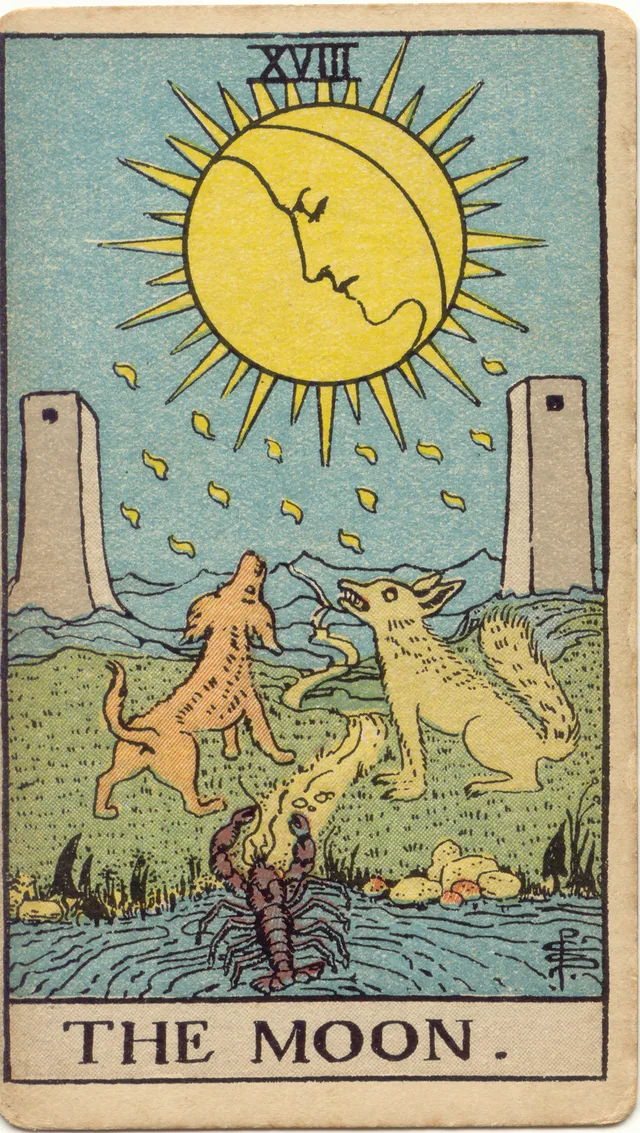
The Moon
The Moon also raises uncertainty during a difficult period. Together, these cards can prompt you to name what is known, what is unclear, and what practical information would help.
Read this card's meaning →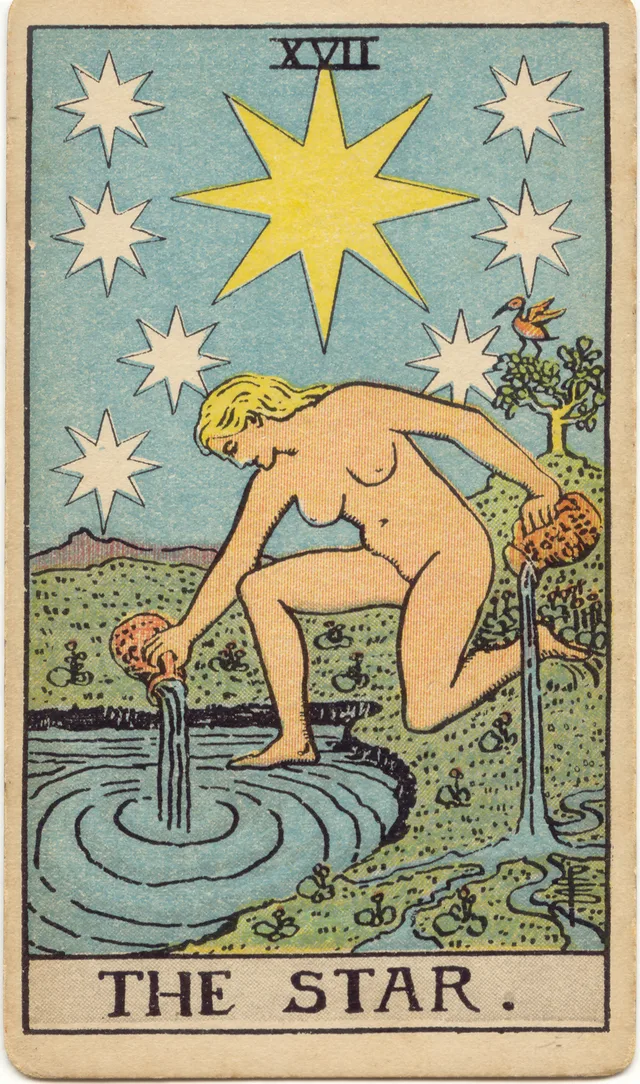
The Star
The Star places hope and restoration beside the Five's hardship themes. The pairing invites reflection on support and recovery without establishing that either is underway.
Read this card's meaning →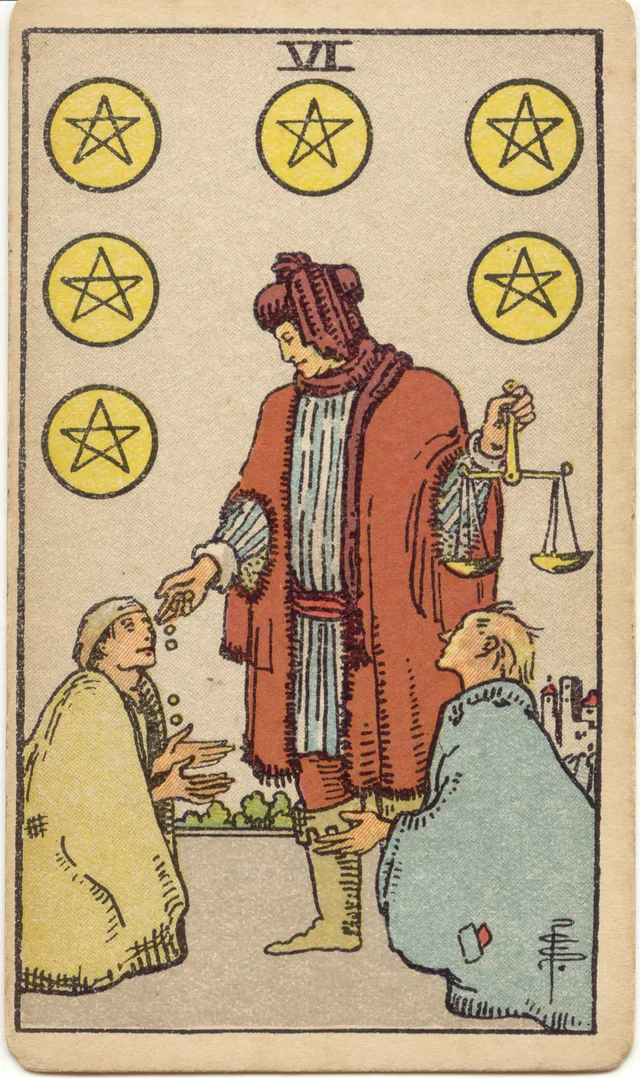
Six of Pentacles
The Six of Pentacles brings sharing and exchange beside the Five's material difficulty. Together they can prompt questions about resources, consent and reciprocal support.
Read this card's meaning →