Three of Pentacles Tarot Card Meaning
The Three of Pentacles represents skilled work, collaboration, feedback, and a shared project. It can prompt you to identify complementary abilities and clarify how decisions will be made, without proving that a team will work well or produce a better result. Check roles, standards, communication, and credit.

What's pictured on the card
Inside a stone cathedral, a young sculptor stands on a low bench, chisel in hand, pausing from carving an arch. Two figures, a robed monk and a well-dressed planner holding drawings, have come to talk over the work with him. Three pentacles are set into the archway above them. The scene honours the moment when a maker's skill meets other people's vision, and something finer takes shape because they built it together.
Three of Pentacles upright: the core meaning
The Three of Pentacles shows a craftsperson consulting with two others over the work, building something together. Today rewards collaboration, sharing your skill, asking for input, letting different strengths combine well. You don't have to build it alone. Value your own craft and welcome the help; the best results today come from working shoulder to shoulder.
Somewhere in you there may be a quiet longing to be seen for what you can do, a wish that your effort would be noticed and valued, not just expected. Perhaps you've been holding back an idea, unsure it's good enough to share. There might also be a shy pride you're not quite letting yourself feel. All of that is tender and human. Underneath sits a real hope of belonging to something, of your contribution actually mattering to the people around you.
Let today be one where you build with others rather than beside them. If you've been carrying a project, invite a second pair of eyes; feedback offered kindly will sharpen your work, not diminish it. Speak up in the meeting, ask the colleague, share the half-finished draft, your skill is more visible than you assume. In love and family, name what you appreciate about someone out loud; recognition given freely tends to come back around. If money or a shared task needs sorting, gather the people involved rather than shouldering it solo. Do accept help without feeling you owe anyone; collaboration is an exchange, not a debt. And let yourself take a little pride when praise arrives today. You've earned the right to feel it.
Three simple ways to work with this card
- Ask one trusted person for feedback on something you're working on, and listen without jumping in to defend yourself.
- Tell a colleague or loved one exactly what you admire about how they do something today.
- Share a work-in-progress you've been hiding, even if it feels unfinished, and let someone help shape it.
Whose input or skill could make your work better today?
What Waite-Smith painted and why it matters
The craftsperson on the bench. A young sculptor stands on a low wooden bench inside a stone cathedral, chisel in hand, pausing while carving an arch. He looks down towards two people who have come to discuss the work. The raised position shows that construction is already in progress; the scene is about reviewing work that exists, not only imagining a future project. The open posture can be read as an invitation to consider feedback without treating it as a verdict on the maker.
The three figures, three roles. The monk and the robed planner hold architectural drawings, while the craftsperson holds the chisel. The drawing represents a plan and the tool represents hands-on ability. The picture places these different contributions in one conversation, so it can prompt questions about who sets the purpose, who designs the work, who carries it out, and whether those responsibilities have been discussed clearly. It does not establish that any group is complete or effective.
Three pentacles in the arch. Three coins are set into the stonework above the figures. Their position connects the suit of Pentacles with physical materials, workmanship, and a result that can be inspected. The number three follows the Ace's beginning and the Two's balancing of resources, so many readers use it for the stage where a plan and a skill meet in visible work. The image can invite a review of what has actually been made; it cannot verify quality from the illustration alone.
The cathedral setting. The stone cathedral provides a clear example of a long project needing many kinds of work. A single person could not design, fund, organise, and carve an entire building alone. For a beginner, the setting makes the subject concrete: large work benefits from defined contributions and a way to compare plans with results. It is not proof that a partnership will succeed.
The number three. In common tarot numerology, three can represent a developing result made through several elements. In Pentacles, that links practical skill, a plan, and a purpose. Some readers also use it for teaching or review because people see work from different angles. These are associations, not a measurement of progress or a guarantee about a team.
The upright Three of Pentacles in full
The Three of Pentacles is commonly read as skilled work being discussed with other contributors. Examine what each person is doing, the group's standard, and how feedback travels. A team may have productive, difficult, or no real exchange; the card cannot decide which. Begin with meeting notes, completed work, agreements, and the people's accounts.
The carving scene makes skill visible and specific. Ask: what have I practised, what can I show, and which part of this work will I own? Training, a portfolio, completed tasks, and useful feedback are stronger evidence of ability than a card. Shared work is easier to assess when people name their skills and show how they meet the project's requirements.
The craftsperson has paused towards the planners, making feedback part of the scene. A beginner can ask what standard is being used, separate a revision request from an insult, and decide which change improves the work. Feedback needs to be relevant and respectful; the card cannot tell you that every suggestion deserves acceptance.
The Three is not an instruction to hand every decision to a committee or to agree with every reviewer. The craftsperson still holds the chisel, so the picture leaves room for professional judgement and clear responsibility. A practical review can ask who has decision authority, how disagreements will be handled, and which feedback is required rather than treating the card as permission to surrender control.
The reversed meaning
One reversed reading is collaboration in appearance only: people attend meetings, but decisions are made elsewhere and comments do not change the work. Check agendas, decisions, revisions, and follow-through. Feeling both included and ignored is important information, but the card cannot establish why. Ask what was heard, adopted, and authorised.
Another reversed reading is a contributor keeping methods or decisions private. The reason could involve credit, confidentiality, quality, or past experience; the card cannot identify motive. Clarify what can be shared, how authorship will be recorded, and which information is restricted. Work can be reviewed without exposing private material.
A third reversed reading concerns a learner who treats questions as proof of incompetence. Asking for instruction, a review, or an example is normal skill development. Mentors, supervisors, and peers can teach, while the learner checks and practises the advice. The card cannot diagnose reluctance; experience and the learning environment provide context.
In a creative context, the reversal can discuss work that meets a technical brief but misses audience needs. Review the brief, user feedback, accessibility requirements, and finished work rather than treating the card as judgement. In a workplace, check whether people doing the work could explain practical constraints. Records and conversation show whether decisions were informed.
In love & relationships
For someone single, the Three can be a prompt to notice connections formed through a class, project, workplace, or community activity. Working beside someone may reveal shared interests and practical compatibility, but it does not predict romance or durability. Look for clear interest, respectful conduct, and reciprocal communication rather than treating a shared task as proof of feelings.
In an established relationship, the card can focus reflection on shared practical work: managing a home, planning a project, or supporting one another's professional goals. Discuss who is contributing, what each person wants, and how rest and credit will be handled. Working on a project together can create understanding, but the image cannot certify the quality of the relationship.
The Three can also prompt a review where roles have become fixed: one person plans while the other carries out tasks, with little consultation. List the recurring work, compare each person's expectations, and agree how changes will be discussed. That conversation may reveal a workable adjustment, but the card does not establish that the division is unfair or tell either partner what to do.
Shared skill and genuine consultation either deepen a partnership or reveal where input is being performed rather than received.
- A connection formed through working alongside each other — admiration earned through actual collaboration
- A couple who create something real together and feel the pride of it
- A partnership where both people's different strengths are genuinely valued
- The intimacy that comes from being trusted with someone's work-in-progress
- A relationship where one person plans and the other executes, without real consultation
- Decisions made 'together' that one person has already made alone
- Creative or professional jealousy masquerading as supportive interest
- Withholding professional respect for the partner's skills while expecting it for your own
Career
Professionally, the Three can direct attention to the structure of a new team or project. Check whether the group has different required skills, a written goal, useful communication channels, and a way to review quality. A job title or salary does not describe the whole role, so ask about decision-making, support, workload, and credit during the hiring process. The card cannot assess a workplace's culture for you.
For a promotion or career change, use the card as a question about how your particular skills would be used. Compare the role description with examples of day-to-day work, training, decision authority, pay, and opportunities to receive credit. If you are uncertain, speak with people who have held the role and weigh the evidence rather than assuming the card approves or rejects the move.
The Three also fits professional learning: an apprenticeship, a mentor relationship, or the early stage of a specialisation. Set a specific learning goal, ask how feedback will be given, and check that the arrangement names pay, boundaries, and credit where relevant. Seeking instruction is not evidence of failure, and the card cannot identify a suitable mentor.
Money
The Three can provide a theme for joint ventures, partnerships, or shared costs. Review ownership, contributions, records, decision rights, fees, tax responsibilities, and how someone can leave. Communication matters, but the card cannot establish that a partner is trustworthy or that an arrangement will last. Written terms and qualified advice are stronger evidence.
For a self-employed person, the image can prompt a question about complementary work: perhaps a designer needs marketing support, or a practitioner needs administrative help. Test the idea with a defined scope, trial, references, costs, and a written method for dividing income. Those checks—not the card—show whether a collaboration is workable.
Health & wellbeing
In health contexts, the Three can prompt questions about coordination between practitioners. Make sure each professional knows what information you have consented to share, which treatment or activity is being considered, and what follow-up is needed. A practitioner who recommends another specialist may be responding to the limits of their role; the card cannot assess anyone's competence or diagnose a condition.
For wellbeing, the Three can reflect on community and shared practice: an exercise class, creative group, or friends checking in about a habit. Choose groups that respect boundaries and use appropriate advice. Social accountability may help, but the card cannot promise that a group will improve wellbeing or replace professional support.
Life events & big decisions
Around a significant decision, the Three can be a reminder to gather relevant input before committing. Choose advisers for their actual knowledge, state what decision you are making, and distinguish information from a recommendation. The craftsperson remains responsible for the chisel in the illustration, so consultation need not mean handing the decision to someone else. The card cannot identify the right adviser or establish that a proposed plan is sound.
For working arrangements, professional partnerships, or a venture combining several skills, compare the proposed roles with the actual work required. Ask what each person contributes, what is missing, and how overlapping responsibilities will be resolved. Trial work, references, budgets, and written terms provide evidence of fit; the card cannot establish that a collaboration is complementary.
Contracts, deals & signatures
Near a contract, the Three can focus attention on agreements between collaborators, such as a partnership, joint creative project, or co-production. Read the sections on roles, decision-making authority, ownership, credit, payment, confidentiality, disputes, and exit. A collaborative relationship can feel informal while still creating serious obligations, so the written document matters.
A useful prompt is whether every material contribution has been named. Replace vague descriptions such as one partner doing the creative work and another handling everything else with tasks, deadlines, authority, expenses, credit, and payment terms. Ask a qualified adviser to review the document when needed. The card cannot judge whether the contract is fair or complete.
Entrepreneurship & business
For a new business, the Three can raise collaborative foundations as a discussion topic. List the capabilities the business actually needs, compare them with current skills, and use portfolio evidence, role requirements, customer feedback, and qualified advice to identify gaps. The card cannot diagnose a blind spot or direct recruitment.
For an existing business, the Three can prompt questions about consultation and working relationships. Ask staff and collaborators how decisions are made, review delivery and customer outcomes, and check whether people receive useful feedback and credit. The card cannot establish respect, attention, or what a leader understands.
Pairings and real reading patterns
Beside The Empress, the pair can be read as a prompt about turning creative ideas into shared work. Next to The Hierophant, it can raise teaching, standards, or institutional procedures. Alongside the Wheel of Fortune, it can focus attention on how a team will respond when circumstances change. These pairings do not predict growth, institutional involvement, suitable people, or timing.
The Three can prompt reflection on craft, visibility, and collaboration. It cannot certify skill, diagnose isolation, approve greater visibility, or show that an audience or working context is missing. Review the work itself, ask the people involved, and use portfolio evidence or market feedback when assessing those questions.
What does the Three of Pentacles mean in tarot?
Is the Three of Pentacles a yes or no card?
What does the Three of Pentacles reversed mean?
What does the Three of Pentacles mean for love?
Does the Three of Pentacles mean I need to collaborate on my career?
If the Three appears, outside input can be an optional reflection theme. The card cannot establish fear, show that another person's input will improve the work, or identify who to approach. Choose feedback based on relevance, consent, expertise, and the needs of the project.
Collaboration can be satisfying when people bring distinct skills, understand their responsibilities, and give one another useful feedback. If you'd like to keep checking in on how your own work and communication develop, the free daily draw is there every morning as an optional reflection practice.
The Three of Pentacles can represent collaboration where distinct skills meet a shared task. Name contributions, standards, and decision rights; the card cannot prove the team will work well or improve the result.
Related cards and themes
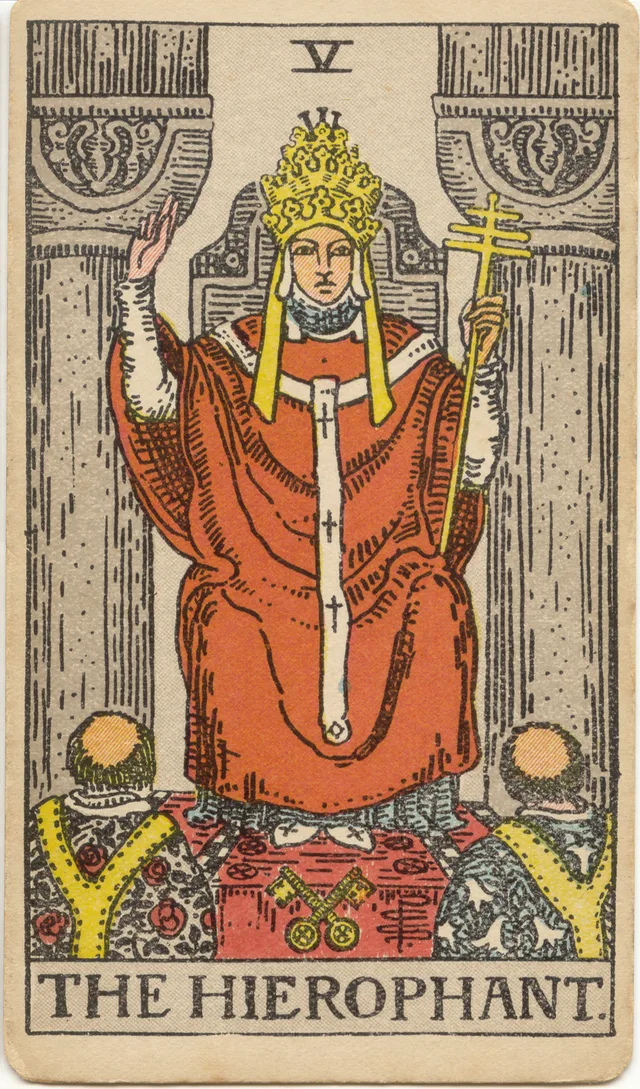
The Hierophant
The Hierophant represents teaching, institutions, and established methods; the Three of Pentacles explores how a learner applies those methods with other people.
Read this card's meaning →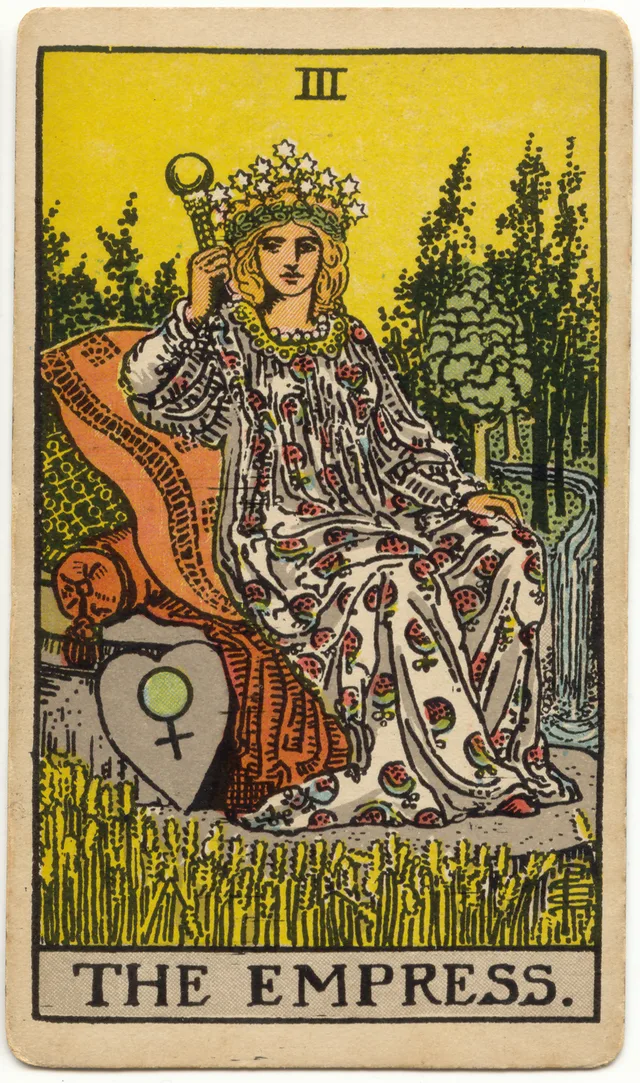
The Empress
The Empress represents creative growth, while the Three of Pentacles considers how several people's practical skills can turn an idea into a shared piece of work.
Read this card's meaning →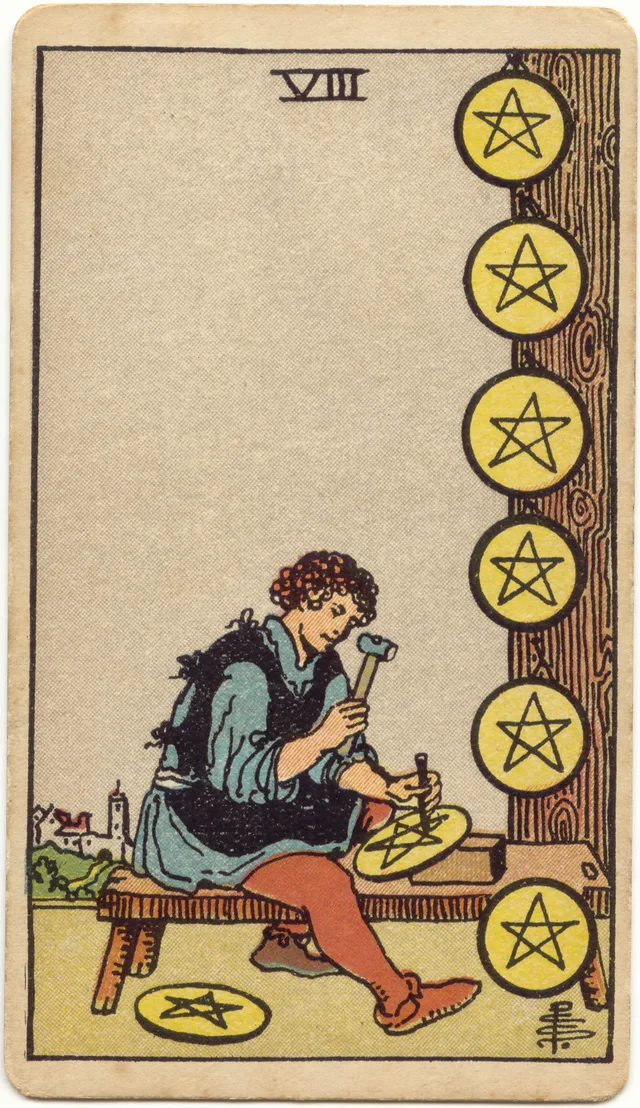
Eight of Pentacles
The Eight of Pentacles focuses on repeated individual practice; the Three considers how practiced skill is used with a plan and other contributors.
Read this card's meaning →