Queen of Pentacles Tarot Card Meaning
The Queen of Pentacles combines practical care with attention to home, work, finances, relationships, and the body. It can prompt you to include your own needs when supporting others, without implying that you must manage everything. Review your capacity, resources, and boundaries before taking on another responsibility.

What's pictured on the card
A queen sits on a throne carved with fruit, angels and a ram's head, cradling a golden pentacle in her lap and gazing down at it with tenderness. Roses arch overhead and lush greenery surrounds her, while a small rabbit hops through the flowers at her feet, a sign of fertility and abundance. The image blends warmth with good sense: a nurturer who tends home, body and loved ones while keeping her own roots firmly in the earth.
Queen of Pentacles upright: the core meaning
The Queen of Pentacles sits amid greenery with a coin resting in her lap, kind-hearted and wonderfully practical. Today asks you to care for your world in grounded ways, tending home, health, and the people around you while staying rooted in yourself. Be generous and sensible at once. You can nurture others and still keep both feet planted.
You may be pouring a lot of care into everyone around you today, wondering who's tending to you. There's often a deep satisfaction in nurturing others, alongside a subtle tiredness when your own needs slip to the bottom of the list. Perhaps you've been the steady, capable one for so long that resting feels almost unfamiliar. That giving heart is a gift. But underneath it stirs a quiet nudge that you deserve the same practical warmth you so freely give away.
Use today for grounded, practical care. Include yourself when caring for others: a meal, a tidy corner, a check-in, or appropriate rest. At work, offer competence without taking on everyone's load. In relationships, ask what support is wanted rather than assuming. With money, balance generosity with your budget. Notice the habit of tending everyone but yourself, and choose care that your capacity can sustain.
Three simple ways to work with this card
- Do one nurturing thing purely for yourself today, a proper meal, a rest, a small comfort you'd offer a friend.
- Offer someone practical help rather than just concern, cook, tidy, carry, or simply show up in person.
- Before saying yes to another's needs today, pause and ask whether you have the energy to give.
How could you care for both yourself and others in a practical way today?
What Waite-Smith painted and why it matters
The throne decorated with natural symbols. The Queen sits on a carved stone throne decorated with goats' heads, angels, fruit, and vines. The imagery is often associated with the material world, discipline, and care. It supports a symbolic discussion of resources and responsibility; it does not establish that a reader has authority, security, or sufficient resources.
The pentacle cradled in her lap. The Queen holds the pentacle at rest in her lap with both hands, unlike the Page's raised coin. The pose supports attention to something tangible and currently being cared for. It does not prove ownership, financial security, or an ability to provide for another person.
The rose arch, the green world, and the rabbit. Full roses and lush greenery surround the Queen, while a small rabbit appears among the flowers. Roses and green growth can support themes of care and the material environment; the rabbit is traditionally linked with fertility. These symbols do not establish fertility, a welcoming household, or the result of a person's effort.
Gaze downward toward the coin. The Queen looks at the object in her lap instead of at the viewer. The detail supports attention to present, tangible tasks such as budgets, food, home, and physical needs. It cannot show that a real person manages resources well or is focused on the right priority.
The upright Queen of Pentacles in full
The Queen of Pentacles can represent practical care: food, housing, money management, health appointments, household tasks, and support expressed through useful actions. In a reading, name the actual responsibility and who has agreed to handle it. The card cannot establish that care is effective or that someone will reciprocate.
This card can prompt a practical check that your own needs are included alongside other people's. List time, money, food, rest, housing, and health needs before accepting another responsibility. Supporting others does not require unlimited sacrifice, and the card cannot determine how much care a person can safely provide.
She can also prompt a review of several material concerns at once: household tasks, financial deadlines, health appointments, and work commitments. Use a written list, clear owners, and realistic limits rather than assuming one person can manage everything. The image cannot measure competence or capacity.
The reversed meaning
The most immediate reversal can describe care provided at the expense of the provider. A person may place household, work, or family needs ahead of food, rest, money, or medical care until resentment or exhaustion appears. List the responsibilities, time, and support available; the card cannot diagnose depletion or identify a cause.
A second pattern is material anxiety affecting decisions: avoiding necessary spending, hoarding beyond a stated plan, or fearing shortage despite available information. Review balances, obligations, future costs, and qualified advice rather than using the card to decide whether scarcity is real.
There is also a control pattern: practical help used to direct another person's choices, or household management used instead of an honest conversation. Do not use the card to infer motives or declare an arrangement fair or unfair. Name the specific behaviour, ask what help was requested, and review the agreement, workload, and consent.
The reversal can also prompt attention to concrete breakdowns such as overdue bills, unsafe household conditions, missed appointments, or an unsustainable workload. List the most urgent issue, contact the relevant service, and ask for help where needed. The card cannot assess severity or replace professional support.
In love & relationships
If you are single and the Queen of Pentacles appears, it can prompt reflection on the life you have built and the practical qualities you want in a partner. A stable routine does not prove that another person will be attracted or that a partnership will work. Discuss finances, domestic labour, independence, and boundaries as a connection develops.
In an established relationship, this card can prompt an inventory of household work, meals, finances, errands, and care responsibilities. Ask who does each task, whether the arrangement was agreed, and whether it needs to change. Physical affection and shared meals may matter, but consent and each person's preferences determine what intimacy means.
Practical care can support partnership when responsibilities, affection, and decision-making are shared rather than assumed.
- A shared home plan with clear responsibilities and acknowledged effort
- Physical affection and shared routines that both people choose
- A relationship where both people contribute and can discuss changes
- Carrying all the practical care of the household and resenting it in silence
- Expressing love only practically and missing the emotional conversation
- Providing so much that the other person has no room to contribute
Career
In career readings, the Queen of Pentacles can prompt attention to practical management, working conditions, and support for colleagues. Do not use the card to certify competence or infer a workplace's culture. Review role expectations, workload, pay, feedback, policies, and the actual behaviour of managers and coworkers.
Career caution: reliable work can lead to unplanned duties. Record the tasks you perform, the time they require, the results, and the recognition or pay attached to them. Use that information in a workload or compensation conversation; the card cannot decide what is proportionate.
For a beginner doing this review, start with one ordinary week rather than an abstract judgement about being dependable. Write down recurring tasks, interruptions, unpaid preparation, travel, and the time needed to recover after work. Mark which duties appear in the job description, which were requested explicitly, and which accumulated because nobody else was assigned to them. Then compare the record with contracted hours, pay, leave, and any stated performance measures. This creates useful material for a conversation with a manager or adviser without assuming that extra work proves appreciation or exploitation. If the issue involves discrimination, retaliation, unsafe conditions, or a disputed contract, keep copies of relevant records and seek appropriate workplace or legal support.
Money
With money, the Queen of Pentacles can prompt careful management rather than impulsive spending or fear-based decisions. Review income, fixed costs, variable spending, savings, debt, and planned generosity. The card cannot establish that finances are healthy or tell someone what to buy or give.
In practical financial readings, it can focus attention on shared household finances, dependants, housing, food, and maintenance. Use a budget, written responsibilities, affordability checks, and qualified financial advice before making a commitment. A symbolic image cannot classify a purchase or arrangement as good.
A simple household example is a shared move or large repair. List the one-off price, recurring bills, deposits, transport, maintenance, and time each person would contribute. Separate confirmed figures from estimates, and note who carries the cost if circumstances change. Discuss access to accounts and records without assuming that the person who usually pays should control every decision. This kind of inventory makes practical care visible while leaving the choice with the people affected and their actual financial advice.
Health & wellbeing
In wellbeing readings, the Queen can symbolise material care, food, movement, sleep and home environment. She cannot establish a care deficit, eating pattern or suitable health routine. Reported needs and qualified health guidance determine care.
A practical beginner exercise is to inspect one ordinary day: when you ate, rested, travelled, took medication if prescribed, completed care tasks, and had access to a comfortable place to sleep. Note barriers such as cost, transport, shift work, or caring duties instead of blaming yourself for an incomplete routine. Bring the record to a clinician or support service when you need help; the card cannot decide what needs changing. If another person shares the home, ask before changing their routines or belongings and include their access needs in the discussion.
Life events & big decisions
At a major decision, the Queen can keep material responsibilities and care in view. The card cannot favour an option or rank practical security against other priorities. Affordability, obligations, risk and the people affected provide the evidence.
For decisions about where to live, livability, location, cost, access and community can be considered independently. The card cannot assess a place, establish community warmth or choose a home.
Contracts, deals & signatures
For household contracts such as property purchases, rentals, renovations, or domestic employment, review protection, responsibilities, payment, access, repairs, notice, and shared obligations. The card cannot assess the terms; use the written agreement and qualified review.
For business agreements, working conditions, care commitments and practical feasibility should be assessed from actual circumstances. The card cannot determine whether terms are workable.
Entrepreneurship & business
The Queen's imagery can prompt research into businesses centred on service, hospitality, food, home, wellness, childcare, or education. It cannot establish customer satisfaction or a competitive advantage; feedback, compliance checks, retention, and performance data provide evidence.
For any care-centred business, review pricing, staffing, safeguarding, systems, accounts, demand, and qualified advice. The card cannot establish that the operation is sustainable or that demand will continue.
Pairings and real reading patterns
The Queen of Pentacles beside The Empress can prompt questions about home, family, fertility symbolism, and creative work based at home; it cannot establish fertility, abundance, or household conditions. With the Queen of Cups, compare emotional needs with practical care, time, money, and boundaries.
The Queen of Pentacles can be useful when a reader lists household, family, or team tasks as though they are insignificant. Write down the time, skill, cost, and responsibility involved, then consider whether the work is shared, recognised, and sustainable. The card cannot establish that others will value it; direct discussion and practical records help.
What does the Queen of Pentacles mean in tarot?
Is the Queen of Pentacles a yes or no card?
What does the Queen of Pentacles reversed mean?
What does the Queen of Pentacles mean for love?
Does the Queen of Pentacles mean a pregnancy or home?
If the Queen of Pentacles has appeared for you today, list the responsibilities you manage and add your own food, rest, health, money, time, and boundaries. Mark what can be shared, delayed, or delegated, then choose one practical conversation or task based on your actual capacity.
Then choose one useful action for the home, body, finances, or a person who has agreed to receive support. The free daily draw is there each morning if you want a brief prompt for practical reflection; compare it with budgets, schedules, consent, and qualified advice.
The Queen of Pentacles can prompt practical care that includes the caregiver. Food, rest, money, and supportive people are resources to maintain, not proof you must supply everyone.
Related cards and themes
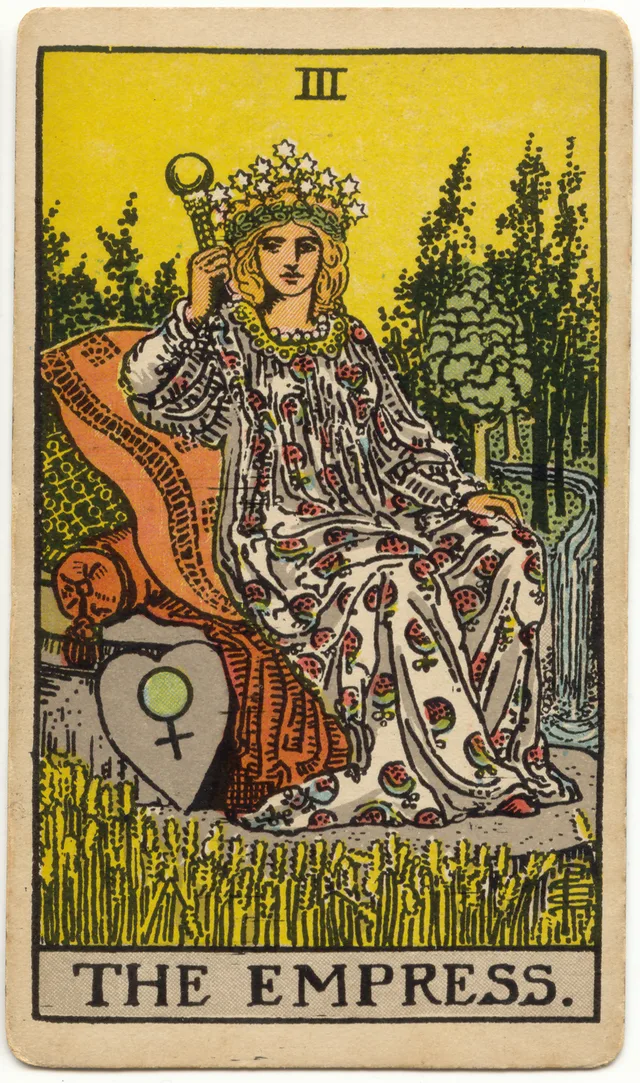
The Empress
The Empress represents broad creative and nurturing themes, while the Queen of Pentacles focuses on practical care in daily life. Together they can prompt questions about resources, support, and what care looks like in practice.
Read this card's meaning →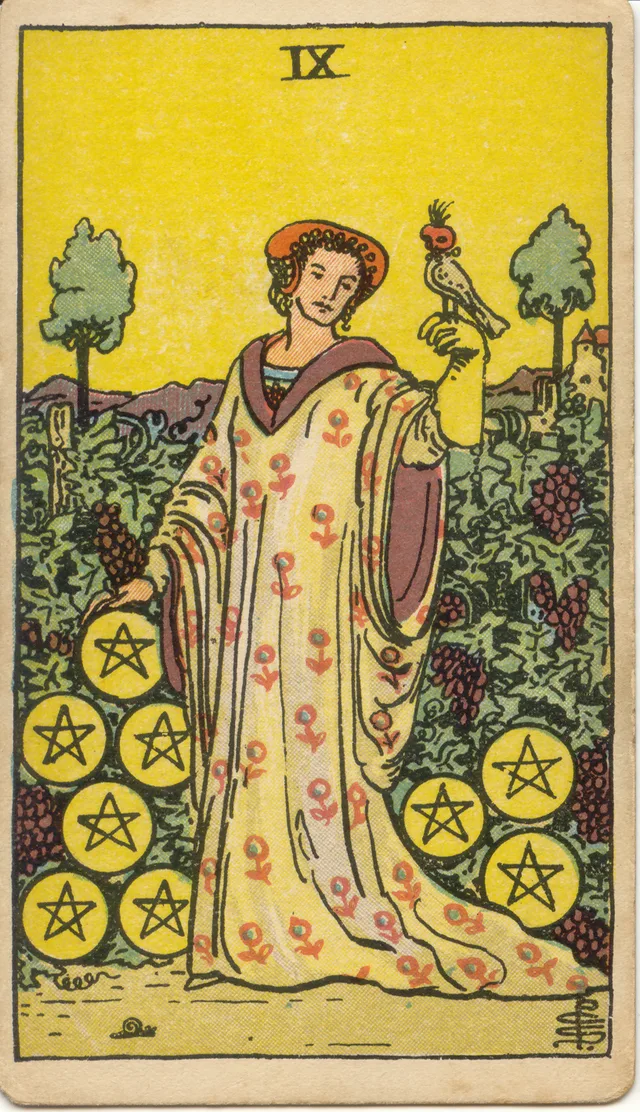
Nine of Pentacles
The Nine of Pentacles considers independence and the results of sustained work; the Queen of Pentacles considers practical care and resource management. The pairing supports a review of both autonomy and responsibilities without proving that either is secure.
Read this card's meaning →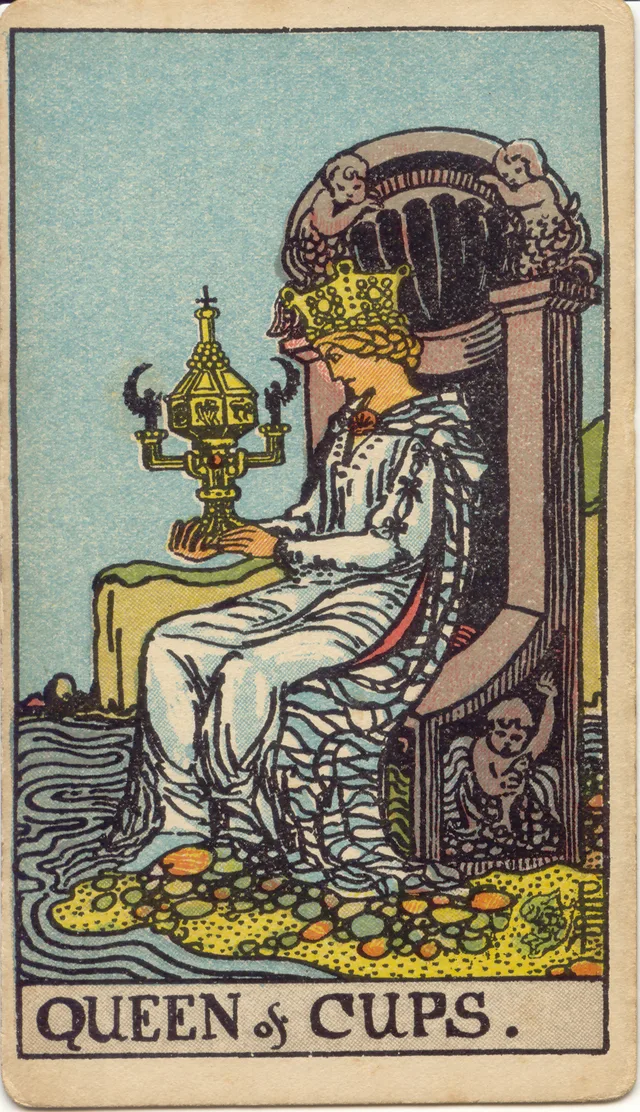
Queen of Cups
The Queen of Cups focuses on emotional awareness, while the Queen of Pentacles focuses on material care. Together they can organise questions about feelings, health, home, money, and boundaries without deciding what anyone should provide.
Read this card's meaning →