Three of Cups Tarot Card Meaning
The Three of Cups depicts friends celebrating together, representing friendship, community, shared joy, and support. It can prompt you to notice which connections feel mutual and restorative, but it cannot prove that an invitation, reconciliation, or celebration is coming. Check the actual relationships, resources, and consent involved.

What's pictured on the card
Three women dance together in a circle, each lifting her cup high in a shared toast. At their feet lies a ripe harvest, pumpkins, grapes and blossoms, the reward of a season's growth. Their arms reach towards one another, robes flowing in kind reds, golds and creams. This is the picture of joy multiplied by company: celebration, friendship and gratitude that things have come good, best enjoyed out loud and in good company rather than kept to yourself.
Three of Cups upright: the core meaning
Three friends lift their cups together in the Three of Cups, dancing in easy, joyful company. Today is for togetherness, leaning on your people, sharing good news, celebrating the small wins out loud. Don't go it alone. Reach for your circle; joy grows when it's shared, and your friends are gladder to help than you assume.
Somewhere beneath the busyness, you may be craving lightness, the easy laughter of people who know you well. Perhaps you have been heads-down for a while, and a part of you misses feeling carefree in company. There might also be a quiet wish to be celebrated, to have your recent efforts noticed by the people who matter. That's not vanity; it's the natural hunger for belonging. You don't have to earn joy by finishing everything first. The wish to gather and exhale is your cue, not a distraction.
Make room for connection today, even a small pocket of it. Text the friend you keep meaning to call, suggest lunch, or share a win out loud instead of downplaying it. If work has been relentless, choose contact with colleagues when it genuinely supports you. In love, celebrate the ordinary together if both people want that. Where money is tight, remember that gathering can be inexpensive. Let yourself be praised without deflecting, and offer the same warmth back. Notice whether connection helps you engage with life rather than avoid something difficult.
Three simple ways to work with this card
- Reach out to a friend you've been missing and make a real plan, even if it's just coffee next week.
- Share a piece of good news out loud today instead of shrinking it, let someone celebrate it with you.
- Raise a small toast tonight, alone or together, to one thing that has gone right this season.
Who could you reach out to and share a little joy with today?
What Waite packed into this image
Three women in a circle. Three women wear cream, saffron, and deep-red robes while raising their arms toward one another. The circle directs attention to participation and shared attention rather than to an audience. Each person remains visible as an individual, so the scene can prompt questions about how a group makes room for different needs, contributions, and boundaries.
The raised cups. Three golden cups are held above the women's heads. A cup can represent feeling, hospitality, or a shared occasion, and raising one can suggest an intentional toast. The image does not establish that a milestone has happened; in a reading, ask what people actually want to acknowledge and whether everyone consents to sharing it.
The harvest underfoot. Pumpkins, grapes, gourds, and flowers lie around their feet. These details connect the scene with work completed over a season and with food that can be shared. They can prompt a review of the practical effort behind a celebration—time, money, care, and contribution—without proving that a reader has achieved a particular result.
The number three. In tarot, three often introduces growth beyond a pair: The Empress is card three, and The World reduces to three in some numerological systems. Here, three people create a small group with more than one relationship to manage. The number can prompt questions about inclusion, communication, and how decisions are made in a group; it does not prove that a group is stable.
What isn't there. There is no visible authority figure, household, or formal hierarchy in the scene. That absence can highlight a gathering organised by its participants rather than by an institution. It does not mean the group needs nothing else; real communities also need resources, access, safety, and ways to handle disagreement.
The Three of Cups upright
The Three of Cups symbolises friendship, community, and mutual participation. In a personal reading, use those themes to review which relationships are reciprocal, how people communicate, and whether support is practical rather than assumed. Conduct and direct conversations provide information about a real relationship; the card cannot rank people for you.
Celebration is its most obvious theme, but a celebration can be large, private, delayed, or not wanted at all. Check what has actually happened, who is affected, what resources are available, and what level of sharing feels safe. A card can help you notice a wish to acknowledge something without creating the occasion.
It can also symbolise creative collaboration. Review roles, credit, workload, decision rights, and the quality of the result rather than assuming a friendly group is working well. Ask participants for feedback and make changes where the process is not equitable.
The card does not establish friendship quality, promise an invitation, or show that support is available now. It offers an image for reflecting on connection, and your next step should take account of actual relationships, capacity, consent, and safety.
The reversed Three of Cups
One reversal theme is distance from community. Notice the actual pattern of contact, whether the distance is chosen, and what you miss or need. The card cannot diagnose loneliness or explain why contact changed, so use your own experience and direct conversations for context.
A second reversal theme is conflict or comparison within a group. Ask about specific words, decisions, exclusions, or workload rather than assigning gossip or motives. If there is harm or harassment, document it and use an appropriate support or reporting process.
Reversed, it can symbolise the contrast between a celebrated moment and the ordinary routine afterward. Review what support, rest, or follow-up the group needs instead of treating the card as a prediction of an emotional downturn.
Sometimes the reversal raises questions about an unmade plan. Ask whether a gathering is wanted, affordable, accessible, and safe, and share responsibility for organising it. Do not assume that everyone wants a reunion or that one person owes the work.
In love & relationships
In a love reading, the Three of Cups can shift attention from the couple to the wider social world: friendships each partner maintains, shared friends, and activities that support both people as individuals. Discuss privacy, time, money, and boundaries so outside connections add choice rather than pressure. Separate and overlapping friendships can be healthy, but the card cannot assess a particular relationship.
For someone single, it can focus attention on existing friendships and community instead of treating them as a waiting room for romance. Choose social activity that fits your energy, access, values, and budget. Participation may create contact with people, but it does not guarantee a partner or require you to date.
It can also symbolise the early social period of a relationship: meeting each other's friends or joining a group. Ask whether everyone is welcoming, whether boundaries are respected, and whether each person can keep independent support. The people involved and their observable experience show what is happening in the group.
Community can support people in a relationship without replacing direct communication between partners.
- A social life that supports each person independently, not only as a couple
- Friends who can offer perspective while respecting privacy and the couple's boundaries
- Celebrating friends' good news while respecting how much they want to share
- A gathering planned around access, budget, and genuine enjoyment
- Letting a relationship become the only source of connection or practical help
- A friend group where competition or comparison replaces respectful support
- Pressuring a partner to withdraw from friendships in the name of couplehood
- Using social activity to avoid discussing difficulty or respecting a need for rest
Career
At work, the Three of Cups can prompt a review of team culture: whether wins are credited accurately, help is offered fairly, and people can participate without being pressured into socialising. A welcoming atmosphere matters, but check workload, pay, management, and formal protections as well as informal warmth.
It can also support a review of creative collaboration: roles, deadlines, decision rights, credit, and whether the result benefits from multiple skills. Joint ventures, co-authorship, and ensemble work require written agreements and feedback, not only enthusiasm. If you are stuck alone, identify a person who has the relevant expertise and ask whether they have capacity to help.
For a job hunt, it can prompt you to use referrals, introductions, or conversations at an event alongside formal applications. Ask for information rather than treating people as transactions, respect confidentiality, and compare the role's written terms with what you hear informally.
Money
The Three of Cups is not primarily a financial card, but it can prompt questions about shared resources: a friend offering a loan, a group splitting costs, or a wedding funded by several people. Put repayment, ownership, contribution, and boundaries in writing even when people care about each other. Warmth does not establish that an arrangement is affordable or fair.
It can also prompt a review of a financial milestone such as a first paying client or a side project paying for a real cost. For a small business, measure repeat customers, referrals, acquisition costs, margins, and workload before deciding that community is the key asset. Genuine relationships matter, but they do not replace financial planning.
Health & wellbeing
Social connection can matter to wellbeing, and the Three of Cups can prompt a review of whether you have enough reciprocal contact. This does not mean filling the calendar or forcing company. Notice which interactions leave you supported, which drain you, and what access, money, health, or safety factors affect participation.
For routine, consider shared activity such as a walk, suitable dance class, or run where conversation is part of the experience. Shared meals can also create regular contact, but adapt for dietary, financial, and health needs. These activities may support wellbeing for some people; a card cannot prescribe exercise, food, or treatment.
Life events and big decisions
At a significant transition, this card can prompt you to map possible support rather than carrying every task alone. Engagements, babies, new jobs, and moves may involve people who want to help, but ask what kind of help is wanted, affordable, and safe. Share information selectively and respect a person's right to decline.
It can also prompt a review of community after a transition: new parents meeting other parents, or a person who moved finding local groups. Allow relationships to develop through repeated, respectful contact rather than assuming a new community will welcome you. Check transport, cost, accessibility, and boundaries before committing.
Contracts, deals & signatures
This card can highlight agreements between friends, collaborators, or people who have worked together before. Warmth can support communication, but it is not a reason to skip paperwork. For joint ventures, creative co-ownership, or partnerships, name contribution, credit, payment, ownership, decision rights, confidentiality, and exit terms. Ask whether the document matches the actual collaboration.
A friendly collaboration can leave terms clear in conversation but vague on paper. If three people will share a project, profit, or credit, write the arrangement so someone who was not in the meeting can understand it. Obtain legal or financial advice when ownership, liability, tax, or intellectual property matters are significant.
Entrepreneurship & business
For a business, the Three of Cups can prompt a review of customer community, collaborator networks, and team culture. Measure referrals, repeat purchases, retention, pay, workload, and customer feedback rather than assuming a friendly atmosphere is durable. Relationships are valuable business inputs, but they still need clear offers, fair terms, and financial controls.
For someone starting out, it can prompt questions about memberships, events, or customer community. Test demand, cost, access, moderation, privacy, and participation before treating community as a business model. Buyers may choose to advocate, but the card cannot predict that behaviour.
How this card sits in practice
The Three of Cups beside The Sun brings visibility and community into the same reflection. Ask what has actually been achieved, who contributed, and what can be shared with consent; do not read it as proof that a celebration is coming. Beside The Empress, discuss creativity, nurture, resources, and fair contribution without promising a harvest or result.
In an outcome position, the Three can prompt a plan for community around a project, worry, or change. It cannot show that support is available or identify who wants to help. Ask directly, make a specific request, and respect boundaries and capacity.
What does the Three of Cups mean in tarot?
Is the Three of Cups a love card?
What does the Three of Cups reversed mean?
Is the Three of Cups a yes or no card?
Does the Three of Cups mean a third person in a relationship?
If the Three of Cups has turned up for you today, consider one concrete connection that fits your capacity. Send a message, make a specific plan, or ask for a practical form of help, while accepting that the other person may be unavailable or may decline. Choose company because it is wanted and safe, not to perform social health.
The harvest image can prompt you to notice the work, people, and resources behind a good moment. You do not need a perfect event or a large group; choose a form of acknowledgement that respects privacy, access, and budget. If you'd like a daily reminder to reflect on connection, the free daily draw is there each morning. It cannot show that support is available, so ask directly and check.
The Three of Cups can reflect shared joy and the support of friendship without making celebration obligatory. Share good news with people who have earned your trust, and notice whether the relationship allows joy, honesty, and reciprocity.
Related cards and themes

The Sun
The Sun focuses on visible joy and confidence; the Three of Cups focuses on friendship, mutual celebration, and group support.
Read this card's meaning →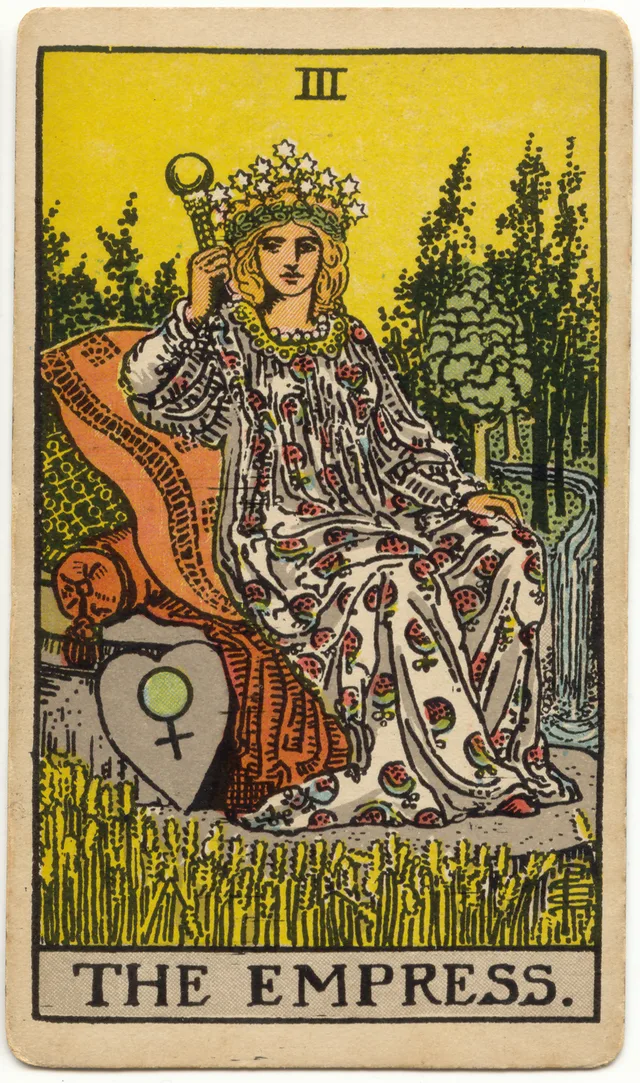
The Empress
The Empress explores nurture and creative abundance; the Three of Cups explores how people share the work, pleasure, and recognition.
Read this card's meaning →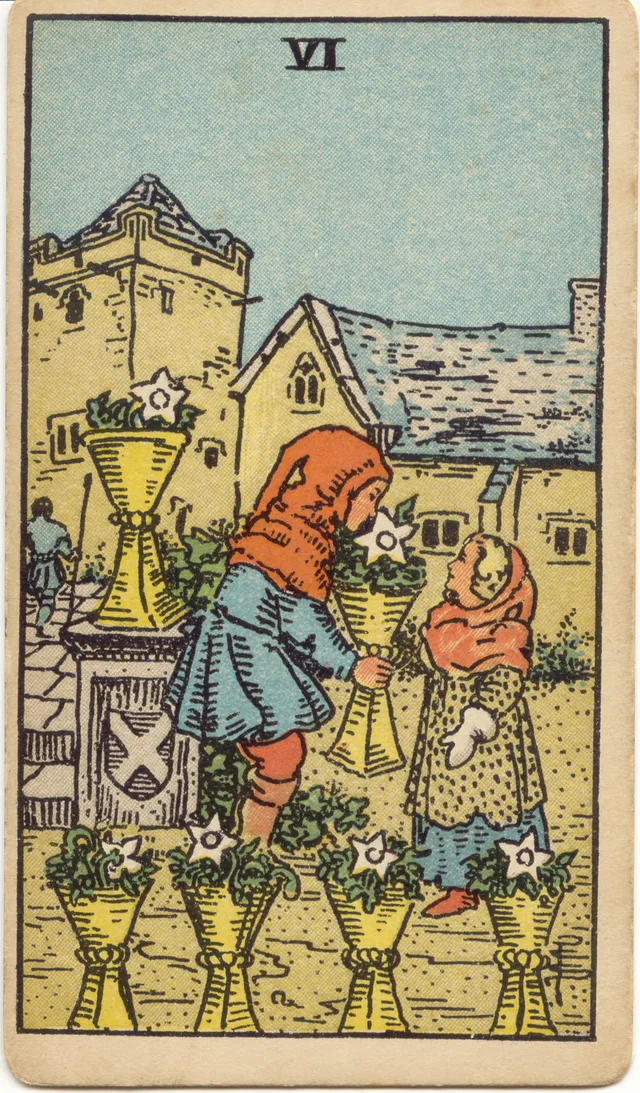
Six of Cups
The Six of Cups looks at memory and familiar affection, while the Three of Cups looks at present-day friendship and community.
Read this card's meaning →