Two of Pentacles Tarot Card Meaning
The Two of Pentacles depicts someone balancing two coins while conditions shift around them, an image of competing priorities, flexibility, and limited capacity. It can prompt you to rank work, money, care, and personal commitments rather than assuming everything can be carried equally. The card cannot prove that the load is manageable; use your actual time, energy, and obligations to decide what changes.

What's pictured on the card
A young man in a tall, pointed orange hat dances lightly on the shore, juggling two coins looped together by a green ribbon curled into a figure-of-eight, the sign of endless flow. Behind him, two ships rise and dip over tall, rolling waves. His balance looks playful rather than strained. The picture captures the art of keeping several things moving at once without letting the churning sea knock you off your feet.
Two of Pentacles upright: the core meaning
In the Two of Pentacles, a figure juggles two coins linked by a looping ribbon, keeping everything in motion. Today is about balancing competing demands, time, money, commitments, with a light and flexible touch. Don't try to freeze it all in place. Stay nimble, decide what matters most, and let the rest flow with you.
You may be weary of spinning so many plates, even if you make it look easy from the outside. There can be a low hum of guilt that you're not doing any single thing perfectly, and a fear that if you pause, everything will come crashing down. That tiredness is real and fair. Yet beneath it runs a surprising nimbleness, a part of you that actually knows how to bend, adjust and stay upright when the ground keeps shifting.
Rather than trying to hold everything with equal weight, let today be about triage. Pick the one or two things that really can’t slip, and give yourself permission to let smaller tasks wobble or wait. A quick list, in order of what matters, will steady the swirl faster than powering through blindly. At work, batch similar jobs together instead of leaping between them. With money, a flexible plan beats a rigid one right now, leave a little room for the unexpected. If someone asks more of you than you can carry, it's fine to say 'not today.' And build in one genuine pause; even ten minutes of stillness will steady your hands. You're more adaptable than you feel, but adaptability still needs rest to keep working.
Three simple ways to work with this card
- List everything on your plate, then cross off or postpone the two items that matter least today.
- Choose one task to finish fully before touching the next, and notice how much lighter single focus feels.
- Block out ten minutes with no phone and no list, just breathe and let your shoulders drop.
What are you juggling today, and which bit needs your hands first?
What Waite-Smith painted and why it matters
The juggler in motion. A young man in a tall, pointed orange hat stands on a shore with his weight shifted as he handles two coins. His expression and posture are stylised rather than a reliable account of his effort or stress. The scene can prompt questions about how a person handles competing demands, while the actual schedule, energy, and obligations determine whether the load is manageable. The orange clothing adds colour; it cannot diagnose a mood or capacity.
The figure-of-eight ribbon. A green ribbon loops around the two coins in a figure eight. Some readers connect this shape with continuity and repeated adjustment, so it can illustrate resources or attention moving between tasks. It does not mean a person can keep juggling indefinitely. The green colour is often associated with material life and growth, but neither colour nor shape measures financial or physical capacity.
Two coins, not ten. Two coins are shown in the loop. The number makes the picture easy to connect with two major priorities, but it cannot establish that the amount is manageable or rule out exhaustion. A reader can use the detail to name the most important competing demands rather than treating it as a diagnosis of ordinary life or burnout.
The ships on rough water. Two tall ships rise and fall on stylised waves behind the figure. The rough water gives the illustration a visible background of changing conditions, while the person remains in the foreground handling the coins. It can prompt a practical check of external pressures, deadlines, and interruptions. It cannot show that circumstances are unstable or that a person is coping well.
The number two. In Pentacles, two follows the Ace's single beginning and introduces two material concerns. Common tarot numerology connects two with choice, comparison, and tension between alternatives. Here that can mean comparing time, money, energy, or responsibilities. The card cannot establish that both demands should be kept or that a person has the skill to carry them.
The upright Two of Pentacles in full
The Two of Pentacles is commonly read as a picture of competing practical demands. Examples include work and family, income and study, two jobs, or two projects. Use it to list what is competing for time, money, energy, and attention. The card cannot show that the demands are balanced or that the person is managing them well; schedules, budgets, and direct experience provide that evidence.
The figure is shown holding onto both coins, but that visual choice should not be used to rule out overwhelm. A practical review can ask which task is urgent, which can wait, what can be delegated, and what must be removed. Priorities may change from day to day, and the card cannot decide whether adding another commitment is wise.
Adaptability is a useful theme for this card. Jobs change, income fluctuates, and responsibilities shift, so a plan may need alternatives, review dates, and a reserve of time or money. The card cannot establish that someone has the capacity to navigate change. Use actual income records, commitments, health needs, and available support when adjusting a plan.
Time is as important a resource as money. A person may be financially stable but unable to find uninterrupted time, or may face both time and financial pressure. Track fixed commitments, travel, care, rest, and focused work before promising more. Attention can move between tasks, but the card cannot guarantee that a neglected task will remain available.
The reversed meaning
One reversed reading is a neglected obligation: a bill, relationship task, appointment, or health routine may have received less attention while another demand took over. The card cannot establish that something has been missed. Check calendars, accounts, messages, and commitments, then address the actual item rather than guessing from the image.
Another reversed reading is a load that feels larger than available capacity. Distinguish essential obligations from optional tasks, ask for practical support, and speak with a qualified professional if stress or exhaustion is affecting health. The card cannot diagnose overwhelm or decide what another person must give up.
A financial version concerns uncertainty about variable income, spending, savings, or several small decisions. Build a simple record of money in and out, upcoming bills, debt terms, and reserves. The card cannot assess the seriousness of a financial problem or prescribe a budget; verified records and qualified advice should guide changes.
The reversal can also prompt a review of a plan that no longer fits changed circumstances. The image does not prove that someone is rigid or that a change is required. Compare the old arrangement with current costs, duties, and constraints, then make the smallest evidence-based adjustment that fits your situation.
In love & relationships
For someone single, the Two can prompt a review of whether work, care, study, or other commitments leave time for dating or friendship. If connection matters, state your availability honestly and decide what time you can give without promising more than you can sustain. The card cannot show that a match is worth pursuing or that circumstances will become quieter.
In an established relationship, the Two can focus attention on closeness amid work, family, and financial pressures. Ask how much time, care, and practical labour each person is contributing, and schedule conversations or shared time when needed. The card cannot establish that a relationship is in trouble or that it is being maintained well.
The reversal can prompt a review when one person manages most logistics, finances, calendars, or care. List the work, ask each person how they experience the arrangement, and agree what can be shared or changed. The card cannot establish imbalance or blame; direct conversation and observed responsibilities provide that context.
A busy life creates practical questions about time, care, and responsibility; the card cannot decide how partners are handling them.
- Partners discussing how to adapt to changing demands
- Practical help and planned connection during a busy period
- A partnership where responsibilities are visible and discussed
- A shared process for reviewing a complicated schedule and its costs
- One person carrying most of the planning, care, or administration
- Repeatedly postponing a conversation about time, care, or money
- Using a crowded schedule to avoid discussing closeness or conflict
- Connection receiving attention only when an unpredictable gap appears
Career
At work, the Two of Pentacles can frame a portfolio career, multi-project role, expanded job description, several clients, or two income streams. It does not establish that the arrangement is possible or sustainable. Compare the written role, deadlines, pay, hours, support, and actual workload, then identify what needs restructuring.
For someone job-seeking, the Two can prompt comparison of varied roles or search directions. It cannot identify the best target or show that a broad search is a problem. Compare requirements, application time, income, location, and priorities; choose a manageable process based on evidence.
A professional question is how a broad range of skills is communicated. Versatility may be useful, but the card cannot establish how employers or clients perceive it. Compare the role requirements with your strongest examples, describe your offer plainly, and decide which work deserves limited time. Keep a record of results so the decision reflects more than a busy impression.
Money
Financially, the Two can prompt attention to variable income and budgets that need regular review. Freelancers, self-employed people, commission workers, and people with irregular hours can list expected income, fixed bills, taxes, debt, savings, and flexible spending. Note when invoices are due and which costs can change. The figure-eight shape can represent repeated adjustment, but it cannot predict good or difficult months.
A useful practical response is a flexible system: track money in and out, upcoming bills, tax, debt, and reserves, and review it on a regular schedule. Note which payments are fixed, seasonal, or negotiable, and record a realistic minimum income. Also record who is responsible for each payment. The card cannot prescribe a budget or show that a system will work. Use verified figures and qualified financial advice for consequential decisions.
Health & wellbeing
In health contexts, the Two can prompt reflection on the physical cost of a full schedule. It is not a diagnostic card and cannot identify fatigue, illness, or a need for a particular intervention. Track sleep, symptoms, function, rest, appointments, and changes in workload, and seek qualified care when needed rather than treating the illustration as an assessment.
For general wellbeing, it can be useful to sort demands by urgency, benefit, cost, and recovery time. Protect sleep, movement, connection, and genuine rest where possible, while considering access and medical needs. Include travel, caring responsibilities, medication routines, and time without obligations in the review. The card cannot decide what is nourishing or safe for a particular person.
Life events & big decisions
Around a major decision, the Two can frame practical tension between competing commitments, such as a move and a job or a new relationship and existing care. List timing, costs, obligations, capacity, travel, support, and consequences. Some plans can be sequenced; others require a choice. The card cannot show that both are possible or that the situation is manageable. Give each option a review date.
Contracts, deals & signatures
Near a contract, the Two can prompt a review of several connected obligations. Read each component, deadline, payment, dependency, change process, and consequence if one part changes. A multi-part agreement is not automatically a problem, and the card cannot assess its risk.
For freelancers with several clients, compare a new contract with existing deadlines, hours, expenses, care, travel, and recovery time before signing. A desirable project can still exceed capacity. The card cannot decide whether the arrangement is safe or whether to accept it; scope, payment, timeline, workload, cancellation terms, and independent advice should guide the decision.
Entrepreneurship & business
For a business owner, the Two can symbolise multiple roles and competing demands. It cannot establish the business stage, assure survival, or show how the business operates. Capacity, cash flow, demand, staffing, and records provide that evidence.
A practical business prompt is to compare tasks by value, urgency, dependency, cost, staffing, and customer effect. The card cannot show that an owner has the answer or direct action. Objectives, records, stakeholder input, and qualified advice should guide prioritisation.
For an established business, cash flow and profitability can be separate reflection themes. The card cannot establish a timing mismatch or prescribe a reserve. Accounts, forecasts, payment records, outstanding invoices, supplier terms, and qualified advice provide the facts. Review the figures at a stated interval rather than reacting to one busy week.
Pairings and real reading patterns
The Two can be read differently with neighbouring cards. Alongside The Chariot, compare competing tasks with direction and deliberate action. Beside The Hermit, review what deserves time before adding commitments. Next to Temperance, consider proportion, pacing, and adjustment. None of these pairings establishes momentum or promises that a situation will settle. Use the surrounding cards to form questions, then check the actual schedule and resources.
A reader may bring the Two while describing difficulty declining requests. The card cannot show that a particular obligation belongs to someone else. List what was agreed, who benefits, what it costs, and what alternatives exist; then decide whether a boundary or renegotiation is appropriate.
What does the Two of Pentacles mean in tarot?
Is the Two of Pentacles a yes or no card?
What does the Two of Pentacles reversed mean?
What does the Two of Pentacles mean for love?
Does the Two of Pentacles indicate financial trouble?
If the Two appears, ask which demands genuinely require your time, money, or energy. Some may be habits, requests, or obligations that can be renegotiated, while others may be essential. Check the consequences, deadlines, and support available before setting anything down; the card cannot classify a priority for you.
The dancer's posture is part of the illustration, not evidence that the reader feels graceful or rested. If a schedule feels strained, review tasks, recovery, support, and deadlines rather than simply trying harder. The free daily draw is an optional small way to reflect on what each day calls for.
The Two of Pentacles can prompt a review of competing demands without telling you simply to do less. Decide what needs attention first, what can wait, and what support or adjustment would make the balance workable.
Related cards and themes
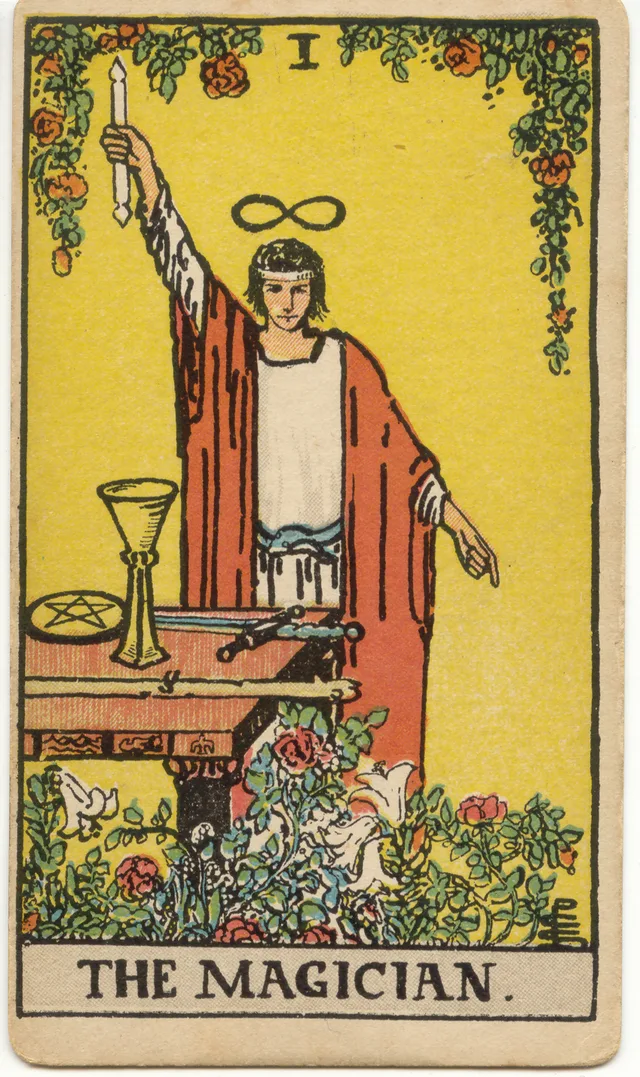
The Magician
The Magician brings several kinds of resource into one deliberate action, while the Two of Pentacles focuses on weighing competing material demands; neither proves capacity.
Read this card's meaning →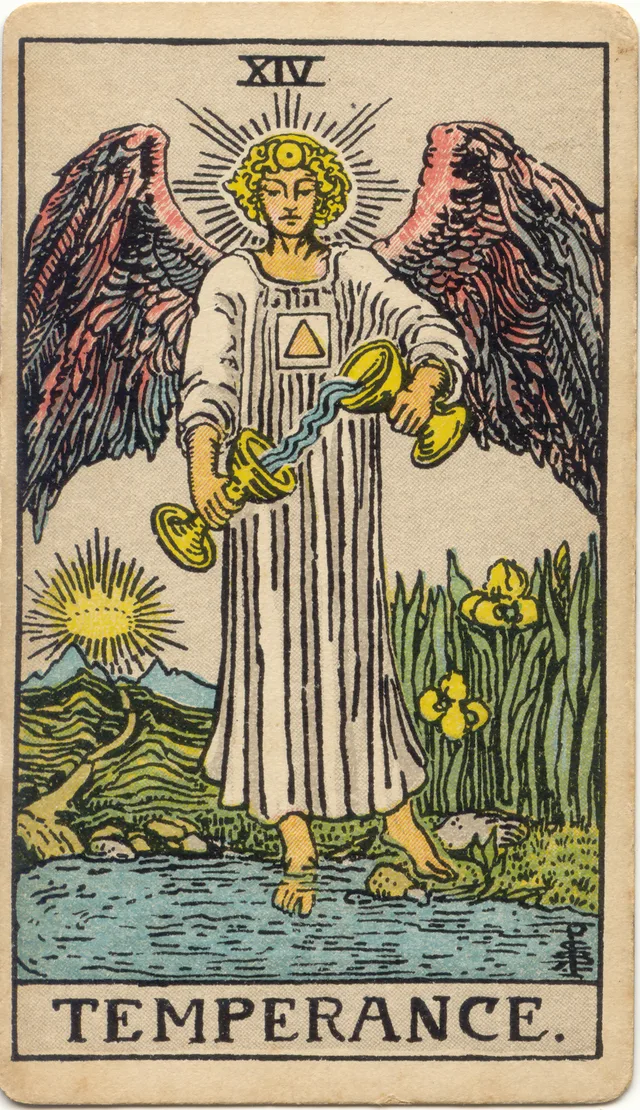
Temperance
Temperance explores proportion and adjustment, useful to compare with the Two of Pentacles' practical questions about time, money, energy, and competing commitments.
Read this card's meaning →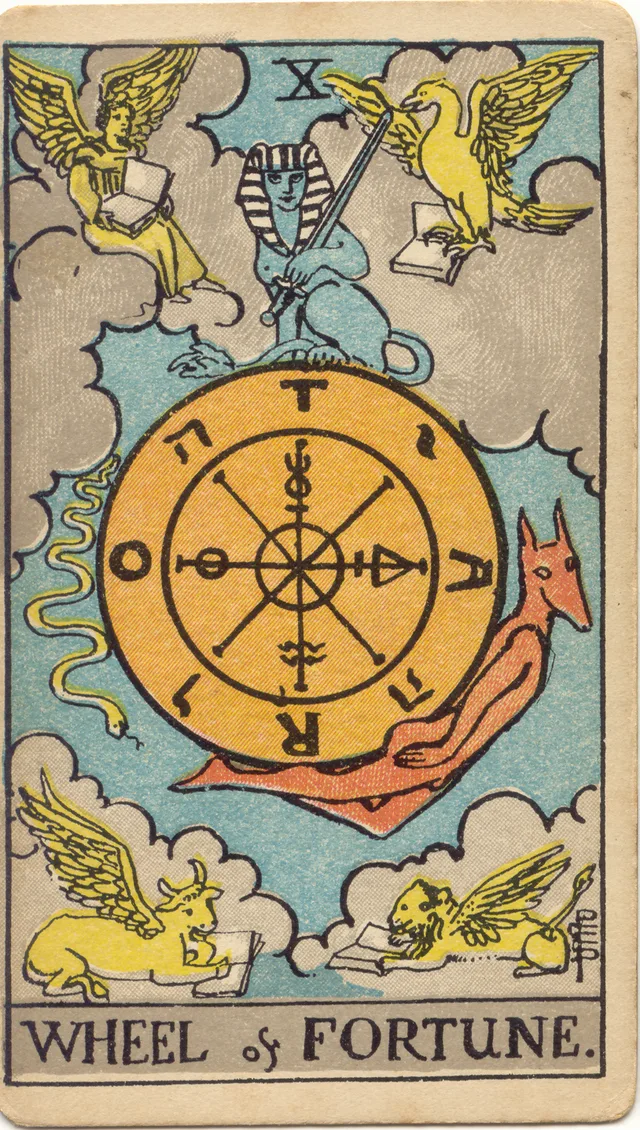
Wheel of Fortune
The Wheel of Fortune represents changing circumstances, while the Two of Pentacles explores how a person responds to changing demands; neither shows that a situation is manageable.
Read this card's meaning →