Page of Pentacles Tarot Card Meaning
The Page of Pentacles represents an earnest beginning, practical study, and curiosity about a skill, field, or clearly stated goal. It can prompt you to gather information and take a manageable first step, but it cannot prove that the path will suit you or that the effort is worthwhile. Check requirements, cost, support, and feedback as you learn.

What's pictured on the card
A young person stands alone in a lush green meadow, holding a single golden pentacle up in both hands and studying it with rapt attention, as though reading a promise in its shine. A freshly ploughed field, a cluster of trees and low mountains lie behind. Nothing is rushed; the whole posture is one of earnest, curious focus. The image captures the beginner's spirit, that grounded eagerness to learn a skill and turn a dream into something real.
Page of Pentacles upright: the core meaning
The Page of Pentacles stands in a green field, studying a single coin with earnest focus, eager to learn. Today wears a student's spirit, starting a new skill, setting a practical goal, taking the first grounded step towards something real. Stay curious and diligent. Big things grow from a small, sincere beginning made today.
There may be a fresh spark of ambition stirring in you, a new idea, a course you'd love to take, a goal you've barely dared to say aloud. Alongside the excitement, though, might sit a little fear of being a beginner: the worry that you're too old, too late, or not ready. That hesitation is tender and normal. But underneath it hums genuine curiosity, an eagerness to learn and grow that's well worth trusting more than the doubt.
Use this card as a prompt for beginnings, not mastery. If there is a skill or goal you want to explore, choose one small, concrete step such as signing up, reading an introduction, or asking an experienced person. You do not have to be good yet; you can treat mistakes as information. At work, willingness to learn is more useful than pretending to know everything. With money, test a modest plan against your budget. Small beginnings can matter without guaranteeing how large the result becomes.
Three simple ways to work with this card
- Take one tiny step towards a skill you'd love to learn, a video, a page, a first attempt.
- Write down a goal you've been shy to admit, then name one practical action you could start this week.
- Ask someone who's good at what you want to learn how they first began, and really listen.
What practical skill or goal could you take a first real step on today?
What Waite-Smith painted and why it matters
The figure holding the pentacle aloft. A young person in a green tunic and cap stands in an open field, holding a single golden pentacle at eye level with both hands. They are studying it closely. The pose supports themes of attention, practical curiosity, and learning from a real subject; it does not establish that a reader's opportunity is valuable or suitable.
The freshly ploughed field. Dark rows of recently turned earth stretch behind the Page. The field has been prepared but not planted, which supports a distinction between preparation and results. It does not establish that conditions in a reader's life are ready, affordable, or free of obstacles.
The mountains, the trees, and the green. Low hills and trees form the horizon while green appears in the clothing and landscape. Some tarot traditions associate green with the natural world and growth. In this image, the distant terrain can support discussion of effort still to come, but it cannot measure difficulty, predict progress, or show that growth will occur.
The court rank of Page. In the Waite-Smith tradition, Pages can represent messengers and students: an early stage of engagement rather than a permanent age or personality. The Pentacles Page is pictured as careful and practical, which supports questions about study, cost, and application. The rank does not show that a person will progress to a later court card.
The upright Page of Pentacles in full
The Page of Pentacles can describe an early practical effort: an educational pursuit, vocational training, a new career field, a financial habit, or a craft someone is beginning to study. The useful focus is not the label but the evidence of engagement: what is being learned, what the first task costs, what support is available, and how you can check progress.
The prepared field in the illustration offers a useful contrast between planning and results, but it cannot prove that a reader is ready or that an idea is realistic. A grounded beginning can be tested through a syllabus, budget, practice schedule, trial task, or conversation with someone experienced. Learning starts with a question and becomes more useful when feedback is recorded and compared with the original question. You can check progress by naming a skill, task, or piece of evidence in advance, rather than assuming that time spent studying is enough.
This card can support being a beginner without pretending to know more than you do. State what you understand, ask specific questions, and choose a manageable practice task. A practical approach also includes limits: estimate time and cost, identify what could go wrong, and decide when to review the results. The card cannot promise quick improvement or a lasting fit.
The reversed meaning
The most common reversal can describe a beginning that has not become action: a course enrolled in but not attended, a skill researched but not practised, or a goal discussed without a first task. Ask what is blocking action, whether the barrier is financial, practical, emotional, or structural, and what support or smaller step would provide useful information.
A second pattern is perfectionism at the entry stage: waiting for complete understanding, an ideal course, or perfect timing before trying a manageable exercise. Another is scattered study, with many starts and little time spent applying any one skill. Track the actual practice completed and choose a realistic scope instead of treating more research as automatic progress.
Occasionally the reversed Page describes carelessness with practical details: not reading terms, failing to ask how a process works, or committing without checking cost and capacity. It can also highlight that a particular beginning is not currently feasible because emotional, financial, or practical foundations are missing. Naming that constraint is information, not a character judgment.
In love & relationships
For someone single, the Page of Pentacles can describe an early connection built through conversation, shared activities, and time spent learning who the other person is. It cannot establish compatibility or future commitment. In a longer relationship, it can prompt each partner to ask what has changed and what support is needed rather than relying on old assumptions. Direct communication and observed reciprocity matter.
Curiosity and attention can support a relationship, while commitment and compatibility must be shown through communication and conduct.
- A connection that develops through shared values, clear communication, and time
- Fresh attention in an established relationship — learning a partner again
- The honesty of being new to something rather than pretending to know more than you do
- A beginning that includes clear expectations rather than romantic assumptions
- Staying permanently in the beginning phase rather than committing to real depth
- Treating someone as an interesting study rather than a person with full complexity
- Beginning repeatedly without ever staying long enough to build real intimacy
- Confusing the excitement of novelty for the deeper pleasure of being genuinely known
Career
In career readings the Page of Pentacles can frame the start of a professional path, such as a career change, a first job in a field, or a training or apprenticeship programme. Explore the direction without declaring it correct: compare requirements, cost, supervision, working conditions, and feedback. Curiosity and diligence are useful approaches, not evidence that the path will fit.
For established professionals, the Page can frame a new department, technology, or market that requires study. State the limits of existing expertise, seek supervision, and check how the learning will be assessed. For further training, compare tuition, time, accreditation, placement information, workload, and likely alternatives; the card cannot determine whether the investment fits your budget, goals, and alternatives.
A beginner deciding whether to enrol in a course can make the comparison concrete. Read the syllabus and assessment method, calculate the total cost rather than only the advertised fee, check the weekly schedule against existing duties, and ask whether the qualification is recognised for the work being considered. Speak with a current student or recent graduate about workload and support, while treating their experience as one source rather than a guarantee. If possible, try a free lesson, introductory task, or short conversation in the field before paying. Keep a written list of questions and note which answers came from official documents, which came from people, and which remain unknown. This turns enthusiasm into a manageable investigation without asking the card to approve the purchase.
Money
In financial readings the Page of Pentacles can frame the beginning of closer money management: reviewing statements, tracking income and spending, opening an account, sending a first invoice, or researching an investment. Use verified figures, fees, liquidity needs, risk tolerance, and qualified advice before acting. The card cannot establish that a financial product is suitable.
For a first budget, use the last few statements to separate fixed bills, flexible spending, debt payments, and irregular annual costs. Choose a review date and record questions about fees or tax treatment for a qualified adviser. A written baseline is more useful than a vague promise to be careful.
Health & wellbeing
As a wellbeing card, the Page of Pentacles can prompt a manageable first step, such as booking an appointment, tracking sleep, or trying a light activity if it is appropriate. Record what you do and how you feel, and follow qualified health advice. The card cannot establish a health need or decide which routine is safe.
For mental and emotional wellbeing, it can describe an early stage of learning about personal patterns, therapy, or coping strategies. Use reliable sources and qualified support, and distinguish a general description from a diagnosis. Openness to information should include checking whether it applies to your circumstances.
Life events & big decisions
At a decision point, the Page of Pentacles can focus attention on what each option would teach and require. For retraining, a new role, or an unfamiliar skill, compare prerequisites, cost, time, supervision, income, and exit options. A first step can gather evidence, but the card cannot rank directions or guarantee that the eventual result will suit you.
Contracts, deals & signatures
Beside contracts, the Page of Pentacles can prompt the basic question: do you understand what you are agreeing to? Before signing an agreement for study, employment, training, or a first business arrangement, check duties, payment, schedule, ownership, cancellation, confidentiality, and dispute terms. Ask a qualified reviewer about anything unclear.
For apprenticeships, internships, and training contracts, review intellectual property, supervision, payment, post-completion obligations, and what happens if either party exits early. The card can organise those questions, but only the written agreement and qualified review clarify the actual obligations.
Entrepreneurship & business
For anyone starting a business, the Page of Pentacles brings practical groundwork into focus: research, customer conversations, pricing and systems. It cannot establish that the groundwork is sound or tell someone to launch. A limited, methodical test may gather evidence, but feasibility, cost and results determine what happens next.
Pairings and real reading patterns
The Page of Pentacles beside The Magician can prompt an inventory of tools, training, and a small practical test; the pairing does not establish that resources are sufficient. Beside the Eight of Pentacles, compare a beginner's task with the practice needed to improve. In both pairings, work samples and feedback provide information that the cards cannot.
The Page of Pentacles can be useful when someone who has been dissatisfied at work is considering a different field. Replace the vague wish with research: identify entry requirements, training cost, likely schedule, transferable skills, and a small way to test the work. There is no card-based deadline for beginning; practical circumstances and the reader's priorities determine the pace.
What does the Page of Pentacles mean in tarot?
Is the Page of Pentacles a yes or no card?
What does the Page of Pentacles reversed mean?
What does the Page of Pentacles mean for love?
Does the Page of Pentacles mean a message about money or a job?
If the Page of Pentacles has appeared for you today, define the smallest useful action connected with the subject: compare two course requirements, set a budget, practise for fifteen minutes, or ask a specific question. Let the action produce information rather than treating it as a promise to continue.
Careful attention is the quality to borrow from the illustration. The free daily draw is there each morning if you want a brief practice of naming a practical question and checking it against real information. The card can support beginner-friendly reflection, not proof that a project is viable or sustainable.
The Page of Pentacles can encourage genuine curiosity without requiring expertise. Start with one learnable task, then use practice and evidence to decide what deserves further effort.
Related cards and themes
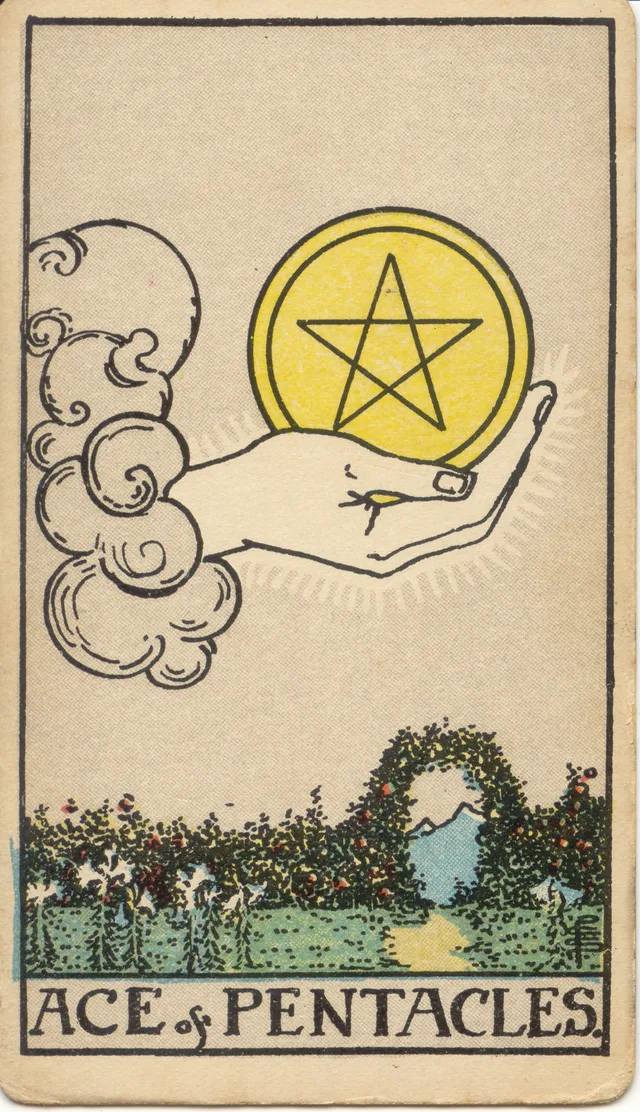
Ace of Pentacles
The Ace of Pentacles introduces a material possibility; the Page of Pentacles examines how to learn, budget, or work with it. The pairing contrasts an opening with the practical study that follows.
Read this card's meaning →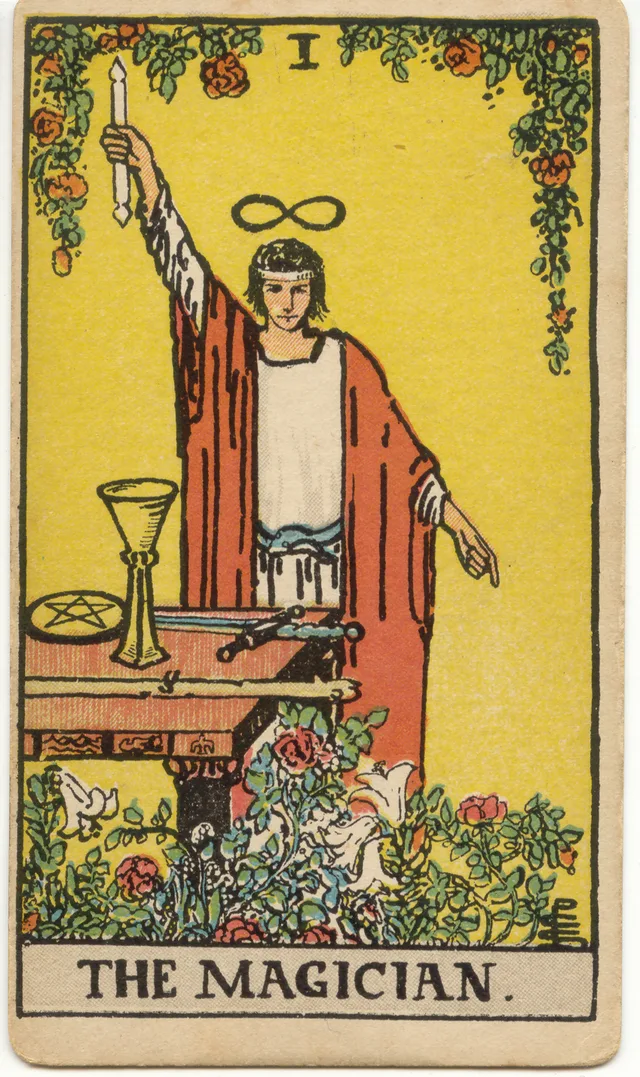
The Magician
The Magician focuses on using available tools, while the Page focuses on learning what those tools can do. Together they can prompt an inventory of skills, resources, and gaps in knowledge.
Read this card's meaning →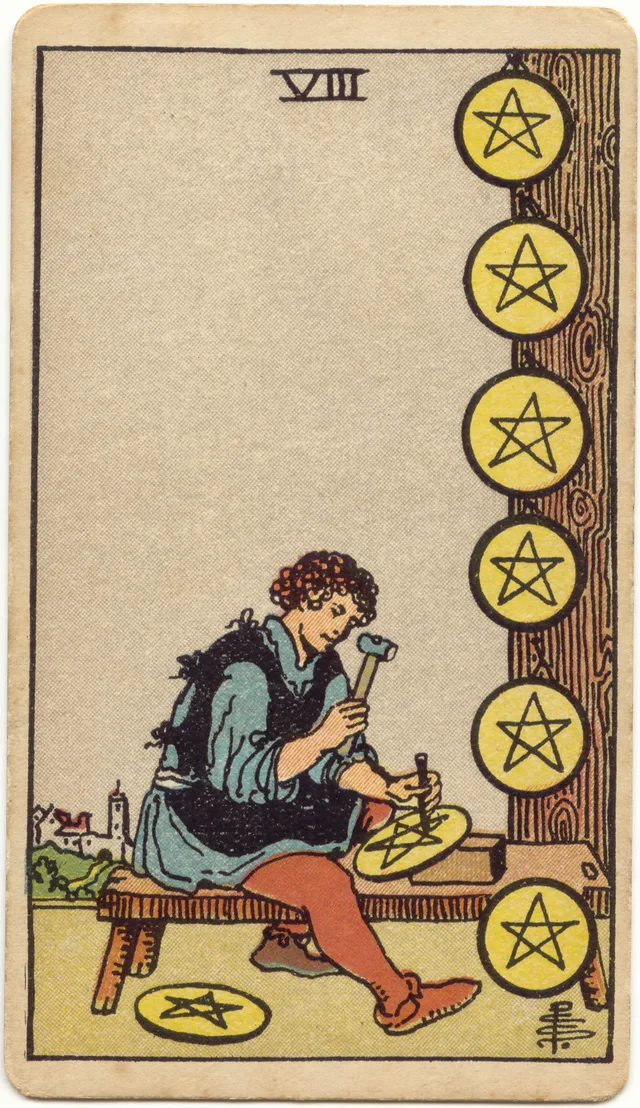
Eight of Pentacles
The Eight of Pentacles represents sustained practice; the Page represents the initial learning stage. Read together, they support questions about practice time, feedback, and how skill is being developed rather than a promise of mastery.
Read this card's meaning →