The Emperor Tarot Card Meaning
The Emperor represents structure, boundaries, and responsibility. In a reading he can prompt a practical framework for scattered money, unclear work expectations, or a relationship in which needs have not been stated. The card cannot decide who should lead or guarantee stability; define responsibilities, limits, resources, and a review point that everyone can consent to.

What's pictured on the card
The Emperor sits on a grey stone throne carved with four ram's heads, a nod to Aries and steady drive. He wears a red robe over armour, holds an ankh-topped sceptre in one hand and a golden orb in the other, and his long white beard signals hard-won experience. Bare mountains rise behind him. Everything in the scene speaks of order, authority, and structure, the firm framework that turns raw energy into something that lasts.
The Emperor upright: the core meaning
Seated on a solid stone throne, the Emperor brings order to what felt scattered. Today rewards a bit of backbone: clear boundaries, a simple plan, and the willingness to take charge of your own patch. You don't need to control everything, just build a steady frame you can stand inside.
There may be a part of you today that's tired of things feeling loose or left to chance, craving solid ground. Perhaps you've been waiting for permission, or for someone else to take charge. Underneath, you already sense that the steadiness you want has to be built rather than found. That wish for a bit of control isn't rigidity, it's a healthy longing for a life that holds its shape when you lean your weight on it.
Bring a little order to whatever feels chaotic today. Pick one area, give it a simple structure, a plan, a deadline, a boundary, and notice how much more at ease you feel working within it. At work, take ownership of your patch rather than waiting to be told. In love, be dependable; showing up consistently says more than grand gestures. With money, a basic budget or one firm rule steadies the ground under you. If family leans on you, lead without becoming the martyr who does it all alone. You needn't control every outcome, just build a frame you can trust and stand within it. Firm and kind can absolutely be the same thing today.
Three simple ways to work with this card
- Choose one messy corner of your life and give it a simple, workable structure before the day is done.
- Set one clear boundary you've been avoiding, and state it plainly and kindly to the person it concerns.
- Write a short, practical plan for a goal, broken into steps you can actually start this week.
Where in your day would a little more structure actually set you free?
Every symbol, explained
The four ram's heads. Four ram's heads are carved into the throne. The ram is associated with Aries and can represent initiative or force; turned into stone furniture, that energy becomes a structure expected to carry weight. The carving can prompt questions about how authority is used, but it cannot establish a leader's character.
The armour under the robe. Mail is visible at his shins and forearms beneath the red robe. It shows a ruler prepared for conflict rather than a purely ceremonial figure. Red is traditionally linked with Mars, and Aries is Mars-ruled in astrology, but those associations do not prove that authority was earned through conflict or that firmness is needed in a real situation.
The ankh and the orb. He holds an ankh-topped sceptre, a symbol traditionally associated with life, and a golden globe representing the material world. Holding both can prompt reflection on how authority affects people's lives and resources. A symbol cannot show whether power is being used responsibly; review conduct, accountability, and consent.
The white beard and bare mountains. The white beard presents an older ruler, while jagged orange mountains behind him are bare of vegetation. The scene associates the card with experience, endurance, and protection, but age does not guarantee wisdom or fairness. The barren landscape also contrasts with the Empress's fertile setting, inviting a question about what structure protects and what it might restrict.
The number four, and Aries. Four is associated with a square, foundation, and clear boundaries in tarot symbolism. Aries is associated with initiation and direct action. Together they invite reflection on turning an idea into defined responsibilities and processes; they do not show that a structure will last or outlive its founder.
The upright meaning, in detail
The Emperor can be used to explore how structure affects freedom. A budget, rota, written boundary, or decision rule may reduce repeated choices, but too much structure can also restrict people. Identify the problem, agree who has authority, record the rule, and set a review point instead of assuming any framework will help.
The card often directs attention to practical administration rather than dramatic change. A reader may recognise an area with unclear ownership, but the image cannot identify who should lead or whether self-management is possible. Clarify the decision, authority, resources, and accountability with the people affected.
The Emperor is not an instruction to dominate people. Authority should include responsibility, limits, and accountability, while a personal boundary describes what you will do rather than controlling another person's choice. Reliability and warmth can coexist; the card cannot certify that a person is trustworthy.
The reversed meaning
Reversed, one theme is rigidity: a rota, rule, or process that may have outlasted the circumstances it was designed for. Review results, current needs, and who is affected rather than assuming that history makes a structure valid.
A second theme is missing structure: unclear plans, boundaries, or ownership. Improvisation may be necessary in some settings, so check actual outcomes and capacity before labelling it a problem. Written responsibilities and review points can make gaps visible without assigning blame.
A third theme is authority used without accountability: control presented as care, or decisions made without the affected person's consent. The card cannot identify a domineering boss or parent, so assess specific conduct, power differences, boundaries, and available support.
A quieter theme is avoiding responsibility: leaving decisions to a partner, ignoring paperwork, or waiting for someone else to resolve an issue. Consider capacity, access, and support before calling this avoidance. Make ownership explicit and choose a realistic next task.
Read reversals as a review of fit. If a rule is causing harm, test a proportionate change and observe results; if responsibilities are unclear, document them. Position may suggest which question to ask, but the card cannot establish that a person controlled you or that a structure will protect or restrict you.
In love & relationships
If you're single, the Emperor can prompt you to define relationship standards in terms of communication, respect, availability, and boundaries rather than a rigid list of traits. A written list cannot predict compatibility. Let observed conduct and direct conversation matter more than a tarot verdict.
In a relationship, the card can focus on reliability: keeping agreements, sharing practical work, and discussing changes. Trust involves more than a record of promises, and the card cannot certify it. Compare words with conduct and make sure both people can question or revise arrangements.
A hard conversation may involve a boundary with family: unannounced visits, an undocumented loan, or unwanted comments. State what you will do, what you need, and what happens next without assuming the other person will agree. If communication is unsafe, seek support rather than confronting someone alone.
Structure either holds a relationship up or pins it down.
- Being reliable in the small, dull things nobody praises
- Saying a limit once, plainly, and then simply holding it
- Sharing the admin of a life rather than one person carrying it
- Choosing steadiness over intensity when both are on offer
- Managing a partner as though they were a department
- Being right in a way that makes someone fall silent
- Running a household so efficiently that no warmth gets in
- Confusing emotional armour with strength
Career
On a job hunt, the Emperor can prompt questions about reporting lines, responsibilities, performance measures, pay, and decision authority. Vague roles need clarification, but structure alone does not make an employer suitable. Compare written terms, culture, resources, and your own priorities.
In the workplace, clarify ownership of a defined area, the authority available, and how success will be measured. Performance concerns should follow policy, evidence, fair process, and appropriate support; the card cannot label a colleague an underperformer or instruct a manager to act.
For a promotion, document achievements and ask about criteria, pay, and responsibilities. If leaving, compare the current terms with alternatives and review notice, finances, and support. The card cannot tell you to remain until a structure changes or establish that an exit is right.
Money
The Emperor can prompt a clear budget: list fixed and variable outgoings, compare them with verified income, and assign any remainder only after essential costs and obligations are covered. A budget describes information; it cannot decide what is affordable without accurate figures and context.
For spending, practical rules such as a cooling-off period or an automatic transfer may help some people. A three-month buffer is a planning example, not a universal requirement. Consider income, dependants, debt, access to funds, and professional advice rather than treating a target as proof of safety.
With debt, list every balance, rate, payment, fee, and deadline together. Compare repayment options and check consequences before using a windfall; a qualified adviser can help where terms or hardship are complex. The card cannot identify an affordable order or guarantee that a buffer will protect you.
Health & wellbeing
Astrological associations with Aries, the head, Mars, heat, or inflammation are symbolic and cannot diagnose jaw tension, headaches, or other symptoms. If an appointment has been delayed, use actual symptoms and clinical guidance to decide how promptly to seek care.
For habits, a consistent time and place may help, but health needs differ. Include rest, flexibility, accessibility, and professional guidance rather than treating discipline as a cure. A work-stop time can be useful, but it must fit the person's job, care duties, and wellbeing.
Life events & big decisions
For a move, the Emperor can prompt a review of surveys, lease terms, total monthly costs, repairs, rights, and deadlines. It cannot determine whether you will be happy or whether a property is sound. Obtain inspections and qualified advice, and treat pressure to skip documents as a reason to slow down and verify.
Around weddings, the Emperor can bring legal arrangements, money, shared work, and contingency planning into the conversation. Early clarity may help, but it does not predict comfort ten years later. Discuss consent and roles, and obtain independent advice for legal or financial decisions.
After a loss, practical administration—forms, calls, notifications, and bills—may need attention alongside grief. The card cannot prescribe a timetable or decide whether to postpone a life change. Share tasks, check legal deadlines, and seek support while making decisions at a pace your circumstances allow.
Contracts, deals & signatures
For contracts, the Emperor can prompt clear written terms, including each party's deliverables, dates, delays, changes, payment, dispute process, and exit. Trust does not remove the need for documentation. A qualified adviser should explain whether the terms are enforceable or suitable.
For timing, allow enough time to read the document, gather advice for significant commitments, and confirm that all schedules and attachments are present. Pressure from the other side is relevant information about the process, but the card cannot establish bad faith.
Before negotiating, write down priorities, limits, alternatives, and a walk-away point. Revisit them if new information appears, and state terms clearly without treating firmness as hostility. The card cannot determine what is fair or what the other party intends.
Entrepreneurship & business
For starting a business, the Emperor can prompt practical foundations: appropriate registration, separate accounts, accurate numbers, clear offers, and documented responsibilities. Whether a business can operate during illness depends on staffing, systems, and resources, not on a card.
For growth, document how work is done, quality standards, failure responses, approvals, and access to information. Review whether the system still fits demand and staff capacity. Documentation can support continuity, but it cannot guarantee growth or make every absence manageable.
For hiring, define duties, authority, pay, support, and performance measures before interviewing. Clear accountability does not remove the need for fair process or adaptation. For risk, record costs, limits, assumptions, and downside scenarios before committing, then review them as evidence changes.
How it shows up in real readings
His neighbours can broaden the questions. Beside The Empress, compare structure with care and flexibility. Next to The Hierophant, ask which rules were inherited and whether people still consent to them. With The Tower, review foundations, failure points, and contingency plans rather than assuming a collapse or assigning blame.
A client once objected to the Emperor because he ran two businesses and believed structure was already his strength. Reviewing the situation showed clear business systems but no finishing time, day off, or boundary around a partner's late calls. He chose a phone cut-off time and discussed calling hours. He later reported that the change helped. The improvement came from an agreed boundary and observed practice, not from the card proving what to do.
What does The Emperor mean in tarot?
What does The Emperor reversed mean?
Is The Emperor a good card for love?
How soon do things happen with The Emperor?
Does The Emperor represent a specific person?
If the Emperor has turned up for you today, avoid changing everything at once. Choose one area, write down the problem, define a small responsibility or boundary, and set a review point. Change the arrangement if evidence shows that it is not helping.
Also notice which decisions require another person's consent or authority and which are genuinely yours to make. If you want a small daily reflective structure, the free daily draw takes a minute each morning. Use it to identify questions, then check the facts and people involved.
The Emperor can frame structure as a practical tool rather than control for its own sake. Choose one messy area, set a proportionate rule, and review whether it supports responsibility without becoming rigid.
Related cards and themes
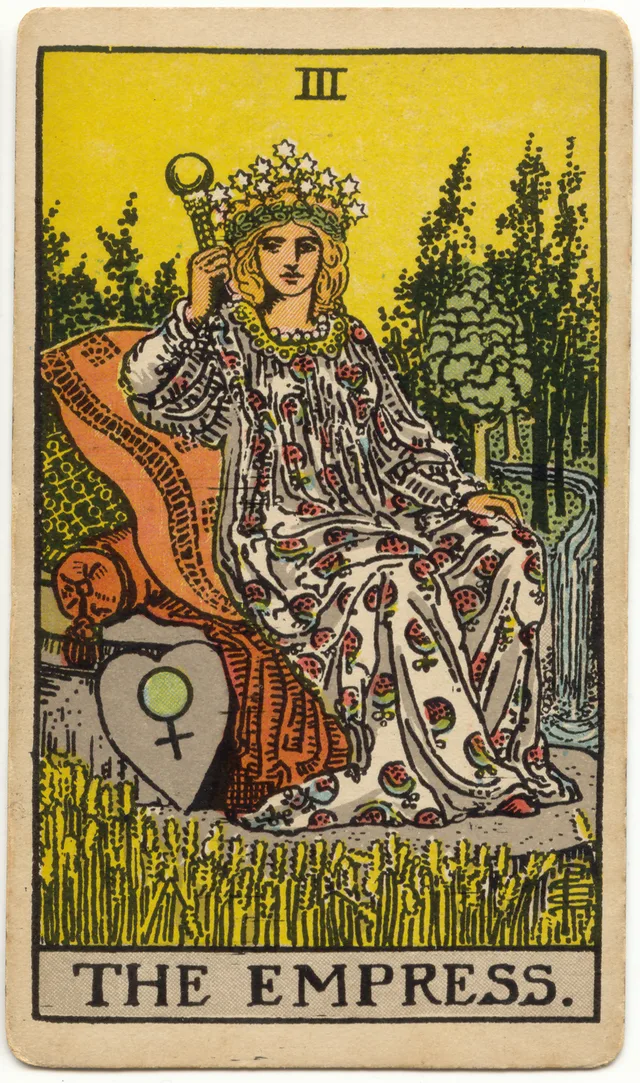
The Empress
The Empress focuses on care and growth; the Emperor focuses on structure, so together they raise questions about support and boundaries.
Read this card's meaning →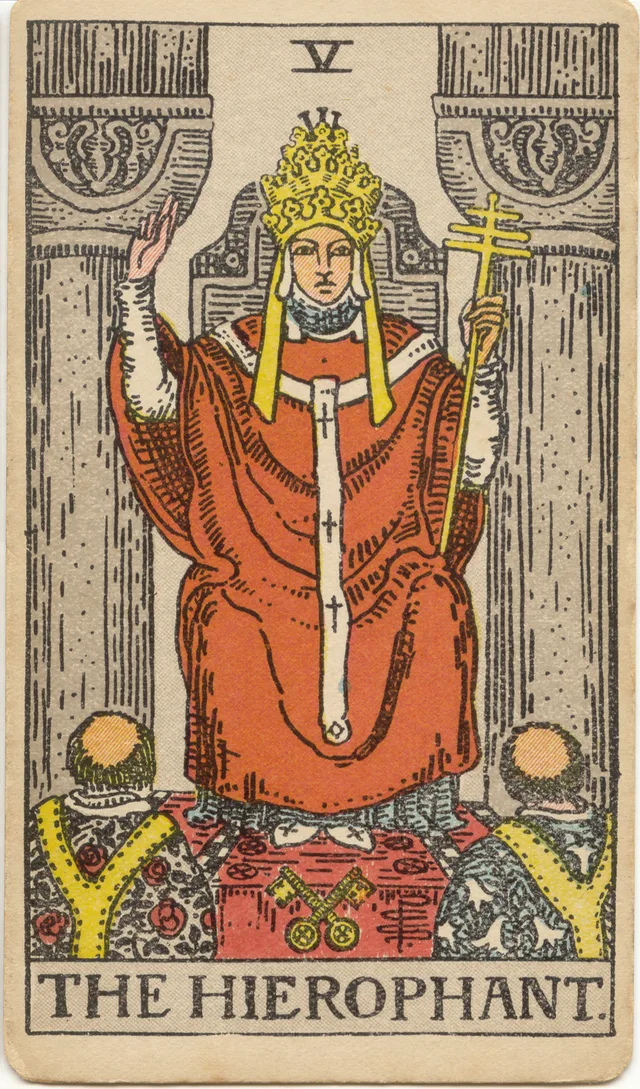
The Hierophant
The Hierophant explores inherited teaching and tradition; the Emperor explores the rules and responsibilities being used now.
Read this card's meaning →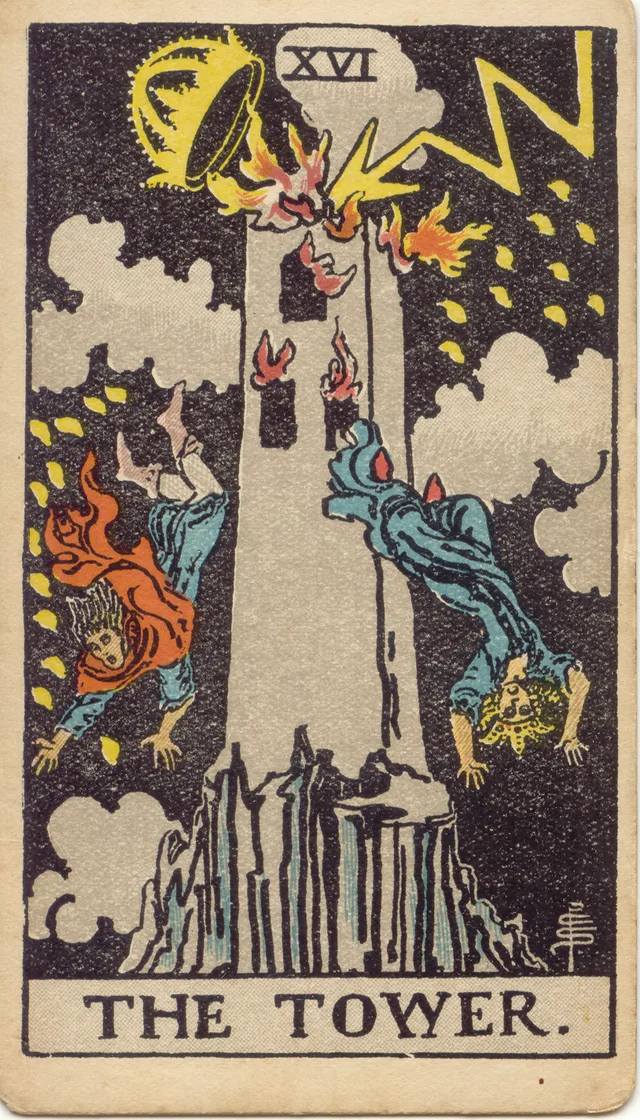
The Tower
The Tower explores disruption; beside the Emperor, it can prompt a review of foundations, authority, and systems that no longer work.
Read this card's meaning →