Ten of Pentacles Tarot Card Meaning
The Ten of Pentacles depicts shared resources, family, home, and long-term foundations. It can prompt questions about what you want to preserve, pass on, or build with others. The image does not prove that lasting security is already present or guaranteed; compare the plans, responsibilities, resources, and relationships that would make it sustainable.

What's pictured on the card
Beneath a grand stone archway, an elderly patriarch in a robe embroidered with vines sits among his family, two white dogs at his knee. A young couple stands nearby, a child reaches towards the dogs, and ten pentacles are arranged across the scene in the pattern of the Tree of Life. Banners and a settled home fill the background. The image speaks of lasting wealth, the kind woven through family, tradition and the security passed down over generations.
Ten of Pentacles upright: the core meaning
The Ten of Pentacles shows generations gathered in a settled, prosperous home, the kind of wealth that lasts beyond one person. Today points to the long view, building security that supports the people you love, roots that outlive the moment. Think beyond the quick win. Tend what endures: family, home, and the foundations others will stand on.
You may be feeling the pull of the long view today, thinking about roots, belonging and whether the foundations of your life feel solid enough to rest on. Perhaps there's a wish for more stability, or a tender awareness of family, home and what you want to pass on. There can be a quiet worry about the future mixed in. But beneath it lies something kind: a longing to build something that lasts, and to feel held by the people who are yours.
Take the long view today and test it against actual resources and obligations. Instead of chasing a quick win, consider what supports a savings plan, family bond, or home over time. At work, review foundations such as reliable relationships and steady habits without assuming they guarantee a reputation. In family life, invest in connection when it is mutual. With money, compare patient building with risky shortcuts. Legacy can be material or relational; decide what you want to pass on and what the plan requires.
Three simple ways to work with this card
- Make one small decision today with your future self in mind, a saving, a habit, a repair.
- Reach out to an elder or family member and ask them about a story from your shared past.
- Do one small thing to make your home feel more settled and safe, tidy, mend, or nurture a corner.
What lasting foundation are you building for the people you love today?
What Waite-Smith painted and why it matters
The archway and the family scene. The image shows an elderly man in a robe covered in grape and moon symbols sitting beneath a large archway. Behind him, a younger couple stands talking while a small child reaches towards two white dogs. At least three generations share one domestic setting. That arrangement makes family continuity and shared resources useful subjects for reflection; it does not establish that a family is harmonious or financially secure.
The ten pentacles in the Tree of Life pattern. The coins are arranged in the Kabbalistic Tree of Life, a diagram traditionally used to connect spiritual and material levels. In this illustration, that arrangement places money, property, and practical security within a wider picture of values and relationships. It invites a question about what resources are meant to support, rather than proving that prosperity has depth or will continue.
The dogs. Two white dogs stand calmly in the foreground. Dogs elsewhere in the Rider-Waite deck can suggest loyalty, instinct, or familiar surroundings; here their relaxed posture adds an ordinary domestic detail. The dogs can prompt reflection on trust and belonging, but the picture cannot confirm that a home or relationship is safe, settled, or free of conflict.
The robes and the castle. The elder's robe is richly embroidered with grapes, which can be read as a reference to cultivation and time. Behind the couple, the archway opens onto a substantial town with walls. These details make maintenance, history, and the work of building a home relevant themes; they do not show that the depicted settlement will remain unchanged.
Ten, and the completion of Pentacles. Ten marks the suit's fullest numerical expression. The Ten of Cups explores emotional and domestic fulfilment, while the Ten of Swords explores an ending after prolonged mental strain. The Ten of Pentacles turns attention to material arrangements that may affect more than one generation: housing, money, responsibilities, and what people choose to preserve. A number cannot establish that anything built will last.
The upright Ten of Pentacles in full
The Ten of Pentacles can be used to think about the long view: not only the next quarter or year, but the next decade and the people who may depend on today's choices. Here, legacy means the documents, resources, skills, customs, and responsibilities that one person leaves for others. A reading can help you name those priorities; budgets, records, conversations, and professional advice show whether the arrangements will support them.
In practical terms, this card can bring attention to decisions affecting a life over many years: estate planning, property, pensions, and provisions for children or dependants. These tasks are easy to postpone. If they matter to your situation, use the card as a reminder to gather the actual figures and documents, discuss responsibilities with the people involved, and obtain qualified legal or financial advice. Administration does not turn prosperity into security by itself; clear, workable arrangements do.
The card can also raise the subject of belonging: feeling at home in a place, family, community, or profession after years of participation. The elderly figure under the archway makes accumulated history visible, but the image cannot tell you whether a particular group welcomes you or whether its traditions are healthy. Ask what belonging requires from you and what you need in return.
The Ten does not establish that everything is perfect or that change has ended. Several generations in one courtyard may still have disagreements, silences, and unresolved histories. The scene simply gives material arrangements a prominent place. A stable home, a loving relationship, and a conflict-free family are different claims, so examine each with direct conversation and observed behaviour.
The reversed meaning
One possible reversed theme is family financial tension: an estate dispute, disagreement about inheritance, or unequal contribution that people avoided discussing. The image can help name a conversation that has been delayed, but it cannot establish who is responsible or what anyone intended. Check the will, accounts, agreements, and each person's stated understanding before drawing conclusions.
A second possible theme is the appearance of security without enough support underneath it: debt that is affordable only while income stays unchanged, reliance on one income source, or a home whose value is doing the work of a broader plan. Review repayment terms, income, reserves, insurance, and realistic scenarios. The card cannot tell you whether a plan is resilient.
Another possible reversal concerns inherited money values: treating accumulation as the only form of security, using money to control access or decisions, or passing financial anxiety from one generation to the next. Consider which beliefs you learned, which still help, and which you want to change. Do not assume a family member's motive from a card; ask about the arrangement directly.
The reversed card can also support reflection on breaking with tradition: leaving a family business, choosing a different career, or defining security for yourself instead of adopting someone else's model. Whether that change is workable depends on income, housing, relationships, and responsibilities. A different path is not automatically a failure or the right choice.
In a financial or estate context, the reversed Ten can prompt a review of unwritten understandings. A verbal promise or assumption about who receives what may not be enforceable or understood in the same way by everyone. Put terms in appropriate written documents, check them with qualified advisers, and discuss them with the people affected.
In love & relationships
If you're single and the Ten of Pentacles appears, it can move attention from the next date to the kind of partnership you want to build. Consider whether you want shared housing, family responsibilities, financial decisions, and a long history, or whether those commitments are not part of your plans. Let your stated needs and a person's observed conduct guide your choices rather than treating the card as a compatibility verdict.
In an established relationship, the Ten can focus discussion on long-term security, domestic decisions, and the practical work of sharing a life. Buying property, formalising a partnership, or combining finances requires affordability checks, consent, clear terms, and independent advice where needed. The card cannot certify that a couple is ready or that a commitment will last.
It can also bring extended-family dynamics into view: parents, in-laws, shared history, and expectations about care or money. Discuss which traditions both partners want to continue and which boundaries need renegotiation. The card cannot decide whether either family is supportive or fair.
Long-term commitment either builds a genuinely enduring foundation or entrenches patterns that belong to someone else's idea of security.
- A shared material and domestic life oriented towards the long term
- Two families integrating in a way that adds rather than complicates
- Decisions about property, finance, and future made together and on paper
- A partnership that deepens with time rather than needing romantic intensity
- Staying because the financial structure makes leaving feel impossible
- Family expectations about a partnership overriding what both people actually want
- Treating 'security' as a substitute for genuine happiness
- Inherited relationship patterns passed down without examination
Career
In career readings, the Ten of Pentacles can focus on a long professional contribution: a reputation developed over years, knowledge that remains useful after a role changes, or work that supports a wider community. It is less about a single promotion than about the record of what has been built. Review actual achievements, working conditions, and the terms of any role before deciding what legacy means for you.
It can also raise succession, mentoring, and knowledge transfer. Who has access to your training and records? Who could carry a process if your role changed? Leaders can review whether systems, pay, authority, and support allow other people to contribute, rather than assuming that a legacy is automatically beneficial.
Family businesses bring professional and family roles together, so responsibilities, ownership, pay, and succession need especially clear documentation. Discuss arrangements early and use qualified legal, tax, or business advice. Never assume relatives share your understanding simply because they share a history.
Money
The Ten of Pentacles can bring long-term financial planning into focus: pensions, property, inheritance, and decisions that may affect another generation. A patient approach may be relevant, but the card cannot endorse an investment or establish that a strategy will grow. Use verified figures, risk information, written terms, and qualified advice.
A financial reading can prompt a checklist: is there a current will, suitable insurance, documented arrangements with family or business partners, and an active pension contribution? These are practical questions, not evidence that a crisis is coming or that the family in the illustration represents a desired outcome.
Health & wellbeing
In a wellbeing reading, the Ten of Pentacles brings the long-view question to the body: what are you building physically that will support you in ten or twenty years? This is the card of the sustainable habit rather than the dramatic fix — the regular movement, consistent sleep, manageable eating maintained across years rather than the intense programme abandoned after six weeks.
It can also speak to the health legacy we inherit — physical patterns, medical histories, habits around food or rest absorbed in childhood. As a wellbeing card it occasionally asks: which of the health patterns I've inherited are actually mine to carry, and which am I carrying out of habit rather than choice?
Life events & big decisions
At a major crossroads, the Ten of Pentacles can help you include long-term effects in the comparison. It does not approve one salary, employer, home purchase, rental, or family decision. Assess stability, affordability, risk, rights, alternatives, and the people affected using evidence and qualified advice where appropriate.
Around property, wills, or estate matters, the card can remind you to identify what needs a decision and set a practical review date. Discuss who has authority, what each document provides, and how responsibilities will be handled. Calm, early conversations may reduce confusion, but legal and financial professionals must confirm the arrangement.
Contracts, deals & signatures
Beside a contract, the Ten of Pentacles can prompt a five- or ten-year review question: how might the agreement work if circumstances change? Employment contracts, property deeds, partnerships, and family arrangements need clear duties, review points, exit terms, and appropriate advice. Whether terms are fair or functional must be assessed from the document and the parties' circumstances, not from the card.
For wills, trusts, and estate documents, use the card as a prompt to check whether the work is complete and current. A qualified professional can explain formal requirements and likely consequences. Writing a will may be uncomfortable, while an unclear or outdated document can leave practical questions for other people to resolve.
Entrepreneurship & business
For business owners, the Ten of Pentacles can focus attention on the whole enterprise: documented quality, durable customer relationships, succession, ownership, and operations that do not depend on one person's memory. That is an ambitious planning horizon, not a forecast. Assess demand, cash flow, governance, staffing, and legal arrangements before deciding how to grow.
It can also prompt questions about continuity: Is knowledge documented? Is there a succession plan? Could ownership be transferred, and what would customers, staff, lenders, or family need to know? Answer those questions with records and professional advice rather than assuming that a business will survive or that a transfer is possible.
Pairings and real reading patterns
The Ten of Pentacles can be read alongside its neighbours as a set of questions rather than a verdict. Beside The Emperor, compare formal structure with the people and resources that structure is meant to support. Near the Four of Wands, discuss how a celebration relates to the practical arrangements that follow. With the Nine of Pentacles, consider how personal resources might be shared without assuming that generational security will result.
This card can appear in reflective work around retirement, selling a long-held business, estate matters after a death, or property held by a family for decades. Those discussions often include meaning, responsibility, identity, and memories as well as money. Give each issue its own conversation; the card can name the themes, but it cannot resolve them or make a financial decision for anyone.
What does the Ten of Pentacles mean in tarot?
Is the Ten of Pentacles a yes or no card?
What does the Ten of Pentacles reversed mean?
What does the Ten of Pentacles mean for love?
Does the Ten of Pentacles mean wealth?
If the Ten of Pentacles has appeared for you today, choose one practical review: gather financial records, arrange qualified advice, check a will, or ask family members to clarify responsibilities. These actions can turn a broad reflection about stability into information you can discuss and use.
Think about what you want to support five or ten years from now, then identify the documents, savings, conversations, and boundaries that would help. The free daily draw is there each morning if you want a small, consistent reflective practice. Practical security grows from informed decisions, not from the card alone.
The Ten of Pentacles can represent structures supporting a household or community over time. Review resources, obligations, and access; the image cannot guarantee lasting security.
Related cards and themes
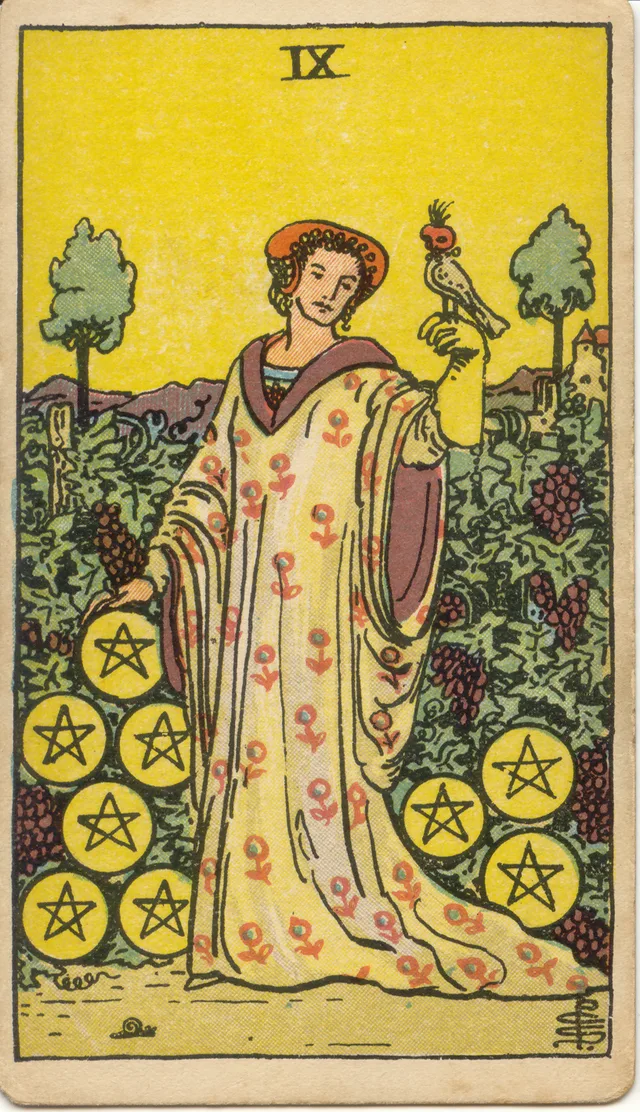
Nine of Pentacles
The Nine focuses on maintaining your own resources; the Ten asks how resources, responsibilities, and care are shared with other people.
Read this card's meaning →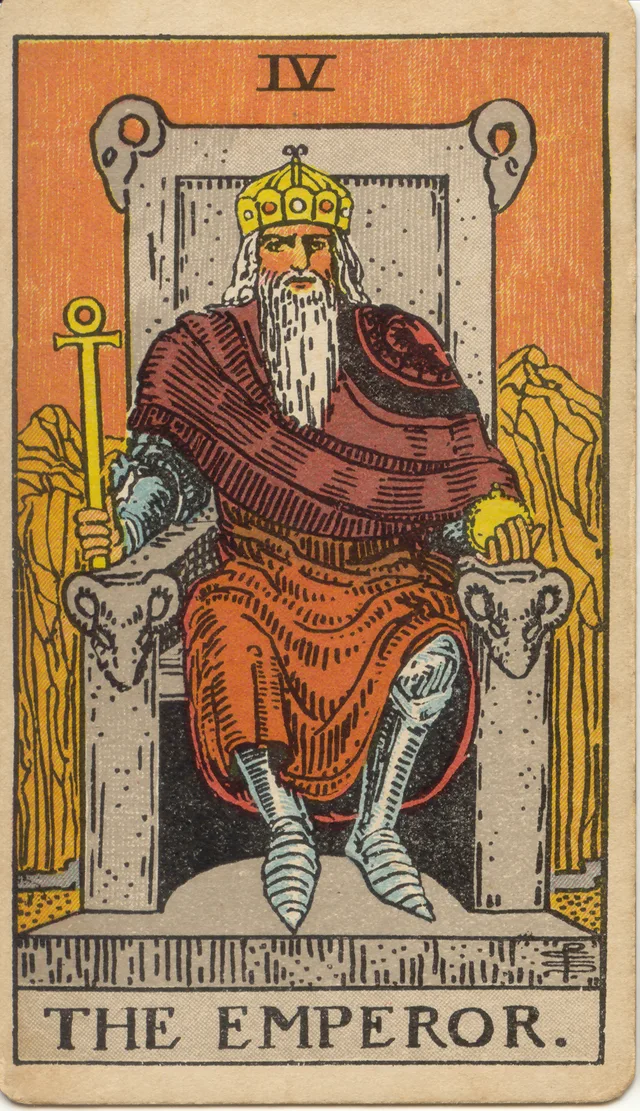
The Emperor
The Emperor focuses on rules and responsibility; the Ten applies those questions to a household, family, or organisation over time.
Read this card's meaning →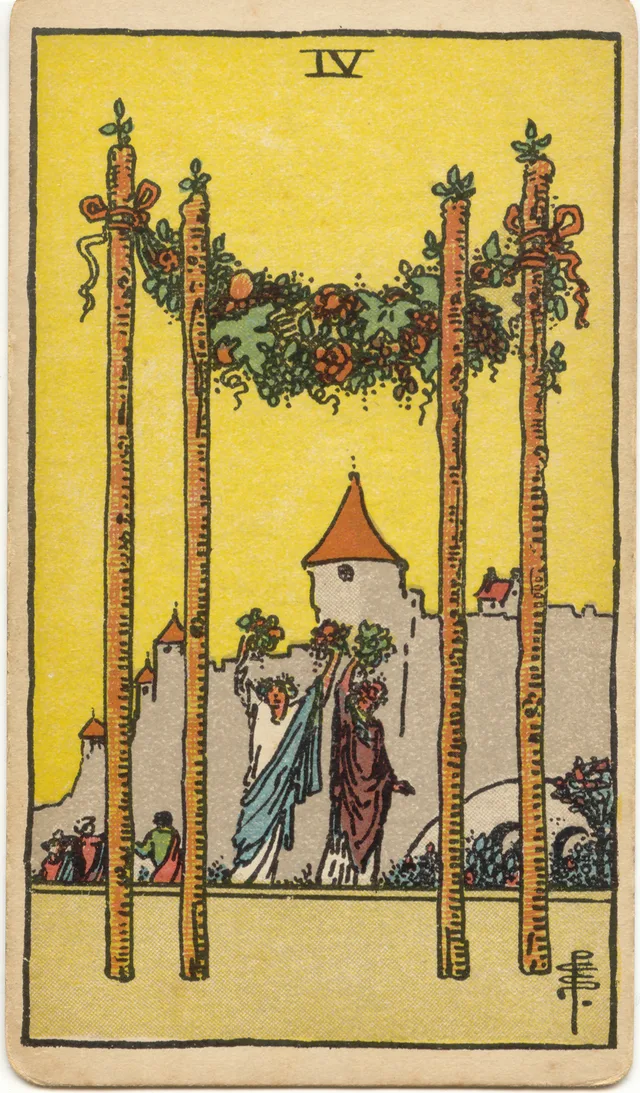
Four of Wands
The Four of Wands highlights a gathering or milestone; the Ten considers the home, resources, and arrangements that support life after the celebration.
Read this card's meaning →