Ten of Swords Tarot Card Meaning
The Ten of Swords depicts a painful ending alongside a thin line of light on the horizon. It can prompt reflection on exhaustion, finality, and what needs to be acknowledged before rebuilding, but it cannot establish that the worst is over or predict recovery. Use current facts, support, and practical next steps to assess what remains possible.

What's pictured on the card
A figure lies face down on the ground with ten swords lined along their back, beside a still, dark stretch of water. It looks like the bleakest card in the deck, until you notice the sky. On the far horizon, a golden sun is breaking through the black night, tipping the clouds with light. Smith placed that dawn there on purpose: the very worst has already happened, it cannot deepen, and morning is unmistakably arriving.
Ten of Swords upright: the core meaning
The Ten of Swords looks dramatic, a figure down beneath ten swords, but a golden dawn is already breaking on the horizon behind. Today marks a definite ending; something has run its full course and there's no more to lose. Let it be over. The worst is behind you now, and a new day is starting to rise.
There may be a strange, tired relief today, the kind that comes when something you've been dreading is finally, definitely over. You might feel wrung out, even a little numb, as if you've reached the bottom of something. That's not defeat; it's the quiet that follows an ending. Beneath the ache, part of you already senses there's nothing left to brace against now, and that release, uncomfortable as it is, is the very thing that lets healing begin.
Use this card to consider what may have ended, without treating the image as proof that a job, relationship, or plan is finished. If the facts do show an ending, allow grief and practical repair to take their own pace. At work, do what is essential before rebuilding. Lean on people who let you be honest about the weight. With money or logistics, take one documented step at a time. The dawn in the image can represent hope, but it is not a forecast.
Three simple ways to work with this card
- Let yourself fully accept that something is over; write it down as a plain, kind sentence today.
- Do only the essentials today and let someone kind know you're running on empty and need softness.
- Name one small thing you can look forward to tomorrow, however tiny, to remind yourself dawn is coming.
What has clearly run its course, and can you let the new day begin today?
What Pamela Colman Smith actually painted
The ten swords in the back. Ten blades are already placed in the ground behind the figure; none is shown in motion. The scene therefore directs attention to an aftermath rather than depicting an event as it happens. The orderly placement can support reflection on finality and accumulated mental strain, but it cannot establish what occurred or who caused it.
The prostrate figure. The figure lies face down with one hand open beside them. That posture can be read as exhaustion, release, or a pause after intense effort. The illustration cannot show whether a real-life situation is over, whether the person is safe, or what support they need; those questions require direct information and care.
The black sky and the dawn horizon. Most of the sky is black, while a thin band of gold appears at the right edge where water meets land. It is an image of contrast: present pain and a possible future can be held in the same frame. The light is not evidence that recovery has begun or that it will follow a particular schedule.
The still, dark water. A flat, dark expanse sits between the figure and the horizon. Its quiet surface contrasts with the intensity suggested by the swords. It can help describe the numbness or quiet that follows a stressful period, but a still image cannot tell us whether turbulence has ended in someone's life or what will happen next.
The number ten. In tarot, ten often represents a suit reaching a full or intensified expression. In the Swords suit, that can make conflict, mental strain, and the consequences of a difficult chapter the focus. The number is a symbolic framework, not proof that a person has reached a lowest point or that a new phase must begin.
The upright meaning in detail
The Ten of Swords can bring a painful ending into focus: a job, relationship, plan, or version of yourself that may no longer be continuing. A card cannot establish whether something is definitively over, so check what people have said, what documents record, and what events have actually occurred. If the facts show an ending, acknowledging it may be more useful than repeatedly trying to recreate what was there.
Compared with other cards about change, the Ten of Swords gives more attention to loss and the difficulty of accepting that a particular chapter may not return in its old form. It does not require a silver lining, and grief does not have one correct size or timetable. The movement from ten back to an ace is a useful symbolic image of starting again, not evidence that a person has reached the bottom or that improvement is assured.
The Ten is not evidence that you deserved an ending, caused it, or must find a lesson immediately. The gold horizon is part of the artwork, not a guarantee about the next stage. If an ending has occurred, give yourself room to name what was lost before deciding what meaning or practical plan comes next.
The reversed meaning
One reversed theme is resistance to an ending: continuing a relationship, role, or plan despite clear information that it no longer works in its former shape. The image can help you ask what evidence supports continuation and what evidence supports closure. It cannot establish that a chapter is over or identify the reason someone is holding on.
Another reversed theme is the first practical movement after a very difficult period. Turning the figure upright can suggest reassessing needs, asking for help, or completing one manageable task. It does not confirm that a lowest point has passed or that recovery is underway; current symptoms, circumstances, and support matter.
A third reading is an apparent collapse that did not fully happen, or a situation that remains unresolved. That is not automatically good or bad. Review the actual terms, risks, and effects before deciding whether to repair, renegotiate, or close it. The card can also prompt a comparison between the problem's measurable scale and the energy it is consuming.
In love & relationships
If you are single after a significant relationship ended, the Ten of Swords can give language to loss without demanding an optimistic explanation. Confirm the practical facts of the separation, allow grief to take the time it takes, and avoid using a new relationship to suppress feelings you still need to process. A card cannot determine when you are ready to date again.
In an established relationship under serious strain, the Ten can prompt a direct conversation about whether both people still consent to the relationship and what has actually been agreed. It cannot determine that a relationship is over or infer what either person feels. Listen to explicit communication, observe conduct, and consider safety and professional support where appropriate.
An ending that is fully complete asks for something different: genuine acceptance rather than a search for the next thing.
- Allowing the loss to be real rather than reframing it immediately
- Taking the time the grief actually needs, not the time that feels acceptable
- Accepting that something ran its course rather than hunting for what went wrong
- Trusting the dawn on the horizon, even if it's still only a thin line
- Moving straight into the next relationship before registering the loss
- Keeping something going past its genuine end
- Treating an authentic completion as a personal failure
- Expecting recovery to run on a particular schedule
Career
In a career context, the Ten of Swords can help name a chapter involving redundancy, resignation, business closure, or a role that has changed substantially. Do not use the card to announce an employment outcome. Check written notices, employment terms, pay, deadlines, and available support before deciding what the change requires.
It can support a pause before choosing the next role, but a financial gap may require immediate practical action. Separate those needs: apply for support, review cash flow, and seek employment advice while also reflecting on what the previous role taught you. Lessons and clarity come from the person's experience and evidence, not from the swords in the picture.
Money
In financial questions, the Ten of Swords can focus attention on a failed plan, a lost income source, or an arrangement that may need to close. It cannot establish that a situation is at its worst. List what has changed, what remains, which payments are due, and which advice or assistance is available before choosing a next step.
A financial crisis can feel absolute without being permanent, but the card cannot assess its severity or promise reconstruction. Put verified income, debts, essential costs, deadlines, and available support in writing. A qualified adviser, creditor, or relevant service can help identify options before you commit to a plan.
Health & wellbeing
I read no tarot card as a health diagnosis, and the Ten of Swords is not a medical card. In a wellbeing context it can provide language for exhaustion after a difficult period, numbness, or the need to stop and seek support. Those experiences do not prove that the worst has passed or that recovery has begun; symptoms and daily function need appropriate professional assessment.
It can also prompt reflection on whether a difficult period has changed and what evidence supports that view. The dawn in the illustration is a symbol, not a progress report. Track symptoms, practical circumstances, and support; a qualified clinician or counsellor can help assess healing and next steps.
Life events & big decisions
When the Ten of Swords appears around a major decision, it can bring an apparent ending or a depleted situation into the discussion. It does not mean that a choice has made itself. Check notices, deadlines, alternatives, consent, and the practical effects before deciding what happened and where to go next.
Around family or domestic changes—a house being sold, an arrangement changing, or a death—the Ten can help separate the legal, practical, and emotional parts of an ending. The card cannot date the change or establish that it is final. Track the documents, responsibilities, and feelings separately so each can receive appropriate attention.
One practical response is to tell a trusted person what has happened and what help you need. Writing it down can also organise the facts and feelings. The solitary figure is an illustration, not an instruction to cope alone; if you are at risk or unable to function, contact appropriate urgent or professional support.
Contracts, deals & signatures
In contract contexts the Ten of Swords can prompt questions about ending, failure or completion, but it cannot establish the agreement's status. Check the written terms, counterparty communication and qualified advice to determine obligations, termination rights and next steps.
If a business deal or professional arrangement has ended, check the written terms and complete the required steps. Record notices, settlement terms, final payments, access changes, and remaining duties. A clean paper trail can reduce later disagreement, but a lawyer or other qualified adviser should explain what the agreement requires.
Entrepreneurship & business
For entrepreneurs, the Ten of Swords can frame a venture, product line, business relationship, or phase that may be ending. Business closure is not automatically a personal failure, but the card cannot classify an outcome. Review cash flow, contracts, staff obligations, customers, creditors, and legal duties before acting.
A deliberate close may involve documenting decisions, contacting creditors and customers, completing required filings, and ending relationships respectfully. The practical result depends on what is owed and what the law requires, so use professional advice. Avoiding loose ends can create later complications, while a card cannot promise a clean slate.
It can also accompany a planned sale, partnership conclusion, or voluntary close after a natural run. Endings are not always catastrophic. What becomes possible afterward depends on resources, obligations, health, and choice; the gold horizon can be a prompt to consider those conditions, not a guarantee.
A Reading Room Example
Beside Death, two cards can draw attention to change and the need to acknowledge what may no longer continue, but they cannot prove that an ending is final. With The Sun, discuss what clarity, support, or renewed energy would look like in observable terms rather than treating the pairing as a recovery forecast. Beside Six of Swords, consider practical movement away from difficulty and the resources required; the cards cannot identify a low point or guarantee a smoother passage.
This card can resonate when a person knows a change was possible yet still feels shocked when it arrives. That disorientation is understandable and does not prove that anyone should have predicted the event. Separate hindsight from the information available at the time, then decide what support and practical action are needed now.
What does the Ten of Swords mean in tarot?
What does the Ten of Swords reversed mean?
Is the Ten of Swords a yes or no card?
What does the Ten of Swords mean for love?
Does the Ten of Swords mean something terrible will happen?
If the Ten of Swords is in your reading today, first identify what has actually ended and what evidence supports that conclusion. You do not have to find a lesson immediately. Name the loss, check any practical obligations, and choose support before deciding what it means.
The gold horizon is genuinely part of the card's artwork, but it is not a report about your recovery or timing. If you want a steady reflective practice while you assess your footing, the free daily draw is there each morning. Pair reflection with the practical and professional support your situation calls for.
The Ten of Swords can depict an ending alongside the possibility of recovery, but it cannot prove that the worst is over or that light is arriving. Separate what has happened from what you hope may follow; the next step still needs evidence.
Related cards and themes
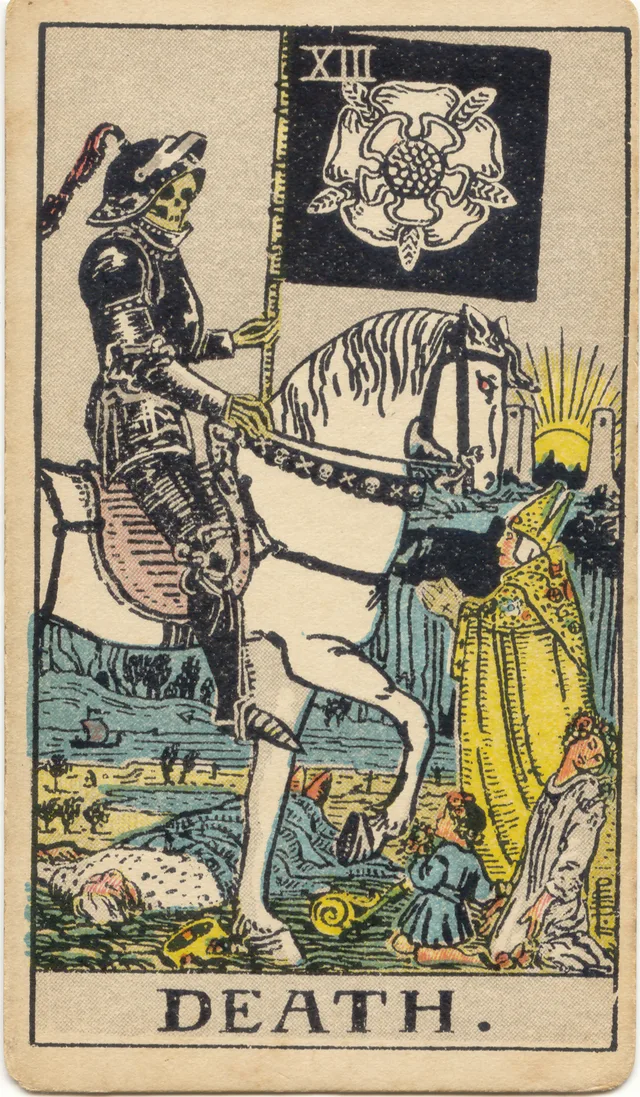
Death
Death explores transformation; the Ten explores the pain and practical consequences of a chapter that has reached its apparent end.
Read this card's meaning →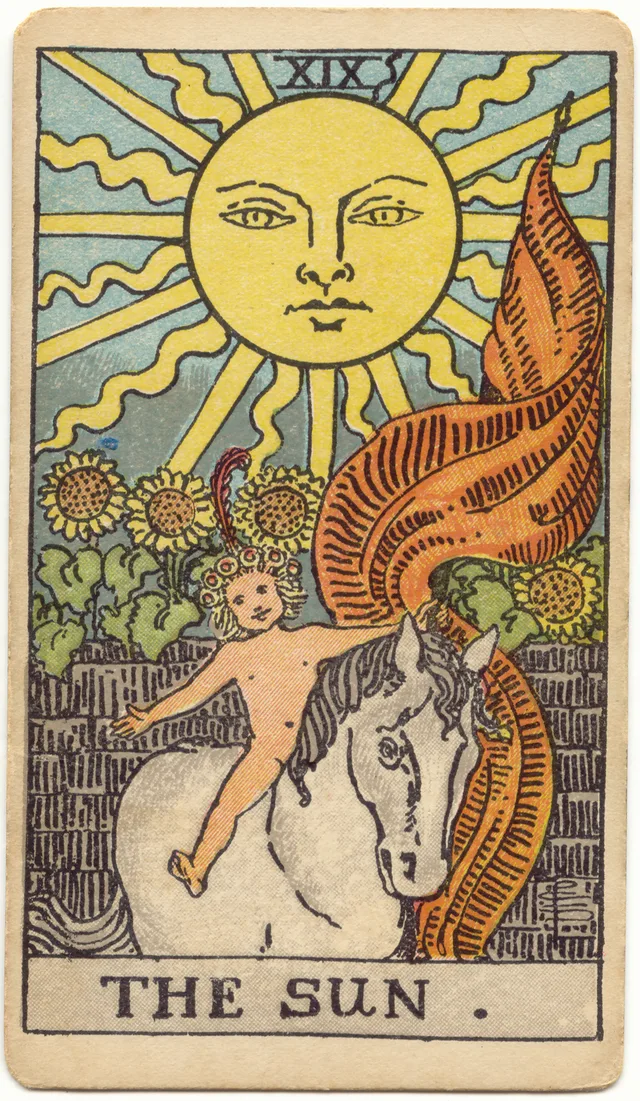
The Sun
The Sun explores clarity and vitality; beside the Ten, it can invite questions about support and rebuilding after a difficult ending without promising recovery.
Read this card's meaning →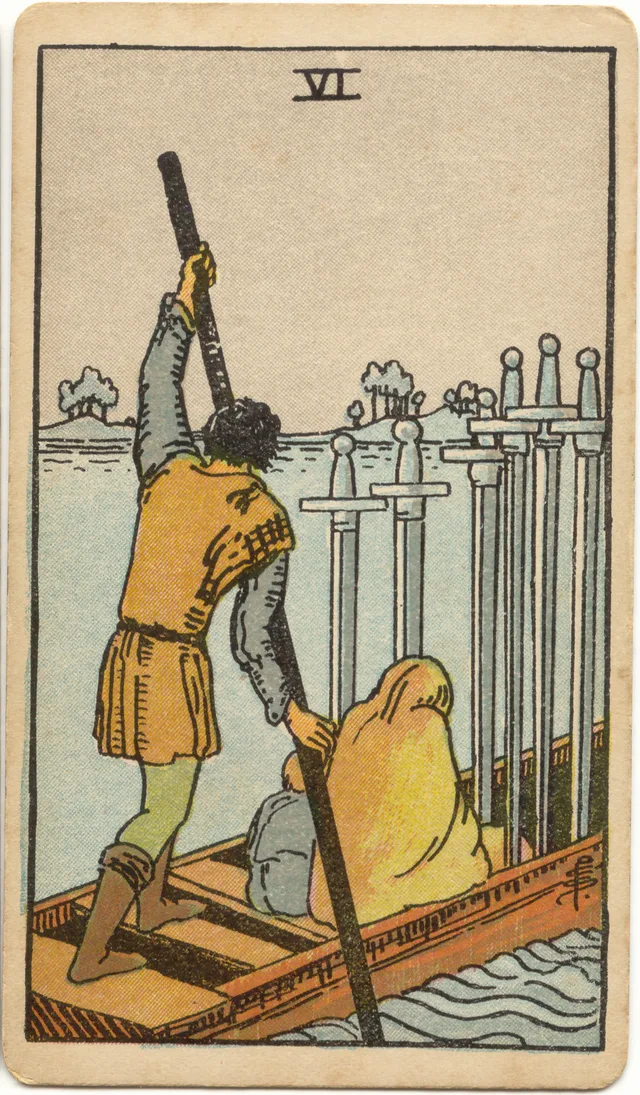
Six of Swords
The Six explores a move away from difficulty; beside the Ten, it can frame practical steps after someone has acknowledged a painful change.
Read this card's meaning →