Three of Wands Tarot Card Meaning
The Three of Wands shows someone watching ships after a launch, an image of expansion, distance, waiting, and planning for what comes next. It can prompt you to review reach, capacity, and preparation, but it does not promise what an effort will return. Compare the evidence already available with the resources needed for further expansion.

What's pictured on the card
A cloaked figure stands with their back to us on a high ridge, three sturdy wands planted in the ground around them. One hand rests on a staff as they watch ships move across a golden sea below. They aren't rushing anywhere; they're overseeing something already set in motion. The wide, open view and the steady posture point to plans that have left the harbour and are now making their steady way out into the world.
Three of Wands upright: the core meaning
The Three of Wands shows someone on a ridge, watching their ships sail out on ventures already set in motion. Today your earlier efforts are moving out into the world, and it's time to think bigger. Keep your gaze on the wider view; growth and opportunity are making their way back to you.
Beneath a fairly settled surface, you may be in that in-between stretch where the hard launching work is done but the results haven't landed yet. Waiting can feel oddly exposed, you've committed, and now you can only watch. There might be a quiet hope you're almost afraid to name too loudly, in case it doesn't come. That patience you're holding isn't passivity; it's trust, and it's carrying more weight than it seems to today.
Use the Three for a longer view when you are waiting for the results of earlier work. Review what is actually underway rather than assuming that movement guarantees an outcome. At work, consider who else you could reach and what expansion would require. In relationships, notice whether connections broaden your life in healthy ways. With money, compare near-term balances with the next season's obligations. While waiting, preparation can be more useful than either panic or forced optimism.
Three simple ways to work with this card
- List three things you’ve already started, and pick one to expand a bit today instead of kicking off something brand new.
- Instead of chasing results today, prepare a small welcome for the good outcome you're hoping soon arrives.
- Reach out to someone beyond your usual circle, a wider network is how today's growth tends to travel.
What effort you've already launched could you expand on today?
Reading the Waite-Smith scene
The figure on the ridge. In Pamela Colman Smith's 1909 painting, a cloaked figure stands with their back to us on an elevated promontory, with three wands planted around them. One hand rests on a staff while the person looks across the water. Because the face is unseen, the illustration leaves the figure's feelings open; a reader can focus on the visible task of reviewing a broad view and considering what comes next.
The ships on the water. Ships are shown below and beyond the ridge on a broad sea. Their presence makes distance, movement, and work already sent out into the world concrete. This differs from the Ace's beginning and the Two's planning scene: the Three can be used to discuss what happens after a launch, including monitoring, communication, and preparation for more than one result. The ships do not show that any result is on its way.
The three planted wands. All three wands are rooted in the ground, giving the figure fixed points from which to look outward. The image can connect the suit of Wands with creative energy, initiative, and a project that has taken form. In a common numerological reading, three suggests development after an initial choice. It cannot establish that a foundation is solid or that the previous decision was correct.
The wide, golden horizon. Open sky, water, and distant land occupy much of the card. The composition draws attention beyond the immediate foreground, so it can prompt a reader to consider a larger context: other markets, audiences, routes, or possible consequences. A wide view is not the same as an approved plan; research still has to test each option.
The suit's fire and the number three. Wands are often associated with initiative, creative drive, and action. Combined with three, those associations can describe an idea moving into a developing project that now needs review and direction. The phrase is symbolic: the card cannot measure motivation, prove that an effort has launched, or forecast what the project will return.
The upright Three of Wands in full
The central image shows a person reviewing ships that are already at a distance. In a reading, that can provide a way to discuss a project, application, conversation, or choice after its first step. It is not evidence that results are underway. Ask what information has actually returned, what the next stage requires, and what you would do if the effort succeeds, stalls, or changes course.
A common mistake is to treat the ships as reassurance that a return is coming or as a warning that nothing will work. A clearer use is scenario planning. What would need to be ready if the effort goes well? What would you change if the response is weak or delayed? The figure's position can represent review and preparation, while real updates and records provide evidence.
The scene can also fit a transition from private preparation to public work, such as a creative project receiving its first audience or a service gaining initial clients. That transition may require clearer communication, feedback, boundaries, and capacity planning. The card cannot establish that an audience exists or that public exposure is the right step; use actual responses and consent.
What it is not saying: it does not guarantee a return, growth, success, or a particular timeline. The picture can describe distance and preparation as themes, but evidence of demand, progress, costs, and capacity must come from the situation itself. You can choose how carefully to plan and what safeguards to use.
The reversed meaning
Reversed, the Three of Wands can be used to reflect on a delayed or unclear response after an initial effort. The image does not establish that a delay exists, that the work was effective, or that a result is still coming. Check dates, messages, deliverables, and the agreed next step before deciding whether to wait, follow up, revise, or stop.
Another reversed reading concerns an expansion plan that was discussed but not started. The reason may be cost, risk, changing responsibilities, incomplete information, or a change of interest; the card cannot identify it. Compare the original goal with current resources, write down the consequences of proceeding and pausing, and ask whether a smaller test would provide useful evidence.
A further reversed reading concerns several initiatives competing for the same time or budget. List each initiative's purpose, evidence, cost, owner, and next milestone. Then decide what can be paused or combined. The card cannot show that attention is divided; schedules, budgets, and the people doing the work can show it.
The image can also prompt a plan-versus-reality review. A product, service, or application may not be reaching the intended audience, but the card cannot establish that there is no market or that the plan has failed. Check customer research, response rates, costs, accessibility, and competing explanations before revising the offer.
Beside cards about urgency, the pair may focus attention on response times and follow-up. Beside cards about distraction, it may raise prioritisation. Near practical Earth cards, it may support a plan-versus-reality review. These are reading options, not evidence about timing, attention, or results.
In love & relationships
If you are single, the distant ships can prompt reflection on meeting people outside familiar routines, through dating, friendship, work, or community. The card cannot predict a match or establish that personal work is complete. Define the kind of connection you want and look for reciprocal interest, clear communication, and respectful behaviour.
In a relationship, the Three can frame practical changes that affect both people: a move, a shared project, public work, or a change in family responsibilities. Discuss what each person wants, what will change day to day, and how decisions will be made. The image cannot establish that a relationship is growing or that a particular shared future is appropriate.
The outward-looking scene can also prompt a check on attention in a relationship. Ask whether work, plans, or future possibilities are taking time away from present communication. The card cannot establish that someone is emotionally absent or identify a motive; compare schedules, agreements, and each person's experience.
Changes in a shared life need discussion; the card cannot decide whether they bring partners closer or create distance.
- A relationship discussing how shared plans affect everyday life
- A phase in which both people's ambitions have room to breathe
- A concrete conversation about responsibilities, timing, and shared plans
- Making room for hope while still discussing costs, risks, and capacity
- One person consistently giving present responsibilities less attention than future plans
- Adding work, travel, or commitments without discussing their effect on the relationship
- Treating an imagined shared future as agreed without asking the partner
- Frustration when a hoped-for change does not happen on the expected schedule
Career
At work, the Three of Wands can help structure a review after a project has started. It does not prove that the launch was sound or that results will arrive. Map several outcomes: who needs an update, what would be built next, what capacity is available, and what evidence would justify expanding or changing the work.
For international work, overseas clients, or markets beyond a current geography, the sea and distant land provide a clear visual theme. They cannot assess whether the plan works in practice or whether the needed infrastructure exists. Market research, legal requirements, costs, demand, accessibility, and operational capacity provide that assessment.
It can also frame roles that involve oversight, such as managing a launched team or operating strategically. Set reporting, support, escalation, and decision rights before delegating. The image cannot establish that a team or system is ready to work without supervision.
Money
In a financial reading, the Three of Wands can mirror the period after investing time, money, or effort while information is still arriving. It does not show that a return is on its way. Review performance, fees, time horizon, downside, liquidity, and professional advice where appropriate; the ships represent distance and uncertainty, not a forecast.
The wide scene can prompt a review of dependence on one income source, but it does not recommend diversification or establish that another stream is available. Compare income stability, skills, costs, tax, time, and risk before adding work or investments. A qualified adviser can help with financial decisions.
Health & wellbeing
In a wellbeing context, the Three can reflect the middle stage after someone has attempted a change. It cannot show that the effort has produced a useful change or that benefits have appeared. Track symptoms, function, side effects, and agreed goals, and follow qualified guidance; use the distant ships only as a prompt to consider time alongside evidence.
It can also raise questions about hopes for health and energy without judging what the body can safely do. Pair ambitions with medical reality, gradual pacing, rest, and qualified guidance, especially after illness, injury, or inactivity. The card cannot assess readiness or safety.
Life events & big decisions
Around a significant decision, the Three can focus attention on what follows an initial signal, such as a conversation, application, or declared intention. List the available choices, obligations, resources, and consequences before deciding how broadly to commit. The card cannot establish that now is the moment to commit or that a wider option is suitable.
For a move, emigration, or geographical transition, the ships and distant land make the card visually relevant. They do not endorse a move or show that it is underway. Visa rules, finances, family impact, housing, healthcare, safety planning, and a realistic fallback determine whether the plan is workable.
After a period of consolidation or recovery, the Three can prompt a review of whether activity is ready to broaden: a business testing demand, a person adding commitments, or a creative returning to larger work. Start with capacity, consent, pacing, and evidence rather than treating the open view as proof that expansion is possible.
Contracts, deals & signatures
The Three of Wands beside a contract can raise questions about a second stage, new territory, or a wider client relationship. It does not signal that the deal is progressing successfully. The written terms should define scope, obligations, jurisdiction, cost, reporting, change control, and exit clearly enough for independent review.
In negotiation, the image can prompt long-term questions without proving that a wider view is correct. If parties are working to different horizons, state those assumptions and record the agreed scope, milestones, options, and limits rather than leaving expansion to goodwill.
For international agreements or deals with parties in other markets, the ships provide a symbol for distance and cross-border work. They offer no assurance about the counterparty or outcome. Local law, tax, currency, enforcement, data rules, and specialist review matter more than an encouraging image.
Entrepreneurship & business
For founders, the Three of Wands can frame the transition from launch to a possible next stage, which may require different skills from starting. Do not assume early customers or proof of concept from the card; verify them in sales records, retention, costs, and customer feedback. Then ask what those records support next.
It can also provide a visual prompt when a business is considering export, international clients, or more than one geography. It cannot assess viability or launch timing. Demand, compliance, capacity, currency exposure, and a costed pilot provide a basis for deciding whether and where to test.
The figure is observing rather than carrying out every task, so the image can prompt a review of delegation. Write procedures, reporting, training, and escalation routes before transferring work. If an owner keeps every task, examine the stated reason and the actual risk; the card cannot establish whether control protects or limits the business.
How it shows up in real readings
Beside The Chariot, a reading may focus on direction, effort, and monitoring. Near The Hermit, it may compare outward expansion with private review. With Wheel of Fortune, it may prompt a check on changing conditions outside one person's control. These pairings do not prove momentum, readiness, or a timing window.
A reader may bring the Three after starting a business, creative practice, or life change and worry about the response. I would not treat the ships as evidence that the effort has produced a result. We would list what has happened, define useful measures, and plan for more than one result. For example, a freelance practice eight months in can review clients, revenue, costs, and workload; the card supplies a discussion frame, not a verdict.
What does the Three of Wands mean in tarot?
What does the Three of Wands reversed mean?
Is the Three of Wands a yes or no card?
What does the Three of Wands mean for love?
How quickly does the Three of Wands manifest?
If the Three of Wands appears, shift from prediction to scenario planning. What has actually launched, what evidence is returning, and what would you do with a strong, weak, or delayed result? The card offers a wider view; it does not tell you what is already happening.
If you would like a small daily practice for noticing your mindset while information arrives, the free daily draw is there every morning. Use it as a reflective check-in, not as evidence that something unseen is unfolding.
The Three of Wands can invite planning beyond one outcome. Review possibilities, then use evidence and contingency plans instead of treating the image as a forecast.
Related cards and themes
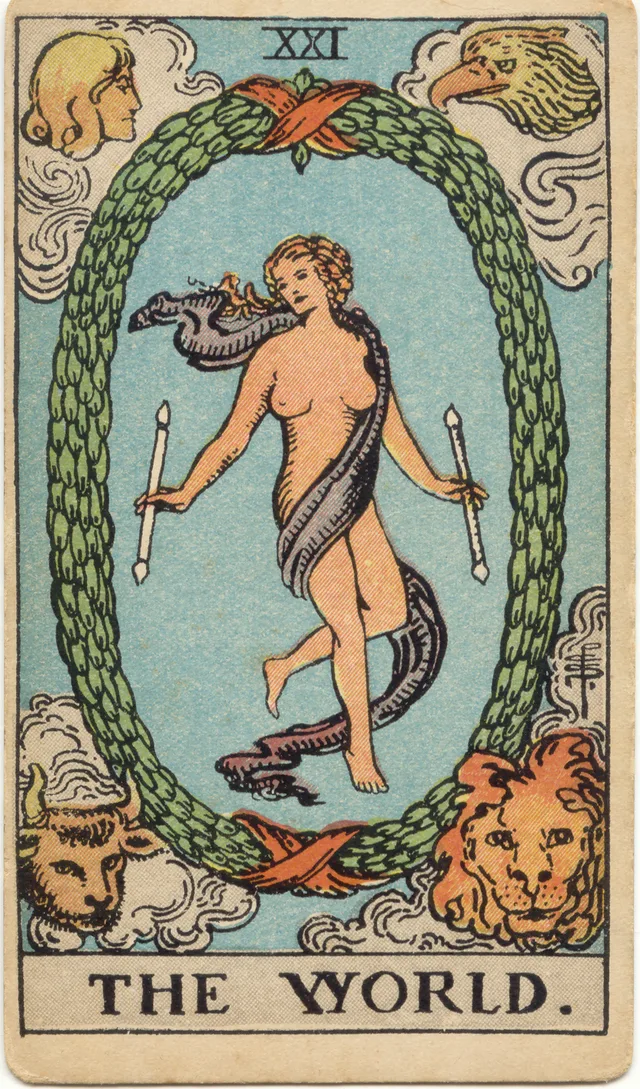
The World
The World concerns completion and a wider perspective, while the Three of Wands concerns planning after an initial launch; neither confirms that a project will reach completion.
Read this card's meaning →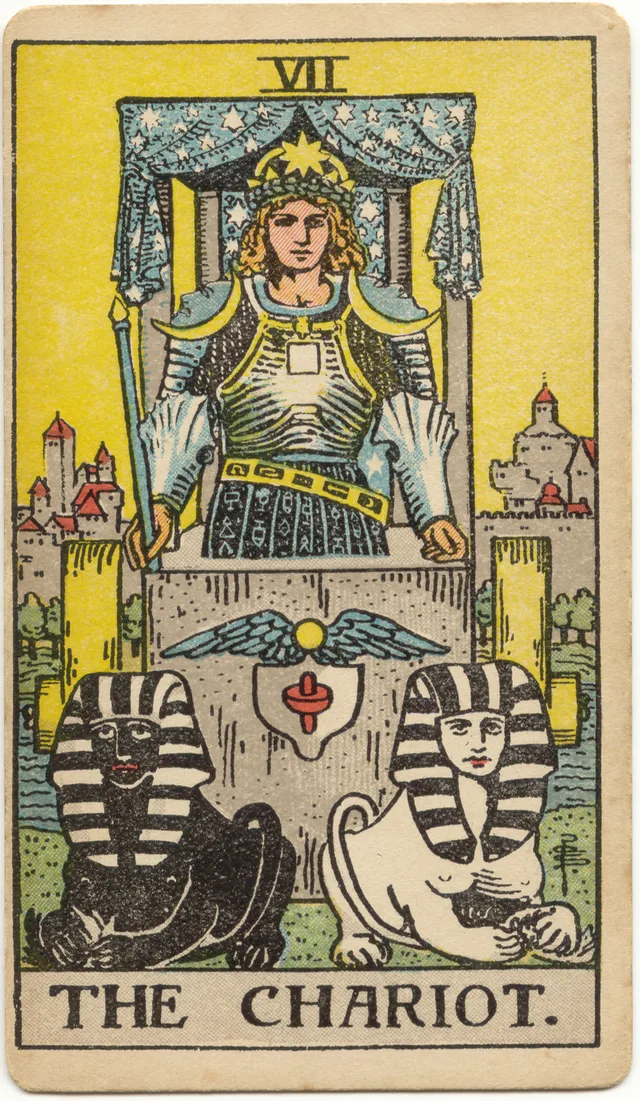
The Chariot
The Chariot focuses on direction and deliberate effort, which can be compared with the Three of Wands' themes of expansion and reviewing what comes next.
Read this card's meaning →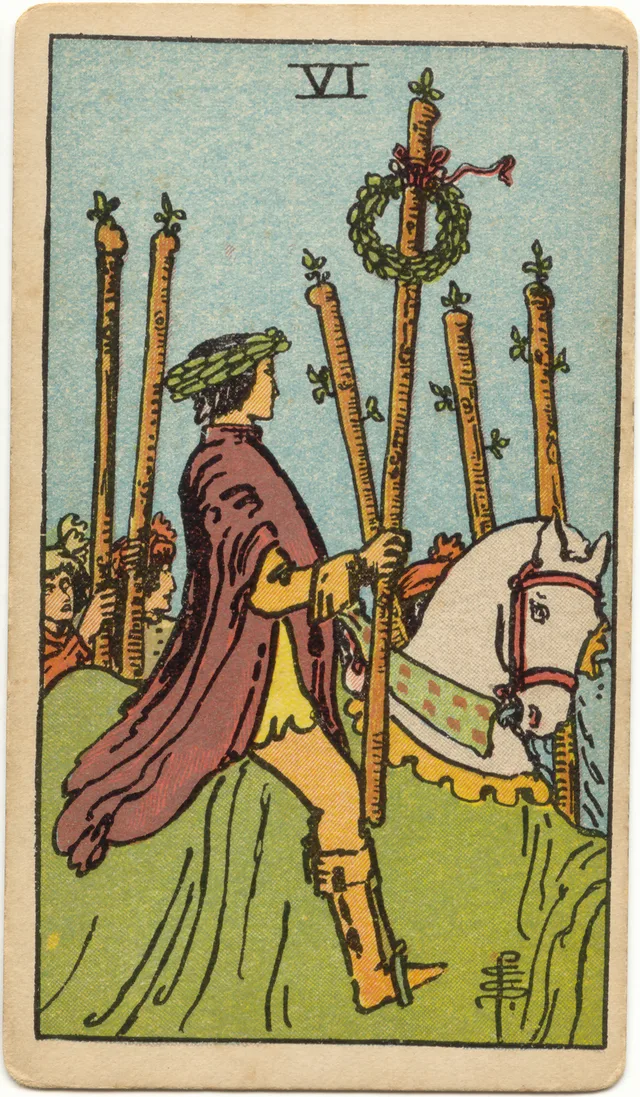
Six of Wands
The Six of Wands explores recognition and public response, useful themes to compare with the Three's launch, reach, and preparation; the pairing does not predict recognition.
Read this card's meaning →