Page of Wands Tarot Card Meaning
The Page of Wands studies a sprouting staff with open curiosity, representing early enthusiasm, experimentation, and learning through experience. It can prompt a small test of a new idea without requiring mastery, but it cannot prove that the spark will last or that risk is harmless. Explore within clear limits and review what you learn.

What's pictured on the card
A young figure in a bright tunic patterned with salamanders stands holding a tall, sprouting wand, gazing up at it with open curiosity. Behind them stretches a dry, sunlit desert with three small pyramids. Their feathered hat and easy stance suggest someone unhurried and game for anything. The salamanders, creatures of fire, hint at lively potential still finding its shape. It's a scene of eager beginnings, of someone delighted by an idea they haven't yet acted on.
Page of Wands upright: the core meaning
The Page of Wands studies his sprouting staff with wide-eyed excitement, ready to explore. Today wears a beginner's spark, curiosity, playfulness, the itch to try something new without needing to be good at it yet. Follow that enthusiasm wherever it points. Let yourself experiment and learn; the fun is exactly the point today.
There may be a spark of excitement you're slightly shy to admit to, an urge to try something new tangled with the worry of looking silly or being a beginner. Perhaps you've been so focused on doing things well that you've forgotten the simple joy of doing them badly and learning as you go. That flicker of curiosity is worth trusting. It isn't frivolous; it's your natural aliveness, tapping you on the shoulder, asking to come out and play.
Follow curiosity today without demanding that it justify itself. Treat a playful idea as an experiment, not a masterpiece. At work, ask the question you have been holding back. In love, choose spontaneity only when it respects the relationship and the other person's consent. With money, explore and gather information rather than committing all at once. Stay open and interested while allowing results to remain uncertain.
Three simple ways to work with this card
- Try one thing today purely because it interests you, with zero pressure to be any good at it.
- Ask the curious question you've been holding back, whether in a meeting, a message, or over dinner tonight.
- Follow a small spark of enthusiasm for twenty minutes and see, with no agenda, where it happily leads.
What are you curious enough to try today, just to see what happens?
Reading the Waite-Smith scene
The wand with fresh leaves. The Page studies a staff with new leaves at close range. The living growth supports a symbolic discussion of an idea or interest that is still developing, rather than a finished tool with a known purpose. The image can prompt curiosity; it cannot show that a real project will grow.
The salamander tunic. The bright garment is covered in salamanders, legendary creatures associated with fire. In the Wands court, that pattern can represent enthusiasm and creative force; on the Page, it supports a discussion of interest before it has a defined method. It does not establish that risk is harmless or potential will become a result.
The feathered hat. The tall, bright hat has a long curved feather and an impractical, theatrical appearance. That detail can support a reading about visible enthusiasm and experimentation without requiring a beginner to look polished. It cannot establish confidence, maturity, or the right level of risk for a real situation.
The desert landscape. A dry landscape and three distant pyramids sit behind the Page. The setting can support questions about resources, unfamiliar conditions, and the wider environment around an idea. The figure's attention is on the wand, a reminder to examine both the exciting subject and the practical conditions it requires.
The court stage: Page. In the court structure, the Page represents an early developmental stage: discovery and engagement before experience has supplied much information. That can be useful, but it also means assumptions and risk need checking. The rank describes an approach to a subject, not a person's permanent age, personality, or competence.
The upright Page of Wands in full
The Page of Wands can represent direct curiosity about a new subject before a person knows whether it will become a long-term project. Notice what attracts attention, then name the time, money, skills, and support needed to explore it. The card can prompt a question about interest; it cannot establish that an idea is worth pursuing or that the reader is ready.
In practical terms it can frame an exploratory step: a new interest, first attempt, or limited experiment. Define the question, budget, time limit, and stop or review point. Trying something can provide information, but it does not require a long commitment or prove that the activity will suit you.
The Page is sometimes associated with enthusiastic communication, such as a conversation about a new idea or a first enquiry. It cannot establish that a message or contact will arrive, who will send it, or whether a collaboration will develop. Check communication directly and evaluate the proposal on its terms.
What the Page is not saying is that expertise is required immediately or that enthusiasm alone is sufficient. A beginning can be valuable as a learning stage, while later progress requires practice, structure, feedback, and resources. The card cannot promise what those later stages will produce.
The reversed meaning
Reversed, the Page can describe scattered enthusiasm: several interests receive attention, but none receives enough time to produce useful feedback. Exploration may be serving as a way to avoid choosing, or the person may simply have limited capacity. Track time and results before deciding whether to narrow the scope.
A second pattern is interest held back by concern about appearing inexperienced. Early practice is allowed to be imperfect, but the card cannot assess the source of fear or determine that beginning is appropriate. Choose a private or supported first step if that respects safety and capacity.
There is also a communication theme. A message may be delayed, unclear, or less definite than expected, but the card cannot prove that news is coming or explain why it is delayed. Ask for a clear update where appropriate. The reversal can also prompt comparison between stated enthusiasm and actual follow-through without judging motives.
In love & relationships
If you're single, the Page can invite curiosity about a new person without demanding an immediate label. Ask questions, share at a pace that feels safe, and let consistent behaviour provide information. Curiosity does not replace consent, boundaries, or a discussion of expectations.
In an established relationship, the Page can prompt a new shared activity or a conversation about interests that have changed. Playfulness is useful only when both people welcome it. Discuss time, energy, and expectations rather than assuming a particular gesture will repair or improve the relationship.
The Page can also describe a connection where commitment expectations have not yet been discussed or agreed. Ask what each person wants, what pace feels appropriate, and what boundaries apply. The card cannot determine whether either person is ready or whether the relationship will develop.
Curiosity can support an early connection, while communication and consent clarify what the connection actually is.
- A genuinely open, curious approach to a new connection
- Playfulness and spontaneity returning to a relationship
- The willingness to be surprised rather than running to conclusions
- A message or conversation that raises a new question
- Enthusiasm moving quickly without checking the other person's pace
- Using the beginner stage to avoid the vulnerability of commitment
- Confusing the spark of interest with untested compatibility
- Moving on before any connection has time to develop
Career
In career readings, the Page of Wands can frame a first exploration of a different field, creative project, or skill. State what you know, ask about requirements, and let genuine interest coexist with accurate limits. The card cannot predict how an employer or team will respond.
It can also describe a newer team member or a fresh question at work. Test an unconventional proposal with a small pilot, clear success measures, and an agreed review rather than assuming either that experience has dismissed it or that novelty makes it useful.
For someone dissatisfied with a career, the Page can prompt research into a different field. Start with a course outline, informational conversation, transferable-skill list, or low-risk project, then compare the information with income needs, time, and qualifications. The card cannot predict a career change or its effects.
Money
The Page of Wands is not primarily a money card, but it can frame early exploration of an income idea or side project. List startup cost, recurring cost, time, taxes, demand, and a limit on loss before spending. A small project may provide information; it does not guarantee income.
Reversed, it can prompt a review of spending driven by enthusiasm: equipment purchased for an abandoned project or a course bought without time to complete it. Check return policies, cancellation terms, budget impact, and the evidence for demand before buying.
Health & wellbeing
In a wellbeing reading, the Page can prompt curiosity about an enjoyable activity rather than a punitive routine. Choose something accessible and compatible with your health, schedule, and preferences. The card cannot establish that an activity is safe, effective, or sustainable for a particular person.
Consider what genuinely interests you instead of adopting a wellness practice only because it is marketed as necessary. Check physical limits and qualified advice, then use a defined trial and observe how you feel. Interest can make an activity appealing, but it does not replace care planning.
Life events & big decisions
At a major decision, the Page of Wands can support a limited exploration before a larger commitment. Define what the trial will test, what it costs, what risks it carries, and what result would change your view. The card cannot choose the direction; the decision remains yours to weigh.
If the decision involves an unfamiliar field, distinguish attraction to the subject from a wish to escape a current problem. List the reasons for each, check them against evidence, and ask someone qualified for information where needed. The card cannot identify motive or predict the outcome.
The Page can also prompt reconsideration of a creative pursuit or interest set aside. Review why it stopped, what has changed, and what a small restart would require. Being a beginner again is an option, not evidence that the project must be resumed.
Contracts, deals & signatures
Beside a contract, the Page of Wands can frame an early conversation or letter of intent, when scope and expectations may still be developing. Ask which points are binding, which are proposals, and what must be written before work begins. Do not assume that interest or an informal discussion creates an obligation.
In a negotiation, the Page can prompt attention to differences in experience and information. Do not infer a counterpart's knowledge or leverage from the card. Explain terms plainly, avoid exploiting uncertainty, and seek an experienced review if you are unfamiliar with the agreement.
A specific risk is signing during an emotional high without checking whether the obligations remain affordable and acceptable later. For a significant commitment, request time to review the document, compare alternatives, and obtain advice. The pause is a safeguard, not evidence that the direction is wrong.
Entrepreneurship & business
For founders, the Page of Wands can frame ideation and early exploration before a business has tested its offer. Turn the fascination into a customer question, prototype, budget, and review date. Openness helps generate alternatives, while evidence determines whether any should receive more resources.
The Page's caution is repeated starting without operational follow-through. Separate idea generation from delivery: assign ownership, document procedures, track customer commitments, and review capacity. If the founder prefers exploration to operations, that is a planning issue to address through roles and support, not a conclusion supplied by the card.
For an established business, the Page can prompt a small test of a new product direction, market, or unconventional proposal. Define customers, budget, permissions, measures, and a stop point so novelty does not replace due diligence.
How it shows up in real readings
The Page of Wands can support reflection when someone is interested in a new subject but concerned about being inexperienced. Beside The Fool, compare openness with the information still needed; near The Sun, consider enjoyment alongside capacity; alongside The Magician, compare enthusiasm with tools and skills. None predicts results or establishes readiness.
The Page of Wands can be relevant when someone with established expertise considers a subject where they are new. Record the learning goal, privacy needs, available support, and consequences of a public trial. Previous competence does not prove success in a new field, and inexperience is not a reason to hide if a bounded experiment is appropriate.
What does the Page of Wands mean in tarot?
What does the Page of Wands reversed mean?
Is the Page of Wands a yes or no card?
What does the Page of Wands mean for love?
Does the Page of Wands represent a person?
If the Page of Wands has come up for you, name one subject you are curious about and design a twenty-minute, low-risk way to learn more. Check whether the experiment fits your time, money, safety, and other people's consent. Curiosity is a prompt for investigation, not an obligation.
The free daily draw is a small reflective practice: use the card to form a question, then compare the question with real information rather than seeking confirmation of an assumption.
The Page of Wands can reflect interest before readiness. Let curiosity identify a small beginning, then build ability through preparation and practice rather than waiting for confidence to arrive.
Related cards and themes
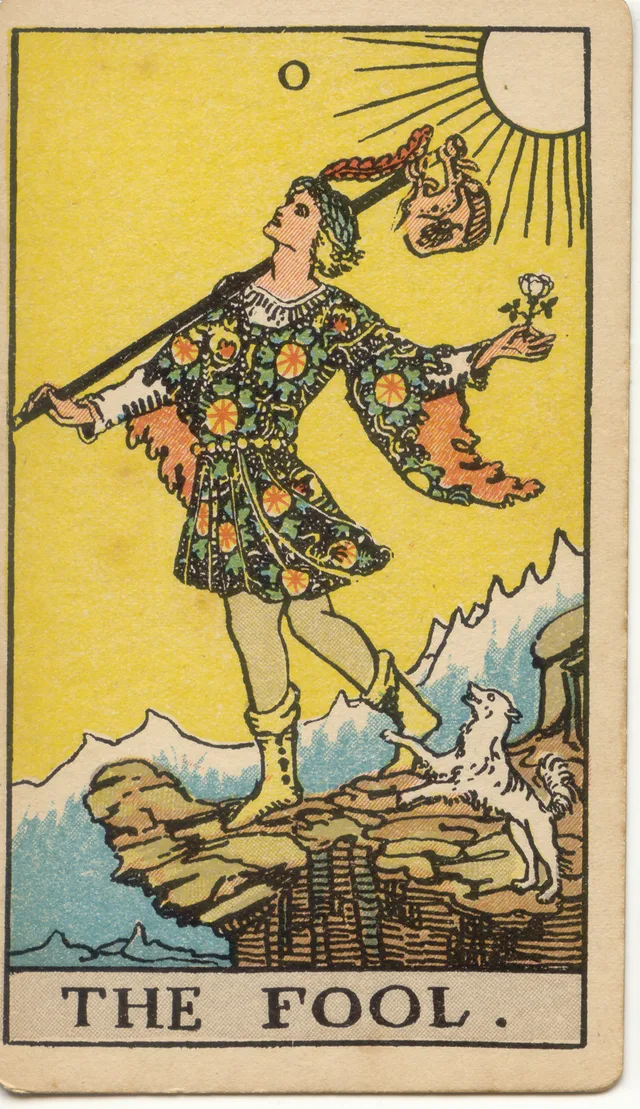
The Fool
The Fool and the Page of Wands both consider how to approach a new experience. The Fool is open to uncertainty; the Page tests an interest through curiosity, without either card proving that a plan is safe or suitable.
Read this card's meaning →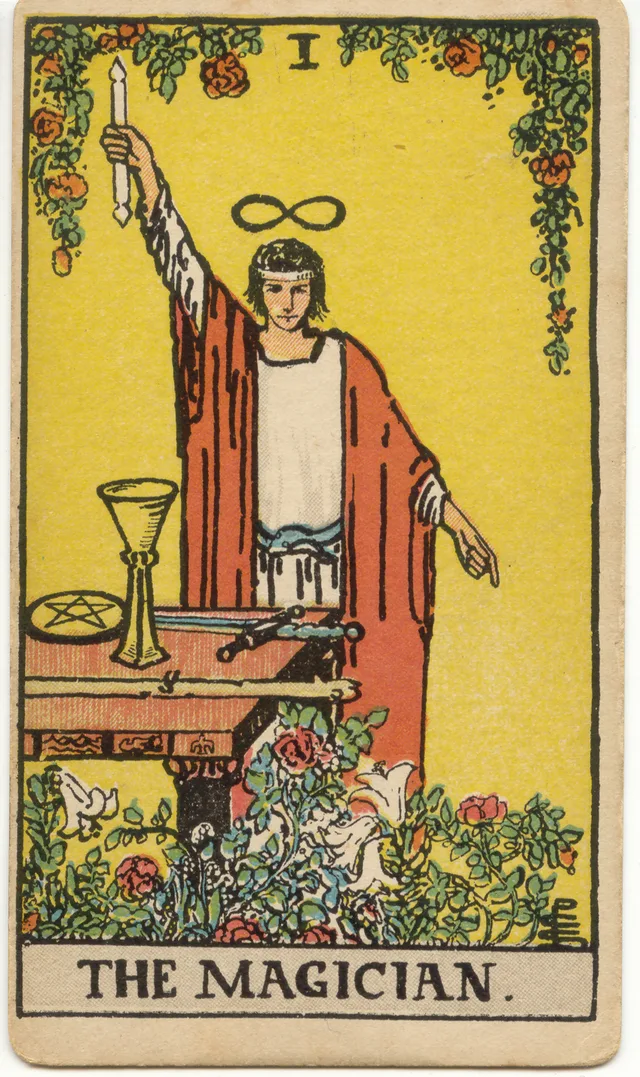
The Magician
The Magician focuses on directing tools and attention, while the Page of Wands explores an interest before it has a fixed method. Together they support turning curiosity into a defined experiment and reviewing its results.
Read this card's meaning →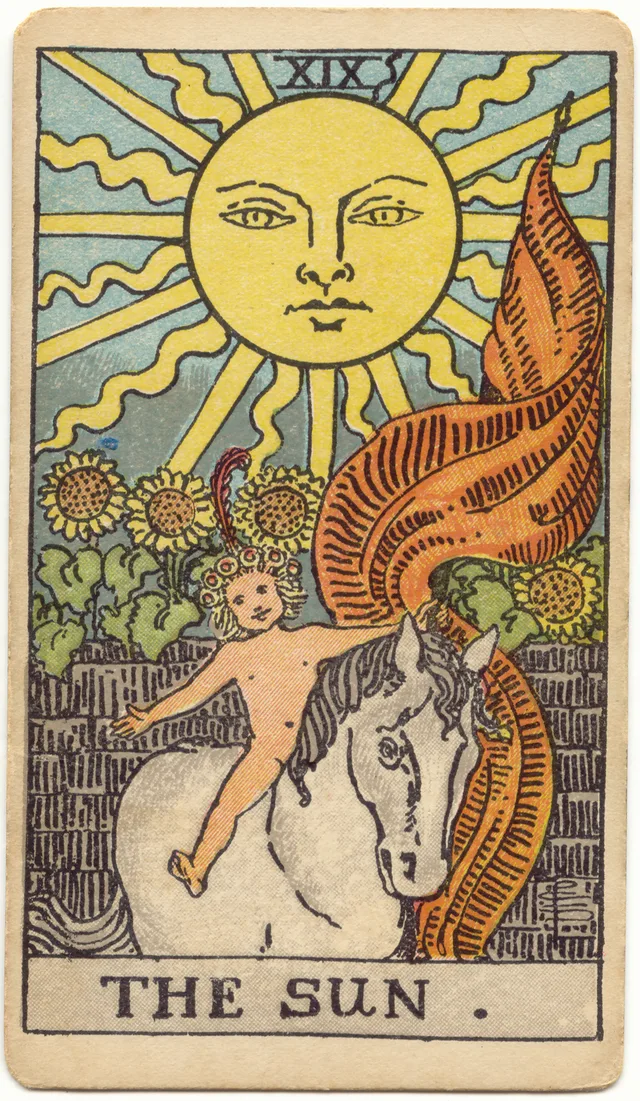
The Sun
The Sun and the Page of Wands both invite discussion of enjoyment and openness. The Page focuses on discovery; the Sun focuses on visibility and vitality. Neither card predicts how an experience will turn out.
Read this card's meaning →