Four of Pentacles Tarot Card Meaning
The Four of Pentacles depicts a person holding coins tightly, representing security, scarcity, control, and the cost of refusing all change. It can prompt you to ask what a boundary protects and where flexibility might help. The image cannot prove that giving, spending, or opening up is safe; check your resources and choose a proportionate step.

What's pictured on the card
A seated figure grips one coin tightly against his chest, balances another on top of his crown, and pins two more beneath his feet. Behind him rises the grey outline of a busy town he has turned his back on. Every pentacle is held, none is shared. The image shows the comfort and the cost of clutching hard to what we own, how safety and stiffness can start to look exactly the same.
Four of Pentacles upright: the core meaning
The Four of Pentacles shows a figure clutching a coin tightly, guarding every bit of what they have. Today invites a look at your grip, where holding on gives you real security, and where it's just fear of letting go. Keep what's wise to keep. But loosen anything you're clenching out of scarcity; a closed hand can't receive.
There's likely a knot of tension you've been carrying, a need to keep everything under control because letting go feels risky. Maybe money has felt tight, or trust has been broken before, and holding on tightly is how you've kept yourself safe. That instinct deserves compassion, not scolding. But you may also sense, faintly, how tiring the clenching has become, how much lighter your chest might feel if you loosened your grip even a little today.
Notice, without judgement, where you’re clinging out of fear today, and try a small loosening to see if it feels safer rather than less safe. This isn't about being reckless with money or giving away your boundaries; it's about telling the difference between wise saving and anxious hoarding. At work, share information or credit you've been guarding, openness usually builds more security than secrecy. In relationships, unclench a little; let someone in, offer flexibility, resist the urge to control the outcome. If you've been saying no to every small spend, allow yourself one modest, joyful yes. Keeping what really matters is healthy; the nudge is simply to hold it with an open palm rather than a fist. You can be secure and generous at the same time.
Three simple ways to work with this card
- Name one thing you're gripping out of fear, then choose a small, safe way to loosen your hold.
- Give something away today, your time, a compliment, a small sum, and notice you remain safe.
- Let one small plan stay open-ended instead of controlling every detail, and see what freedom that creates.
Where are you holding on tightly, and is it wisdom or fear today?
What Waite-Smith painted and why it matters
Every coin accounted for. A seated figure holds one coin against his chest, balances another on his head and places two beneath his feet. All four coins are physically contained. The arrangement can suggest a strong need to keep resources under personal control, but the card cannot establish hoarding, fear or exhaustion in a real reader.
The coin on his head. The pentacle placed on his head can connect money with identity, status or a sense of stability. That is an interpretive possibility in the image, not evidence of what a person believes about themselves. The card can open a conversation about possessions and self-worth without answering it.
The turned back. A city appears behind the figure, suggesting activity, exchange and other people while he faces away. The contrast can raise a question about what someone may give up when protecting resources, but it cannot show that community is available, safe or worth joining. Confirm real access and boundaries directly.
The feet on coins. Two coins sit beneath the figure's feet, a visual sign that he is keeping them firmly in place. This can suggest control and the trade-off between holding resources and moving freely. It cannot prove that the figure is secure or immobilised, or that a reader faces the same trade-off.
The number four. Four in Pentacles can refer to consolidation after the Ace's beginning, the Two's balance and the Three's collaboration. Four walls and corners give a useful image of containment, but the card cannot establish that a reader is secure or refusing change. Ask what is being protected and at what cost.
The upright Four of Pentacles in full
The Four of Pentacles can symbolise boundaries, containment and conserving resources. Holding money, time or information may be appropriate in some circumstances, while excessive restriction may carry costs in others. The card cannot classify a choice as prudent or fearful; assess the person's resources, obligations, consent and actual level of risk.
A shadow theme is holding that feels difficult to change: savings that never feel sufficient, boundaries that limit contact, or guardedness learned in an earlier situation. The card cannot establish compulsion, past danger or current safety. Ask what the boundary protects now, what evidence supports it and what flexibility, if any, the person wants.
A practical reading can explore scarcity thinking after circumstances change: money anxiety despite higher income, guilt about ordinary spending, or reluctance to accept help. Those are examples, not facts supplied by the card. Compare current figures with the person's reported feelings and choices; the coins can represent beliefs and habits without proving their origin.
In financial or professional contexts, the card can prompt a comparison of conserving, spending, investing, consolidating and expanding. A thin margin or unstable environment may make a reserve important, but the card cannot assess the environment or approve a choice. Use accounts, obligations, forecasts and qualified advice.
The reversed meaning
The Four reversed has contrasting themes. One is a deliberate loosening of control: a person may choose to share, spend or become more open after careful review. The card cannot establish that resources are moving, that the change is beneficial or that generosity is safe.
Another theme is loss of control rather than chosen release: money spent faster than intended, boundaries changed without consent, or generosity that creates unaffordable obligations. Check transactions, agreements, capacity and consent; the card cannot establish carelessness or identify what should be retained.
A third theme concerns a mismatch between financial figures and felt security. A person may report steady income and savings while still feeling anxious, or may have real financial pressure that is not visible to others. Review the figures and listen to the person's account; the card cannot label either situation as objective safety.
In relationships, the reversal can prompt discussion of opening up, changing boundaries or giving more than intended. Avoid assuming that openness is good or that a boundary is harmful. Ask what each person has consented to, what support exists and which limits protect wellbeing.
In love & relationships
For someone single, the Four can frame emotional self-protection, cautious dating or keeping distance after disappointment. It cannot establish why a person is guarded or whether the strategy has outlasted its usefulness. Ask what boundaries feel necessary now and what kind of contact is wanted.
In an established relationship, the Four can raise questions about control over money, plans, information or social contact. The card cannot establish possessiveness, fear or coercion. Review who has access, who makes decisions, whether consent is present and whether both people can maintain independent choices.
In a new relationship, caution may reflect past hurt, privacy or a different pace rather than lack of interest. The card cannot reveal care or motive. Ask directly, respect the answer and let conduct over time provide context.
A boundary may protect a relationship, while excessive control may reduce trust; communication and consent provide the context.
- Healthy caution after real vulnerability — taking time before trusting again
- Clear boundaries that protect both people in the partnership
- Knowing what's yours and what you're not responsible for
- Choosing not to rush something that deserves careful consideration
- Keeping a partner at arm's length so long they stop trying to get closer
- Financial control masquerading as responsibility or care
- Possessiveness that confuses security with ownership
- Never risking real intimacy because intimacy involves uncertainty
Career
At work, the Four can prompt questions about retaining information, undocumented processes or reluctance to delegate. The card cannot reveal whether withholding is strategic, habitual or required by confidentiality. Review role expectations, continuity needs, documentation and the effects on colleagues.
In a career context, the Four can frame a choice between a known role and an uncertain change. A known salary may matter, but the card cannot determine whether staying is wise or whether a better offer exists. Compare pay, benefits, workload, development, alternatives and the person's priorities.
For leaders, the reversed Four can prompt a review of delegation and decision access. It cannot establish that others feel distrusted or that delegation is required. Use role clarity, feedback and operational risk to decide what can responsibly be shared.
Money
The Four is closely associated with holding money and the tension between conservation and restriction. Money may carry feelings about security, status, worth or control, but the card cannot identify which one applies. Ask what saving and spending feel like, then compare those feelings with the actual budget.
Practically, the Four can raise a question about a reserve during uncertainty or before a known expense. It does not instruct anyone to hold, invest or delay. Test the feeling against income, expenses, obligations, access to cash and qualified financial advice.
A shadow theme is savings that never feel sufficient, even as figures change. That pattern may involve anxiety, real obligations or incomplete information; the card cannot diagnose the cause. A budget review and appropriate emotional or financial support can address the separate parts.
A beginner example is a person deciding whether to use savings for a necessary car repair. List the cash balance, rent and food costs, repair estimate, transport alternatives and the date of the next income. A smaller repair, payment plan or second opinion may change the options. This keeps caution connected to figures rather than treating the feeling of holding tightly as the whole financial analysis.
Health & wellbeing
In health territory, the tightly held coins can prompt awareness of physical tension in places such as the jaw, shoulders or chest. The card cannot link symptoms to vigilance or prescribe physical release. Persistent or concerning symptoms need qualified clinical assessment; any exercise or relaxation choice should fit the person's health and capacity.
For wellbeing more broadly, the Four can symbolise conserving energy or avoiding unfamiliar situations. It cannot show that a gym, social event or other activity would help. Actual needs, safety and qualified health guidance matter.
Life events & big decisions
Around major decisions, the Four can prompt comparison between an active choice to stay and a default shaped by uncertainty. The card cannot identify fear or decide whether change is affordable. List the costs of staying, the costs of changing, the evidence and the person's priorities.
Around property and home decisions, the Four raises questions about caution and risk. It cannot judge an offer, timing or finances, nor establish that a move is necessary. Compare affordability, condition, legal checks, alternatives and qualified advice.
Contracts, deals & signatures
Beside a contract, the Four can focus attention on protective clauses and restrictions without revealing a counterparty's plans. Review penalties, exit fees, exclusivity and future obligations with independent advice appropriate to the agreement.
In negotiation, the Four can prompt questions about minimum acceptable terms and alternatives. It cannot set the number or tell someone to walk away. Costs, market evidence, leverage and professional advice determine the position.
Entrepreneurship & business
For a business owner, the Four raises the cash-reserve question. It cannot affirm conservatism, hiring timing or investment. Cash flow, runway, obligations, opportunity cost and professional advice provide the basis.
The Four can also frame questions about pricing and scarcity. It cannot establish that someone undercharges or that fear exceeds the actual risk. Compare costs, market rates, demand and likely customer response.
A third business theme is ownership, delegation and partnership. The card cannot show that a business has outgrown one person or needs a partner. Capacity, governance, cost and operational evidence determine that.
Pairings and real reading patterns
Beside The Devil, the Four intensifies themes of attachment; next to The Emperor, structure and control; near the Six of Pentacles, holding and exchange. These are reflection themes, not proof of entrapment, approval of conservatism or a forecast that resources will move.
The Four with the Ten of Pentacles can place security, enjoyment and long-term planning beside one another. It cannot show that a desired future is coming or diagnose anxiety about receiving it. Current finances, plans and the reader's reported experience provide the facts.
What does the Four of Pentacles mean in tarot?
Is the Four of Pentacles a yes or no card?
What does the Four of Pentacles reversed mean?
What does the Four of Pentacles mean for love?
Does the Four of Pentacles mean I have financial problems?
If the Four has come up, one reflective question is what feels at risk. Do not assume the answer is control or dependence; identify the actual concern, evidence and consent before judging whether caution is necessary.
The card cannot tell you to give, spend, trust or test a feared outcome. Choose any real-world experiment only after weighing affordability, consent and risk. For a daily reflective prompt rather than a verdict, the free daily draw is there every morning.
The Four of Pentacles can prompt a review of security and restriction: is a boundary protecting you, or preventing movement? Compare the actual risks and benefits rather than assuming the same grip serves both.
Related cards and themes
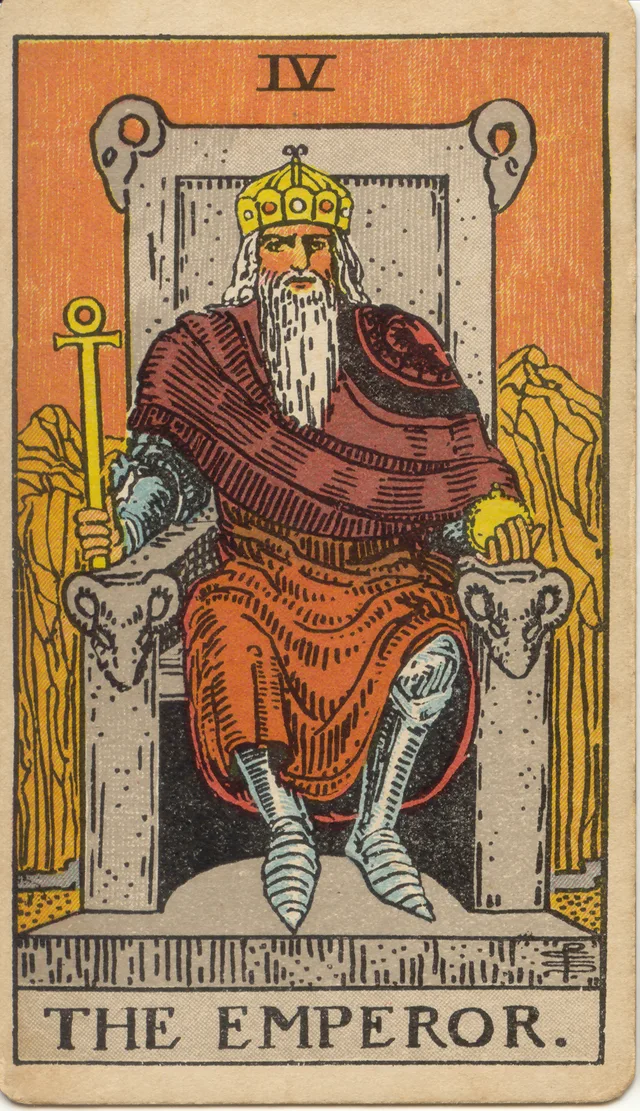
The Emperor
The Emperor explores security through rules and structure, while the Four of Pentacles explores personal containment. Together they can prompt questions about how control is being used.
Read this card's meaning →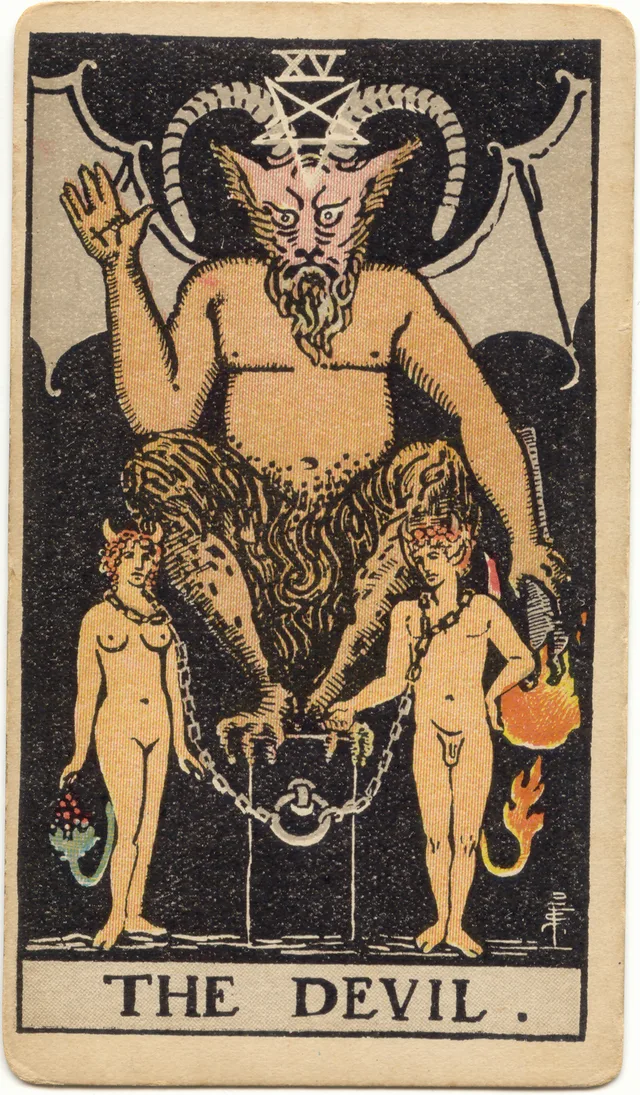
The Devil
The Devil intensifies the Four's themes of attachment and restriction. The pairing can prompt questions about dependence without proving that anyone is trapped.
Read this card's meaning →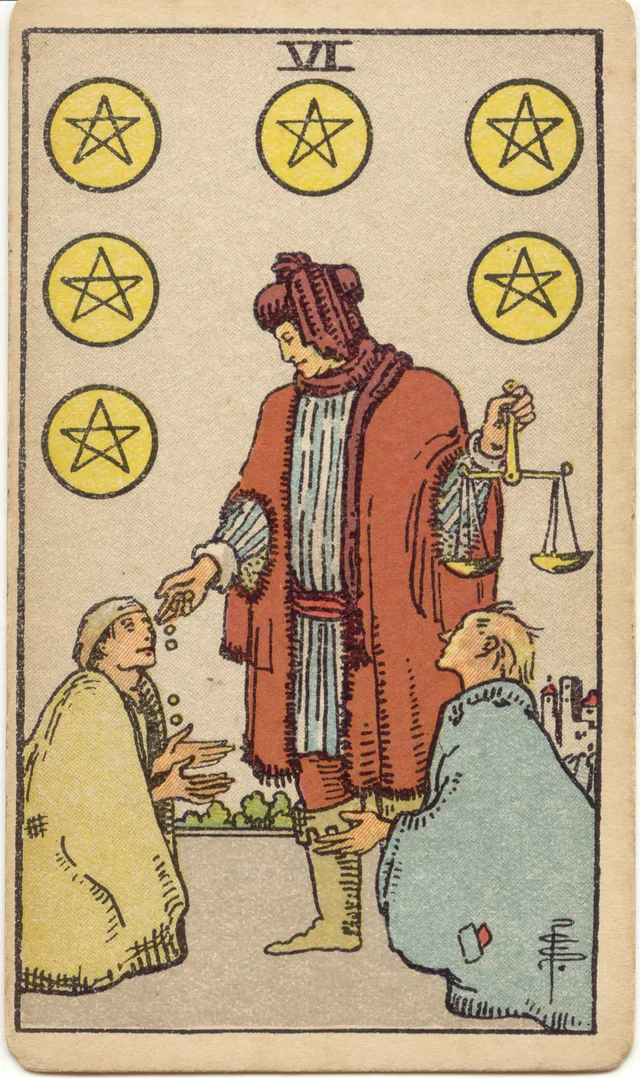
Six of Pentacles
The Six of Pentacles places sharing and exchange beside the Four's holding. The pairing can explore giving, receiving and boundaries without showing that resources are moving.
Read this card's meaning →