King of Swords Tarot Card Meaning
The King of Swords represents clear reasoning, principled judgment, communication, and responsibility for difficult decisions. It can prompt you to review evidence and standards without proving that your position is correct or giving you authority over another person. State what you know, identify what remains uncertain, and act within the rules that apply.

What's pictured on the card
The King of Swords sits square on a stone throne carved with butterflies and crescent moons, robed in blue, holding an upright sword that tilts very slightly to one side. A few clouds gather behind him, two birds cross the sky, and the trees stand almost still. His gaze is level and direct. Smith drew clear authority and sound judgement, an intellect that has weighed hard things and rules with fairness, reason, and firm integrity.
King of Swords upright: the core meaning
The King of Swords sits with his sword upright, the picture of clear thought and fair judgement. Today’s a day to use your head, weigh the facts with care, stick to your principles, and make choices with a steady mind. Let logic guide you without losing your humanity. Sound thinking and strong ethics will see you through anything today.
A steadier, more measured mood may be settling in today, a wish to think clearly and decide well rather than react. Beneath it you might sense the quiet weight of responsibility, a feeling that others are looking to you, or that a choice you make matters. That's not pressure to fear; it's a sign of how much you've grown. Somewhere in you is a steady authority that’s earned its confidence, and it’s ready to be trusted with today’s decisions.
Lead with a clear head and let your principles guide the review. When a decision looms, list facts, unknowns, values, and consequences rather than assuming one option is obviously right. At work, offer fair thinking without taking responsibility for everyone's response. In relationships, hold to your values without lecturing. With money, compare the figures and risks with your plan. Good judgment can be principled and kind while remaining open to new information.
Three simple ways to work with this card
- For a looming decision, write the facts in one column and your values in another, then choose from both.
- Be the steady, fair voice in a tense moment today, saying what’s reasonable without needing to raise yours.
- Make one money or life choice from steady logic rather than fear, and write down why it's sound.
What choice today would go better if you kept a clear head and stuck to your values?
Every detail in the King's throne
The upright sword, slightly tilted. The King holds his sword upright with a small tilt to the right, unlike the Queen's more vertical blade. The difference gives the image a sense of action following thought: a conclusion is ready to be expressed or applied. It does not prove that a real-world decision is correct, fair or safe; those require evidence and review.
The throne carvings. Butterflies and crescent moons decorate the stone throne. In tarot tradition, butterflies can suggest change and moons can suggest cycles, uncertainty or reflection. Read together, the carvings support a practical question: what information has changed, what remains uncertain and when is further observation useful?
The blue robes. Blue dominates the King's clothing, a colour commonly associated with air, thought and communication in tarot art. The colour can orient a reading toward language, reasoning and information, but it cannot show that the wearer is impartial or clear-minded. Check how claims are supported and whether the same standards are used for everyone.
The two birds behind him. Two birds cross the sky behind his shoulder. Their paired movement can be used to represent two parties, options or pieces of information that deserve attention. The image does not show that a person has considered both sides; when the card appears, list the competing claims and check whether any voice has been left out.
The still trees and settled clouds. The trees barely move and the clouds are calmer than those on the Knight or Page. That quiet background contrasts with the active sword and suggests time to organise thought before speaking. Quiet presentation is not evidence of competence, so compare the calm appearance with the person's work, explanations and willingness to correct errors.
The upright meaning in detail
The King of Swords represents a mature approach to the suit's concerns: reasoning, standards, communication and responsibility for decisions. Compared with the Knight's urgency and the Queen's observation, the King asks how a conclusion is reached, explained and revisited over time. A card cannot establish that someone makes good decisions or can be trusted; those claims need a record and accountable conduct.
Consistency is an important theme. Principles about fairness, accuracy and responsibility are meaningful only when they are stated, applied to oneself as well as others, and revised when reliable facts change. Use the card to ask which standard is operating and what would count as a reason to update it; do not assume that a confident position is principled.
In a reading, the King can bring a principled decision into focus: a choice based on stated values and relevant evidence rather than only convenience. Before calling one option correct, name the standard, test the facts and consider who bears the consequences. A difficult conversation may be necessary, but clarity should include listening and room for other people to respond.
The King is not limited to detached analysis. The butterflies and moons on the throne can keep change, uncertainty and human experience in view. Clear reasoning works best when it accounts for impact and makes space for compassion; the illustration can prompt that balance, but it cannot show that a reader or leader has achieved it.
The reversed meaning
A central reversal theme is authority without accountability: reasoning used to control rather than to explain or listen. The sword's altered angle can prompt a review of selective standards, withheld information, unequal consequences or language used to intimidate. If a boss, parent or institution is involved, rely on documented behaviour and support options; the card cannot identify an abusive motive or establish an imbalance.
Another reversal theme is analysis used to dismiss emotional information: treating a feeling as irrelevant because it cannot be reduced to a proof, or using a neat explanation to avoid a difficult conversation. Do not infer a hidden cause from the card. Ask what was said, what was avoided and what kind of acknowledgement or practical response the people involved need.
A further reversal theme is inconsistent reasoning: standards change with mood, decisions are made without a stated basis, or a promised boundary is not maintained. The language of reason can also hide a predetermined conclusion. Instead of diagnosing manipulation or gaslighting from a card, record the actual claims, missing evidence, changing standards and effects on the conversation, then seek appropriate support.
In love & relationships
For a single reader, the King brings discernment and clear communication into focus as relationship qualities. A direct manner does not prove honesty or equal standards, so look for specific statements, consistent behaviour, respect for boundaries and willingness to discuss uncertainty before relying on an impression.
In an established relationship, the King can focus attention on direct, respectful communication about values, boundaries and decisions. Say what you know, ask what you do not know and leave room for the other person to disagree. Analysis can become unhelpful when a partner first needs their feeling acknowledged rather than solved; a conversation should include listening, not only a conclusion.
Clear standards and direct communication can support a relationship, but a fixed position can also leave too little room for feelings and new information.
- Specific statements about needs, boundaries and commitments
- A willingness to apply agreed standards to both partners
- A direct conversation that includes listening and repair
- Clear communication about what each person wants and can offer
- Turning an emotional conversation into a debate with a winner
- Analysing a feeling before acknowledging its effect
- Treating a previous conclusion as fixed after circumstances change
- Using principles to avoid sharing uncertainty or asking for help
Career
Professionally, the King can prompt questions about leadership, standards and decision records. Respect is not established by a card or title: examine whether a leader explains reasoning, applies standards consistently, invites challenge and accepts responsibility for effects. In a charged environment, accurate communication should include the limits of the information and a way for affected people to respond.
For strategic direction, the King encourages a comparison between convenience and stated purpose. Write down the objective, constraints, evidence and trade-offs, then define how the decision will be reviewed. Consistency can help a career or organisation, but it can also preserve a poor plan; a principled process includes checking results and changing course when warranted.
Money
With money, the King can prompt a clear account of income, costs, debt, access and shared responsibilities. State the values behind a boundary with a borrower or a household arrangement, but do not treat firmness as proof that the arrangement is balanced. Compare written records, consent and qualified advice when stakes are high; a card cannot settle the terms.
The image also supports a long financial view: compare an immediate cost with a ten-year time horizon, future obligations and evidence for the expected benefit. A principle can guide a budget, but the card cannot forecast returns or show that a costly choice will align with a future goal.
Health & wellbeing
For wellbeing, the King can prompt a consistent plan for appointments, rest, movement or other routines that a person has chosen with appropriate guidance. Consistency should be flexible enough to account for symptoms, disability, changing capacity and professional advice; a card cannot assess health or turn a routine into a moral standard.
I read no tarot card as medical guidance, and the King is no exception. The useful reflection is to gather understandable information, write down specific questions, check what is known and unknown, and ask a qualified clinician to explain options. A calm tone should never be confused with a medical assessment.
Life events & big decisions
Before a major decision, use the King to ask which option fits your stated values, available evidence, constraints and responsibilities. “Right” is not a property the card can identify. If interests conflict, list who benefits, who carries risk, which standards apply to each party and what would make the process accountable.
For timing, the King is an image of a decision after review, not a timetable. If waiting continues, separate useful preparation from avoidance by naming the missing information, the actual deadline and the consequence of delay. The card cannot judge whether certainty is sufficient or tell you when to act.
Contracts, deals & signatures
In a contract context, the King brings close reading and explicit explanations into focus. Compare every clause with the arrangement discussed, define unclear terms, and check what happens if delivery, payment or the relationship changes. Precision can protect both parties, but the card cannot assess fairness or legal effect; independent legal or commercial review may be necessary.
When one party has more bargaining power, identify the protections, alternatives and consent needed for the weaker party to make an informed choice. State concerns clearly without treating calm language as proof of fairness. Consider whether the other party can realistically refuse, obtain advice and understand the consequences.
Entrepreneurship & business
For entrepreneurs and business leaders, the King symbolises consistent decisions, stated principles and direct communication. It cannot show that a business is well led or predict the teams and clients it will attract. Staff, customer and performance evidence provide that information.
He also brings long-term principles and short-term opportunities into comparison. The card cannot tell a leader to reject a client, predict that a choice will pay back or determine what is right. Use obligations, stakeholder impact, evidence and independent advice.
How the King tends to show up in practice
Beside Justice, the King combines judgement and evidence as themes without forecasting a fair result. With The Emperor, compare formal structure with reasoning and accountability; the pairing cannot show that proper channels will succeed. Alongside Queen of Swords, consider discernment, standards and boundaries without treating the combination as proof that a situation will be handled well.
The King can prompt reflection on analysis, principles and outside authority. It cannot certify that a reader's judgement is accurate, an analysis is sound or a principle is fair. Verify facts, consider affected people and use qualified review before deciding.
What does the King of Swords mean in tarot?
What does the King of Swords reversed mean?
Is the King of Swords a yes or no card?
What does the King of Swords mean for love?
Does the King of Swords represent a real person in my life?
If the King of Swords appears, principles and evidence can be reflection themes. Write down the standard you want to use, the facts that support it and the uncertainty that remains; the card cannot determine what a principle requires or promise a clear answer.
The slightly tilted sword is the King's distinctive visual detail. If you'd like an optional daily reflective prompt, the free daily draw is there each morning. Treat any prompt as a starting question, then check its relevance against your actual circumstances.
The King of Swords can represent clear thinking in a difficult meeting, not a promise that someone will tell the truth or control the room. Prepare evidence, boundaries, and a fair process rather than trying to win.
Related cards and themes
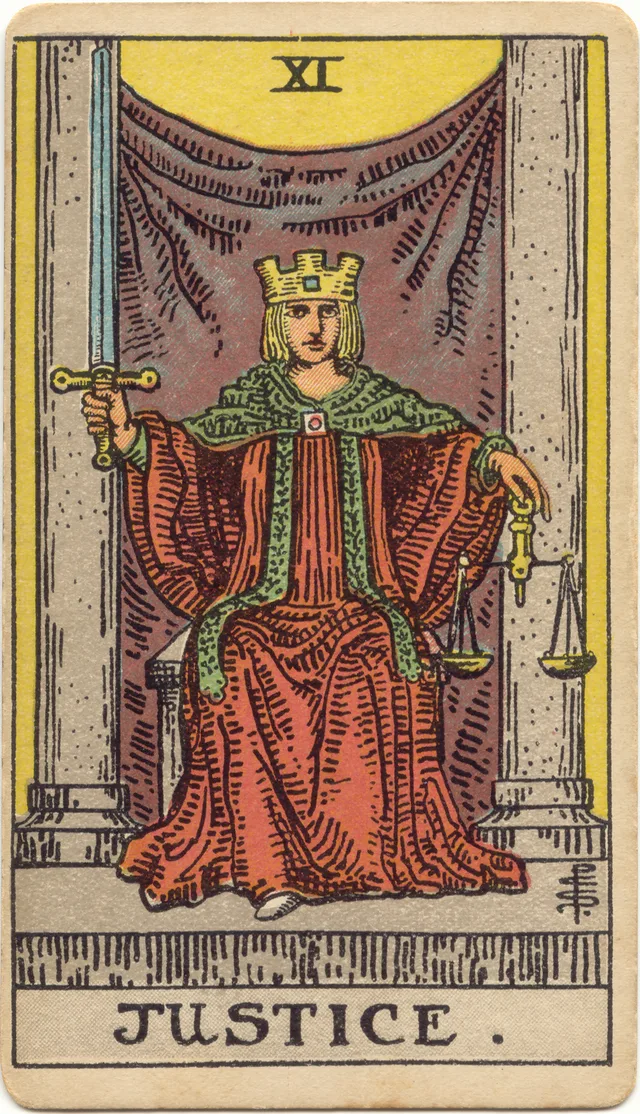
Justice
Justice uses scales and a sword to explore fairness and accountability; the King of Swords explores how a person applies reasoning and standards in daily decisions. Together they invite a review of evidence and consequences.
Read this card's meaning →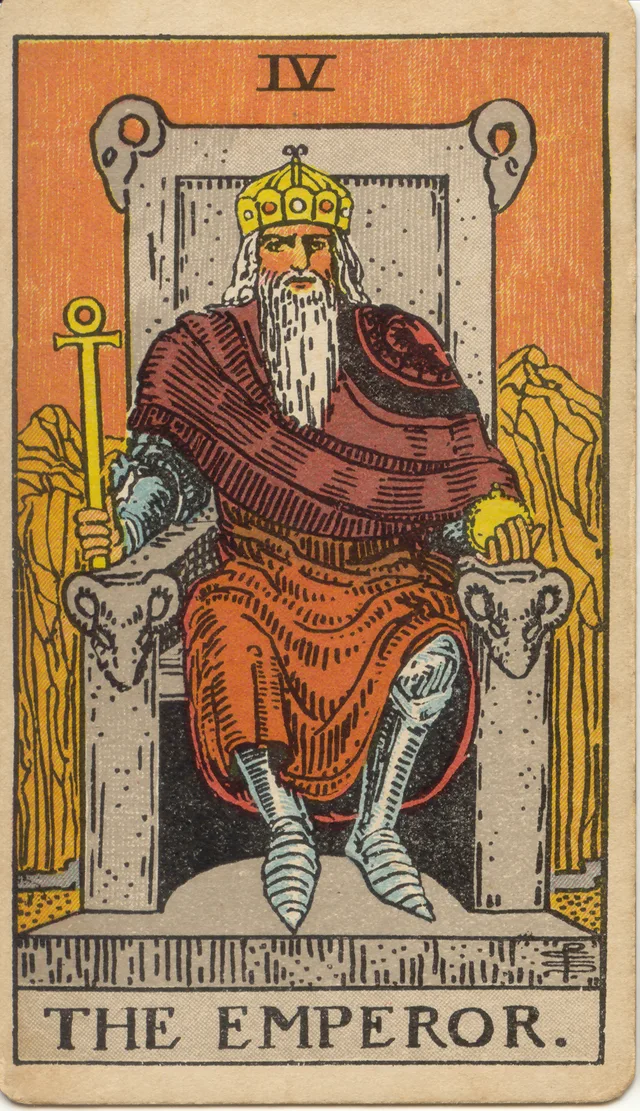
The Emperor
The Emperor focuses on structure and order, while the King of Swords focuses on reasoning, communication and standards. The pairing lets you compare formal power with accountable decision-making.
Read this card's meaning →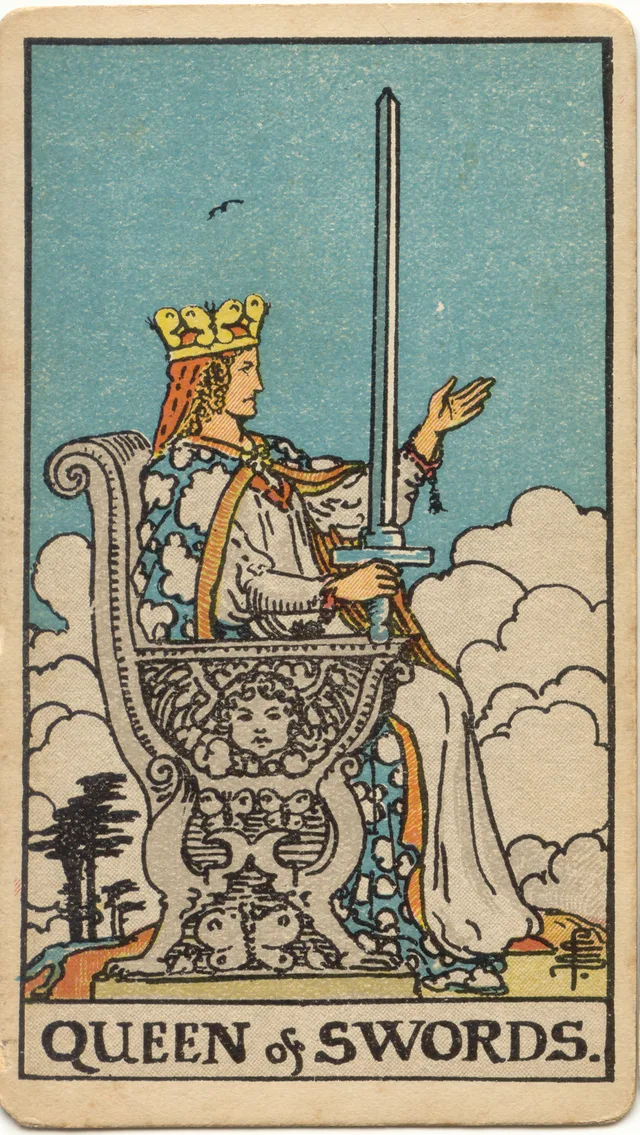
Queen of Swords
The Queen of Swords brings observation and independence; the King brings responsibility for decisions and explanations. Together they support questions about evidence, boundaries and how conclusions are communicated.
Read this card's meaning →