Eight of Cups Tarot Card Meaning
The Eight of Cups shows someone leaving a row of cups to search for a more meaningful direction. It can prompt reflection on dissatisfaction, changing priorities, or the practical reasons to leave a situation that looks acceptable from the outside. The image cannot prove that your feelings are a complete answer; compare the evidence, alternatives, support, and cost of staying or leaving.

What's pictured on the card
Cloaked in red and leaning on a staff, a figure turns their back on eight carefully stacked cups and walks away towards distant mountains. Overhead the moon shows both full and crescent faces at once, lighting a quiet, watery landscape. There is a gap in the stack of cups, something missing that no amount of arranging could fill. The card captures a brave, lonely departure: leaving behind what looks complete because your heart knows it isn't enough.
Eight of Cups upright: the core meaning
In the Eight of Cups, a figure walks away from a neat row of cups under the moon, seeking something more meaningful. Today may ask you to leave behind what's comfortable but no longer fulfilling. It takes courage to walk on. Trust that turning away from the wrong thing makes room for the right one.
A quiet restlessness may be tugging at you today, a sense that something you've invested in no longer fits the person you're becoming. On the surface everything might look fine, that's part of what makes it hard to name. Underneath, though, there's a truthful little voice saying you've outgrown this, whatever this is. Walking away from something decent-looking can feel like ingratitude, and it isn't. It's honesty. You may feel the pull of the unknown road and the ache of what you'd leave behind, both at once.
Notice any quiet dissatisfaction without treating it as an instruction to leave immediately. You do not have to make a dramatic exit; you can first reduce the energy given to what drains you and gather information. At work, identify what is unfulfilling and what a realistic change would require. In love, compare depth and mutual care with appearances. With money, connect spending with your actual values. If you choose to leave something, make space for grief and practical planning rather than assuming the unfamiliar will be better.
Three simple ways to work with this card
- Name one thing you keep doing out of habit rather than love, and give yourself permission to step back from it.
- Journal openly about what 'enough' and 'meaningful' would actually look like for you, without editing yourself for other people.
- Take one small step towards something that really matters to you, even while the old, comfortable thing still hangs around.
What are you outgrowing that it might be time to walk away from today?
What Waite painted and why it matters
The eight cups, carefully stacked. Eight cups stand in two rows, five below and three above, with a gap at the top. The arrangement lets readers discuss a perceived absence within something that otherwise looks complete. It does not prove that anything is missing in a reader's life or that leaving is justified. Check the specific concern, its duration, and the available alternatives.
The cloaked figure and the staff. The traveller wears red beneath a grey cloak and leans on a staff while walking. The clothing and staff can represent effort, privacy, and support, while the walking posture differs from a sudden run. The picture does not establish that a reader has considered a decision or that departure is safe.
The moon's double face. Overhead, the moon appears in two phases at once, full and crescent. Readers often use the contrast to discuss changing information, uncertainty, or a transition between viewpoints. The darkness is part of the scene, not proof that it is safe or threatening. The moon does not predict what is forming.
The river and the mountains. Water flows through the landscape, while high mountains sit ahead. The river and distance make the route look effortful, but they do not show whether the figure has crossed a boundary or whether a reader should do so. Use the setting to discuss practical obstacles, resources, and the information still needed.
The red and grey palette. Unlike the brighter Cups scenes, the Eight uses grey-blue water, dark hills, and a muted sky. The palette can help describe a serious or reflective mood without proving that departure is necessary. The red cloak draws attention to the traveller, but it does not show their motive or destination.
The upright Eight of Cups in detail
The Eight pictures a kind of leaving that can be difficult to discuss: considering departure from something that is not obviously bad. The missing space can symbolise a felt gap, but the card cannot establish that the gap is real, permanent, or enough reason to leave. Name what is missing, test assumptions, and weigh safety, responsibilities, support, and alternatives.
The scene is often associated with resignation, relationship change, or leaving a creative project. These are examples, not instructions. Compare the practical, emotional, and ethical costs of staying and leaving, and write down what evidence would change your assessment.
What it is not saying matters. It cannot tell you to leave, stay or romanticise dissatisfaction. Persistence of a feeling is information, but it is not a verdict. Consider patterns over time, direct communication, practical options and specialist support where safety, work, housing or finances are involved.
The image may create recognition by giving ambivalence a visible form. That response does not prove that a decision is already made or that the body has supplied an answer. It can simply open a more honest assessment.
For a beginner, translate the feeling of absence into observations before making a major change. If work feels empty, record the tasks, hours, feedback, pay, and parts of the week that create strain. If a relationship feels distant, name the interaction you want to discuss rather than labelling the whole bond. If a course or project feels misaligned, check its requirements and the cost of stopping. A short record and one direct conversation can separate a recurring concern from a difficult day; neither the record nor the card chooses the outcome.
The reversed meaning
One reversal theme is difficulty taking action around a possible departure. That may involve fear, practical constraint, ambivalence, or an unsettled decision. The card cannot confirm that leaving is right or diagnose what is holding someone in place.
A second pattern is return: revisiting something after leaving it. The image cannot say the original departure was correct or that returning will recreate the same problem. Ask what has changed, what has not, and what safeguards or evidence now exist.
A subtler reversal theme is remaining between staying and leaving without a defined decision. Beside supportive cards, patience may be one question to examine, but the spread cannot show hidden potential or tell someone not to leave. Circumstances, safety, and the reader's informed choice remain decisive.
In love & relationships
If you're single and the Eight appears, ask what may still need attention from a previous relationship. The card can frame memories, grief, or a former identity without proving that a chapter is closed or that you should stop looking back. Name the feeling, notice current boundaries, and decide what support would help before pursuing a new connection.
In an established relationship, the Eight can focus attention on dissatisfaction or a need to examine a pattern. It cannot show that something essential is missing, measure either person's investment, or predict a breakup. Discuss the specific concern, ask whether a change is wanted, and consider counselling or safety support where appropriate before making an irreversible decision.
Leaving can be one option among several; the card cannot decide whether it protects a relationship or avoids a difficult conversation.
- Naming persistent incompatibility before resentment builds
- Discussing whether staying still fits each person's needs and values
- Making space for each person's choices without promising a better match
- Ending or renegotiating an arrangement with clear, respectful communication
- Leaving at the first sign of difficulty rather than at the sign of genuine incompatibility
- Using the card to frame avoidance as a considered decision without examining the specific problem
- Making a permanent exit because of a temporary emotional state
- Confusing 'no longer easy' with 'no longer right'
Career
In a career reading, the Eight of Cups can frame dissatisfaction with a role that looks acceptable from the outside. A salary, colleagues, and title do not answer whether the work fits a person's values or capacity, but the card cannot establish that the role has lost meaning. Review workload, finances, alternatives, and specific sources of dissatisfaction before resigning.
The practical question is whether you are moving toward a defined option or mainly away from a problem. Either may be understandable, but the difference affects planning. List what is missing, whether the current situation could change, what another option requires, and what financial or professional support would reduce risk.
The Eight can frame a decision to leave a stable sector for work that seems more aligned with personal priorities. The card guarantees neither benefit nor cost. Treat restlessness as information to investigate, then compare training, income, demand, working conditions, and reversible ways to test the change.
Money
Financially, the Eight can focus on the cost of staying in work or an arrangement that feels unfulfilling. A salary, benefits, debt, and dependants matter when considering a change. The card cannot decide whether uncertain meaning is worth the financial trade-off; use a budget, alternatives, and qualified financial advice where needed.
It can also prompt a review of a financial pattern rather than a job: an investment that no longer matches stated goals, an automatic spending habit, or a shared arrangement that needs new boundaries. Review statements, ownership, risk, and written terms; do not treat the image as evidence that a specific asset or person should be left.
Health & wellbeing
In wellbeing readings, exhaustion and energy use can be reflection themes. The Eight cannot establish tiredness, its cause or whether sleep would help. Reported symptoms, responsibilities and qualified clinical guidance provide context.
The solitary walk and night landscape can symbolise withdrawal and reflection. They cannot establish a recovery phase, prescribe time alone or predict restoration. Symptoms, safety, responsibilities, support and qualified clinical advice should determine any recovery plan.
Life events & big decisions
Near a major decision point, the Eight can invite a comparison between current needs and the identity or priorities tied to an older choice. Logistics, finances, and obligations must be weighed alongside the cost of dissatisfaction over time. The card cannot tell you whether staying serves you; write down evidence for both options.
Around relocation, it can frame the difference between a planned move and an escape from an unresolved problem. Around relationships, distinguish a temporary difficulty from a persistent incompatibility using conversations and behaviour. Around career choices, ask whether credentials, income, and daily work still fit; the card cannot answer for you.
Contracts, deals & signatures
Beside a contract or signature question, the Eight can prompt a pause to distinguish informed commitment from relief at ending uncertainty. It is not a hard no and cannot judge the agreement. Read the terms, check affordability and obligations, and obtain independent review before deciding.
It can also frame a possible exit from a lease, partnership, or long-term contract. Gather evidence about why the wish to leave persists, what has been tried, and what termination requires. Read the exit clause, notice period, costs, and continuing duties before deciding.
Entrepreneurship & business
For an entrepreneur, the Eight can frame questions about achievement, meaning, and what to do after a milestone. It cannot show that a business works, a goal was achieved, or satisfaction is missing. Use revenue, customer evidence, obligations, capacity, and the founder's own account.
It can also symbolise discussion of a possible pivot involving a product, market, model, or partnership. The card cannot establish a gap or tell a founder to leave. Compare customer evidence, finances, obligations, capacity, and alternatives.
If a business exit has already been decided independently, proper notice, accurate records, and appropriate legal or commercial advice are general safeguards. The card cannot direct the departure or predict a long-term payoff.
How this card shows up in real spreads
Paired with The Hermit, the Eight can bring departure and solitude into the same discussion; with The Moon, departure and uncertainty; with Six of Swords, departure and transition. None proves withdrawal is necessary, predicts clarity, or shows that a calmer phase is underway.
If a reader reports burnout or workload strain, the Eight can support reflection on alignment without diagnosing a cause. Symptoms, responsibilities, workplace facts, and qualified health support determine what is happening and what may help.
What does the Eight of Cups mean in tarot?
What does the Eight of Cups reversed mean?
Is the Eight of Cups a yes or no card?
Does the Eight of Cups mean a breakup?
What does the moon in the Eight of Cups mean?
If the Eight of Cups has turned up for you today, sit with it rather than acting immediately. Notice your response to the walking figure, the stacked cups, and the distant mountains, then write down what is observation, what is assumption, and what is still unknown. The image does not demand an exit by Thursday; it can prompt an honest description of what feels missing.
If you'd like a daily practice for reflecting on priorities, the free daily draw is there each morning. Treat each card as a prompt rather than evidence about a decision. If the Eight appears again, compare your notes with current facts and notice whether your description of the concern has changed.
The Eight of Cups can frame leaving as an honest response when something no longer holds everything you need. Consider what you built, what is missing, and what staying or leaving would actually require.
Related cards and themes
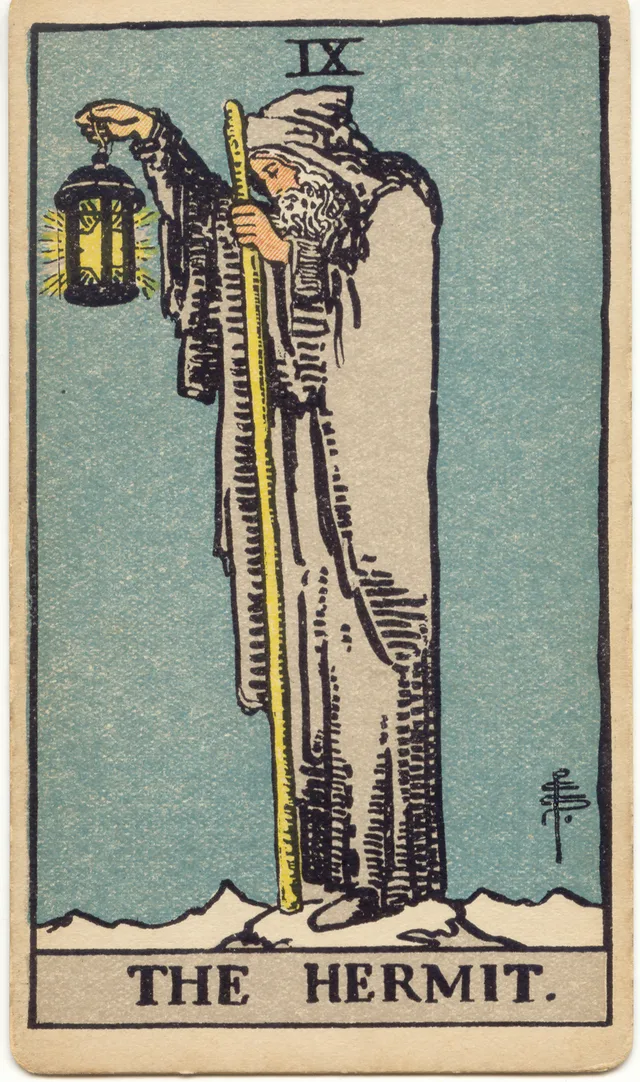
The Hermit
The Hermit and the Eight of Cups both support reflection and solitude as themes; neither card establishes that a person should leave or has found an answer.
Read this card's meaning →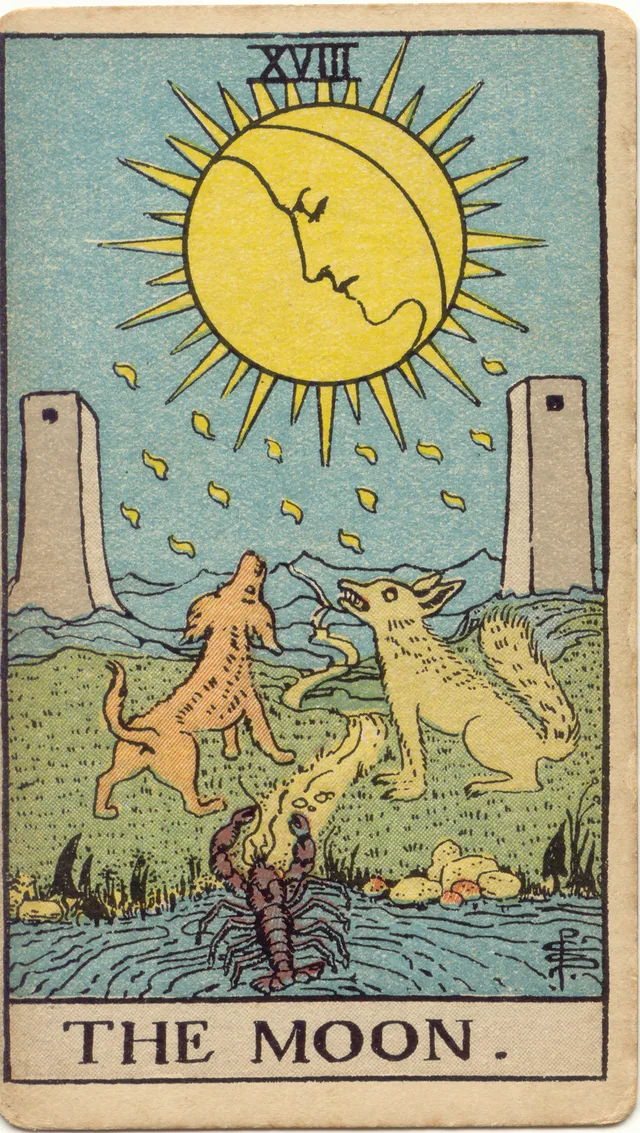
The Moon
The Moon and the Eight of Cups can both frame uncertainty and emotional complexity; the pairing cannot predict what lies ahead.
Read this card's meaning →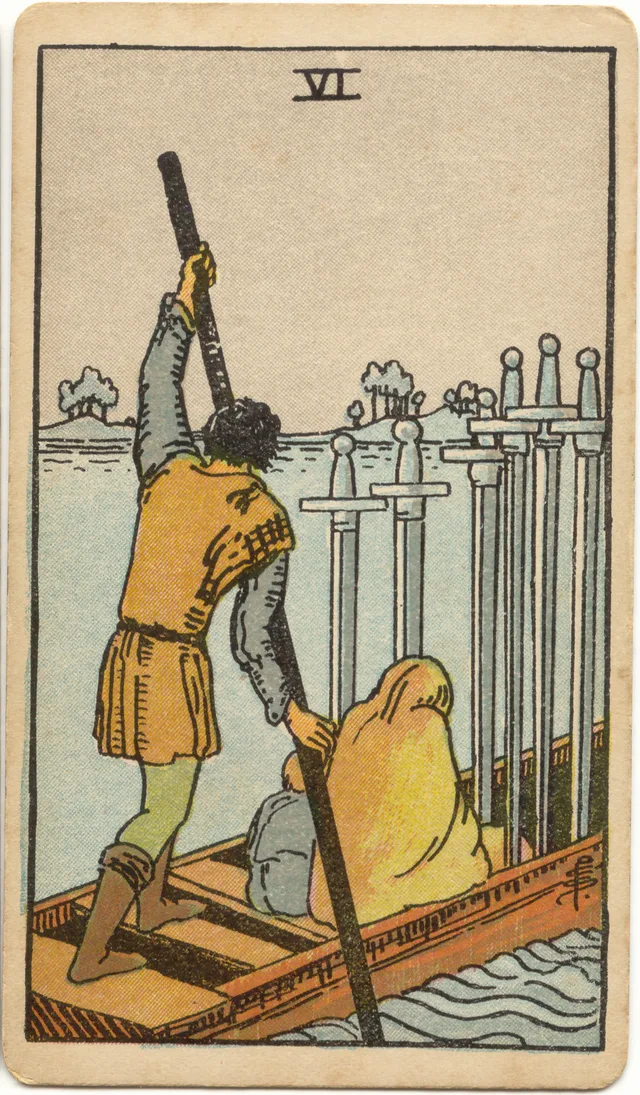
Six of Swords
The Six of Swords also uses travel imagery for transition, so the pair can raise questions about practical support during change without promising calmer conditions.
Read this card's meaning →