The Lovers Tarot Card Meaning
The Lovers combines relationship imagery with a choice shaped by values. It can prompt reflection on a connection, two work options, two places, or the tension between staying and leaving. The card cannot establish another person's feelings or identify the right choice; compare your values, consent, practical consequences, and what each option asks of you.

What's pictured on the card
A man and woman stand unclothed in a garden beneath a great winged angel bathed in sunlight, its arms outstretched in blessing. Behind the woman grows a tree with a serpent; behind the man, a tree of flames. A mountain rises between them. The scene recalls Eden and speaks of union, but also of conscious choice, values, attraction, and the meeting of two halves. It marks a time when your heart and the promises you’ve made really count.
The Lovers upright: the core meaning
Under an open sky, the Lovers stand hand in hand at a genuine crossroads of the heart. Today brings a choice that matters to your relationships or your values, and it deserves honesty rather than autopilot. Pick what you actually care about, not what fear or habit pushes you into; lining things up with yourself is the whole point.
There may be a choice pulling at you today that’s less about logic and more about what you actually care about most. Perhaps two paths, two people, or two versions of yourself are asking to be reconciled. Underneath, you might feel the weight of wanting to choose well, to stay true to your heart rather than take the easy road. That tension isn't indecision; it's your integrity making sure the choice actually fits who you are.
Let your values steer you today rather than fear, habit, or the wish to please. If a choice sits before you, ask which option you could live with proudly, then lean that way. In love, honesty and openness deepen things now, say the true thing, even if it trembles a little. At work, choose the path aligned with your principles over the merely convenient one. With money, spend in line with what you really care about. With family, meet people as equals rather than slipping into old roles. Connection thrives on presence today, so put the phone down and really be there. When head and heart disagree, let your deepest values cast the deciding vote.
Three simple ways to work with this card
- Name what you value most in a choice you're facing, and let that guide your next step today.
- Have the open, real conversation you’ve been putting off with someone who really matters to you.
- Put your phone away during one interaction today and give that person your full, kind, undivided attention.
Which choice today would honour what you value most at heart?
Every symbol, explained
The angel above. Raphael fills the top third of the image, wearing purple with arms spread over both figures. He does not point to one person or hand either person an answer. The figure can represent a wider perspective or a values question, but the image does not promise approval or decide for you.
Two trees. Behind the woman is a fruit tree with a serpent; behind the man is a tree with twelve flames. Traditional readings connect the first with knowledge, desire, and consequences, and the second with the twelve signs or the passage of ordinary time. Together they invite a question about what each choice reveals and what it asks you to accept.
The line of sight. The man looks toward the woman, while she looks toward the angel. Neither figure faces the viewer directly. This arrangement can prompt reflection on attention, influence, and whether each person is listening to both a partner and their own values. No person in the image becomes another person's compass.
Bare skin and the mountain. The figures stand unclothed in clear daylight, with no obvious shadows. The lack of clothing can suggest openness and vulnerability, while the grey mountain between them provides a shared practical challenge or future that neither person owns alone. Openness still requires consent and boundaries.
Six, and Gemini. The Lovers is numbered six, a number often associated with balance and relationship. Tarot traditions connect it with Gemini, the sign represented by twins and often used for conversation between different viewpoints. That association makes spoken values, questions, and consent useful themes, not fixed facts about a relationship.
The upright meaning, in detail
The essential lesson is to make a decision with your values visible. Fear, flattery, habit, and momentum can influence any option, so name them alongside practical benefits, costs, and risks. A values question complements a pros-and-cons list; it does not replace evidence or tell you which option will work.
When this card appears, people may recognise that they have been avoiding a decision or conversation. That recognition can identify a useful question, but it is not proof that one option is correct. Write down the choices, who is affected, what consent is required, and which facts still need checking.
The card does not promise a soulmate, confirm another person's feelings, or make the decision for you. It may concern two people, but it can also describe two responsibilities, places, jobs, or versions of a future. Use the image to clarify your questions, then rely on consent, communication, and practical evidence.
The reversed meaning
Reversed, the commonest reading is a choice left open so long that uncertainty has become part of daily life: two jobs half-considered, two relationships without a clear agreement, or two possible homes never compared properly. The absence of a crisis does not remove the cost of delay. Set a review date and identify what information would make a decision possible.
Second, a choice may have been shaped mainly by fear of being alone, a parent's expectation, salary, or public approval. Those factors can be legitimate, but trouble begins when they are treated as your only values. Name whose needs are present, what you consent to, and what trade-off you are actually choosing.
Third, a relationship may have uneven attention. One person notices, remembers, and initiates while the other experiences the arrangement differently. Do not infer motives from the imbalance; describe the tasks and conversations, ask whether both people want the same future, and decide what fair participation would look like.
How I read reversals: context first, dogma never. Just after a major decision, it can prompt a review of new information and practical support rather than a verdict about the choice. After a year of circling, it can highlight the cost of avoiding a decision. In an outcome position, ask which choice, conversation, or boundary remains open.
In love & relationships
If you're single, this card can shift attention from waiting for someone to identifying what you would genuinely agree to. Look beyond height, job, postcode, or other surface preferences and name how you want to be treated during ordinary difficult days. That list can guide questions and boundaries, but it does not identify a particular person or guarantee a connection.
In an established relationship, it highlights a conversation about moving in, children, caring for a parent, work abroad, money, or another unspoken plan. Use clear words rather than hints: state what you want, what you can consent to, and what you need to know from the other person. The answer belongs to both people.
The hard conversation concerns the future that neither person can decide alone. Two people can care for each other and still want different lives. Ask whether each person is choosing the current arrangement, what would need to change, and what each can freely consent to. If the conversation feels unsafe, seek support before having it.
The same card, depending on whether you use it to choose or to avoid choosing.
- Saying the thing you've rehearsed in the shower for months
- Choosing your partner again, deliberately, rather than by habit
- Paying attention to how someone treats people, not only to first impressions
- Letting the other person choose freely, even at the risk of a no
- Keeping a second option welcoming while claiming to be all in
- Staying because leaving would disappoint people outside the relationship
- Confusing intensity with alignment, real chemistry, clashing values
- Waiting for a sign so the decision doesn't have to be yours
Career
On a job hunt, it can frame a comparison between two offers or between pay, security, flexibility, and work you respect. Money is a valid priority; the useful question is whether the role matches the reason you are choosing it. Compare salary, benefits, duties, commute, progression, workload, and your own values in writing.
In the workplace, it points to collaboration and professional boundaries: who is responsible for each project, how credit is assigned, and what you will do when a decision conflicts with your stated standards. Discuss responsibilities and attribution early, and document decisions so a working partnership does not depend on memory.
For a promotion or resignation, consider the duties, authority, schedule, and skills you would use, not just the title or pay. Compare the written role with the work you want to do. If you are resigning, state the reason accurately and check notice, income, references, and safety before closing another option.
Money
Money under The Lovers can prompt a comparison between stated values and three months of actual spending. Look for unused memberships, subscriptions for an old version of your life, or no budget for a priority you say matters. Use the record to choose changes; it is not evidence that one set of values is morally superior.
It also highlights shared money: joint accounts, one earner supporting two people, a partner's debt, or a family loan with unwritten terms. Discuss income, responsibilities, privacy, debt, savings, and what money is for. Two people can have different habits, but they need informed consent and a clear process for decisions.
For debt and windfalls, it supports deliberate planning rather than dramatic promises. Compare the purpose, interest, affordability, and consequences of new borrowing; do not assume a card can tell you what is survivable. When money arrives unexpectedly, write down possible uses, tax obligations, and a pause period before spending or investing.
Health & wellbeing
Tarot traditions associate The Lovers with Gemini and with conversation, which can make breath, nerves, and decision-related tension useful reflection themes. Indecision can be tiring, but the card cannot explain a symptom or guarantee better sleep after a conversation. If anxiety or sleep problems persist, seek qualified support.
For habits, choose actions you can consent to and repeat, rather than a plan built on shame. Pick movement that fits your access, energy, and preferences. If your body has been monitored or a symptom persists, have a clear conversation with a qualified clinician; the card is not a diagnosis.
Life events & big decisions
For a move, compare a relocation you want with one shaped mainly by a partner's job, caring duties, or another person's opportunity. Any of these can be chosen freely, but the person giving up more needs space to name the cost, benefits, support, and alternatives. Put important agreements into a practical plan instead of relying on goodwill.
Around weddings, look beyond the day, dress, and guest list to whether the commitment is a current choice rather than an inherited script. Discuss pressure from family, a date set by other people, legal arrangements, finances, and the possibility of saying no. A simple ceremony can be freely chosen; a large ceremony can also be freely chosen.
After a loss, bereavement, divorce, or serious illness can change priorities quickly. If this card appears, write down the clarity you feel and allow time for grief, practical advice, and changing needs before making an irreversible choice. A feeling may be important without proving that a particular action is right.
Contracts, deals & signatures
The Lovers can focus attention on documents with two or more parties: partnership agreements, joint mortgages, co-signed loans, prenups, and co-founder splits. Make the document match the actual responsibilities, contributions, decision rights, exit terms, and risks, rather than an idealised relationship. Use qualified legal advice when the consequences are significant.
In negotiation, disclose material constraints and be clear about what you will not accept. Do not hide information that another party needs for informed consent. You can protect confidential information while still describing the relevant risk, and you should record what each person understood before signing.
For timing, have the difficult conversation before the paperwork. Discuss exit, buyout, ownership, credit, and what happens if the partnership stops working. If those terms are unclear, pause and obtain advice instead of assuming goodwill will answer later.
Entrepreneurship & business
For starting something, this card supports careful co-founder conversations before choosing an idea together. Shared enthusiasm is not the same as shared values. Discuss what you would refuse a client, who has final authority, how money and workload are handled, what happens during conflict, and what success means over five years.
For growth, it supports a clear position: define who the business serves, what it offers, and which work it will decline. Test that position with customer research and revenue data rather than assuming a narrower audience will succeed. Review tempting contracts for scope, capacity, reputation, and whether the work fits the business you are choosing to build.
On hiring, define the values and behaviours the role requires, then assess skills fairly and plan training. With your first three people, document expectations so culture is not left to assumption. Review a pivot against customer evidence, cash, capacity, and the mission you chose rather than chasing it only because it is available.
How it shows up in real readings
Use neighbouring cards to frame questions rather than to label a choice. Beside The Hierophant, compare an established path with your own values and check who benefits from the expectation. Beside The Devil, examine pressure, dependency, and whether consent is genuinely free. Beside The Chariot, turn a considered choice into a practical plan with milestones.
A client drew The Lovers three readings running and kept apologising for asking about her marriage again. During the discussion, a different issue emerged: her mother's care had landed mainly on her while her brother sent money from abroad, and she had never said she resented the arrangement. The practical choice was whether to discuss responsibilities and boundaries. She had that conversation at Christmas, badly, in a kitchen. She later said it was the hardest hour and that the following year felt clearer because the responsibilities were finally being discussed.
What does The Lovers mean in tarot?
What does The Lovers reversed mean?
Is The Lovers a yes or no card for love?
How soon do things happen with The Lovers?
Does The Lovers mean a soulmate or twin flame?
If The Lovers has found you, name the sentence you have been avoiding and the person who needs to hear it. Write down what you can ask for, what you can consent to, and what response would change your plan. The card can help you reflect; it cannot bless a person, settle a dispute, or make the decision.
Name your two or three real values, compare each option with them, and record the practical evidence alongside your emotional response. A flinch is information about your reaction, not proof that an option is wrong. If you'd like a reflective pause while you work through it, the free daily draw is there each morning.
The Lovers can frame a meaningful choice and the values that make it difficult. Decide by what matters most to you, but include communication, consequences, and the needs of everyone affected rather than seeking the easiest explanation.
Related cards and themes
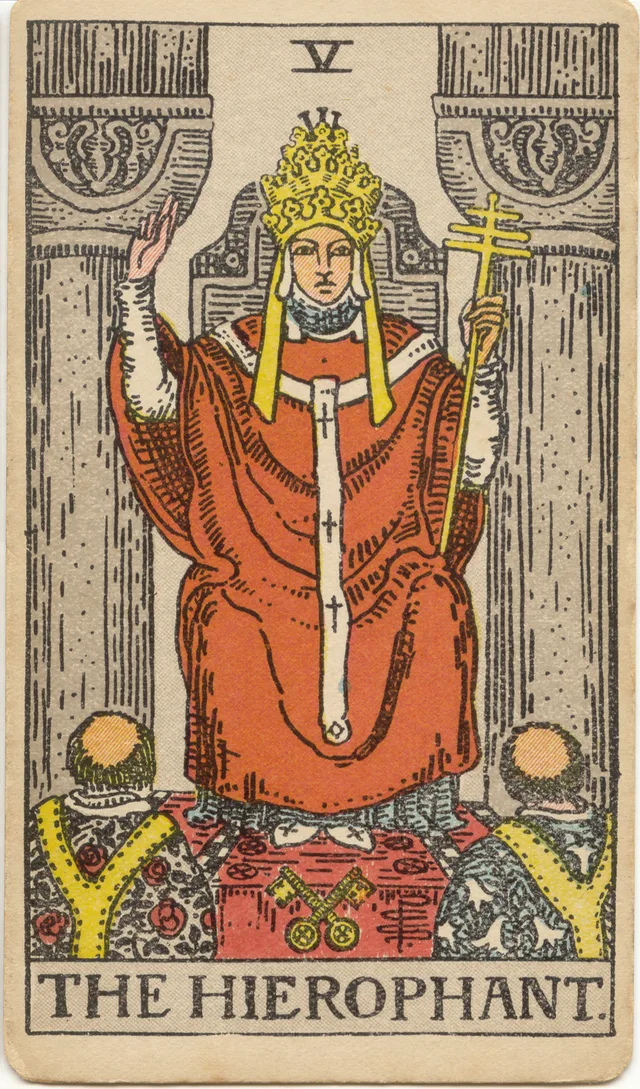
The Hierophant
The Hierophant emphasises shared tradition and formal commitment; The Lovers emphasises a choice made from personal values.
Read this card's meaning →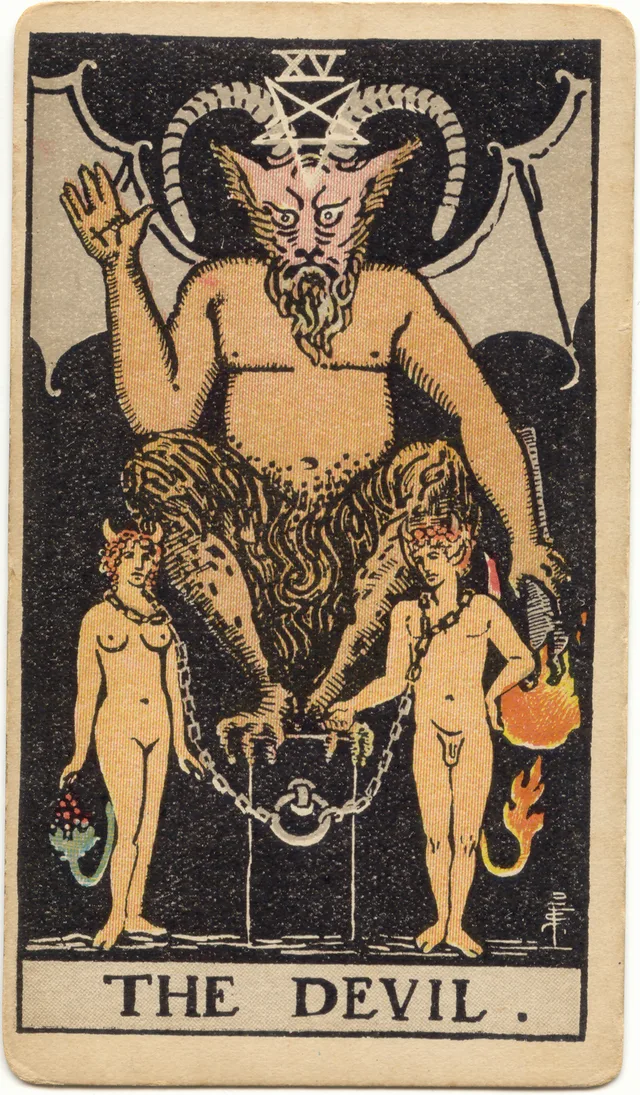
The Devil
The Devil also shows two figures, but asks whether attachment, fear, or compulsion is limiting the choice The Lovers presents.
Read this card's meaning →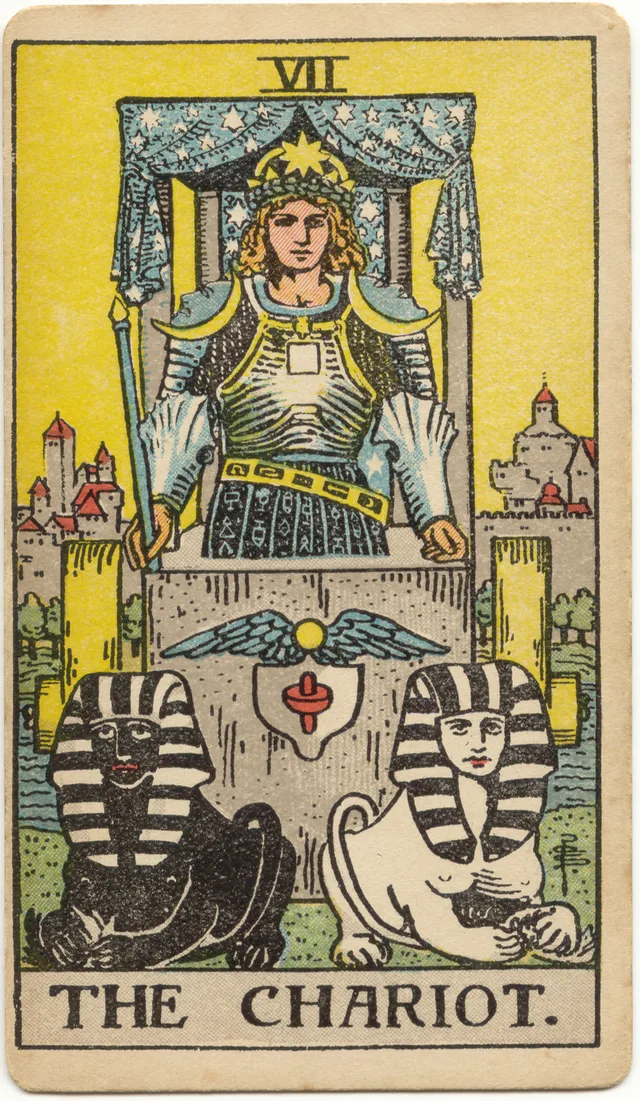
The Chariot
The Chariot follows a decision with direction, discipline, and movement, while The Lovers focuses on choosing the direction.
Read this card's meaning →