Five of Swords Tarot Card Meaning
The Five of Swords shows one figure collecting swords while others withdraw, an image of conflict, power, and the cost of winning at another person's expense. It can prompt you to ask whether an argument serves your actual goal, but it cannot establish motive, blame, or whether a conflict is unavoidable. Review what happened, what repair is possible, and which boundaries are needed.

What's pictured on the card
Under a jagged, windswept sky, a smirking figure gathers up swords while two others walk away with their heads bowed and shoulders slumped. He holds three blades and two lie on the ground; the clouds above are torn and restless. Smith caught the strange emptiness of winning at someone else's expense, the victor left standing alone, the field cleared, but nothing kind remaining. It's a picture of conflict that costs more than it gives.
Five of Swords upright: the core meaning
The Five of Swords shows a figure collecting swords as others walk away defeated, a win that somehow feels hollow. Today warns that being right isn't always worth the cost. Pick your battles with care. Ask whether this fight is worth what it takes from the relationship, and let go of the ones that only bruise everyone.
There may be a prickle of defensiveness in the air today, a readiness to prove your point that sits just under the skin. Perhaps something stung recently and part of you wants to even the score. That flare of frustration is understandable, you're not wrong to want to be respected. But notice the quieter voice beneath the heat, the one that would rather feel close to people than triumphant over them. It's still there, waiting for you to choose it.
Before any exchange today, ask what you actually want to be left with when it's over, connection or a scorecard. If tension rises at work, you can be firm about the point without needing the other person to lose; state your case once, then let it breathe. In relationships, resist the last word that wins the argument but bruises the bond. Sometimes stepping back isn't weakness, it's wisdom. Where money or fairness is at stake, aim for a resolution both sides can live with rather than a total victory. Release grievances that only weigh you down. And if you were the one who overstepped recently, a simple, real repair today will feel far lighter than defending a hollow win. Pick the outcome your future self will be glad you chose.
Three simple ways to work with this card
- Before responding to something that stung, pause and ask whether winning this point is worth the distance it might create.
- If you overstepped recently, send a short, sincere repair today, no long defence, just an open, kind acknowledgement.
- Pick one grievance you've been carrying and decide, on paper, to set it down and stop rehearsing it.
Is being right today worth what the fight might cost you?
What Pamela Colman Smith painted
The central figure's expression. The central figure holds three swords and glances back at the retreating figures with an expression that can be read as satisfaction. Smith gave him a restrained, pleased look rather than a triumphant one. That contrast can prompt questions about the difference between winning an exchange and considering its effect on the people involved; the painting cannot establish anyone's feelings.
Three swords collected, two abandoned. He carries three swords while two remain on the ground. The uneven distribution can suggest selective victory or unfinished business, but it does not tell us what the dispute was about or what either person lost. The scene leaves room to ask what was gained, what was left behind and whether the result served the original purpose.
The departing figures. Two people walk away with heads lowered and shoulders drawn inward. One has a hand near the face, a gesture that may suggest distress or humiliation rather than physical injury. The image can help discuss relational cost and dignity after an argument, but it cannot establish what happened or how anyone feels.
The turbulent sky. Torn clouds hang above a choppy sea. There is no blood or wreckage, yet the setting remains unsettled. This visual contrast can support a discussion about the aftermath of an argument: an exchange may have ended while questions, stress or repair remain to be addressed.
Five, and Venus in Aquarius. Some tarot traditions associate this card with Venus in Aquarius. That correspondence can add a theme of ideals, relationships and distance to the image, but it does not establish attachment or explain a real conflict. Use the correspondence as optional vocabulary alongside what the people involved report.
The upright meaning in full
The Five of Swords gives language to conflict, especially the question of what a person wants from an argument. Some confrontations address boundaries or protect something important; others become focused on pride, being seen to be right or accumulated resentment. The card cannot distinguish those situations, so examine the stated issue, conduct and consequences directly.
The scene can evoke a hollow victory: an argument appears to be won while the relationship feels more damaged afterwards. That is a useful reflection prompt, not a conclusion about a reader's conduct. Ask what changed after the exchange, what each person wanted, and whether repair or a firmer boundary is needed.
As a prompt before a difficult conversation, it can encourage someone to define a useful outcome before engaging. Ask whether the goal can be reached without humiliation, and whether a firm boundary, mediation or a pause would serve better. Some positions do require disagreement, but the card cannot determine whether goodwill must be lost or which approach is proportionate.
What the card is not saying: it does not require someone to avoid every conflict or concede a necessary boundary. A reflective reading can ask whether the dispute is connected to the stated goal and whether the method is proportionate. Facts, consent, safety and the people involved determine the response.
The reversed meaning
One reversal theme is a conflict losing intensity before a full confrontation. Two people may step back, or a difficult issue may be addressed in a contained way. The image can support reflection on de-escalation, but it cannot establish that tension has ended or that the change is positive.
A second reversal theme is unresolved conflict after an outward pause. Someone may replay an exchange or think about what they wished they had said, but the card cannot reveal a private mental process. Ask what each person reports and whether a safe, consensual conversation or other form of repair is wanted.
A third reversal theme is reviewing the effects of a conflict and considering repair. The image can prompt acknowledgement of harm, an apology or a boundary reset, but it cannot establish that damage occurred or that repair will be accepted. Any contact should respect consent and safety.
There is also a self-directed theme: competing priorities or self-criticism that leaves a person feeling diminished. The card cannot diagnose that experience or show its cause. If the reader recognises it, kind language, trusted support and qualified care may be more useful than further self-judgement.
In love & relationships
In a romantic relationship, the Five of Swords can evoke an argument that appears won while both people feel worse afterwards. Use it to examine a pattern rather than treating the image as evidence. Look at language, frequency, repair attempts, boundaries and each person's account of the disagreement.
It can also prompt someone to consider whether a forceful argument met the relationship's wider needs. A person's impression of another expression is not proof of harm or motive, so ask directly where consent allows. Repair depends on what happened, what each person wants and whether a safe conversation is possible.
For someone dating, the Five can frame a connection that feels competitive or focused on being right. It cannot establish a pattern in another person or decide whether closeness is possible. Notice the actual conversations and decide which boundaries and forms of communication fit your values.
Direct communication can address a real issue, while repeated point-scoring can make closeness harder. Conduct and consent provide the context.
- Standing firm on something that genuinely matters to you
- Naming a pattern before it builds into resentment
- Knowing what you need from a confrontation and stopping when you've got it
- Not pursuing a point further once you've made it, even when you could win it
- Winning in a way that requires the other person to be wrong rather than just different
- Using accurate observations as weapons in the heat of an argument
- Point-scoring as the default mode of difficult conversation
- The hollow satisfaction of being right while the relationship deteriorates
Career
At work, the Five of Swords can frame office politics, credit disputes or a meeting that became a contest about who was right. Ask whether the proposed action advances the work or only a personal position. Review documented responsibilities, workplace policy and the effects on colleagues instead of assuming that the card predicts reputational consequences.
It can also frame a professional confrontation about a problem, an unreasonable demand or a colleague's treatment. The card does not tell anyone to back down. State the concern, desired remedy and evidence clearly, then use the relevant manager, policy or representative if direct discussion is not appropriate.
For leaders, the card can prompt review of a forceful management style and its effects on participation. It cannot show that a team is compliant, disengaged or harmed. Use staff feedback, retention information, performance context and psychological-safety practices to assess whether the approach is working.
Money
Financially, the Five of Swords can frame a price dispute, settlement or negotiation that has become focused on defeating the other party. A competitive atmosphere may make it harder to compare workable terms, but the card cannot decide what is fair. Use figures, written proposals, rights and qualified advice where the stakes require it.
It can also prompt reflection after a discount, claim or concession is obtained. The reader can compare the financial result with relationship and practical effects, without assuming the result was hollow or that a dispute was unnecessary. Some claims need pursuing; documentation and independent advice help assess them.
Health & wellbeing
In a wellbeing context the Five of Swords most often speaks to the exhaustion of ongoing conflict — the physical toll of sustained tension, the way unresolved combative dynamics drain energy that isn't visibly spent on anything. Swords are air, and conflict is mentally exhausting even when it isn't physical: the rehearsals, the replays, the arguments prepared in the shower that never get used.
It can also appear for someone very hard on themselves — whose internal life has the quality of a contested argument, one part consistently winning against another and leaving both diminished. This self-directed conflict is less obviously damaging than external conflict but often more persistent. The card names it clearly: pursuing a victory over yourself is as hollow as any other. Nothing here is diagnostic — if something concerns you, speak to a doctor.
Life events & big decisions
Around a decision where people want different things, the Five of Swords can prompt a question about whether the process needs a winner. List the practical issue, each person's priorities and any non-negotiable boundaries before the disagreement takes over. The card cannot identify a compromise or decide whose position is justified.
It can also frame a decision about disengaging from a conflict. Compare the cost of continued contact with the importance of the issue, and consider boundaries, mediation or qualified advice. Leaving an argument is not automatically weak or correct; safety, rights and the practical goal matter.
Contracts, deals & signatures
The Five of Swords around a contract can prompt a review of whether negotiations are focused on workable terms or on defeating someone. A document should be assessed by its wording, obligations, remedies and practical use; the card cannot show that a term will cause conflict. Independent legal or professional review may be appropriate.
For an existing-contract dispute about breach, deliverables or meaning, separate the documented issue from the relationship history and reputational concern. The card cannot classify which part matters most or predict expense. Gather the agreement, timeline and communications and obtain qualified advice where needed.
Entrepreneurship & business
In business, the Five of Swords can frame external competition or internal conflict. Compare the cost of a dispute with its concrete business purpose, such as protecting intellectual property, correcting a contract or serving customers. The card cannot determine which contest matters; records, strategy and qualified advice should do that.
For partnerships and founding teams, it can prompt a review of decisions that have become point-scoring. Different visions do not automatically require a victor. Clarify decision rights, ownership, written commitments and a route for disagreement; the card cannot predict whether a partnership will survive.
It can also symbolise reputational conflict — public disputes, combative review responses or industry disagreements. The card cannot decide whether pursuing a win is worth the cost. Examine documented consequences, repair options and stakeholder response.
How the hollow win shows itself
The Five of Swords beside The Tower combines conflict and disruption as themes without showing who caused them or predicting recovery. Beside Two of Swords, confrontation and stalemate can be explored, but the cards cannot establish the history, motives or outcome.
Someone may bring this card after a conflict and ask whether pursuing the win was right. The card cannot confirm that decision or reveal a private cost. Review observable consequences, the other parties' communication, consent and possible repair.
What does the Five of Swords mean in tarot?
What does the Five of Swords reversed mean?
Is the Five of Swords a yes or no card?
Does the Five of Swords mean someone is lying to me?
What does the Five of Swords mean for love?
If the Five of Swords has appeared for you, ask what a useful result would look like in the situation you are considering. Name what would be different, what evidence would show progress and what cost you are willing to accept. A reflective answer may reveal an aim more specific than victory, but the card cannot choose the strategy or speak for another party.
The central figure holds three swords and looks back at the people leaving. That composition can support reflection on consequences before choosing a strategy. If you'd like a daily practice of honesty and reflection while you work this out, the free daily draw is available each morning.
The Five of Swords can prompt an honest review of conflict: what do you want, what will winning cost, and what outcome would be worth pursuing? The card cannot decide whether to continue, withdraw, or repair.
Related cards and themes
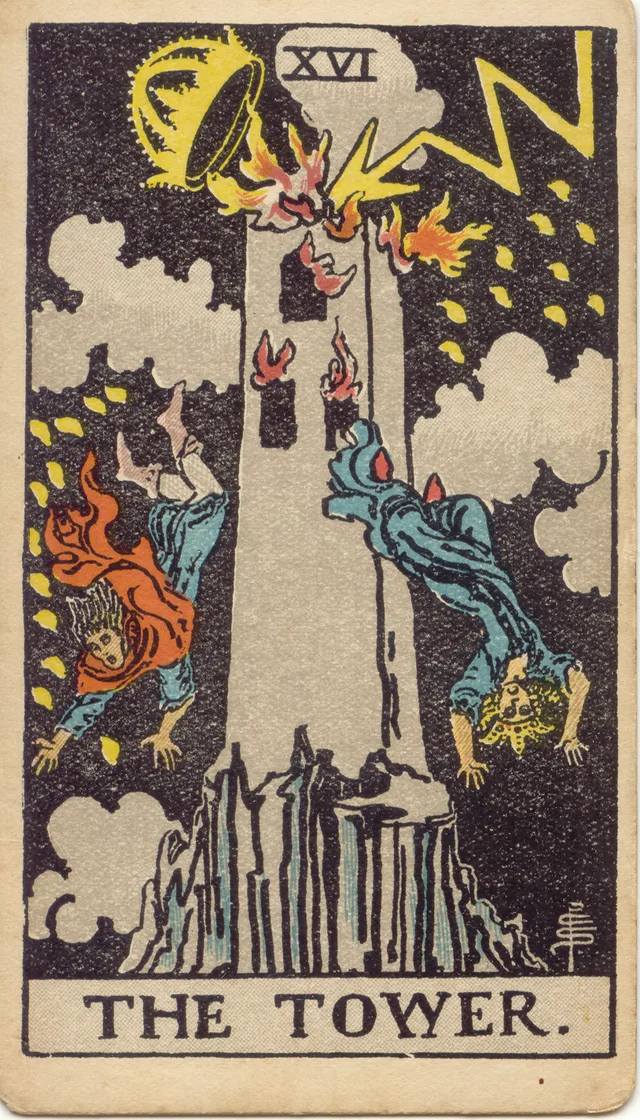
The Tower
The Tower introduces disruption as a theme, while the Five of Swords can help examine conflict and competing responses after a disruptive event.
Read this card's meaning →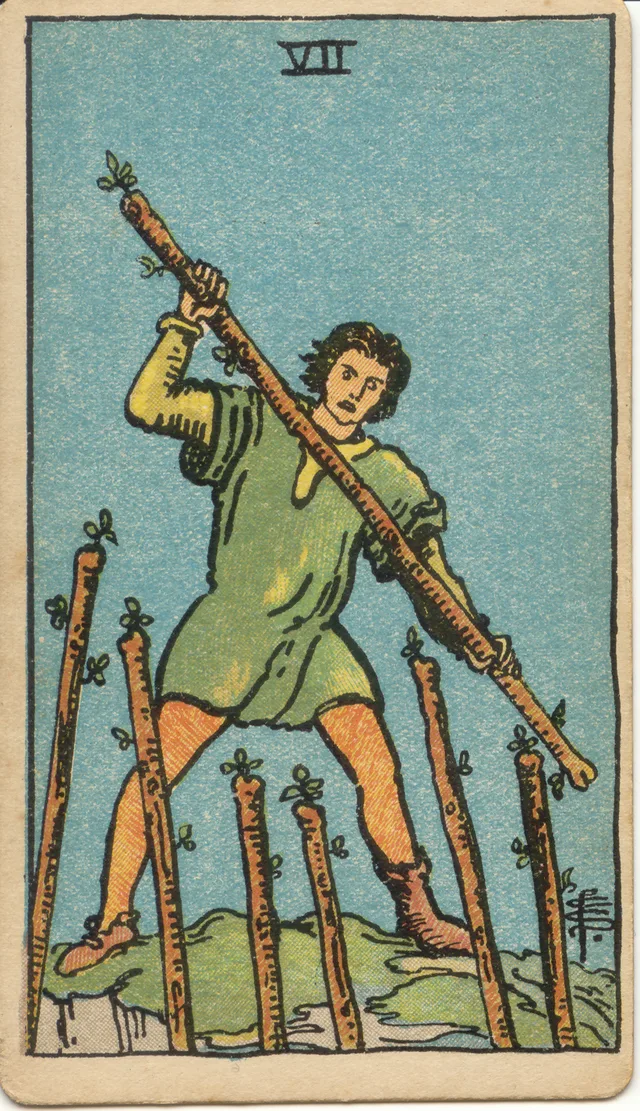
Seven of Wands
The Seven of Wands explores holding a position under pressure; the Five of Swords raises questions about when defence becomes point-scoring or causes avoidable harm.
Read this card's meaning →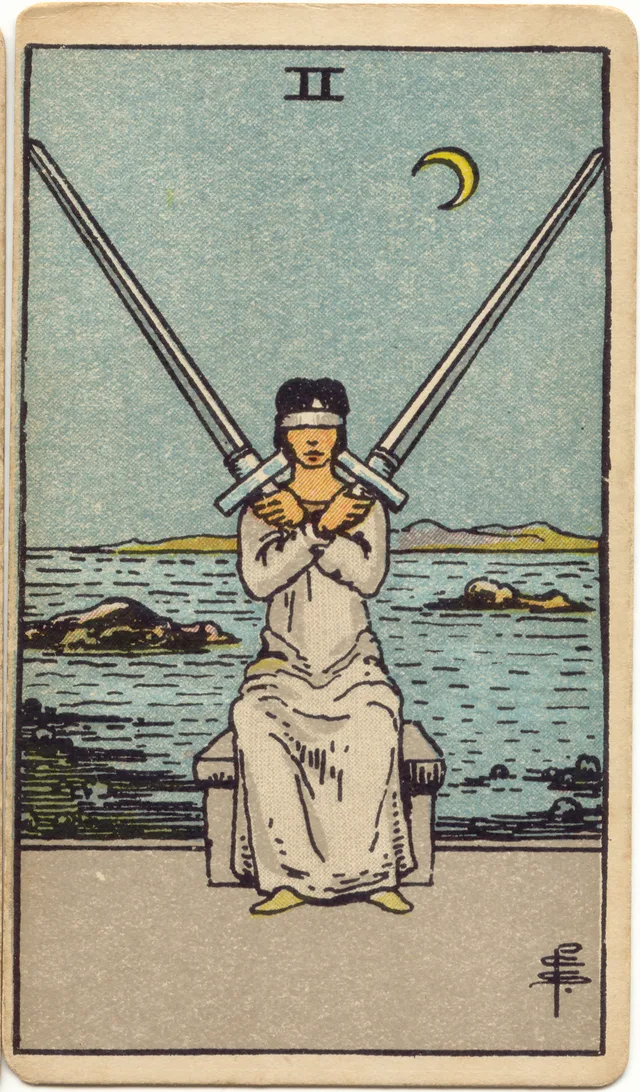
Two of Swords
The Two of Swords can frame avoidance or indecision, while the Five of Swords can frame the conflict that may follow when an issue is finally addressed.
Read this card's meaning →