Nine of Swords Tarot Card Meaning
The Nine of Swords depicts night-time worry, exhaustion, and thoughts that feel larger in isolation. It can prompt you to write down fears and separate observable facts from imagined outcomes, but it cannot diagnose anxiety or promise that morning will resolve it. If worry is persistent or affecting sleep and daily life, consider qualified support.
What's pictured on the card
A figure sits bolt upright in bed in the dead of night, face buried in both hands, woken by dread. Nine swords hang in rows on the dark wall behind, though none of them touch her. The quilt is stitched with roses and zodiac signs, and the bed frame is carved with two figures in distress. Smith drew the shape of anxiety exactly, the wall of worries that looms in the dark yet never actually strikes.
Nine of Swords upright: the core meaning
The Nine of Swords shows someone sitting up in bed, head in hands, swords lining the wall like anxious thoughts. Today the worry may feel loudest in the small hours, far bigger in your head than in daylight. Bring it into the light. Most of these fears shrink once they're spoken aloud or written down.
Your mind may be spinning faster than the day actually warrants, replaying worst-case scenes on a loop. There's often a quiet exhaustion beneath this, the wear of carrying worry no one else can see. You might feel a little ashamed of how big the fear grows when the house falls silent. Please go easy here: an overactive mind is usually a caring one that’s just run out of daylight. The dread feels enormous, yet it's far more shadow than substance.
Bring worries into the light by writing down the fear and separating what you can influence from what you are imagining. At work, identify the single task most connected to the worry. In relationships, share the anxious thought with someone who can listen and respond safely. With money, review the real figures rather than the imagined ones. Movement, fresh air, and sleep may support you, but persistent anxiety deserves appropriate professional help; a card cannot measure how well you are coping.
Three simple ways to work with this card
- Write every worry down in one list tonight, then circle only the ones you can actually do something about.
- Say your loudest fear out loud to someone you trust, and let them help you right-size it.
- Before bed, do one small calming ritual, kind tea, slow breaths, a soft page, to signal safety.
Which late-night worry would look smaller in the daylight today?
Pamela Colman Smith's sleepless room
The figure sitting upright. The figure sits upright on the bed with both hands covering the face and elbows on the knees. This posture communicates wakefulness, distress and an attempt to cope with difficult thoughts. It can help a reader describe an experience, but it cannot diagnose anxiety or tell us why the person is awake.
The nine swords on the wall. Nine swords hang horizontally in a row above the bed. They do not touch the figure, so the composition separates a distressed person's thoughts from a visible physical threat. The number nine is often read as a late stage before ten in the suit; neither detail predicts a worst case or proves that danger is absent.
The decorated quilt. Roses and astrological symbols decorate the quilt beneath the figure. The detailed pattern contrasts with the person's distress and can prompt attention to the wider circumstances, relationships and resources that may be hard to notice during worry. It cannot show that supportive things are available or that fear is misplaced.
The carved bed frame. A relief of two figures in conflict is carved into the bed, with one figure falling. The detail introduces a visual story of defeat and can prompt questions about repeated mental narratives or the material setting around sleep. It cannot identify the source of worry or establish that a person feels defeated.
The darkness. There is no visible window, floor or daylight, only the dark wall and swords. The absence of light creates a confined night-time setting, while the Ten of Swords later introduces a horizon and sunrise. The contrast can support a question about what is known now versus what may look different later; it cannot promise relief.
The upright meaning in detail
The Nine of Swords is associated with anxious thought, especially worry that becomes louder at night and repeats without resolving. A beginner can make the distinction concrete by writing “I will lose my job” under thought, “my manager scheduled a review” under observable fact and “ask what the meeting covers” under next action. That list does not settle the outcome, but it prevents one sentence from carrying every assumption. It is not evidence of catastrophe, a warning that a feared event is coming or a diagnosis of a person's condition. Use the image to describe the experience, then separate thoughts, facts and practical support.
The swords hang above rather than touching the figure, so the composition can represent feared possibilities as thoughts. The image cannot establish that danger is absent or that a feared event will not happen. Check actual information and safety needs independently.
The Nine can prompt reflection on whether repeatedly rehearsing a fear is producing useful preparation or only exhaustion. It cannot establish the reader's mental state, preparedness or fatigue; ask the person and observe practical effects.
A reader may also report a genuinely difficult situation. The card cannot determine whether distress is proportionate or validate a response. Facts, symptoms, safety needs and qualified support provide context.
The reversed meaning
Reversed, a frequent theme is shame about being worried or difficulty discussing distress. A person may appear to function while carrying a burden they have not named, but the card cannot establish hidden suffering. Ask what support is wanted and respect the person's account.
Another theme is distress in response to a genuinely difficult situation. A card cannot determine severity or whether a response is proportionate. If there is a real threat, loss or obligation, address the facts and seek practical or professional support rather than using reassurance from a spread.
A further theme is a change in how worry is being managed, including moments when a thought feels less consuming. The card cannot mark recovery or promise that distress is clearing. It can prompt a practical question about whether support has been avoided; if worry affects sleep or daily life, consider a trusted person or qualified professional.
In love & relationships
For a single reader, the Nine can frame fears about being rejected, too complicated or affected by a previous experience. Night-time intensity is not evidence that the fear is true. Write down the specific concern, what supports it, what does not and whether a conversation or professional support would help.
In an established relationship, the Nine can frame a gap between an observable event and the story built around it: a quiet day, disagreement or delayed text may prompt fears about the whole relationship. Do not assume the anxiety is unrelated or that the relationship is unsafe; check what happened and ask directly when it is possible.
A grounded check-in can separate a global question such as “am I lovable?” from a specific need to communicate. Write what happened, what you need to ask and what response you can accept. Choose a calm, consensual conversation rather than making a relationship decision during a spiral.
Worry can make an uncertain relationship feel more threatening, but the intensity of a thought is not evidence about the relationship.
- Naming the worry to a trusted person rather than carrying it alone
- Checking whether a specific event needs a direct conversation
- Separating “I am anxious about this relationship” from “this relationship is a problem”
- Using the same patience at 3am that you would offer a friend
- Treating a tired, nighttime interpretation as the most accurate one
- Making a relationship decision during an anxiety spiral
- Repeating worry instead of gathering relevant information
- Keeping significant distress private because asking for help feels difficult
Career
At work, the Nine can frame worry about performance, feedback, redundancy, rejection or a difficult meeting. A reader's report is more important than the card; identify the specific fear, actual requirements, available support and any steps that would prepare without increasing exhaustion.
Anticipatory distress around a review, redundancy, client or public response is one possible theme. A new employee facing a first performance meeting might write down the stated criteria, two questions for the manager and one colleague or support service to contact, while leaving room for information not yet available. The card cannot diagnose distress or prescribe preparation. Use actual requirements, reported symptoms, workplace support and qualified care where appropriate.
Money
Financial worry is one possible Nine of Swords theme. The card cannot establish catastrophising or compare distress with the actual situation. Current accounts, obligations, deadlines and qualified financial advice provide relevant facts.
Reviewing current accounts can be an independently chosen factual step, but the card cannot order it or promise the numbers will be reassuring. Use verified figures, a manageable list and qualified advice where appropriate.
Health & wellbeing
I read no tarot card as medical diagnosis. Anxiety, hypervigilance, intrusive thoughts and dread can be discussion themes, but the card cannot establish any of them. If distress affects sleep or daily life, seek qualified help rather than tarot guidance.
For wellbeing, sleep and recovery can be practical topics. A beginner tracking a difficult week might note bedtime, wake time, caffeine, screen use and the worries that appeared, then bring that record to a clinician rather than diagnosing from the card. Ask what conditions, routines or support make rest more possible, without treating the image as evidence that sleep is being lost or that a particular remedy will work. Persistent sleep difficulty belongs with qualified care.
Life events & big decisions
Before a major decision, the Nine can prompt a distinction between uncertainty-related fear and evidence about an outcome. Fear is real but does not select a direction. List the checks already made, the gaps, deadlines, consequences and available advice instead of assuming either that the worst case is likely or that no further checking is needed.
It can also frame waiting for results, news or a response. Identify what is known, when an update is reasonable and what support helps while information is unavailable. After a loss, diagnosis or serious setback, distress may need witnessing and qualified support; the card cannot set a stage of grief or say what will make it manageable.
Contracts, deals & signatures
The Nine around a contract can frame worry before signing, including concern that something is unclear. The caution may reflect anxiety, a genuine problem or both; the card cannot distinguish them. Name the clause, obligation or assumption that needs checking before signing.
If you can name the concern, investigate that clause or obligation. If the dread remains vague, do not dismiss it or treat it as proof of a problem; take a pause, seek independent review and consider support for the distress. Another reader can help with information, but only appropriate professional review can assess legal terms.
If negotiations are affecting sleep, write down minimum terms, questions and alternatives before the next conversation. For example, a first-time freelancer could list the fee, payment date, revision limit, ownership clause and the point at which independent advice is needed. This creates a factual reference point when pressure rises; it cannot guarantee a good deal or replace legal or commercial advice.
Entrepreneurship & business
For business owners, the Nine can symbolise worry about operations, cash flow or an upcoming decision. It cannot diagnose anxiety, identify a cause or prescribe an action. Use accounts, operational evidence, professional advice and support for the person carrying the worry.
Before a launch or pitch, the Nine can frame worry as a theme. It cannot assess preparedness or identify a protective mechanism. Check the plan, customer evidence, cash needs, lawful terms, contingencies and support.
How it tends to show up
Beside The Moon, the Nine brings worry and uncertainty into the same reflection; with Eight of Swords, worry and perceived restriction; beside Four of Swords, worry and rest. These pairings cannot diagnose anxiety, establish illusion or show that rest is available or needed.
A reader may report managing something difficult or keeping worry private. The card cannot reveal either or identify what will help most. The person's account, safety needs and qualified support matter.
What does the Nine of Swords mean in tarot?
What does the Nine of Swords reversed mean?
Is the Nine of Swords a yes or no card?
What does the Nine of Swords mean for love?
Does the Nine of Swords mean I should be worried?
If the Nine of Swords has appeared, write the thoughts down and separate each fear from the observable fact, practical question and next support. You do not need to solve everything at night; a written list can show which items need action, information or a conversation when you have capacity.
You do not have to feel fine immediately. If distress is persistent, affects sleep or makes daily life difficult, contact qualified support or a trusted person. The free daily draw is available each morning as an optional reflection, not a substitute for care or evidence about what is happening.
The Nine of Swords can mirror a mind rehearsing every possible problem in the dark. Treat the image as a prompt to separate present facts from imagined outcomes, seek support, and address one concern at a time. One thought can be checked at a time.
Related cards and themes
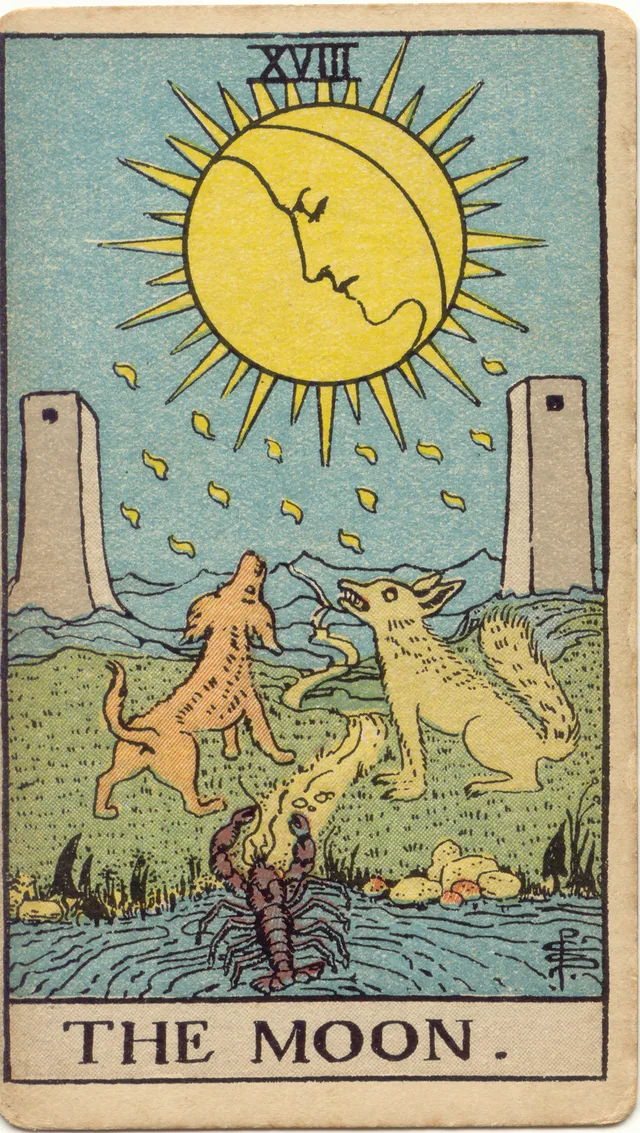
The Moon
The Moon explores uncertainty and changing perception, while the Nine of Swords explores distressing thoughts and night-time worry. Together they invite a check of facts, assumptions and support without diagnosing either experience.
Read this card's meaning →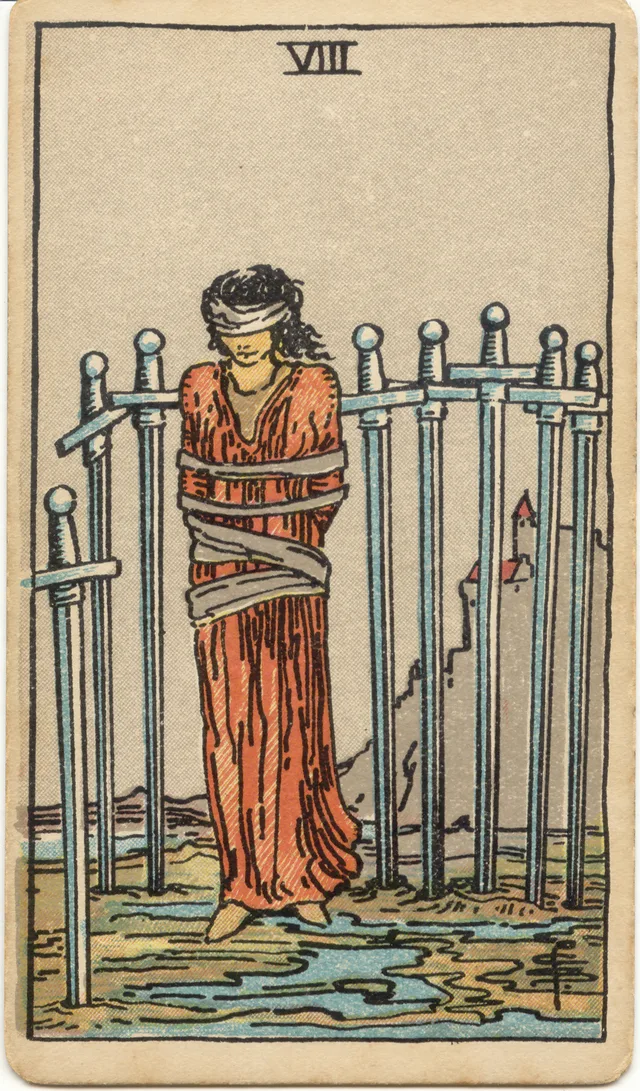
Eight of Swords
The Eight of Swords explores perceived restriction, while the Nine of Swords explores worry and distress. The pairing can prompt a review of available choices and support, but it cannot establish paralysis or a cause.
Read this card's meaning →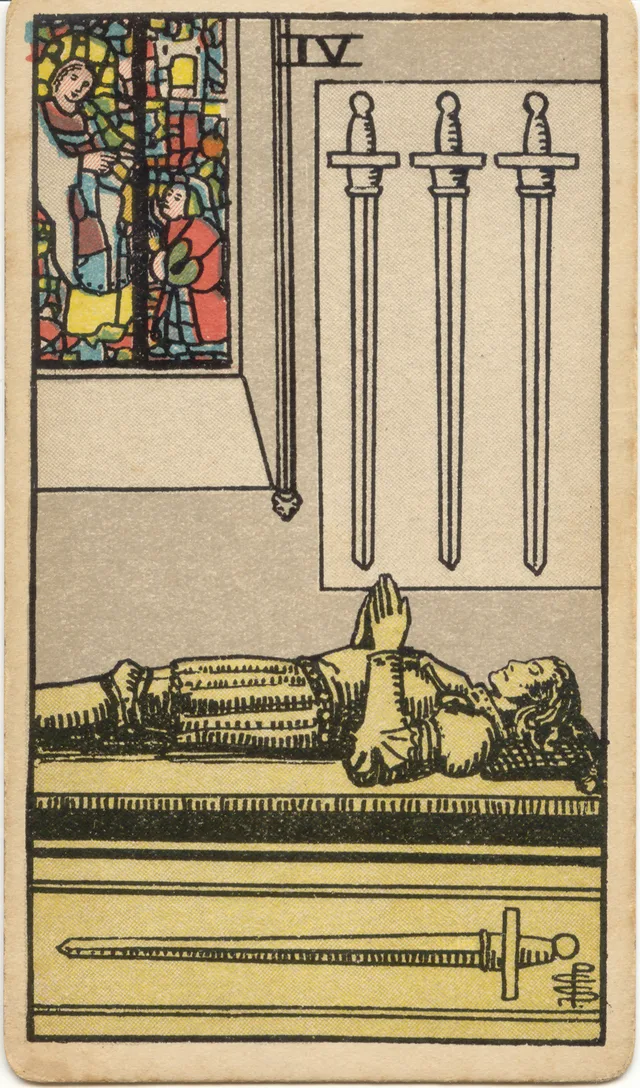
Four of Swords
The Four of Swords explores deliberate rest, while the Nine explores worry that may interfere with rest. Together they support questions about sleep, recovery and qualified help without prescribing either.
Read this card's meaning →