Nine of Cups Tarot Card Meaning
The Nine of Cups depicts a person surrounded by full cups, representing satisfaction, enjoyment, and the ability to recognise what is enough. Its nickname, the wish card, does not make a wish come true or predict an outcome. Consider what contentment means in your circumstances and whether pleasure, gratitude, or more information belongs in the next step.

What's pictured on the card
A comfortably well-fed man sits on a wooden bench, arms folded, a satisfied smile on his face and a jaunty red hat on his head. Behind him, nine golden cups stand in a proud arc along a blue-draped counter, like trophies of a life well enjoyed. His posture is pure contentment, nothing to prove, nothing lacking. Long nicknamed the wish card, it pictures the quiet, full-bellied happiness of getting what you hoped for and letting yourself actually enjoy it.
Nine of Cups upright: the core meaning
The Nine of Cups shows a satisfied figure seated before a row of cups, the card often called the wish card. Today feels content, with small comforts, wishes granted, and a quiet sense that enough is enough. Savour what you have rather than chasing more. Let yourself feel satisfied; you've built something good here.
Beneath today's to-do list, there's a softer feeling worth pausing for, a sense that, actually, quite a lot is going right. You may have been so focused on the next thing that you've skipped past your own contentment without tasting it. Part of you wants permission to simply be pleased, without immediately chasing more or bracing for the catch. There may also be a wish sitting close to your heart, nearer to coming true than you dare hope. Let yourself feel the quiet pride you've earned.
Consider pausing the drive for more long enough to notice what is already good: the roof over your head, supportive people, and small comforts. Enjoyment is not laziness, and it does not require ignoring real problems. At work, acknowledge a recent win before choosing the next target. In love, express appreciation openly. With money, choose a modest pleasure that fits your budget. You can name a wish without treating the card as evidence that it will happen.
Three simple ways to work with this card
- Write down three things you have now that you once wished for, and let yourself feel proud of yourself.
- Treat yourself to one simple pleasure today, good food, a long bath, an hour with a book, guilt-free.
- Tell someone who matters exactly what you appreciate about them, letting your gratitude be specific rather than a vague thank you.
What are you grateful for today that already feels like enough?
What Waite painted and why it matters
The man on the bench. He sits centrally on a plain wooden bench with his arms crossed. His full figure and relaxed posture make comfort and physical sufficiency visible. The pose can invite a question about whether satisfaction is being felt and acknowledged, but it cannot establish that the person is content, secure or free from concern.
The arc of nine cups. Nine golden cups stand upright in an arc on a blue-draped counter behind him. Their orderly, full appearance makes abundance and visible satisfaction the focus. The number nine sits before ten in the suit's sequence, so readers often contrast personal fulfilment with wider shared fulfilment; the picture cannot establish that someone has everything they need.
The red hat and white robe. The red hat adds visible self-display, while the white robe appears beneath the crossed arms. Those details allow a reading to compare healthy pleasure with complacency or self-satisfaction. They do not diagnose an attitude; look at behaviour, openness to feedback and whether care for others has been maintained.
The blue drape. Blue cloth supports the Cups suit's associations with feeling, relationships and imagination. The cups therefore invite questions about emotional satisfaction as well as material comfort. The illustration does not identify what the figure wanted or establish that a wish has been fulfilled.
Nine, and Jupiter. Some tarot correspondences connect the Nine of Cups with Jupiter, associated with expansion, generosity and excess. That association adds a useful comparison: pleasure can be generous and life-enhancing, or can become overconsumption. It remains a symbolic framework, not evidence of good fortune or a forecast of what someone will receive.
The upright Nine of Cups in detail
Wishes are the idea most often attached to this card, and the one most easily misunderstood. A reader may ask whether a person will text or an offer will arrive, but the card cannot answer either question. It can prompt a review of what satisfaction would mean, what is already available and whether attention is focused only on the next unmet goal.
At its clearest, the Nine symbolises sufficiency and the feeling of enough. A beginner can make that idea concrete by listing one recent achievement, the people or resources that supported it and one ordinary pleasure that is genuinely available today. It cannot establish that the reader is satisfied or that a goal has been achieved. Compare the symbol with the reader's own account, circumstances and observable milestones.
Practically, the Nine keeps fulfilment, pleasure and attention in view as themes. It cannot show that a hope will be realised or that a reader has stopped noticing something valuable. Ask what evidence supports either description.
The card is not a wish-granting mechanism. Drawing it cannot show that a situation is close to fulfilment, establish anxiety or compare the reader's awareness with reality. Use it to form questions, then check those questions against facts and experience.
The reversed meaning
Reversed, the Nine can frame disappointment after a goal or the feeling that an achievement did not provide the expected satisfaction. It cannot establish that a promotion, relationship or wish arrived or identify a deeper unmet need; ask the reader what happened and what they expected.
A second reversal theme is difficulty enjoying what is present. The card cannot establish that something is good, diagnose perfectionism or anxiety, or assess how long satisfaction lasts. Use the person's account and concrete circumstances.
A third theme is excess or overconsumption. The card cannot prove that a wish was granted or diagnose a gap being filled. Observable behaviour, costs, effects and the reader's account provide context.
Beside worried or frustrated cards, fulfilment and attention remain symbolic themes. The pairing cannot show that fulfilment is real, diagnose self-sabotage or prescribe inner work. Ask what the reader can observe and choose.
In love & relationships
For someone single, the Nine can prompt an honest review of life alone without turning partnership into a rescue plan. Do you have routines, friendships and pleasures that support you now? The card cannot establish happiness or predict attraction; it can help distinguish wanting connection from expecting another person to solve an unmet need.
In an established relationship, the Nine can focus attention on specific appreciation and the practice of saying it aloud. Do not assume silence means satisfaction or dissatisfaction. Name what helps, ask what the other person values and make appreciation reciprocal rather than using the card to speak for either partner.
Contentment in love is easier to sustain when appreciation is expressed and both people continue to attend to the relationship.
- Specific appreciation expressed without assuming it is understood
- Choosing the relationship while maintaining support and identity outside it
- Noticing present qualities without ignoring a problem that needs discussion
- Enjoyment that does not require control or constant reassurance
- Calling a lack of attention contentment
- Expecting a partner to resolve every unmet need
- Keeping appreciation private when the other person needs clarity
- Accepting a problem as “good enough” without discussing it
Career
In a career spread, the Nine can represent a wish-list and hoped-for satisfaction. It cannot show that a role is available, a wish-list is realistic or an opportunity is approaching. Market evidence, applications, terms, finances and the reader's priorities answer those questions.
Inside a current role, the Nine can prompt a balanced review of what is working as well as what needs fixing. Name specific tasks, relationships, skills or conditions that support motivation, then check whether the role's pay, workload and development opportunities match your needs. Satisfaction is useful information, not proof that the job is sustainable.
For someone building a career, the Nine can frame the transition after a milestone: what has been completed, what was learned and what needs to be chosen next? Marking an achievement can be healthy, but the card cannot establish that a phase is complete or that the next goal should wait.
Money
For money questions, the Nine can frame the experience of sufficiency and manageable spending. It cannot establish financial security, wealth or that an effort was worthwhile. Check income, essential costs, debt, savings, upcoming obligations and the evidence for any claimed improvement.
A practical prompt is to include chosen pleasure in a budget without letting comfort stop financial review. A beginner could write down monthly income, rent, food, debt payments and one modest enjoyable purchase, then check the remaining amount before paying. That exercise makes pleasure part of a real decision rather than treating the full cups as permission. Before spending, check affordability, recurring costs and priorities; the image cannot determine that a purchase is appropriate or that contentment is stable.
Health & wellbeing
For wellbeing, the Nine can prompt reflection on pleasure, recovery and the pressure to keep achieving. A beginner could choose one evening without a productivity target, note how rest feels and notice whether guilt, fatigue or relief appears. That observation is personal information, not a diagnosis. Some people find it useful to mark “enough” for a day and allow rest without treating rest as failure. The card cannot diagnose perfectionism, exhaustion or recovery; use the person's experience and qualified support.
For physical wellbeing, the image can prompt attention to enjoyable nourishment, rest and comfort without shame. It is not a diagnosis or a treatment. Notice how activities affect you, and use qualified advice for nutrition, sleep, pain or other health concerns.
Life events & big decisions
Around a major life decision, the Nine can add satisfaction and personal priorities to a comparison that otherwise focuses only on what is defensible. Ask what each option provides, costs and requires, and whether it fits your values and capacity. Feeling good is relevant information, not proof that an option is suitable.
Around graduations, completions, milestones and achievements, the Nine can prompt a deliberate pause to record what was accomplished and what support made it possible. Do not treat the image as proof that a wish has been granted or that the next goal should wait; choose how to mark the moment based on your circumstances.
Contracts, deals & signatures
Beside a contract question, the Nine raises satisfaction as a topic: whether the terms meet stated needs and whether either party is accepting from pressure or relief. It cannot tell you whether terms are fair or consent is informed. Read the agreement, compare alternatives and obtain independent review where appropriate.
In negotiations, relief at reaching an endpoint can resemble satisfaction. Before signing, read the terms, test whether key needs are met, record unresolved issues and allow time for advice. A pleasant feeling about the process is not evidence that the agreement is fair or affordable.
Entrepreneurship & business
For business, the Nine symbolises satisfaction with a venture as a possible experience. It cannot show that the venture is working, enjoyable or succeeding. Metrics, client feedback, finances, workload and the owner's account provide relevant evidence.
The imagery can suit hospitality, food, creative work or experiences because pleasure and satisfaction are themes. It cannot affirm that a product is wanted; customer research, accessibility checks and sales evidence answer that.
How this card sits in real spreads
The Nine of Cups alongside The Star can frame hope alongside present satisfaction; it cannot establish that circumstances are improving. With Ten of Cups, compare personal needs with shared or domestic wellbeing. Alongside the Four of Cups, ask what the reader is noticing, declining or unable to acknowledge without assuming that a gift is present.
The Nine can resonate with someone reviewing an achievement or asking whether a current life meets their needs. Instead of granting permission or declaring a situation good enough, list what is working, what is missing, what is affordable and what change would address the concern. Attention to present satisfaction can inform a decision without replacing evidence.
What does the Nine of Cups mean in tarot?
What does the Nine of Cups reversed mean?
Is the Nine of Cups a yes card?
Does the Nine of Cups mean a wish will come true?
What does the Nine of Cups mean for love?
If the Nine of Cups has appeared, try naming three things you value now and the evidence that they are present. They might be a supportive friendship, meaningful work or a home that meets your needs. Then name one condition that still needs attention; noticing satisfaction does not require ignoring a problem.
The nine full cups are an invitation to pause before looking for the tenth, not evidence that everything is good. If you'd like a daily reflective practice, the free daily draw is there each morning. Use it to notice satisfaction and identify a concrete step, without asking the card to judge your circumstances.
The Nine of Cups can prompt a check on satisfaction rather than another wish. Notice what you already have, what still matters, and whether wanting more is a choice or a way to avoid receiving the present.
Related cards and themes
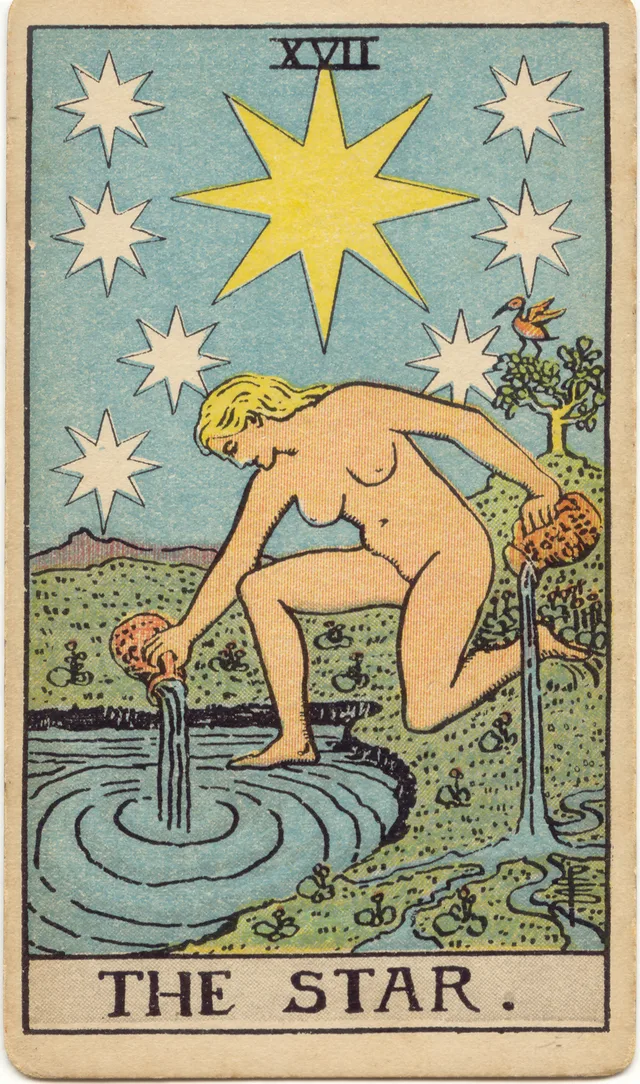
The Star
The Star explores hope and restoration; the Nine of Cups explores satisfaction and the ability to notice pleasure. Together they invite a distinction between hoping for change and experiencing what is present.
Read this card's meaning →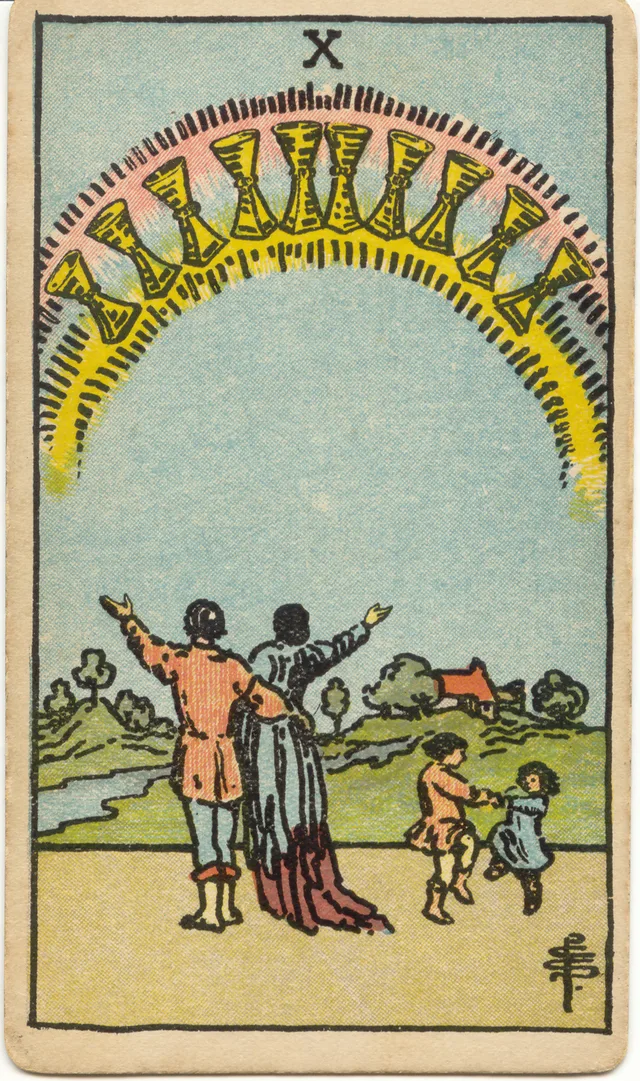
Ten of Cups
The Ten of Cups expands emotional life into family or community, while the Nine of Cups focuses on personal satisfaction. The pairing can compare private needs with shared wellbeing.
Read this card's meaning →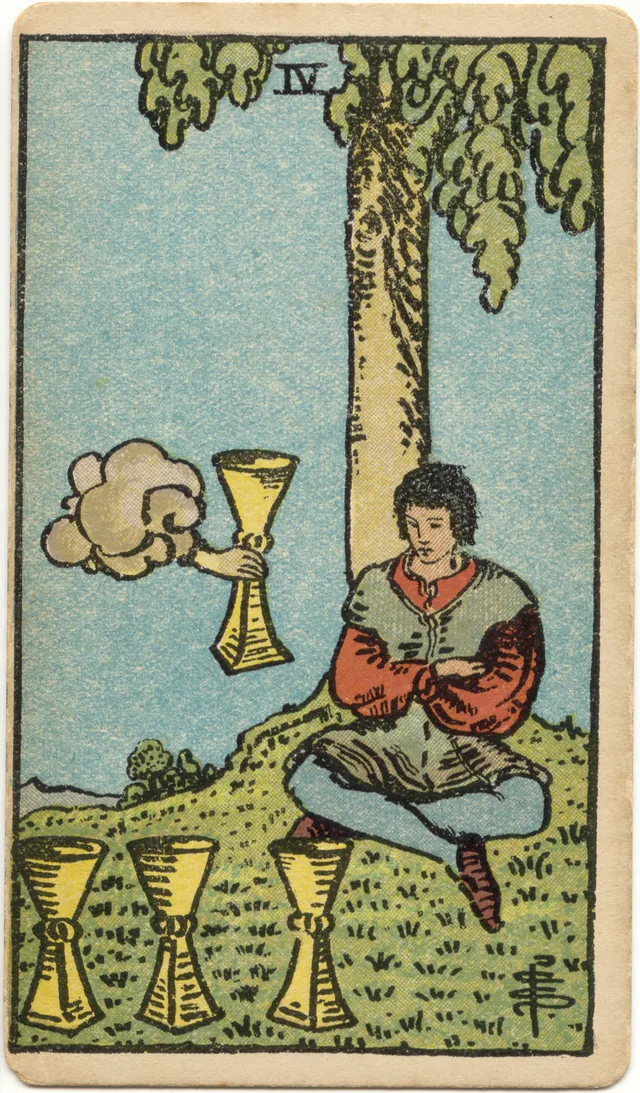
Four of Cups
The Four of Cups explores withdrawal or disengagement, while the Nine explores satisfaction and receiving. Together they can prompt a practical question about attention, choice and what the reader is able to acknowledge.
Read this card's meaning →