Page of Swords Tarot Card Meaning
The Page of Swords represents curiosity, observation, questions, and the early work of checking information. It can prompt direct, respectful inquiry in a relationship, job, or decision, but it cannot prove what someone has not said or make suspicion reliable. Look closely, ask clearly, and distinguish evidence from inference.

What's pictured on the card
A young figure stands on a grassy hilltop, holding a sword upright in both hands and gazing off to one side, alert and ready. The wind whips their hair and bends the trees; clouds scud across a restless sky and birds wheel overhead. The ground rises and dips in uneven mounds. Smith drew a quick, curious mind in that stance, watchful, eager to learn, full of questions, energised by ideas and keen to test the truth of things.
Page of Swords upright: the core meaning
The Page of Swords stands alert on windswept ground, sword raised, keen to learn and question everything. Today wears a sharp, curious mind, asking good questions, gathering facts, staying awake to what's really going on. Use that clarity kindly. Speak the truth plainly, keep learning, and don't be afraid to think for yourself.
There's a bright, buzzing energy in your mind today, a hunger to know more and get to the bottom of things. Beneath it, though, you may feel a flicker of impatience, or a worry about saying the wrong thing before you've fully thought it through. That eagerness is a gift, not a flaw. The trick is aiming it kindly. Your curiosity wants somewhere useful to go, and there’s a quiet wisdom underneath that already knows the difference between sharp and helpful.
Put that lively mind to work on something worth understanding today. Ask the good question you've been holding back in a meeting, or finally research the thing you keep wondering about, curiosity is your superpower right now. At work, gathering facts before reacting will save you from hasty conclusions. In relationships, lead with genuine questions rather than assumptions; ask how someone really is and listen properly to the answer. Where money is concerned, read up before you commit, and let learning replace anxiety. Do watch the tendency to speak faster than you feel; a sharp remark can land harder than you mean. Release the need to have every answer at once. Stay teachable, keep it kind, and let today's clear-eyed curiosity open doors that defensiveness would keep shut.
Three simple ways to work with this card
- Ask the real question you've been holding back, then listen fully to the answer before forming your reply.
- Spend fifteen minutes learning about something you keep wondering about, and let curiosity replace a worry for a while.
- Before sending a sharp message, reread it once and soften any edge that's cleverer than it is kind.
What question is worth asking openly today?
What Pamela Colman Smith drew
The raised sword. The Page holds the blade upright in both hands rather than pointing it at a person. The pose supports themes of a developing ability to investigate, question, and handle information carefully. It does not establish that a real person is intelligent, accurate, or prepared to act.
The restless sky. Clouds move across the sky while birds circle above. In a symbolic reading, that busy background can support questions about changing thoughts and incoming information. It cannot diagnose anxiety, mental activity, or a person's ability to rest.
The wind-bent trees. The trees behind the Page lean in the wind. Their movement can illustrate changing circumstances and the need to adjust an interpretation as information changes. The image does not show that a reader must keep searching or that a situation is unstable.
The uneven hilltop ground. The Page stands on elevated, uneven ground. A higher viewpoint and an unsteady surface can support a discussion of partial information: seeing some details while still needing to check the basis for a conclusion. The card cannot establish that the reader has better perspective or poor footing.
The sideways glance. The Page looks to the side rather than directly along the sword. The detail can prompt attention to footnotes, omitted questions, and information outside the main presentation. Noticing a detail is not the same as proving its significance, so verify before drawing a conclusion.
The upright meaning in detail
The Page of Swords can describe a way of thinking rather than a specific person: alert observation, active questioning, and a wish to understand before committing. Questions can improve a professional or intellectual decision, while a relationship also needs warmth, listening, and respect for privacy. The card cannot establish whether anyone's questions are justified or intrusive.
It can also frame an early learning phase: beginning a subject, re-examining an assumption, or gathering information about a decision. At that stage, record what is known, what is uncertain, and which source could answer each question. The image does not show when research is complete.
Vigilance is another visual theme. The card cannot establish hypervigilance, its cause or whether current caution is proportionate. The reader's report and qualified support provide that context.
What the Page is not: a dismissal of someone's age or experience. Pages can represent an early stage in one subject for a person of any age. A reader forming a new view can use the image to ask better questions while remaining open to correction.
The reversed meaning
Reversed, anxious thinking or extended vigilance can be themes for reflection. The card cannot diagnose either, assess environmental safety, or identify a response pattern. The reader's report, observable conditions, and qualified support provide context.
A second reading is gossip or information gathered without a responsible purpose: repeating rumours, keeping facts to use in an argument, or monitoring someone without consent. Check the source, relevance, privacy, and likely effect of information before sharing or using it.
Scattered attention is another possible theme. The card cannot establish overload, paralysis, or a cause. Reported experience, daily function, and practical circumstances matter.
Deception may be a concern a reader brings, but the reversal cannot prove it in the reader or anyone nearby. Verify facts and conduct.
In love & relationships
For someone single, the Page of Swords can describe careful questions about a potential partner. Discernment is useful, but privacy and reciprocity matter; allow a conversation to be mutual rather than treating someone as a research subject. Update your view from consistent behaviour instead of trying to infer everything from small details.
In an established relationship, the Page can highlight a need for explicit communication when ambiguity feels difficult. Say what you are noticing and ask for clarification rather than monitoring small signs or treating silence as proof. The card cannot establish a partner's feelings, motives, or honesty.
The Page can also describe an early relationship in which both people are learning about expectations, communication, and boundaries. Discuss whether the pace and level of commitment are mutual. The image can support that conversation but cannot establish whether the relationship will deepen.
Observation can support honest communication, while speculation and monitoring can increase relational strain.
- Asking the real questions early rather than hoping ambiguity will resolve itself
- Comparing stated intentions with consistent, observable behaviour
- An early stage where both people can state and learn each other's boundaries
- Clear, honest communication about what you need and observe
- Over-analysing early encounters before any actual data exists
- Reading significance into silences and pauses that are genuinely neutral
- Asking so many questions that the relationship feels like an interview
- Using intelligence as a barrier against the vulnerability of not knowing
Career
In career questions, the Page of Swords can prompt research into analysis, journalism, legal work, or another role where questions and source-checking matter. It can also frame the start of professional learning. Compare role requirements, training, supervision, deadlines, and evidence of performance rather than treating the card as a qualification.
For someone starting something new, asking specific questions can clarify expectations and reduce avoidable mistakes. Seek feedback from experienced colleagues without assuming that every concern is correct. The card cannot show how a workplace will respond or whether a role is suitable.
The Page can frame tension between inquiry and confident declaration. It cannot determine how a workplace will interpret uncertainty or prescribe presentation.
For a beginner comparing two roles, turn curiosity into a short evidence list: the daily tasks, tools used, training provided, reporting line, salary, schedule, and examples of recent work. Ask one person in each role what surprised them and what entry-level mistakes are common. Record which answers are firsthand, which are promotional, and which still need checking. This gives the Page's questioning quality a practical form without treating questions as a substitute for experience. A small research plan can also protect privacy: seek public information or permission before asking about someone else's work, and do not collect personal details that are unrelated to the decision.
If the answers conflict, do not solve the conflict by choosing the most confident speaker. Ask what evidence would distinguish the claims: a written policy, a sample schedule, a conversation with the hiring manager, or a short practical exercise. Keep a note of the date and source so an old impression does not be treated as a fact.
Money
With finances, the Page symbolises information gathering: comparing options, reading terms and asking about fees. It cannot establish the reader's knowledge stage or tell them when to commit.
The Page can prompt questions about the balance between research and decision. It cannot show that research has gone on too long or direct a specific action. Use material facts, deadlines, risk and qualified advice.
Health & wellbeing
In a wellbeing context, the Page symbolises alert thought. It cannot establish an overactive mind, inability to rest or any mental-health state. Reported symptoms and qualified care matter.
In health situations, information quality can be a useful general consideration, but the card cannot decide the next step. Symptoms, urgency and qualified clinicians should guide questions and choices.
Life events & big decisions
Before a big decision, the Page is an image of inquiry. It cannot show that a direct question or factual information is the missing piece. Define what evidence matters, who can provide it and the cost of delay.
A decision may contain an overlooked detail or an alternative that has not been considered. Write down the specific discrepancy, identify the source that could clarify it, and consider privacy, safety, and consequences before raising it. The card cannot establish that your first concern is correct.
On timing, the Page of Swords cannot set a date or show that missing information will arrive. Make a list of open questions, name the source for each answer, and set a review date based on the actual deadline. Decide whether to proceed only after weighing the available evidence and cost of delay.
Contracts, deals & signatures
In contract situations, the Page of Swords can prompt a clause-by-clause review and specific questions about words such as 'standard', 'reasonable', or 'material'. Check duties, rights, payment, timing, privacy, cancellation, and dispute provisions instead of relying on a summary.
It can also prompt a second opinion from someone qualified in the relevant field. Tell the reviewer what you understand, what concerns you, and what decision deadline applies; do not treat a symbolic card as a substitute for legal or commercial advice.
In negotiations, questions can clarify before positions are stated: 'What does this clause require if X happens?' or 'How is payment calculated?' Record the answers and request changes in writing. A question does not establish the other party's motives or willingness to agree.
Entrepreneurship & business
For new ventures, the Page of Swords can frame market research that tests assumptions instead of collecting only supportive answers. Ask potential customers about current behaviour, alternatives, price, and unmet needs; record the sample and limitations. The card cannot establish demand or prevent loss.
In established businesses, the Page can symbolise a newer perspective. It cannot rank an employee's observations or establish what others have normalised. Use evidence and open discussion.
The Page and Knight can symbolise inquiry and action as separate stages. The cards cannot decide when research should end or whether a business is failing to commit; use a defined research question, budget, deadline, and decision rule.
How the Page tends to show up
Beside The Hermit, the Page can compare private reflection with outward questioning; with Knight of Swords, research with rapid action; beside Ace of Swords, questions with a possible distinction. None proves understanding, readiness, or imminent action.
The Page can symbolise an early stage of inquiry or a changing understanding. It cannot establish the reader's knowledge stage or readiness to act. Actual evidence, context, consequences, and consent determine what happens next.
What does the Page of Swords mean in tarot?
What does the Page of Swords reversed mean?
Is the Page of Swords a yes or no card?
What does the Page of Swords mean for love?
Does the Page of Swords represent a real person in my life?
If the Page of Swords is in your reading, write down the question that would provide useful information and identify who or what could answer it. Check whether asking is safe and welcome, then compare the response with other evidence. The card does not establish that you have already noticed the correct issue.
Use observation to distinguish facts from assumptions rather than to monitor your own performance constantly. A short list of known facts, open questions, and possible sources can make reflection more concrete. If you'd like a daily prompt, the free daily draw is there each morning.
The Page of Swords can represent careful observation and a useful question, not needless difficulty. Read the details, ask what is missing, and let evidence make the situation clearer.
Related cards and themes
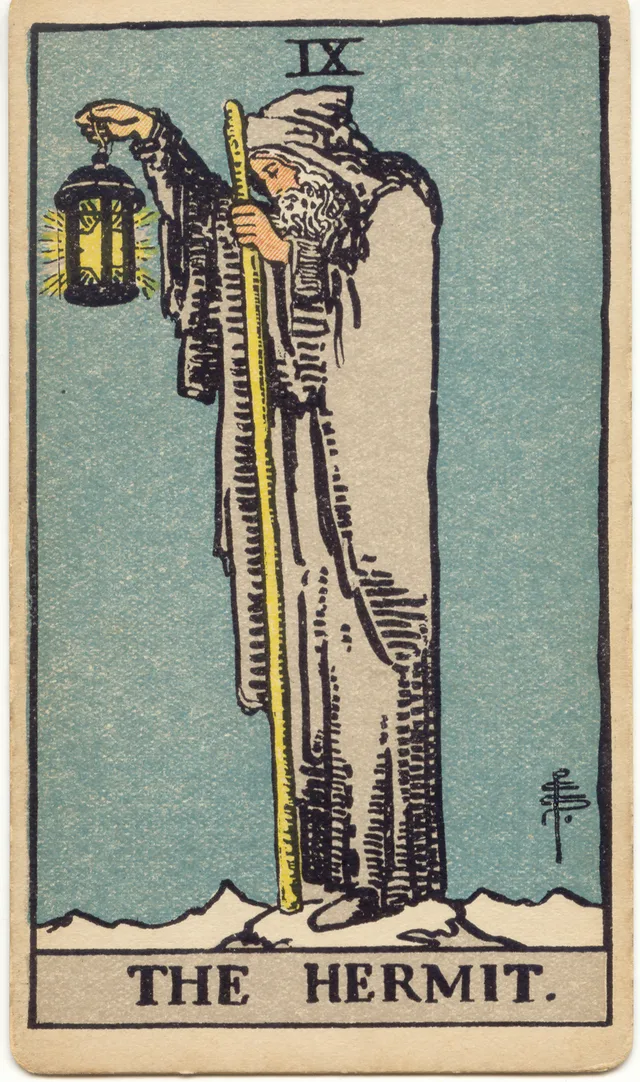
The Hermit
The Hermit uses solitary reflection, while the Page of Swords gathers information through questions and observation. Together they can help distinguish private consideration from facts that still need checking.
Read this card's meaning →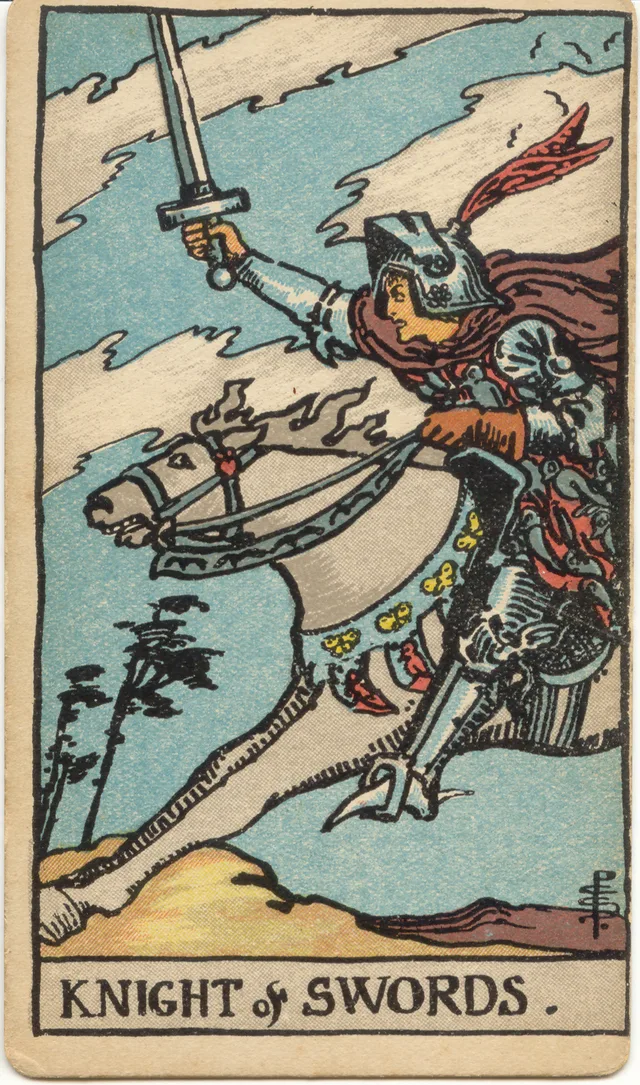
Knight of Swords
The Page of Swords concentrates on questions and early research; the Knight of Swords represents rapid application of an idea. The pairing invites a review of evidence before action rather than assuming that speed is appropriate.
Read this card's meaning →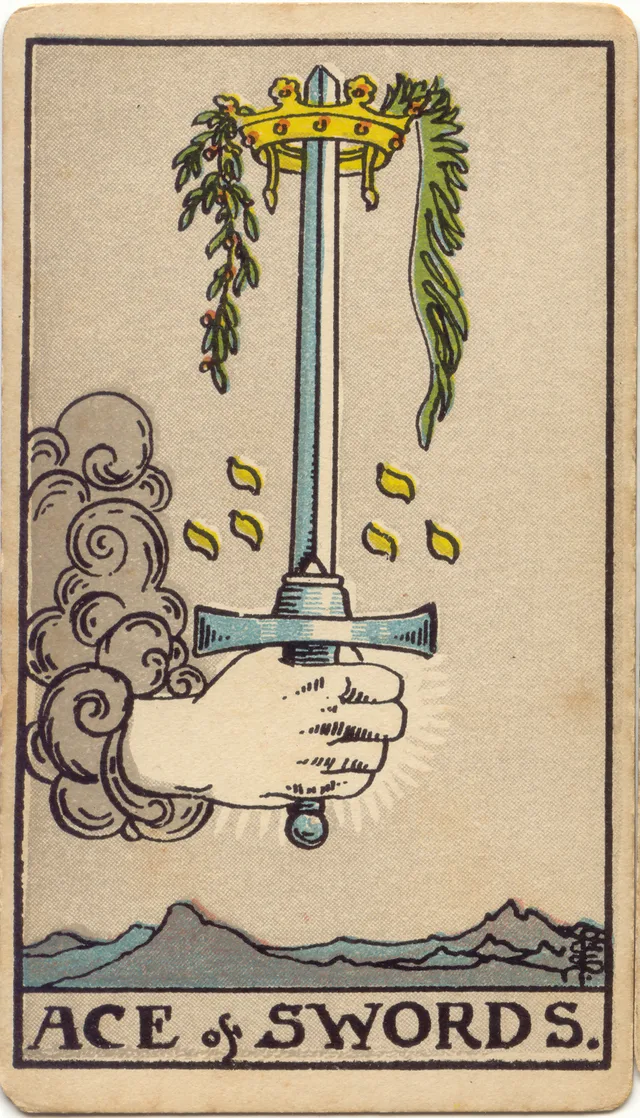
Ace of Swords
The Ace of Swords can represent a clear idea or distinction, while the Page of Swords represents learning how to investigate and communicate it. Read together, they support testing an insight against evidence.
Read this card's meaning →