Seven of Wands Tarot Card Meaning
The Seven of Wands shows one figure defending a raised position against several staves, an image of boundaries, conviction, and pressure. It can prompt you to decide what deserves protection and what can be reconsidered, but it cannot prove that opposition is real or that staying is best. Name the boundary, evidence, allies, and cost of maintaining it.

What's pictured on the card
A figure stands on higher ground, wand raised, holding off six other staves that push up towards them from below. We can't see the challengers, only their weapons, the pressure comes from all sides at once. Curiously, the defender wears two different shoes, as if they rose to the moment before they were fully prepared. Their stance is braced but determined. The card captures the effort of holding a position you believe in against steady opposition.
Seven of Wands upright: the core meaning
In the Seven of Wands, one figure stands on higher ground, holding their position against those pressing from below. Today asks you to stand firm on something that matters, a boundary, a belief, a piece of hard-won territory. You may need to defend your corner, but you have the higher ground. Hold steady and keep going.
There may be a weariness beneath your resolve today, the tiredness of feeling like you always have to defend or justify yourself. You might be bracing for pushback before it even arrives, shoulders tight, ready to argue your corner. Somewhere under that guardedness is a value you hold dear and don't want trampled. That protectiveness makes complete sense. You're not being difficult; you're standing up for something that matters, and doing so takes real, quiet courage.
Hold your ground today, but choose your hill wisely. Not everything needs defending, so save your energy for what clearly reflects your values. At work, it's fine to stand firm on a boundary or an idea you believe in, you don't owe endless explanations to everyone who questions it. In relationships, distinguish real disagreement from your own defensiveness; sometimes the pushback is smaller than it feels. Financially, resist being talked out of a sensible choice just to keep the peace. You’ve got the upper hand here, which means you can take your time and stay level-headed rather than getting combative. Take a breath, stay steady, and remember that conviction spoken often outlasts conviction shouted.
Three simple ways to work with this card
- Pick the one boundary that matters most today and hold it kindly but firmly, without over-explaining your reasons.
- Notice where you're defending out of habit rather than need, and let that particular battle go.
- Refuel before you stand your ground, eat, breathe, or rest, so your conviction comes from steadiness not strain.
What do you believe in strongly enough to stand your ground on today?
The Waite-Smith image in detail
The single figure on higher ground. One person stands on an elevated hill or ledge above the wands pressing from below. Visually, height suggests advantage and perspective. It cannot establish that a real-life position is better or that the odds favour the reader.
The six wands from below. Six staves thrust upward from below the frame — we can't see who holds them, and that's deliberate. The faceless opposition can represent challenge, competition or other people's agendas. The image cannot tell you whether the opposition exists, whether it is justified or whose position is sound.
The mismatched shoes. One of the most humanising details in the minor arcana: the figure wears one boot and one shoe. The detail suggests imperfect preparation within the scene. It can prompt a practical check of resources, support and readiness, but it does not show that a reader is equipped for a real conflict.
The wand, raised and ready. The defender holds one wand above their head while six others enter from below. That is a visual of active response rather than passive endurance. In a reading, distinguish a boundary you have chosen from an attack you have assumed, and choose a proportionate response rather than treating the scene as proof of danger.
The number seven. Sevens can be used as symbols for tests and thresholds. In Wands the theme is external and social: how does a conviction respond to challenge, scepticism or competition? Evidence and consequences, not the number, determine whether a position is worth defending.
The upright Seven of Wands in full
The Seven of Wands is a card about conviction under pressure. It can help you explore perceived opposition, boundaries and the cost of defending a position. It does not establish that opposition is genuine, that your position is stronger or that holding it is the correct response.
What makes this more nuanced than a simple 'fight back' message is the mismatched shoes. They raise questions about preparation, pressure and improvisation. Sincerity alone does not make a defence valid; facts, proportionality, personal safety and the rights of others matter.
The card also speaks to the fatigue of sustained defence. Ask what the issue costs in time, energy, relationships and risk. The upright image supplies no yes answer. Distinguish a credible threat from criticism, disagreement or information that deserves consideration before choosing a proportionate response.
The reversed meaning
Reversed, the Seven of Wands can explore a position abandoned under pressure, but it cannot say that defence was available or departure unnecessary. Exhaustion, self-doubt, new evidence or a legitimate wish for peace can all change the meaning. The actual circumstances, not the card, decide what happened.
A second reading is the over-defended position: holding ground so firmly that there is no longer a genuine assessment of the evidence. Every challenge becomes an attack, and a conviction becomes rigid enough to reject new information. Check whether the position can answer specific objections rather than judging every disagreement by its tone.
There is also an overwhelmed version. Six wands from below, when you are genuinely tired, may represent demands that exceed current capacity. That is not a verdict on the position; it describes resources. Consider rest, support and a smaller response, while remaining open to updating the position if legitimate challenges reveal something unresolved.
In practice, cards about depletion may make capacity the central theme; cards about rigidity may highlight the need to hear counter-evidence; cards about decisions or self-doubt may highlight withdrawal. These are prompts for context, not instructions to stand up again or give way.
In love & relationships
In a love reading, the Seven of Wands can frame the work of holding your values, needs and sense of self within a relationship. This is not automatically argumentative. It may mean declining an arrangement that compromises you, naming a need or refusing to stay silent about a serious concern. The card cannot determine whether the concern is valid; conduct, consent and communication matter.
It can also frame questions about external pressure on a relationship: family disapproval, friends' concerns or a social context that complicates the partnership. The card cannot decide whether to defend it or whether criticism is noise. Consider the relationship's actual conduct, consent, safety, the substance of concerns and the values you choose to uphold.
A relationship needs room for each person's values and limits; the challenge is to express them without turning every disagreement into a contest.
- Maintaining your own values and identity within a relationship
- Discussing family or social pressure without allowing it to replace the couple's own values
- Being clear about what you need without apologising for needing it
- Having the difficult conversation rather than giving way to keep the peace
- Defending a position in a relationship out of pride rather than conviction
- Being so focused on not losing ground that you stop listening
- Treating every disagreement as a test of whether you'll yield
- Holding a boundary so hard there's no room for genuine compromise
Career
At work, the Seven of Wands describes a position under challenge: explaining a project approach, documenting your contribution or naming a value that workplace pressure is testing. It can prompt a pause before conceding, but performance records, role expectations, power dynamics and feedback are more reliable than the image for deciding how to respond.
It can also symbolise an established position under competitive pressure. The card cannot prove an advantage or tell someone to defend it. Document performance, alternatives, market conditions and the cost of holding, changing or leaving the position.
A useful work response is to separate a factual disagreement from a status contest. State the claim, attach the relevant data, invite a specific objection and record the decision. If the pressure is personal or discriminatory, use the workplace process and support available; a symbolic image cannot tell you to endure an unsafe environment.
Money
In money readings, the Seven can frame salary, pricing or contract negotiation. It cannot rank a position as superior or tell someone to hold it. Use market data, written terms, leverage, alternatives, downside and qualified advice.
In a salary or pricing conversation, decide in advance which number is a goal, which is a minimum and which costs you cannot absorb. Consider non-cash terms such as notice, workload, flexibility and payment timing. Present the evidence calmly, but remain free to update your position when the facts change.
It can also frame disagreement about a financial decision. The card cannot determine whose position is better informed or whether to update or hold a view. Compare evidence, responsibilities, conflicts of interest and professional advice.
Health & wellbeing
The Seven of Wands in a wellbeing reading can raise the theme of self-advocacy: describing symptoms, asking questions or seeking a qualified second opinion. It cannot establish a diagnosis, prove a position or tell someone to persist with a particular treatment. Documented experience and professional care matter.
More broadly, the Seven asks whether you're maintaining the habits and limits that protect your energy, or whether outside pressure — work, others' needs, your own sense of obligation — is steadily eroding them. Wellbeing is a position that can be defended or abandoned; the card asks which you're doing.
Life events & big decisions
Around a significant decision, the Seven of Wands can frame pressure to change a view or avoid disagreement. List the reasons for the decision, the strongest objections, the evidence supporting each option and the risks of continuing or changing. The card cannot establish that the decision is yours, sound or worth defending.
It can also frame a decision that differs from consensus, such as an unconventional path or less prestigious option. Explain the evidence, acknowledge what you do not know and identify what would change your mind. A difference from the majority is neither proof of insight nor proof of error.
If pressure comes from family or a community, name the decision that belongs to you and the decisions that affect other people. A boundary may need a clear explanation, a time limit or a practical alternative. Independence is not the same as refusing all feedback, and compromise is not the same as surrender.
After setting a boundary, decide how you will know whether it is being respected. A reply, changed behaviour, written agreement or reduced contact may provide evidence; repeated pressure may show that a different protection is needed. The card can help name the issue, but the person's conduct determines what the boundary means in practice.
Contracts, deals & signatures
The Seven of Wands in a contract context can describe a negotiation under pressure: someone questions your terms or proposes changes. Do not revise solely because the other party is uncomfortable, but do not treat resistance as evidence that your terms fit the agreement either. Compare the written language, alternatives, costs and professional advice.
It can also describe a dispute about an existing agreement. Read the document closely: what does it actually say, and what relies on goodwill or an assumption? Written terms are important evidence, but they do not by themselves settle every legal or practical question. Identify non-negotiables, possible movement and independent advice before responding.
Entrepreneurship & business
For business owners and founders, the Seven of Wands can frame competition, pressure to conform or questions about positioning. A track record, relationships and delivery records may be relevant evidence, but they do not prove that an established approach remains suitable. Compare customer feedback, costs, competitors and capacity before holding or changing course.
It can also frame pushback from investors, advisers or early customers. Record the specific objections, test them against customer evidence and identify the cost of waiting. Holding a view for a defined experiment is different from refusing to learn; the card cannot decide which approach is appropriate.
How it shows up in real readings
The Seven of Wands pairs with Strength to raise themes of calm communication, boundaries and self-regulation. Beside The Chariot, movement and defence can become questions to compare. With Five of Wands, scattered disagreement may help identify the one issue that needs a clear response. These pairings describe themes, not proof that a challenge is justified.
This image can resonate with someone tired of defending a position. The six visible wands are symbolism, not proof that opposition is finite or that the reader is right. Compare the strongest objections with the evidence, and compare the real costs of holding, changing or leaving the position before deciding.
What does the Seven of Wands mean in tarot?
What does the Seven of Wands reversed mean?
Is the Seven of Wands a yes or no card?
What does the Seven of Wands mean for love?
Does the Seven of Wands mean I should never compromise?
If the Seven of Wands has appeared in your reading, name the specific thing you are defending and why. Write down the evidence, the strongest objection, the boundary involved and the cost of responding. Clarity can help you decide whether to hold, revise, seek support or leave.
If you are in a sustained period of defending something and want a daily prompt to review energy, evidence and boundaries, the free daily draw is there each morning. Keep the practical checks separate from the symbolic prompt so the image does not become reassurance that your position is superior.
The Seven of Wands can reflect the effort of defending a position under pressure, not a command to fight everyone. Identify what you are protecting, which challenge matters, and whether support or a boundary would work better. Choose support and limits with care.
Related cards and themes
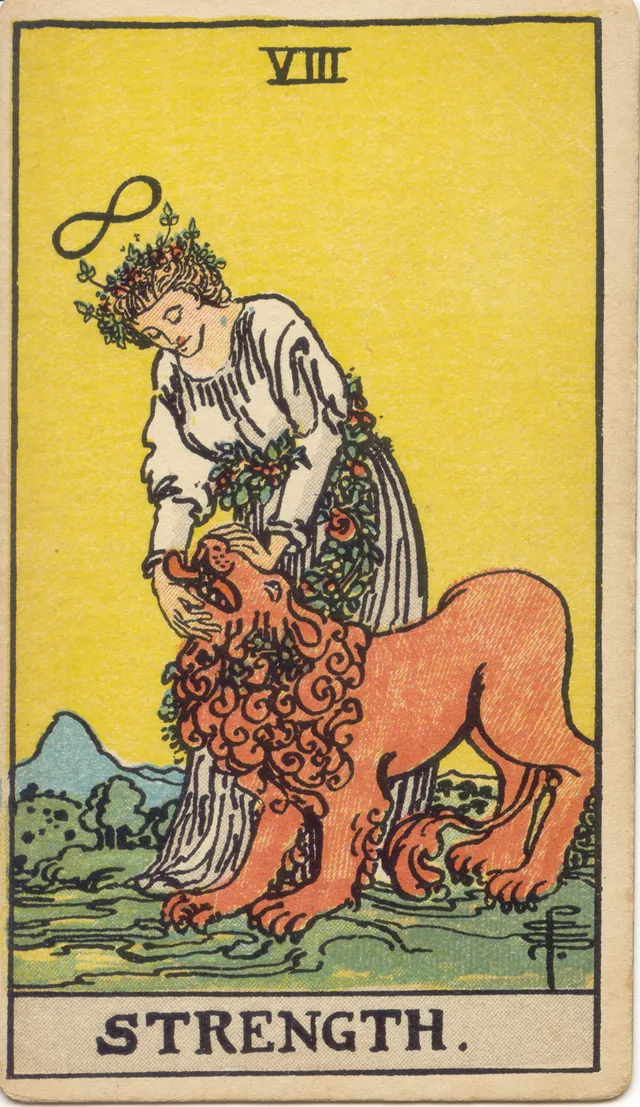
Strength
Strength explores calm self-regulation, while the Seven of Wands explores how a person responds when a boundary or position is challenged.
Read this card's meaning →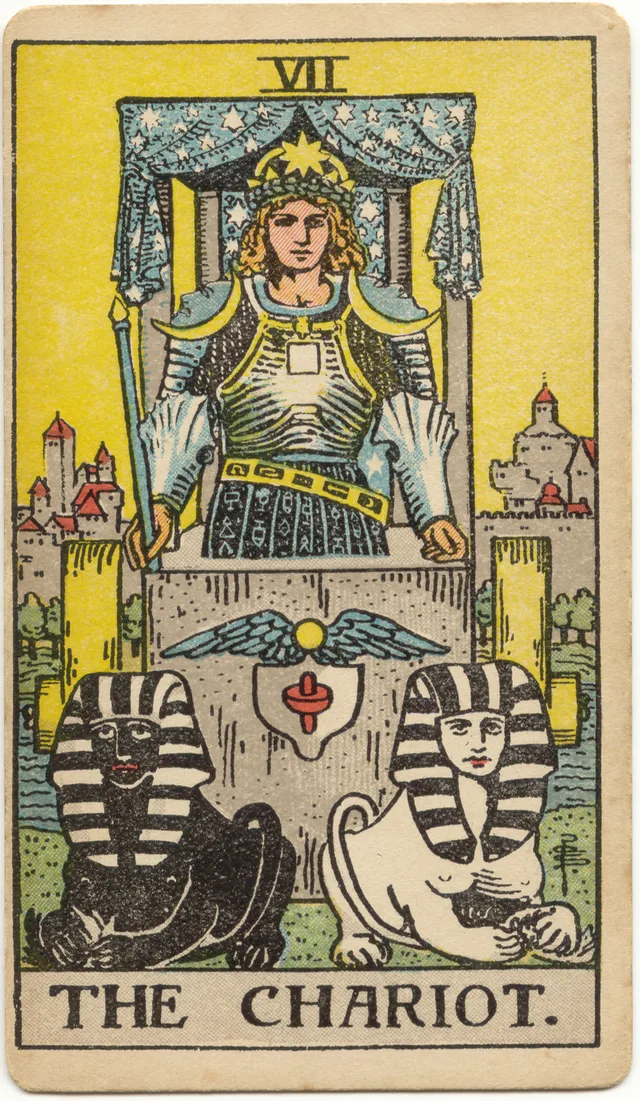
The Chariot
The Chariot focuses on directed movement, while the Seven of Wands focuses on assessing pressure before deciding what to defend.
Read this card's meaning →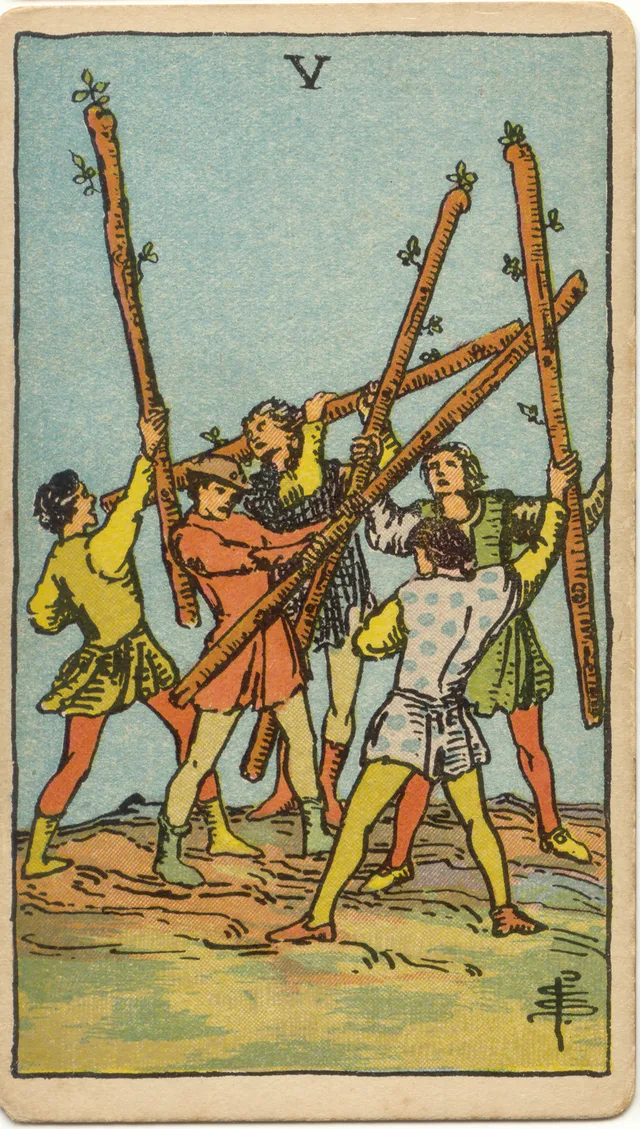
Five of Wands
The Five of Wands explores scattered disagreement; the Seven of Wands narrows the discussion to one position, boundary or responsibility under pressure.
Read this card's meaning →