Eight of Pentacles Tarot Card Meaning
The Eight of Pentacles depicts repeated craft and deliberate practice rather than a glamorous rush. It can prompt you to examine the skill, routine, or project you are building and whether the effort fits your time and priorities. The image cannot prove that mastery or a particular result is coming; measure progress with observable work and useful feedback.

What's pictured on the card
At a simple wooden bench, a craftsman bends over his work, chisel and hammer in hand, carving a star into a fresh coin. Six finished pentacles already hang neatly on the wall beside him, one waits on the ground, and one is under his tools. A small town sits in the distance, but his whole focus is on the piece in front of him. The image honours the quiet dignity of steady, skilful work.
Eight of Pentacles upright: the core meaning
The Eight of Pentacles shows a craftsperson absorbed at their bench, carving out one careful coin after another. Today rewards steady, focused work, refining your skill, taking pride in the details, showing up for the craft itself. Put your head down and do the reps. Mastery is built one real, unglamorous effort at a time.
There may be a craving for focus underneath today, a wish to lose yourself in something absorbing and do it well, away from noise and interruption. Perhaps you’ve felt scattered lately, and part of you longs for the steady feeling that comes from doing one thing properly. There might also be a flicker of self-doubt about whether you're skilled enough yet. That doubt is common in anyone still learning. Under it is a real wish to grow, to become very good at your craft.
Give today to focused, patient effort and let one meaningful task be enough. Work with attention, resisting the pull to check your phone or chase ten things at once. At work, practise a skill and invite useful feedback rather than seeking applause. If you are learning, allow an awkward stage without turning it into a verdict about your ability. With money, compare consistent habits with dramatic moves. Small repetitions can help without guaranteeing mastery; record what you learn and adjust.
Three simple ways to work with this card
- Pick one task today and give it thirty phone-free minutes of full attention, then notice how good focus feels.
- Practise a skill you want to improve for a short while, letting yourself be a beginner without judgement.
- Tidy and set up your workspace so it's easy to concentrate, then tackle one thing start to finish.
What skill would repay a little focused, patient practice today?
What Waite-Smith painted and why it matters
The craftsman at his bench. A young man sits on a low stool, bent over a stone coin he is carving with hammer and chisel. Six finished coins hang in a row on a board beside him, a seventh sits on the ground, and the eighth is in his hands. The scene gives a concrete picture of repeated work and attention; it does not prove that a reader's practice is effective or that the person is skilled.
The six finished coins on the wall. The row of completed pentacles shows that some work has already been made, while another coin is still being carved. Readers can use this contrast to discuss practice beyond the first attempt and before completion. The picture cannot establish how many attempts a reader has made or whether a pattern feels natural.
The small town in the distance. Behind the craftsman, a settlement sits on the horizon, separated from him by a path. The distance can prompt discussion of focused work, but it does not show that networking, feedback, or public work should be avoided. Good practice may require quiet concentration and outside review.
The yellow background. Waite uses a golden yellow also seen in the Sun and the Fool. Readers may associate it with attention or optimism, but colour does not show that practice is pleasurable, sustainable, or free from strain. The card can support a balanced discussion of effort, feedback, rest, and purpose.
Eight, and the number's energy. Some numerological traditions associate eight with cycles, discipline, or repeated effort, while the Pentacles sequence places this card after assessment and before independence. These associations are interpretive, not evidence that raw skill will become reliable craft. Use the sequence to discuss practice and review, not to forecast mastery.
The upright Eight of Pentacles in full
The Eight of Pentacles symbolises practice and developing craft rather than completed mastery. It can prompt questions about learning, building, and attention, but it cannot show what deserves full focus or promise that an outcome will follow effort.
This card can frame education, professional training, creative practice, or unfamiliar work. Focused practice may build capability, but the card cannot establish progress or forecast results. Goals, feedback, and measured performance provide that evidence.
A useful way to work with the image is to separate effort from evidence. Name the skill you are practising, choose a modest measure of progress, and decide when you will review it. That keeps the reflection practical: attention is useful when it connects to a clear aim, realistic capacity, and feedback you can act on.
The imagery can raise the contrast between practice and perfectionism: a draft repeatedly revised, another qualification, or a project kept private. It cannot diagnose anxiety or decide when the work is finished. External requirements, feedback, and the creator's goals determine that.
A beginner can make this concrete with a small practice log. Someone learning spreadsheets might complete one budget, note the formula that caused trouble, ask a colleague to review it, and repeat the task later. Someone learning a language might record ten minutes of speaking, note which sounds need attention, and compare the next recording with the first. The point is not to produce a perfect score; it is to connect a chosen skill with observable attempts, useful feedback, and a review date that fits available time.
A useful review asks three plain questions: what did I attempt, what changed in the work, and what help or adjustment is needed next? For example, a new baker can compare two loaves, record oven temperature and texture, and ask for a specific critique instead of calling the whole attempt a success or failure. If practice repeatedly consumes sleep, money, or required duties, those costs belong in the review as well.
The reversed meaning
A common reversal theme is scattered effort: many starts with little completion, or energy spread across too many skills. Four half-finished courses and a notebook full of beginnings illustrate the pattern. Review priorities, available time, and the evidence for continuing each option rather than assuming the card identifies what deserves attention.
A second reversal theme is perfectionism or fear of evaluation. The card cannot show that a draft is finished or instruct someone to release it. Define acceptance criteria, obtain useful feedback, and weigh deadlines and consequences.
There is also a possible depletion theme, but the card cannot diagnose burnout or prescribe stepping back. Workload, symptoms, function, and appropriate health or workplace support determine what change is needed.
The reversal may also raise a mismatch between effort and direction. It cannot identify the right career or qualification. Compare interests, requirements, costs, accessibility, and realistic opportunities.
Beside a question about quality or completion, a reversed Eight can frame the tension between refining and releasing. It cannot tell someone to finish, submit, or publish. Deadlines, standards, feedback, and consequences should decide.
In love & relationships
If you're single, the Eight can place personal projects and dating priorities side by side for reflection. It cannot decide where focus belongs or predict that a relationship will begin through work or learning. Goals, availability, consent, and real interactions provide that information.
In an established relationship, it can focus on the practical work of communication, conflict, patience, repair, and learning how each person receives care. Relationships require effort, but the card cannot prove that effort will deepen a bond or that both people are contributing. Discuss expectations and observe whether responsibilities are shared.
Practice and shared effort can be discussed here, while the card cannot show whether both people want the same work or whether the relationship will deepen.
- Partnership skills discussed and practised intentionally
- A connection built around shared work or craft with clear expectations
- Learning how each person wants care to be expressed
- A relationship where both people can describe and share the work
- One person doing all the relational learning while the other coasts
- Work or study used to avoid a needed conversation about closeness
- Perfectionism extended to relationships: never quite ready to commit fully
- Mistaking shared industry for shared emotional connection
Career
In career readings, the Eight of Pentacles can frame training, probationary roles, or an early career pivot. Learning may involve asking questions, using feedback, and completing routine tasks carefully. The card cannot show how an employer will judge performance; role expectations, supervision, and measured results provide that information.
For someone established, the Eight can raise questions about changing responsibilities and skill gaps. It cannot establish that a role exceeds current capability or promise that sustained attention will close a gap. Use role expectations, feedback and measured learning outcomes.
There is also a freelance and creative reading here: portfolio building, developing a body of work, and finishing pieces before they are commissioned. The wall of coins can illustrate work to show, but it cannot assess quality or market demand. Use feedback, briefs, and professional standards to evaluate the portfolio.
Money
In financial readings, the Eight connects skill, work, and compensation as themes. It cannot show how money will be earned or recommend spending on a course, tool, or qualification. Compare total cost, affordability, accreditation, market demand, and measured outcomes before investing.
It can also raise the question of how skill is valued in a market. The card cannot establish that someone is underpaid or tell them to negotiate. Comparable rates, responsibilities, contract terms, and the risks of the conversation provide the evidence.
Health & wellbeing
Applied to the body, the Eight of Pentacles can frame gradual habit-building rather than dramatic intervention. Physiotherapy exercises or learning to cook are examples of repeated practice, not prescriptions from the card. A clinician should set rehabilitation and health guidance; capacity and symptoms determine what is sustainable.
For mental and emotional health, the Eight can symbolise the repeated work sometimes involved in therapy. It cannot promise that repetition will shift a pattern or create lasting change. Goals, symptoms, the therapeutic relationship and qualified clinical review show whether an approach is helping.
Life events & big decisions
At a major crossroads, the Eight brings skill development and beginnerhood into the comparison. It does not favour the harder path or promise retraining will be more rewarding. Compare cost, demand, aptitude, working conditions, accessibility, and priorities before choosing.
Around further study, qualification, or professional development, the Eight symbolises practice but gives no green light to the investment. Check accreditation, total cost, realistic employment value, time, accessibility, and genuine interest. The card cannot predict motivation or where it will lead.
Contracts, deals & signatures
Beside contracts about employment or service, the Eight of Pentacles draws attention to clauses about training, professional development, and intellectual property. Who owns the work produced during the role? What development is the employer required to provide, and what is only promised informally? Read these sections as carefully as the salary line.
For freelancers and contractors, the Eight can frame a question about whether a rate still matches the work's scope and the market. An early-career rate may be worth reviewing, but the card cannot establish a person's value or what a client will accept. Compare comparable rates, responsibilities, results, and contract terms.
Entrepreneurship & business
For someone building a business, the Eight can symbolise an unglamorous middle of practice and uncertain demand. It cannot show that skill is improving, that the business is worthwhile, or that income will follow. Customer response and measured results provide that evidence.
The Eight also raises operational quality and scale as themes. It cannot establish that systems need improvement or order a business to delay growth. Reviews, delivery metrics, capacity, cost, and customer impact determine the response.
Pairings and real reading patterns
Next to The Hermit, the Eight combines practice and solitude as themes without prescribing withdrawal or predicting exceptional output. Beside the Three of Pentacles, practice and collaboration meet. Readiness to share depends on goals, standards, feedback, and obligations.
The Eight can resonate with someone partway through a qualification and uncertain about fit or progress. It cannot certify that they are on the right path. Review learning outcomes, cost, wellbeing, career value, and qualified educational advice.
What does the Eight of Pentacles mean in tarot?
Is the Eight of Pentacles a yes or no card?
What does the Eight of Pentacles reversed mean?
What does the Eight of Pentacles mean for love?
Does the Eight of Pentacles mean I'll succeed at what I'm studying?
If the Eight of Pentacles has appeared for you today, ask whether your current practice has a clear aim and enough focused time. The craftsman provides an image of repetition, not proof of talent or a guarantee of mastery. Use feedback, standards, and measured work to decide what to adjust.
Put distractions aside for a defined stretch if that fits your capacity—perhaps thirty minutes—and review what the session produces. The free daily draw is there each morning if you would like a small reflective practice. The Pentacles suit can prompt attention to concrete work; it cannot reward, grade, or guarantee the result.
The Eight of Pentacles can prompt patient attention to practice. Focus on one skill or task at a time; progress does not require brilliance.
Related cards and themes
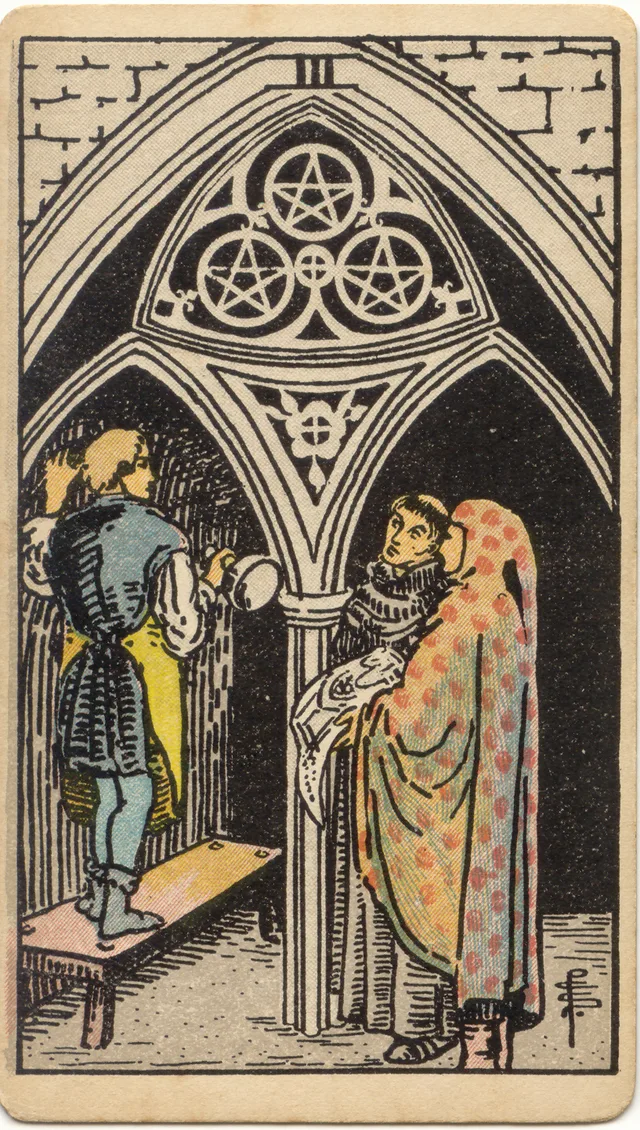
Three of Pentacles
The Three of Pentacles focuses on collaboration, while the Eight of Pentacles focuses on individual practice; neither card certifies skill or readiness.
Read this card's meaning →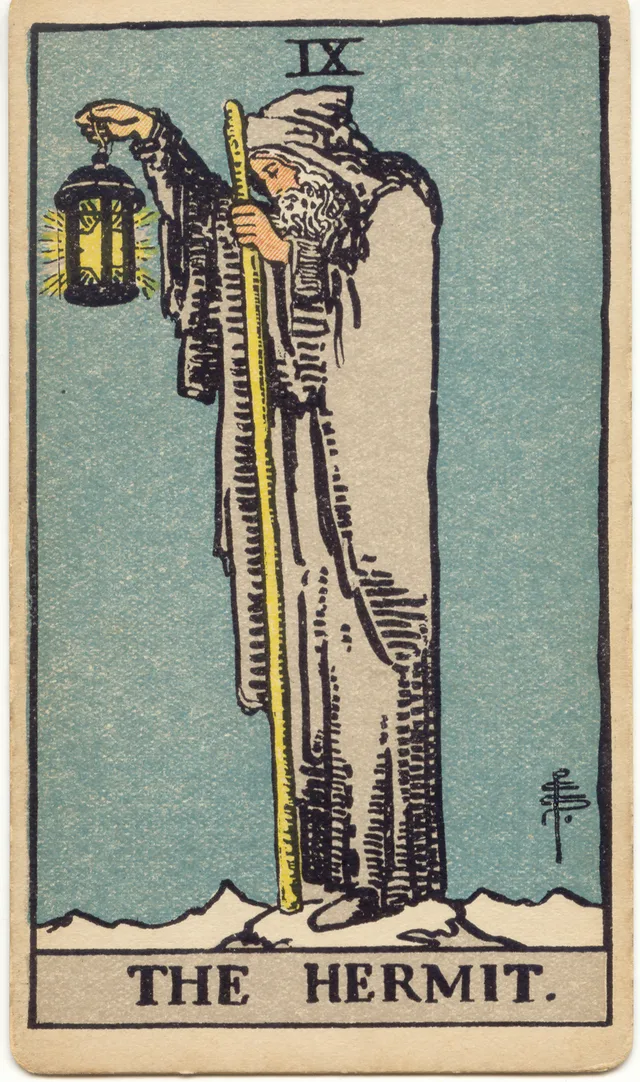
The Hermit
The Hermit and the Eight of Pentacles can both frame focused study, although neither card requires withdrawal or proves mastery.
Read this card's meaning →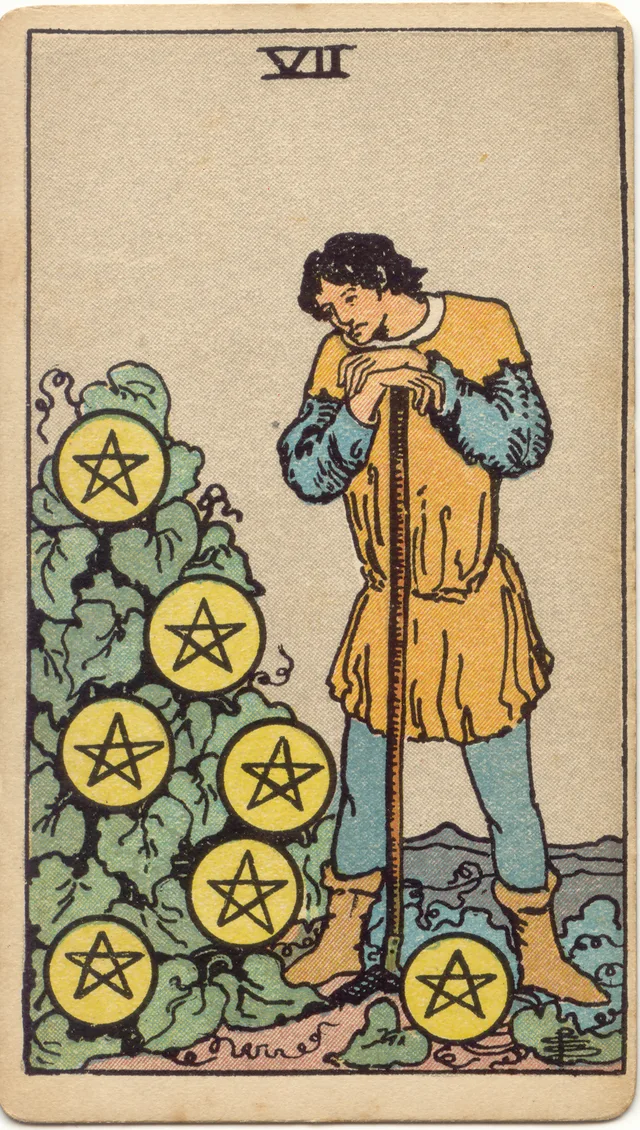
Seven of Pentacles
The Seven of Pentacles reviews progress, while the Eight of Pentacles examines repeated practice; the pairing does not predict a result.
Read this card's meaning →