The World Tarot Card Meaning
The World represents completion, integration, and a wider perspective after sustained work. It can prompt you to review a finished course, project, relationship stage, journey, or move, but it cannot prove that the outcome is settled or successful. Name what is complete, what remains open, and what you want to carry into the next phase.

What's pictured on the card
A dancing figure floats within a great oval wreath of green leaves, draped in a flowing purple cloth and holding a wand in each hand. In the four corners appear a human, an eagle, a bull and a lion, the same four creatures from the Wheel. The wreath is bound top and bottom with red ribbons. The scene shows completion and wholeness: a long path come full circle, integrated, accomplished, and ready to begin anew.
The World upright: the core meaning
The World dancer moves inside a full green wreath, a long path that’s now come full circle and finished. Today marks something whole, a cycle closing, a goal met, a lesson finally landing. Pause to honour how far you've come before you rush off to the next thing. You've earned this arrival; let it count.
There may be a quiet sense today that something has come full circle, a goal reached, a lesson finally understood, a chapter complete. Underneath, you might feel both proud and oddly wistful, unsure whether to celebrate or rush straight on to the next thing. That pause before the new beginning is worth honouring. You've arrived somewhere real, and part of you knows it, even when you're tempted to skip past the acknowledgement altogether.
Pause to recognise what you have completed before deciding what comes next. At work, acknowledge a finished project or milestone rather than immediately pursuing another target. In love, appreciate the depth you have built together and name what still needs attention. With money, record the goal you reached and decide how it changes your next plan. If a family chapter is closing well, mark it in a way that feels meaningful. Let satisfaction and uncertainty coexist; a next step can wait until you choose it.
Three simple ways to work with this card
- Acknowledge something you've completed today and let yourself feel properly proud before moving on to what's next.
- Tell someone about a milestone you've reached, and let their gladness help the achievement feel real.
- Jot down what a recent experience taught you, respect that growth before you start the next chapter.
What have you completed that deserves a real moment of acknowledgement today?
Every symbol, explained
The wreath, an egg on its side. A large oval wreath of green laurel surrounds the dancer. Laurel is traditionally associated with achievement, while the oval shape can suggest a contained cycle rather than a permanent full stop. Use the image to review what is complete and what remains open; it does not guarantee that the next stage will succeed.
Two wands, one in each hand. The dancer holds a wand in each hand, echoing The Magician's single wand. The paired wands can represent skills or responsibilities held together after practice. The image does not prove mastery; compare it with completed work, feedback, and the standards that matter to you.
The red ribbons at top and bottom. Red ribbons tie the wreath at the top and bottom, forming shapes like a lemniscate or infinity sign. This combination of closure and continuation can prompt a review of what an ending hands into the next stage. It does not mean that every consequence is positive or that nothing remains to do.
The four creatures in the corners. A human, eagle, bull, and lion occupy the four corners. They are commonly linked with fixed zodiac signs and the four elements, and they also appear on the Wheel of Fortune. Their placement creates a broad frame for the dancer, inviting a whole-picture review rather than proving that a goal has been achieved.
Twenty-one, and the purple cloth. This is the twenty-first card, and its digits add to three, The Empress's number in tarot numerology. The dancer wears a loose purple scarf, leaving the figure's identity and gender open to interpretation. These details can support reflection on achievement and identity, but they do not identify who you will become or what will arrive.
The upright meaning in detail
The essential lesson is to name and record what has actually been completed. That might be a degree, renovation, treatment, or long period of care. Marking it can help you understand the skills, relationships, costs, and lessons involved, but do not call something complete until the relevant work, documents, approvals, or follow-up are finished.
When this card appears, the question may concern what happens after a milestone rather than the milestone itself. A wedding, promotion, course, or child leaving home can be followed by flatness or uncertainty about the next routine. Notice the feeling, review practical support, and allow the next direction to develop without treating the card as an instruction.
The card is not saying that everything is fixed forever, perfect, or free of future work. It focuses on one cycle, not every cycle to come. Completion can include difficulty, help, and unfinished effects; list those openly instead of using the image as proof that a situation is settled.
The reversed meaning
The commonest reversal is the unfinished last ten per cent: a manuscript needing one edit, a qualification with one module outstanding, or a room ninety per cent decorated since March. Identify the exact remaining task and the standard required, while noticing whether fear of evaluation, cost, access, or competing care is blocking completion.
The second is an achievement not acknowledged because it took too long, involved help, or included favourable circumstances. Record the contribution of other people and the facts of what you completed without reducing your own work to luck. Credit can be shared without being erased.
There is also disorientation after a major structure ends: retirement, the end of a treatment plan, or the year after a large goal. It may involve sadness, relief, or uncertainty. Build a new routine gradually and use qualified or practical support when the transition affects health, finances, or identity.
The excess reading is continuous goal-setting without recovery or reflection. A new target can be useful, but review time, health, relationships, and finances before adding it. A pause is part of planning, not evidence that you have lost direction.
How I read reversals: context over dogma. Beside practical cards, identify the remaining task, deadline, and resources without assigning a date from the card. Beside emotional cards, explore why completion is difficult to acknowledge. In an outcome position, check whether a document, approval, payment, or conversation remains open.
In love & relationships
If you're single, this card can prompt a review of whether you are content with your own life and clear about what you want from a relationship. You do not have to perform independence or wait for a partner to validate you. Contentment may affect how you choose, but it does not guarantee that a particular partner will appear.
In an established relationship, it can prompt reflection on depth built through time, shared work, and conversations. Long partnerships and anniversaries still need current communication; stability should not be assumed from history. Say what you appreciate and discuss what remains unresolved.
It can also prompt reflection on an ending handled with respect. Do not assume an ending is final or morally better because the card appears; review consent, practical arrangements, safety, and whether unresolved matters need support. Closure can be an intention rather than a feeling.
Wholeness either deepens a relationship or closes one, both are completions.
- A milestone reached together and properly marked
- Old material finally integrated rather than re-litigated
- Contentment alone that isn't resignation
- An ending handled well enough to leave no residue
- Taking a solid relationship for granted because it's solid
- Staying because the story feels complete, not because you're happy
- Waiting for one more milestone before allowing contentment
- Refusing to close something that plainly finished years ago
Career
On a job hunt, this card can prompt a review of what would count as completion: an offer, a signed contract, or a clear decision to close the search. Check the written terms before accepting. If leaving a long role, complete documentation, agree the handover, and preserve professional relationships without assuming that your ending determines future opportunities.
At work, review whether a project is finished, accepted, documented, and handed over. Write a summary, credit the people who supported it, and record lessons before moving on. Recognition can support morale, but it does not replace checking deliverables, approvals, and remaining maintenance.
It can also prompt consideration of international work, travel, cross-border clients, or an overseas role. Research visas, tax, employment law, insurance, time zones, language, and support. The card cannot establish that an international career is realistic; the requirements and resources do.
Money
With money, it can prompt a review of a completed financial target such as debt paid, a deposit saved, or a loan settled. Confirm balances and documents, then allow time to update the budget before choosing another target. Completion is evidence about the past plan, not a guarantee of future security.
It can also address administrative endings such as settling an estate, closing business books, or finalising a divorce settlement. Check each document, payment, account, and continuing obligation, and allow time for the emotional impact. Use legal or financial advice where the details exceed your knowledge.
For planning, consider pensions, twenty-year goals, insurance, beneficiaries, and a will, with qualified financial or legal advice where appropriate. A long view should include inflation, changing needs, access, and uncertainty. Preparing documents can clarify responsibilities without predicting what happens afterward.
Health & wellbeing
The World can prompt a review at the end of a treatment course, such as the final session, discharge paperwork, or follow-up plan, but it cannot give an all-clear or assess health. Ask the clinician what comes next, what symptoms require attention, and where to get support if the structure changes.
For the mind, it can prompt reflection on integrating an experience into your understanding of yourself, including near the end of therapy. Support wellbeing with practical basics such as movement, food, rest, and company when appropriate, and follow professional guidance rather than treating four symbolic corners as a health plan.
Life events & big decisions
On a move, this card can prompt a review of arrival tasks: housing completed, a country settled into, documents filed, services arranged, and community support identified. It can relate to emigration or return, but it cannot promise ease or establish that a location is right. Check legal, financial, and safety requirements.
Around weddings and family milestones, it can prompt a deliberate way to mark what happened: a party, speech, photographs, or private ritual. Choose the level of publicity that protects everyone's consent and privacy. Ceremony can acknowledge an event, but it does not establish relationship quality or future security.
After a loss, it can prompt reflection on anniversaries, settled affairs, and how memories fit into life now. There is no universal point at which grief is integrated, and telling a story without crying is not proof of recovery. Use the card to name what is complete and what support remains helpful.
Contracts, deals & signatures
Beside a signature, it can prompt a checklist for completion: sale documents, final invoice, settlement, transfer, and continuing obligations. A long negotiation may still need review or approval; the card cannot establish that an agreement will close or that its terms are fair.
Pay special attention to what continues after an agreement ends: a clause that survives termination, a guarantee still in your name, an account left open, or data that remains shared. Ask for a written list, confirm closure with the relevant provider, and obtain qualified advice when necessary.
For timing, set a completion checklist and review whether any unresolved term is material. Do not accept a supposedly fair agreement merely to end the process; compare the cost of remaining open with the legal, financial, and practical effect of closure. Actual approvals and signatures determine the date.
Entrepreneurship & business
For starting something, review whether the required skills, permissions, finances, customer evidence, and support are assembled. You may need no further credential, or you may discover a real requirement. Do not use the card to declare readiness; use a checklist, qualified advice, and a small test.
For an existing business, review whether a product, funding round, founding phase, sale, succession, or handover is actually complete. If considering a sale or step back, compare valuation, tax, responsibilities, staff, customers, and personal capacity. The card cannot label an exit natural or successful.
For international expansion, review markets, exporting rules, tax, employment, currency, language, data, and support before committing. Finish material open projects or explain how they will be supported while expanding. A business with three unfinished projects needs capacity evidence before adding a fourth country.
How it shows up in real readings
Use The World's neighbours to frame a review rather than predict a chapter. Beside The Fool, list what has been completed before beginning a new experiment. Near Wheel of Fortune, separate changing circumstances from work you can control. With Judgement, consider how a decision or accountability process affects what remains to complete; neither pairing sets a one-year timetable.
A client I'd read for perhaps a dozen times finished a law degree in her late forties, part-time, over six years, with two children and a job. She came a fortnight after her final result and wanted to discuss another qualification. We reviewed what had actually been completed and how little time she had taken to acknowledge it. She arranged a party with forty people, and her tutor gave a speech. She later said she cried in the kitchen because marking the degree made the achievement feel real. The card offered a reflection on completion; it did not establish that another qualification was wrong or that a celebration would solve anything.
What does The World mean in tarot?
What does The World reversed mean?
Is The World a yes or no card?
Does The World mean travel?
What does The World mean for love?
If The World has found you today, list what is actually finished and what still needs documents, payment, repair, or conversation. Mark a genuine completion in a way that suits you: tell someone, write it down, take an afternoon, or share a meal. Do not use the card to declare an unresolved matter closed.
Then take a defined pause before adding a new target. Review rest, finances, relationships, and responsibilities, and choose the next step only after checking capacity. If you'd like a small daily habit of noticing progress, the free daily draw takes a minute each morning; it cannot measure achievement or readiness.
The World can invite recognition of a completed chapter without proving that every issue is resolved. Take stock of what you learned, what remains unfinished, and what you want to carry into the next stage.
Related cards and themes

The Fool
Card 0, The Fool, begins an open-ended journey; The World reviews what has been completed after sustained experience.
Read this card's meaning →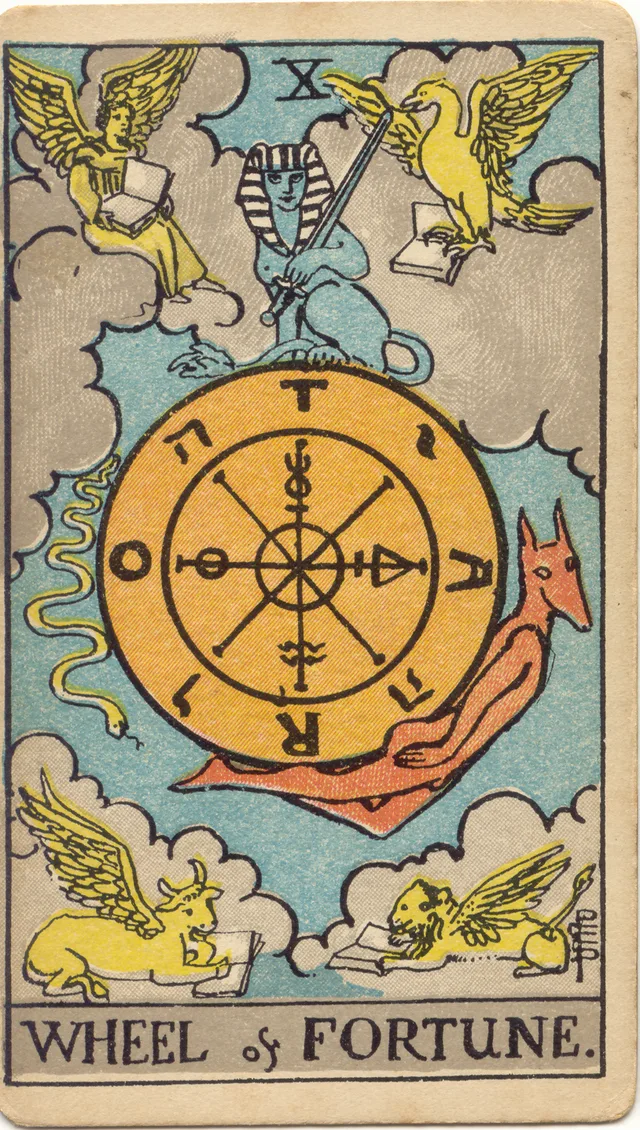
Wheel of Fortune
Both cards address cycles; the Wheel highlights changing circumstances, while The World reviews an integrated stage.
Read this card's meaning →
Judgement
Judgement reviews a decision or reckoning; The World asks what has been completed and integrated afterward.
Read this card's meaning →