Wheel of Fortune Tarot Card Meaning
The Wheel of Fortune represents changing circumstances, cycles, and factors outside one person's control. It can prompt you to review what is shifting in work, relationships, money, or a difficult period, without promising that the next turn will be favourable. Identify what you can influence, what evidence is changing, and which safeguards would help through uncertainty.

What's pictured on the card
A great golden wheel turns in the sky, lettered with T-A-R-O and older mystic symbols. A sphinx rests on top with a sword, a snake slides down one side, and a jackal-headed figure rises up the other. In the four corners sit winged creatures, a bull, a lion, an eagle and an angel, each reading a book. Clouds surround it all. The image shows the ever-turning cycles of life, luck, and change: whatever falls will rise again.
Wheel of Fortune upright: the core meaning
The great Wheel turns, and the figures on it rise and fall as it goes. Today reminds you that circumstances move in cycles, and this moment, good or hard, is already shifting. Stay flexible and ready; a turn of luck is closer than it feels, so meet the change rather than bracing against it.
There's a sense today that something is shifting, whether or not you can name it yet. You may feel a little out of control, as though life is moving to its own rhythm rather than your carefully kept schedule. Underneath any unease is a truer knowing: nothing stays fixed for long, and this very moment is already turning. What feels stuck is loosening, and what feels uncertain may be luck getting ready to swing your way.
Consider where flexibility could help when circumstances change. If plans wobble or something unexpected arrives, pause and identify what you can adjust without abandoning your priorities. At work, assess a surprise opportunity against its timing and terms. In love, discuss how the relationship is changing instead of assuming it must return to an earlier pattern. With money, check the facts before treating an unexpected opening as good fortune. You cannot control every circumstance, but you can choose how to respond.
Three simple ways to work with this card
- Name one thing you're gripping tightly and practise loosening your hold on how it absolutely must turn out.
- Say yes to an unexpected opportunity today, even if the timing isn't quite what you'd have planned for.
- Write down a past hard patch that turned around, to remind yourself this current cycle will shift too.
What change are you resisting that might actually be turning in your favour?
Every symbol, explained
The letters on the rim. Four letters are spaced around the wheel: T, A, R, and O. They can be read as TARO, a name for the tarot, or rearranged as ROTA, a Latin word for wheel. The arrangement supports a theme of cycles and changing viewpoints. It does not encode a personal message or predict the next turn in someone's life.
The three figures on the wheel. A snake descends on the left, a jackal-headed figure climbs on the right, and a sphinx sits above the wheel holding a sword. Their positions show movement in different directions and a figure that remains separate from the turning rim. Readers may use this arrangement to discuss changing circumstances, perspective, and what can be influenced. It cannot show that a real person is rising, falling, or in control.
The four winged creatures. A winged bull, lion, eagle, and human figure appear in the four corners, each reading a book. They are often connected with the fixed signs of the zodiac and with steadiness. In the illustration, they remain separate from the wheel's movement, so they can prompt a review of routines, knowledge, values, or support that a person wants to maintain. The card cannot identify which parts of life are stable.
The clouds and the missing ground. The wheel floats among clouds without a landscape or solid ground. This removes a specific location and leaves the scene abstract, which lets readers discuss systems, cycles, and context without assigning a personal cause to the picture. It does not show that events are impersonal, unavoidable, or aimed for or against a reader.
Ten, and Jupiter. Ten is often read as the end of one numbered sequence and the beginning of another. Traditional tarot astrology associates the Wheel with Jupiter, a planet linked with growth, opportunity, and expansion. These associations provide a symbolic vocabulary for changing scale and circumstance; they do not establish luck, an opening, or a favourable moment.
The upright meaning, in detail
The Wheel of Fortune is commonly read as an image of changing circumstances and cycles. A situation can be described as a current position rather than a permanent identity, but the card cannot establish that a particular event is temporary or identify where a cycle stands. Use the theme to ask what is changing, what evidence supports that view, and what can be influenced now. Keep the question specific enough to answer with observable information.
The card can support a distinction between personal choices and external conditions. Markets, diagnoses, restructures, and other people's decisions may affect a situation, but the Wheel cannot determine which causes apply or remove personal responsibilities. List what is outside your control, what information is changing, and what choices, support, or safeguards remain available.
What it is not saying: it is not fate, rescue, or a verdict about an outcome. The sphinx and the four corner figures are visual symbols, not instructions about effort or responsibility. Do not treat the card as proof that a cycle is predictable. Use dates, records, circumstances, and the reader's own account when describing change.
The reversed meaning
Reversed, one reading is difficulty adjusting after circumstances change. A role, friendship, health situation, or financial arrangement may be different, but the card cannot establish that a change has happened or diagnose resistance. Compare the previous arrangement with current facts, costs, duties, and available choices.
Another reversed reading can provide language for several difficult events arriving close together. A car repair, household failure, job loss, or family emergency may each have different causes; the card cannot call a period luck, identify blame, or assure anyone that it is temporary. Use practical support, records, and qualified advice for each issue.
A third reading is a possibility noticed after a deadline or a plan has changed. The card cannot establish that an opportunity existed, that someone missed it, or that timing was the reason. Check the actual offer, requirements, costs, consent, and alternatives before deciding what to learn from the event.
The reversal can also prompt a check for fatalism: treating external conditions as a reason to stop gathering information or making choices. The card can represent limits on control without proving that a reader has no agency. Identify the decisions, duties, support, and safeguards that remain relevant.
For reversals, context matters more than a fixed rule. Beside cards about delay, the pairing may prompt a review of conditions and costs; in an outcome position, it can raise uncertainty about timing; in a past position, it can support reflection on a change already described by the reader. None of these positions predicts disaster or establishes a turning point.
In love & relationships
If you are single, the Wheel can prompt reflection on how changes in routine create new social settings, such as a work trip, class, or invitation. It cannot predict a meeting or recommend saying yes to every invitation. Consider your capacity, consent, boundaries, and the actual conduct of anyone you meet.
In a relationship, the Wheel can frame a period when circumstances or responsibilities change: a new baby, job, illness, empty house, or shift in identity. Discuss practical needs, consent, finances, care, privacy, and expectations instead of assuming an earlier arrangement still fits; a plan that worked in 2016 may need review now. The card cannot show that a relationship will last or that renegotiation is possible.
A useful conversation is about what is outside each person's control and what remains a choice. A posting, illness, or changed circumstance may affect a relationship, while other decisions still need to be named. Discuss timing, support, and boundaries too. The card cannot decide whether a separation is unavoidable or reveal a motive; use direct communication, consent, and practical facts.
Changing circumstances can be discussed openly, but the card cannot decide what a relationship should do next.
- Considering an invitation while checking capacity and boundaries
- Reviewing responsibilities and expectations as circumstances change
- Describing a difficult period without treating it as a permanent verdict
- Preparing for more than one timing or logistical outcome
- Using old agreements without checking whether circumstances changed
- Calling a decision fate instead of naming the people and facts involved
- Waiting for chance while taking no intentional, evidence-based steps
- Treating one difficult period as proof of a permanent future
Career
On a job hunt, the Wheel can prompt attention to routes outside a standard application, such as professional contacts, an unadvertised role, or a new field. It cannot establish that an opportunity exists or that networking will produce one. Keep records of applications, ask for information respectfully, and compare role terms, pay, and support.
In the workplace, the Wheel can provide a theme for a restructure, new management, altered responsibilities, or a department changing. It cannot establish what is happening or predict who will benefit. Read formal communications, ask about role, pay, workload, and support, document changes, and use workplace or professional advice when needed.
For a promotion or departure, the Wheel can prompt consideration of adjacent roles, secondments, industry changes, or a non-linear path. It does not favour a sideways move or show that an offer is suitable. Compare duties, pay, development, location, timing, management, and alternatives rather than waiting for a perfect story.
Money
In money questions, the Wheel can prompt a review of changing income, expenses, and financial conditions. Do not assume a high-income period is a permanent baseline or that a difficult period will end soon. Use budgets, reserves, debt terms, tax information, insurance, and qualified advice to plan for several scenarios. Include ordinary bills, irregular costs, and the effect of delayed payments.
The Wheel can also be used to discuss unpredictable financial changes such as a refund, rebate, irregular work, or an unexpected cost. It cannot predict money arriving or show its amount. Keep records, verify claims, and use an emergency reserve only if one is actually available; qualified advice can help with financial planning.
For debt, gambling, or speculation, the Wheel can prompt a careful risk review. It cannot show that another attempt will help or that a plan depends on luck. Check interest, affordability, loss limits, legal terms, and independent advice; do not use a card as evidence for borrowing or gambling.
Health & wellbeing
In health contexts, the Wheel can prompt tracking of changes in symptoms, energy, mood, or sleep. Some conditions fluctuate, but the card cannot diagnose a cycle, explain a cause, or predict a flare or improvement. Note dates, triggers, treatments, and functional effects when relevant. Use symptom records and qualified medical guidance, especially when a change is sudden or concerning.
The Jupiter association can prompt reflection on excess, growth, or boundaries, but it cannot identify overuse or a health cause. For a diagnosis, accident, or other bodily change, use qualified care and practical support. A symbolic card cannot assign blame, promise change, or determine the response required.
Life events & big decisions
For a move, the Wheel can frame a decision prompted by changing circumstances, such as work, housing, or family needs. It does not favour moving, establish that a new option exists, or recommend a fast decision. Check finances, legal requirements, housing, healthcare, responsibilities, consent, transport, schools, and fallback plans.
Around weddings and family events, the Wheel can provide a way to discuss several changes occurring near one another, such as marriage, bereavement, a birth, or job loss. It cannot establish a pattern, predict a reunion, or say how estrangement will change. Record dates and practical needs, then use the people involved and real circumstances as the source of information.
After a loss, the Wheel can support reflection on changing grief without assigning a reason to the loss. It cannot establish that grief will change, set a timetable, or decide whether a difficult day is a setback. Notice what the person is experiencing and use appropriate support.
Contracts, deals & signatures
For contracts, the Wheel can prompt a stress test of terms that depend on current conditions: a rate, projection, staffing arrangement, demand level, or exchange rate. Ask what happens if conditions change and record review, adjustment, suspension, or termination rights. The card cannot assess whether a clause is adequate.
It can also prompt attention to breaks, review dates, notice periods, change control, and an option to renegotiate at eighteen months. Compare flexibility with price, risk, and obligations; the card cannot show whether an agreement is good or bad. Qualified legal or commercial review is appropriate for significant terms.
On timing, the Wheel can prompt a check for deadlines and changing conditions, but it cannot say that a window is closing or that an opportunity is real. Verify the deadline, costs, alternatives, and downside. Do not sign until the obligations remain workable under less favourable conditions and qualified review is complete.
Entrepreneurship & business
For starting a business, the Wheel can frame changing market conditions and the limits of a founder's control. It cannot establish a timing window, favour launching early, or predict survival. Test demand, costs, compliance, capacity, staffing, and alternatives before committing resources.
For growth, the Wheel can prompt scenario planning for lower demand, delayed payments, higher costs, or loss of a major customer. Review reserves, customer concentration, fixed costs, contracts, staffing, payment timing, and insurance. The card cannot predict a downturn or establish which safeguard is affordable.
For risk and hiring, the Wheel can prompt comparison of reversible tests with large commitments. Do not treat it as advice to use contractors, hire, or run experiments. Check employment law, budget, workload, quality, training, insurance, and the evidence from each test before changing the business.
How it shows up in real readings
In a spread, the Wheel can bring changing conditions into conversation with nearby themes. Beside The Hanged Man, discuss the purpose and cost of a pause. Beside The Chariot, compare deliberate action with external limits. Beside Justice, review evidence, responsibility, and consequences. These pairings do not make other cards temporary or determine an outcome. Use them to form questions, then verify the answers independently.
In a difficult period, a reader may want the Wheel to explain events or promise a change. I would instead ask what has actually changed, what remains important, what support is available, and which decisions are still open. A spread can organise that conversation, while records and the reader's own experience show what happens next.
What does Wheel of Fortune mean in tarot?
What does Wheel of Fortune reversed mean?
Is Wheel of Fortune a yes or no card for love?
How soon do things happen with Wheel of Fortune?
Does the Wheel of Fortune mean I have no control?
If the Wheel appears, name the outcome you are focused on and separate your preference from what the evidence currently shows. Then list three practices, supports, or standards you can maintain while circumstances are uncertain. Add a date for reviewing new information and a person you can contact for practical help. The card cannot decide which practices matter; choose them from your needs and responsibilities.
You can also record a previous difficult period and what actually changed, without using it as a promise that the present will follow the same pattern. Note which supports were useful and which assumptions proved wrong. If you would like a brief reflective marker while circumstances develop, the free daily draw is available each morning. Use it to notice your choices and questions, not to predict a turn.
The Wheel of Fortune can symbolise changing conditions without promising that a hard patch will pass or a good period will last. Notice what is within your control, protect what is working, and plan for more than one turn.
Related cards and themes
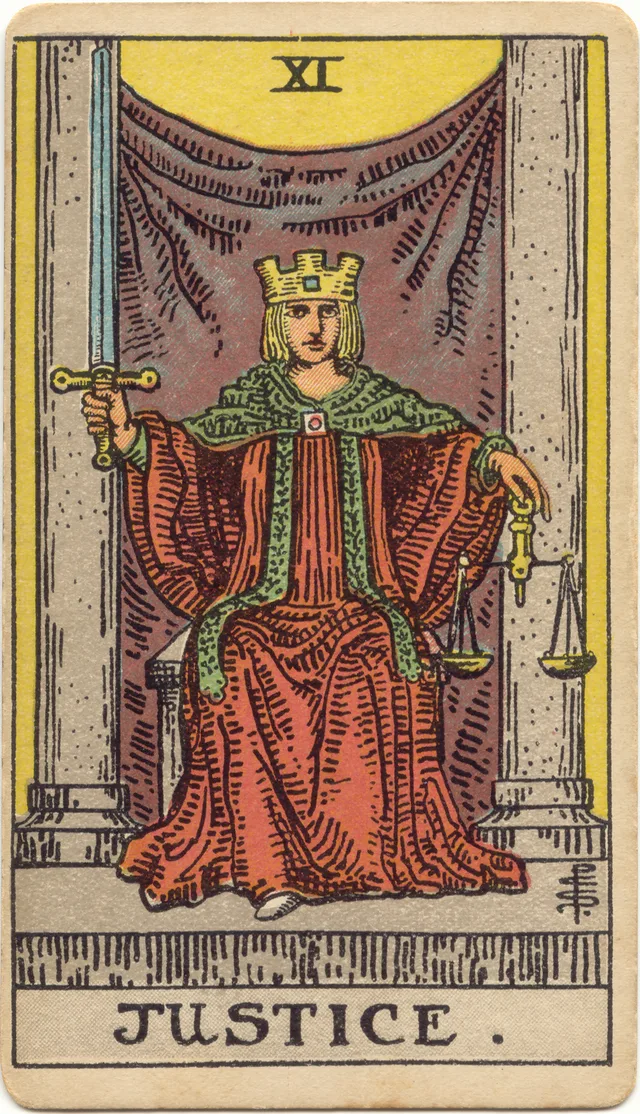
Justice
Justice focuses on evidence, responsibility, and proportion, which can be considered after the Wheel's themes of changing circumstances; neither card determines an outcome.
Read this card's meaning →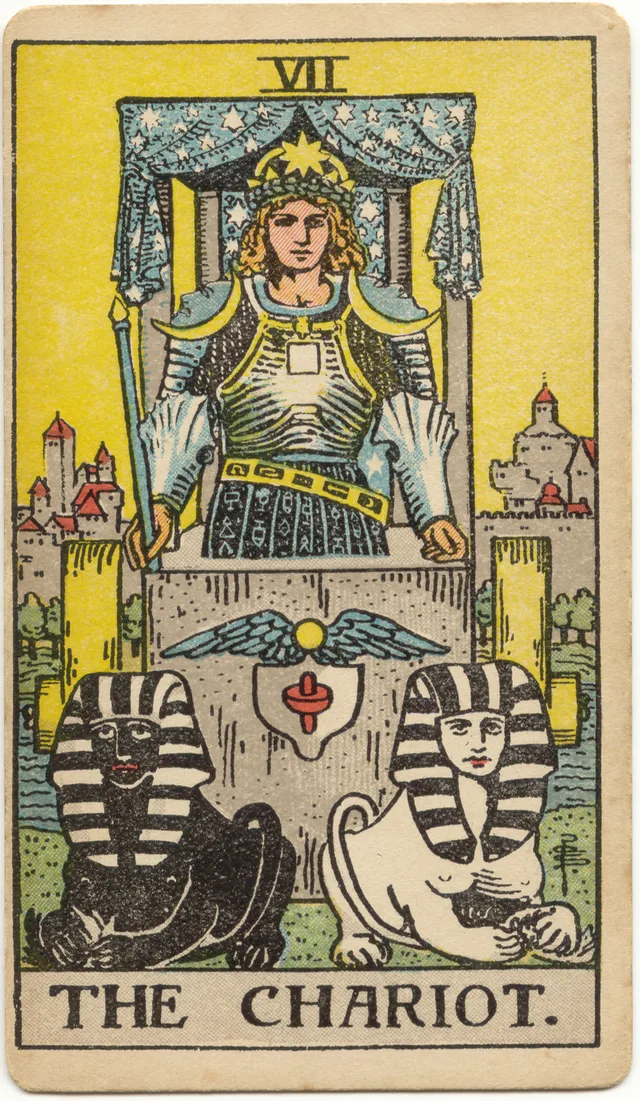
The Chariot
The Chariot explores deliberate direction and effort, while the Wheel of Fortune explores conditions outside one person's control; neither shows how much control a reader has.
Read this card's meaning →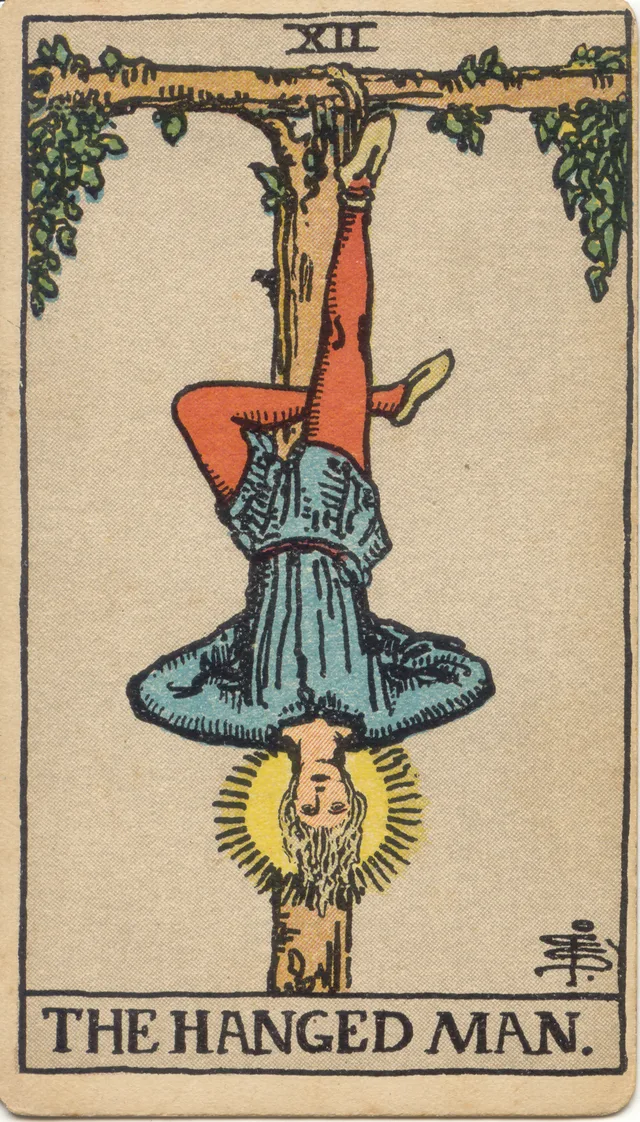
The Hanged Man
The Hanged Man explores a pause and a changed perspective, useful to compare with the Wheel's themes of movement and changing conditions; neither instructs a reader to wait.
Read this card's meaning →