Seven of Pentacles Tarot Card Meaning
The Seven of Pentacles depicts a pause to assess work already invested, including its progress, cost, and direction. It can prompt an honest review of whether a job, relationship, saving plan, or habit remains worth tending. The image cannot show that results will arrive; use observable evidence and your current priorities to decide what to continue or change.

What's pictured on the card
A young man pauses in his garden, both hands resting on the handle of his hoe, and gazes at a tall leafy plant heavy with seven ripening pentacles. His posture is thoughtful, a little tired, the look of someone taking stock rather than toiling. The soil is dark and well-worked. The image captures that in-between moment when the hard planting is done and you're weighing what has grown, wondering whether to keep tending or move on.
Seven of Pentacles upright: the core meaning
In the Seven of Pentacles, a gardener leans on a hoe, surveying the vines they've patiently grown. Today asks you to pause and assess, to notice how your long-term efforts are ripening and whether they're worth continuing. Growth takes its own time. Don't dig up the plant to check the roots; trust the work and let it mature.
You might be feeling the ache of waiting, that restless doubt that creeps in when results are slower than your effort. You might hear a nagging voice saying it isn’t working, that you should have more to show by now, that maybe you picked the wrong thing. Impatience like this usually means you care a lot about the outcome. Beneath the doubt, though, there's a wiser knowing: that real growth has its own timing, and that what you've planted is maturing out of sight.
Use this card for clear assessment rather than anxious uprooting. Review where you have invested energy—the job, relationship, savings, or habit—and look for observable progress, even if it is slow. If there is progress, decide what continued tending would require; if there is none after a fair effort, you can redirect your energy without treating that as failure. At work, record smaller signs of progress. With money, compare long-term effects with quick wins. Pausing to review is useful even when it does not produce an immediate answer.
Three simple ways to work with this card
- Write a short list of what has grown from your efforts lately, even the smallest sprouts of progress.
- Choose one thing you've been impatient about and consciously give it another month before you judge it.
- Rest today without guilt, trusting that stepping back to reflect is part of the work, not a break from it.
Which long-term effort is ripening and worth your patience today?
What Waite-Smith painted and why it matters
The gardener at rest. A young man stands in his garden, both hands draped over the top of a hoe, his weight on the handle. He is not sleeping or daydreaming — his eyes are on the plant with a focused, slightly tired expression. This is the posture of someone who has done a great deal of work and paused not to escape it but to look honestly. The weariness is earned; the looking is intentional.
The plant heavy with pentacles. A tall, leafy vine bears seven large coins among its leaves and stems — ripe enough to see clearly, heavy enough to show real growth. The plant is not finished; these aren't harvested fruits yet. They hang in that in-between stage when something is visibly developing but not complete: the gardener is assessing ripeness, not arrival.
The dark, well-worked soil. The ground at the gardener's feet is dark and turned — evidence of real prior labour, not of someone who just arrived and planted a seed. It tells the story of time already invested: this assessment is happening mid-cultivation. The question isn't 'shall I start?' but 'is this worth continuing, and is it growing the way I hoped?'
The single coin near his feet. One pentacle lies on the ground, slightly apart from the main plant — an easily missed detail worth noting: not everything in the frame is thriving. One coin is down, separate, possibly fallen or not yet raised. The image is not purely celebratory; something here hasn't flourished quite as expected, or needs a different kind of attention.
The number seven. In this guide, seven is a useful symbol for reflection, reassessment and the pause between phases: what have I learned, what is working, and what needs to change? Across the Pentacles suit, seven falls between the give-and-take of the Six and the dedicated craft of the Eight, so the number helps frame a considered review rather than a guaranteed stage of progress.
The upright Seven of Pentacles in full
The Seven of Pentacles is the card of patient, conscious investment — and of the honest check-in that investment requires. It pictures the stage after effort has been made and before the outcome is known. In a reading, the relevant question is what the actual evidence shows, not whether the card can see fruit forming.
What distinguishes the Seven from discouragement is the quality of the looking. The gardener is not visibly abandoning the vines; his posture is assessment rather than despair. He is comparing what he sees with what he hoped to see. That is different from the anxious question, 'Why isn't this working?' It is a practical request to inspect the evidence before deciding what to do next.
Patience is a central theme, but the picture cannot tell you how long to wait or whether continued investment is wise. The gardener is still holding the hoe and looking closely. Apply that scrutiny to a career, relationship, savings plan or creative project: what has changed, what has not, what would another month cost, and what evidence would support continuing, adjusting or stopping?
The reversed meaning
The most common reversal theme is impatience disrupting a process: switching approaches repeatedly or abandoning work before it has been assessed carefully. The opposite is sunk-cost loyalty — continuing only because of what has already been spent. The card cannot tell you which pattern is present. Compare milestones, cost, expert feedback and alternatives before deciding whether the project needs time, a different method or an ending.
A third version is perfectionism preventing completion: the work stays one revision away from being shared or submitted. Financially, the reversal can prompt a review of the return on effort, money or time. Surrounding cards may change the reflective emphasis, but they do not decide whether to wait or finish. Measured results and the real cost of delay must answer that.
In love & relationships
For someone single, the Seven of Pentacles suggests stepping back from the active search long enough to assess honestly: what has the recent pattern been, what's been invested, with what results? Not to be harsh but to be informative. The card values the pause between efforts — the honest reflection that makes the next approach more considered rather than more of the same.
In an established relationship, the Seven marks the mid-point stocktaking that every long partnership needs if it's to stay genuinely alive rather than simply ongoing. How has it grown over the past year or two? Is the investment mutual? Is what you're building still aligned with what both people actually want? Not anxious questions, but the ones healthy, durable relationships hold openly.
It can also describe a relationship at a decision point: does it merit continued effort, what would another investment require, and is a difficult conversation needed to change the pattern? The gardener's pause offers a structure for those questions. The card does not give the answer; the people involved need to compare conduct, needs and capacity.
Honest assessment either reveals genuine growth worth continuing to tend, or surfaces the truth that effort has flowed in an unproductive direction.
- A relationship that has genuinely deepened over time and deserves recognising
- A clearer view of the parts that have become dependable through repeated effort
- A prompt to consider whether a conversation about the next phase is one you want to open
- Shared effort that can be compared with current behaviour rather than assumed from history
- One person doing most of the relationship work while the other assumes the arrangement will maintain itself
- Continued investment out of familiarity rather than genuine connection
- Avoidance of the honest assessment that would require an uncomfortable conversation
- Growth that has been real but in incompatible directions
Career
Professionally, the Seven of Pentacles is one of the most useful cards around career development because it asks about return on investment: is the time and effort being spent producing results proportionate to what's going in? Not 'am I working hard enough' — rarely the question — but 'am I working on the right things, and is the approach I've been using still the best one available?'
It's particularly relevant for people several years into the same role or field, wondering whether to stay, seek advancement or redirect. The Seven does not make that decision; it asks you to assess the growth you can document. Which skills, responsibilities and opportunities have developed? Is there room to learn more here, or would a different role or setting address the evidence more directly?
For anyone building a skill or working through a qualification, the Seven reflects the tension between patience and assessment. It cannot show that work is accumulating successfully or that hidden results are forming. Feedback, completed milestones and the standards of the field show whether the approach works and deserves more time.
Money
In financial readings the Seven of Pentacles carries the long-term-investment theme — savings, pensions, property, a young business or education. It does not show that money invested now will return later or that patience is correct. Review performance, fees, risk, time horizon and qualified financial advice before changing or continuing an investment.
The practical question is whether you review those investments at sensible intervals rather than ignoring them or checking anxiously every week. A financial plan needs a defined review schedule, clear records and current assumptions; a visual symbol cannot tell you when to buy, sell or wait.
Health & wellbeing
In health and wellbeing, the Seven of Pentacles evokes slow, cumulative practice: exercise, sleep, food, meditation or therapy. It cannot show that a practice is working or will change health over time. Track symptoms and function, follow qualified clinical advice and use an appropriate review period rather than the card to decide whether to continue.
The image can prompt a non-diagnostic wellbeing review without declaring that now is the correct moment. Look at the whole picture — sleep, movement, connection, symptoms and what depletes you — and involve a qualified practitioner where health concerns or treatment decisions are present.
Life events & big decisions
Around significant decisions, the Seven of Pentacles makes prior investment and assessment visible. It neither tells you to pause nor supports continuing. Ask what has actually been produced, what another round would cost, what alternatives exist and whether sunk cost is distorting the choice.
Contracts, deals & signatures
The Seven of Pentacles beside a contract can prompt a review of whether the agreement still reflects current reality, particularly for a renewal, renegotiation or long-standing arrangement. Conditions and contributions change; terms that made sense at the start may need discussion after the work has been delivered. Compare the written obligations, results and remaining risks rather than assuming the arrangement is still equitable.
For new agreements, it can prompt questions about the time horizon: what would each party expect to see, and when? Long-term agreements often benefit from explicit checkpoints where both parties can assess progress before the next phase. Put milestones, review dates and exit options in writing instead of relying on a shared metaphor of patient tending.
Entrepreneurship & business
For a business owner, the Seven of Pentacles offers a mid-course review. It cannot identify what is generating return or declare that this is the moment to change course. Revenue, margin, customer retention, workload and strategy provide the information needed to compare services and relationships before committing more resources.
It's particularly relevant for an owner considering a significant new investment of capital, time or strategic direction. List the existing offers, their costs and their measured contribution. Then compare adding resources, finishing a current project, redirecting effort or testing a new offer. Useful checkpoints might include the first meaningful customer feedback, a complete financial year or the first year of a new service; the records, not the card, determine what they show.
Pairings and real reading patterns
The Seven of Pentacles reads differently alongside its neighbours. Beside The Hermit, withdrawal and introspection become themes to examine; the pairing does not prescribe more time alone. Next to The Hanged Man, pause and perspective come forward. Near the Nine of Pentacles, independence and sufficiency become discussion points. None of those images is evidence of current progress or a future destination.
This card can resonate when someone is years into a project, career shift, business or relationship and tired of sustained effort. It gives no verdict on direction and cannot reveal hidden progress. A useful reading defines the evidence that would support confidence, adjustment or stopping, then examines that evidence without turning the card into an authority.
What does the Seven of Pentacles mean in tarot?
Is the Seven of Pentacles a yes or no card?
What does the Seven of Pentacles reversed mean?
What does the Seven of Pentacles mean for love?
How long does the Seven of Pentacles say to wait?
If the Seven of Pentacles has come up, use the scene as a prompt to pause and review. Record what the effort has actually produced, including disappointing evidence. The review may show growth, stagnation or a need to change; the card cannot know which, and your records need to carry the decision.
The Pentacles suit often brings practical routines into focus: work, inspect, adjust, review again. If you'd like a small daily prompt for noticing resources and effort, the free daily draw is there every morning.
The Seven of Pentacles can prompt an honest review without despair. Use evidence to decide what deserves tending, what needs changing, and what costs too much.
Related cards and themes
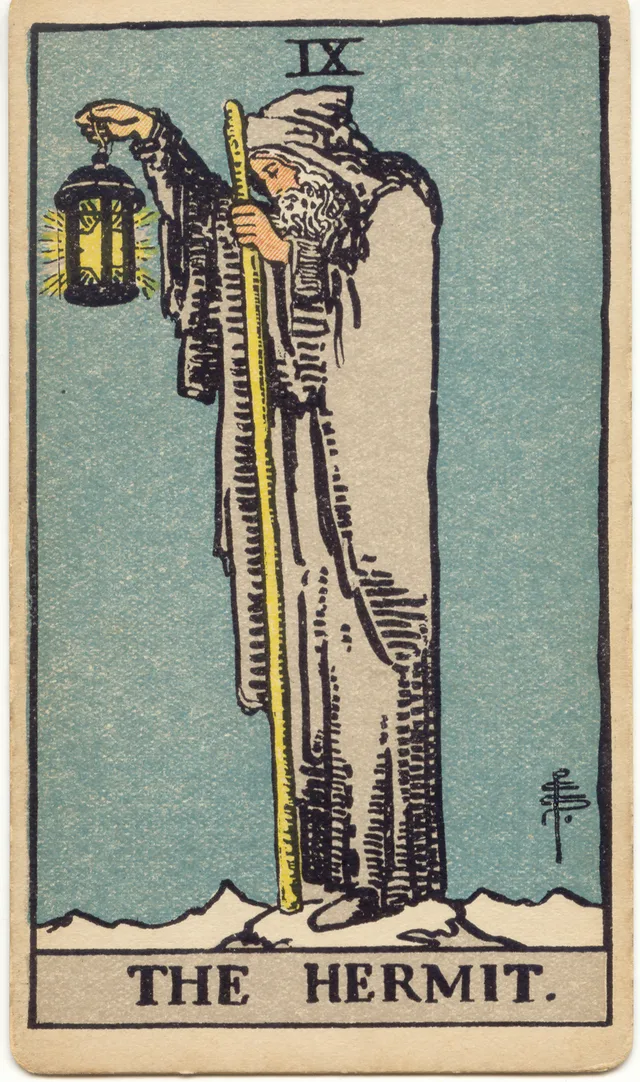
The Hermit
The Hermit uses a lantern while he withdraws; the Seven also makes room for deliberate review, but applies that review to work already under way.
Read this card's meaning →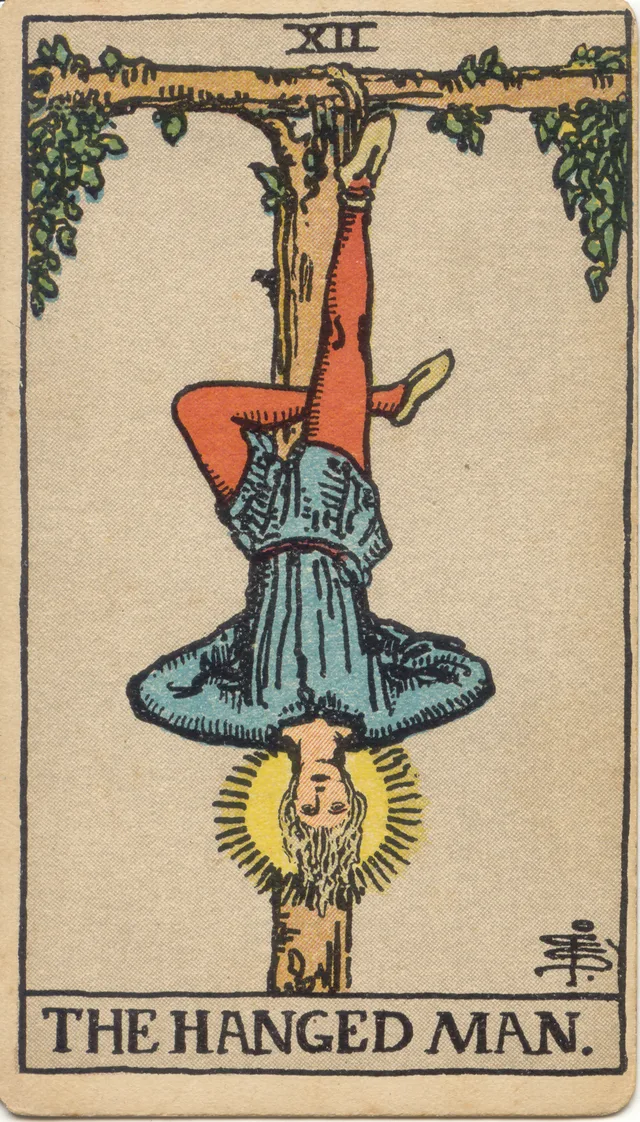
The Hanged Man
The Hanged Man examines a deliberate suspension, while the Seven examines an active project; both invite observation before another decision.
Read this card's meaning →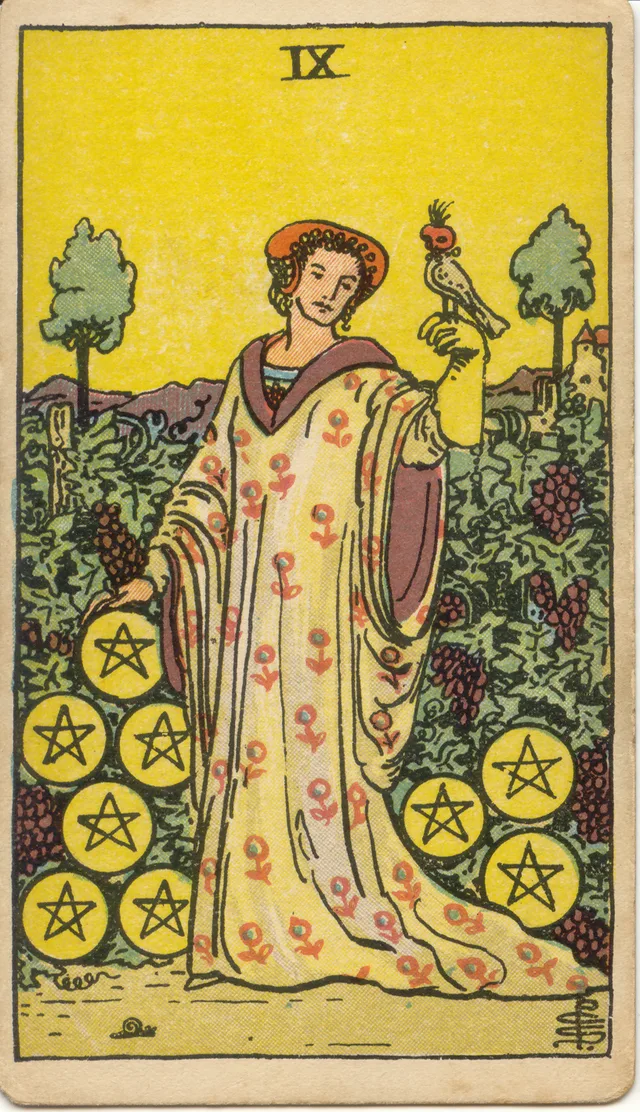
Nine of Pentacles
The Nine of Pentacles explores independence and established resources; beside the Seven, it raises questions about what kind of result the current work is meant to support.
Read this card's meaning →