Six of Swords Tarot Card Meaning
The Six of Swords shows a ferryman moving a small boat from choppy water toward a quieter shore, with six swords carried in the hull. The image can frame a transition, recovery, or practical move away from a situation that no longer works. It cannot prove that a change is progress or that the next place will be steadier; compare the evidence, support, and costs of the route you are considering.

What's pictured on the card
A cloaked figure and a child sit low in a small wooden boat while a ferryman poles them across the water. Six swords stand upright in the hull before them, carried along but no longer wielded. The water on the near side is choppy, yet ahead it lies flat and still, with a distant shore in view. Smith painted a passage, leaving turbulence behind, carrying your lessons , moving towards steadier ground.
Six of Swords upright: the core meaning
In the Six of Swords, a small boat carries its passengers towards still waters, leaving rough seas behind. Today is a small shift, moving away from difficulty towards something steadier. You don’t need everything sorted yet; just keep drifting towards steadier ground. The hardest part is already behind you.
There's a bittersweet quality to today, a mix of relief and a little grief for what you're leaving. Even good departures ask something of you. You may feel tender, a bit tired, not quite ready to celebrate but no longer sinking either. That in-between feeling is real progress, though it rarely announces itself loudly. Somewhere under the fatigue, a steadier version of you is already breathing easier, sensing that the roughest stretch has now passed.
Use this card to identify a manageable next step rather than demanding a grand arrival. At work, choose one task instead of solving the whole problem at once. In relationships, notice whether a draining pattern needs a boundary, a conversation, or distance. With money or logistics, one call, form, or payment may make the situation more legible. You can carry sadness while making a practical change; the card cannot confirm that the road ahead is better.
Three simple ways to work with this card
- Choose one practical next step for a situation you're leaving behind, and take just that step today.
- Name one thing from a rough chapter you're glad to leave behind, and one lesson you'll carry forward with care.
- Let yourself feel wistful without turning back; write a short goodbye to what you're moving on from today.
What quieter shore are you slowly moving towards today?
Every element of the scene
The boat, low in the water. A modest wooden vessel carries people across a wide stretch of water. It is a practical means of travel rather than a grand vehicle. The scene can frame necessary movement, logistics and limited capacity; it cannot establish that a real-life departure is needed.
The cloaked figures. An adult and a child sit hunched and still, with their faces hidden. Their anonymity leaves the emotional context open: they might be grieving, relieved, tired or simply concentrating on the crossing. The image cannot identify who they are or explain why they are travelling.
The six swords upright in the hull. The blades travel in the boat with the passengers, planted in the wood rather than put away. This detail can symbolise problems, memories or responsibilities carried into a new setting. It does not establish that the worst is over or that the passengers have learned from what happened.
The water: choppy to one side, smooth to the other. On the left, the water is rough; on the right, it is calmer. The contrast can help a reader compare present conditions with the conditions they are considering, but it is not a promise of relief or a forecast about the next place. Check practical evidence before calling a change progress.
The ferryman. He works the pole while looking toward the route. The scene includes a person performing practical labour, so it can prompt questions about transport, guidance and paid or unpaid support. It cannot identify a real-life helper or show that someone knows the way.
What this card is really saying
The Six of Swords is useful for discussing the middle of a transition rather than only its beginning or end. The boat is between rougher and calmer water, and the passengers carry the swords with them. That can frame movement away from difficult conditions, but the card cannot show that a change will improve life or that staying costs too much. Compare options, support and evidence.
The contrast between rough and calm water can frame partial relief: conditions may be less intense without becoming easy. A person in transition may feel tired, numb, hopeful or uncertain. Name the actual experience instead of assuming that a change is healing or that relief has begun.
It can also frame a transition caused by circumstances: a job ending, a relationship ending, relocation or a change in care needs. Choice may be limited. Identify what remains within your control, what support is available and what obligations travel with you; the card does not label the direction forward or backward.
What it is not saying: that everything is fine now or that arrival will be better. The swords are still in the boat and the figures are not celebrating. The scene shows movement, not resolution. A transition needs a plan for costs, support, safety and the possibility that circumstances may change again.
The reversed meaning
A common reversal theme is a stalled transition: a move, ending or change has not progressed. The reason may be attachment, fear, cost, missing support or external constraints. Rather than calling one side of the water wrong, list the barriers, the deadline, the resources available and the consequences of delay.
A second reading is reconsidering a departure or returning to a previous arrangement. Familiarity can be mistaken for improvement, but returning can also be practical. Compare current conditions, safety, costs, rights and alternatives instead of treating discomfort in a new setting as evidence for either choice.
The third is a transition completed externally while adjustment remains unfinished. A new city, job or chapter may be in place while grief, stress or habits from the earlier situation continue. That lag is common, but the card cannot set its duration; use support, routine and professional care where needed.
A gentler reversal reading is a transition that has been less disruptive than expected. Treat that as one possible reflection, not evidence that the issue is resolved; check the actual obligations and remaining adjustments.
In love & relationships
In a relationship it can frame a transition within the partnership rather than out of it: a change in responsibilities, a new phase or the practical work after a difficult period. Not all transitions are departures. Discuss what each person needs, what has changed and whether both people consent to the next arrangement.
It can also frame the period after a relationship ends, when emotional impact and practical entanglements are still being worked through. The image does not show that steadier ground is available. Attend to housing, finances, contact boundaries, support and safety while the situation changes.
For someone single after a painful relationship, the card can frame gradual adjustment: making room for ordinary routines while the earlier experience remains part of the story. Recovery is not guaranteed by the image and has no fixed pace. Notice functioning, support and symptoms, and seek qualified help when needed.
A transition can carry unfinished practical and emotional work. The image invites a comparison of what is being left, what is being attempted and what support is available.
- A chance to identify which difficult conditions have changed and which remain
- Distance that creates perspective impossible from inside the situation
- A practical review of stability, support and remaining uncertainty
- The beginning of adjustment, even when it doesn't feel like 'better' yet
- Immediate resolution — the swords are still in the boat
- A way to skip the in-between and arrive fully healed
- Certainty about what the other shore will hold
- Permission to pretend the crossing wasn't hard
Career
In professional readings, the Six can frame a job transition: leaving a role, a period between jobs or a gradual move into a different field. Career changes may involve financial pressure, incomplete information and uncertain destinations. Compare notice terms, income, skills, support and available opportunities rather than assuming the move is right.
It can also frame a change in responsibilities within a role. The adjustment period may feel like inadequacy while systems and skills are still developing. Set clear expectations, request training and review performance evidence; the card cannot say that competence is coming or that the role will fit.
For anyone weighing whether to leave a difficult situation, the calmer water can be used as a prompt to imagine alternative conditions. It does not promise a destination or assess a workplace. Review documented conduct, finances, support, rights, safety and professional advice before deciding.
A practical transition plan can name the last task in the old arrangement, the first task in the new one and the support needed between them. For a job change, that may mean notice, references, income and training. For a relationship ending, it may mean housing, contact, shared accounts and care responsibilities. Writing those details down can reduce uncertainty without turning the image into a promise.
Money
Financially, the Six can frame a transition between circumstances: redundancy, a significant expense, relocation or a change in household income. Build a cash-flow plan, list fixed costs, confirm benefits or income and identify support. The picture cannot show that finances are improving or that a new income will establish itself.
It also brings the costs and reorganisations of a move, divorce or care change into view. In-between states may lack the structure of either the old or new arrangement. List deadlines, shared obligations, fees and contingencies, and seek financial or legal advice where appropriate.
During a financial transition, avoid describing a calmer month as a complete recovery. Compare current income with fixed and variable costs, identify dates when bills change and keep a record of any shared responsibility. If the transition involves benefits, tax, housing or debt, use the relevant official information and qualified advice rather than a symbolic timetable.
Health & wellbeing
In a wellbeing context the Six can frame gradual change rather than a dramatic turning point. A person may be adjusting to treatment, rehabilitation or a new routine without knowing how it will develop. Track symptoms and function, follow qualified advice and do not treat the card as evidence that recovery is under way.
For mental health it can prompt discussion of the period after acute difficulty or during a change in support. Avoid declaring that the roughest period is over. Follow the care plan, note changes in symptoms and seek urgent help when safety is at risk.
The swords in the boat can also represent questions that remain after a difficult period: What needs to be explained? Which memory still affects daily life? What practical problem has been carried into the new routine? Naming those questions can guide a conversation with a practitioner or trusted person, while the card itself remains a reflective image rather than a health assessment.
Life events & big decisions
The Six can frame physical moves and relocations, including moving for work, leaving an unsuitable home or changing country. The image cannot establish that the old place is untenable or the new place is better. Compare housing, income, legal status, support networks and safety before treating a move as the practical choice.
Around a transition already set in motion — a notice given, a move arranged or a legal process started — the Six can frame the active middle phase. Keep track of deadlines, documents, costs and support. The rough and calm water are a visual structure for reflection, not a guarantee about the destination.
For a departure not yet decided, the Six can prompt a comparison of movement and staying. Do not treat the calmer water as a nod toward either choice; examine evidence, alternatives, timing and safety.
Contracts, deals & signatures
Around contracts, the Six can frame a transitional agreement such as a severance, handover or settlement. Read the closure language alongside continuing duties, payment dates, confidentiality, records, benefits and dispute terms. The emotional relief of a decision should not replace legal or professional review.
For leases, employment or service agreements at a transition point, review end-of-term clauses as carefully as beginning clauses. Note notice periods, fees, transferred obligations, data, equipment, benefits and what happens if circumstances change. Ask these questions before signing.
For a handover, make a written list of work in progress, access permissions, outstanding payments, confidential information and who is responsible after the date of transfer. A smooth-looking departure can still leave a dispute if the details are assumed rather than recorded. The boat is a helpful picture for inventory; it is not a substitute for the contract.
Entrepreneurship & business
For businesses, the Six can frame a pivot under way: a change in model, market or product that is not yet established. Compare the old and new assumptions, runway, customer evidence, staffing and legal obligations. Discomfort during a transition is not proof of error, and the card cannot prove that the new direction will hold.
It can also frame a difficult stretch for founders or self-employed people: lower income, a lost client or a product that did not work. Build a cash-flow plan, document lessons, seek advice and choose manageable next steps. The card does not show that a recovery is available or that staying put is the wrong choice.
It can also frame a decision to wind down or exit a business. An exit is not automatically failure, but neither is it automatically wise. Review liabilities, employees, customers, taxes, contracts and personal capacity, and seek qualified advice before treating the departure as complete.
A business transition also has an emotional side: founders may keep an old product because it represents years of work, or abandon a viable service because the new direction feels more exciting. Review revenue, customer evidence, obligations and capacity separately from the story attached to the old model. That distinction helps the decision stay practical.
For a team, explain why a transition is happening, what will change and what will not. People need dates, roles, access and a place to raise concerns, not only an inspiring story about the destination. Record the decisions and revisit them when new evidence arrives; movement can be steady while the plan still needs correction.
A written handover should also say what remains undecided. Naming an open question is more useful than implying that every risk has been solved. Set the person responsible for the next check, the date for it and the evidence that will inform the next decision.
How transition appears in readings
The Six beside The Star can put transition, hope and renewal in the same discussion; it does not prove that conditions are improving or that a route is worthwhile. Beside The Moon, uncertainty and incomplete information become central questions. Verify what is known, what is assumed and what support is available.
The Six can resonate when someone is in a gradual transition rather than a dramatic crisis. They may feel neither settled nor ready to name the next stage. A reading can acknowledge that uncertainty without validating a particular direction; list the next practical step, the unresolved risk and the support needed.
What does the Six of Swords mean in tarot?
What does the Six of Swords reversed mean?
Is the Six of Swords a yes or no card?
What does the Six of Swords mean for love?
Does the Six of Swords mean I should leave?
If the Six of Swords has appeared for you, use the scene to name the transition without forcing a positive story onto it. The figures are not celebrating, so you can acknowledge grief, fatigue or uncertainty while reviewing the next practical step, support and unresolved risk.
The still water is on the right of the image, but it remains a symbol rather than a promise about the next situation. If you'd like a brief prompt while you review a transition, the free daily draw is there each morning; keep practical decisions grounded in evidence and support.
The Six of Swords can reflect movement through difficulty without proving that a destination is right or that progress should feel linear. Assess what support, time, and practical choices would make the next stage safer and move at a workable pace.
Related cards and themes

The Star
The Star explores hope and renewal after difficulty; beside the Six of Swords, those themes can be compared with the practical work of transition.
Read this card's meaning →
Eight of Cups
The Eight of Cups examines a decision to leave; the Six of Swords examines the practical and emotional transition that may follow a departure.
Read this card's meaning →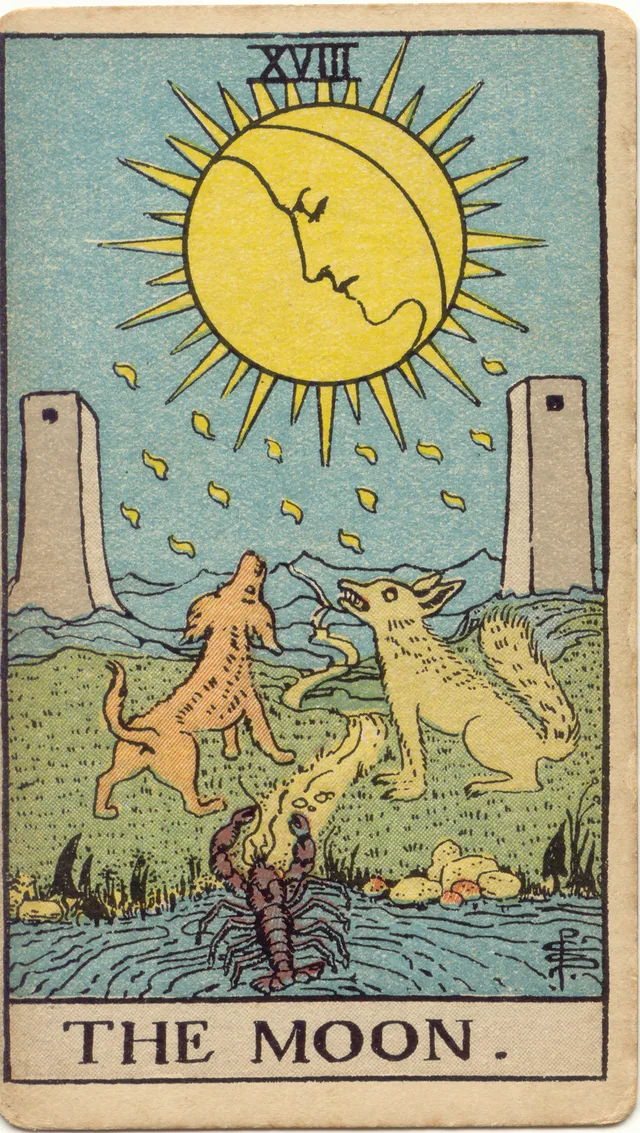
The Moon
The Moon explores uncertainty and incomplete information; beside the Six of Swords, it can prompt a review of what is known about a transition and what remains unclear.
Read this card's meaning →