Temperance Tarot Card Meaning
Temperance depicts two cups being blended and represents balance, patience, and adjustments between competing needs. In a reading it can prompt a review of all-or-nothing thinking at work, in relationships, or in daily routines. It does not prove that life is settling or identify the right compromise; compare the trade-offs, boundaries, and pace you can actually sustain.

What's pictured on the card
A winged angel stands with one foot on land and one in a pool of water, pouring liquid between two golden cups with steady, careful hands. A triangle within a square marks the robe, a solar symbol glows on the brow, and a path leads to distant mountains crowned with light. Irises bloom nearby. The blending of the cups and the balance of land and water point to moderation, patience, and the knack for mixing opposites into something steady and whole.
Temperance upright: the core meaning
Temperance pours water between two cups with a steady hand, blending them without spilling a single drop. Today favours the middle path, a steady, measured pace instead of all-or-nothing swings. Mix your ingredients patiently, whether that's work and rest or effort and ease. Small, steady adjustments will carry you further than any dramatic push.
There may be a quiet longing today for things to feel more even, less feast or famine, more steady middle ground. Perhaps you’ve been swinging between overdoing it and shutting down, and part of you craves a steadier rhythm. Underneath any restlessness is a wish to feel settled in yourself again. That pull towards balance isn't dull; it's wisdom, nudging you away from the extremes and back to a pace you can actually keep up with.
Aim for the middle path today and let patience set your pace. Small, measured steps carry you further than any all-or-nothing push. At work, blend effort with rest rather than sprinting until you crash; steady beats frantic. In love, seek compromise where you've been polarised, and meet each other halfway. With money, moderation now, neither reckless nor rigid, keeps things flowing. If family tensions run hot, be the steady one who cools the temperature. Mix your ingredients thoughtfully: work and play, giving and receiving, doing and being. You don't have to choose between extremes today. The graceful, sustainable option is nearly always in the balanced centre, and something in you already knows where that is.
Three simple ways to work with this card
- Pick one situation where you’ve been swinging to extremes, find the middle ground, and move towards it at a steady pace.
- Pair one hour of focused effort with real rest today, instead of pushing until you're completely depleted.
- Blend two things you keep treating as either-or, and notice how peacefully they can actually coexist.
Where could a little more balance and patience serve you better today?
Every symbol, explained
One foot on land, one in the water. Her right foot is submerged in the pool and her left rests on the bank. The posture can represent attention to feeling and practical circumstances at the same time. It does not prove that someone is steady or that a situation has a workable balance.
The water pouring sideways. Water appears to move between two cups at an unusual angle. The impossible stream is a symbolic device, not a practical instruction. It can prompt questions about combining different needs, while real compromises still involve limits, losses, costs and decisions about what cannot be combined.
The triangle inside a square. A triangle sits inside a square on her chest. Some readers connect this with spirit held within form and with alchemical or metallurgical tempering. These references can prompt discussion of structure and flexibility; they do not prove that a plan is usable or that a compromise will hold.
The irises and the winding path. Yellow irises grow at the water's edge. Their name connects them in mythology with Iris, a messenger between gods and people, which can support the theme of mediation. Behind the angel, a path curves toward distant mountains beneath a bright crown. The winding route can prompt patience, but it does not predict a destination.
Fourteen, and Sagittarius. Temperance is numbered XIV, and some traditions connect it with Sagittarius. Fourteen can be reduced to five in numerology, while Sagittarius brings themes of direction and adaptation. These are interpretive frameworks, not timing or outcome evidence. A direction still needs a real goal and practical measures.
The upright meaning in detail
A central theme is that some changes require combination, repetition and time rather than intensity. In practical terms, name the ingredients, define the goal, set a sustainable pace and review the result. The image cannot establish that patience will produce what someone wants or that faster action is always harmful.
Readers sometimes find Temperance less dramatic than cards associated with sudden change. That does not diagnose the situation or mean that consistency is all it needs. Use the card to compare gradual adjustment with other options, while checking evidence, urgency, safety and the cost of delay.
The image can frame competing needs: practical and creative work, caregiving and personal time, staying and leaving. Combining them is not automatically possible or desirable. Identify the resources, boundaries and trade-offs, then decide whether an arrangement can be adjusted without erasing an essential need.
Temperance is not an instruction to split every difference or remain half-committed. A compromise can be unsafe or unfair when it removes a necessary boundary. Define the target, what must be protected and what can change; without those details, moderation can become dilution or avoidance.
The reversed meaning
A common reversal theme is an all-or-nothing pattern: an ambitious routine followed by stopping, strict saving followed by a large spend, or silence followed by an overwhelming conversation. The cause may be stress, capacity, unclear goals or many other factors. Track the pattern before choosing a response.
The second is impatience with a process that may be producing mixed or slow results. People can abandon a diet, business, treatment or relationship because progress is hard to see, but the card cannot show that a process is working or that continuing is safe. Use measurable milestones and qualified advice.
The third is an imbalance that has become routine: most time and resources go to work, one child or one relationship while other needs receive little attention. Name the actual commitments, capacity and impact before deciding what to redistribute.
A subtler version is over-moderation: trying to remain reasonable by avoiding every commitment, risk or strong feeling. That may be caution, burnout, fear or a lack of information. Ask what decision is being deferred and what evidence or support would make it possible to choose.
Read the reversal in context rather than as a fixed instruction. For someone near burnout, review workload and recovery rather than adding effort. For someone stuck, define a specific goal and next step. In an outcome position, assess the plan and pace with real milestones; the card cannot say either is sound.
In love & relationships
If you are single, Temperance can prompt attention to pacing and consistency in dating. Do not treat a slow connection as automatically suitable, or intensity as automatically unsuitable. Set boundaries, notice behaviour over time and avoid swinging between compulsive dating and complete withdrawal if either pattern is unhelpful.
In an established relationship, Temperance can frame small adjustments: household labour after a shift change, time apart, finances or care during a difficult period. Discuss the change explicitly and check whether both people can sustain it. Frequent adjustment is not proof that a relationship is healthy or that compromise is mutual.
It can also frame repair after an affair, illness, difficult year or damaging argument. Repair is not guaranteed by one conversation or by time alone. Look for specific changed behaviour, accountability, consent and professional support where appropriate; do not use patience to bypass safety or responsibility.
A hard conversation may concern different timelines: moving in, having children, changing work or managing care. Do not split a major life decision into an unhappy middle simply to avoid conflict. Name each person's needs, limits and deadlines, then assess compatibility through direct discussion rather than the card.
Patience can support repair when it is paired with observable change; without a goal, it can become delay.
- Small, frequent adjustments rather than one big showdown a year
- Allowing a workable arrangement to develop gradually while checking its effects
- Rebuilding trust with steady evidence, not a single grand apology
- Saying two different speeds out loud and then talking them through with clear, straight answers
- Splitting every difference until neither of you has what you needed
- Calling avoidance patience, being reasonable as a way of never asking
- Swinging between smothering and going cold for a fortnight
- Waiting for a slow build without milestones, changed behaviour or a review date
Career
On a job hunt, Temperance can prompt a sustainable search rhythm rather than alternating between frantic applications and stopping. Set a manageable schedule, tailor applications and review response data. A role that blends familiar and new skills may be worth exploring, but the card cannot assess fit or availability.
In a workplace, the card can frame mediation and translation between teams. This labour should be named, scoped and recognised rather than added without discussion to one person's workload. Clarify authority, time and credit; the card cannot establish that a mediator is valued or that the conflict can be resolved.
For promotion or resignation, a phased transition may be one option: a clear handover, training or a trial of new responsibilities. It is not automatically cheaper or safer than a direct change. Consider rights, finances, health, workplace conduct and the cost of delay.
The mediator role also needs an explicit limit. Translating between teams can build useful knowledge, but it can become invisible emotional labour or a substitute for management. Record the requests, time and results, then ask for authority, credit or workload changes instead of absorbing every conflict.
Money
Temperance can frame regular saving and long-term financial routines. Small contributions may matter, but the card cannot calculate returns or show that a product suits you. Review fees, risk, inflation, tax, time horizon and qualified financial advice rather than relying on a metaphor of compounding.
On spending, it can prompt a review of deprivation-and-splurge cycles. Compare a realistic budget with actual transactions, essential costs and accessible support. A sustainable plan may be more workable than an extreme one, but affordability depends on the person's figures, not the card.
For debt, Temperance can prompt regular payments and a review of interest, fees, priorities and advice. On windfalls, compare debt, tax, savings and spending needs rather than assuming one allocation fits. A qualified adviser can help with complex circumstances.
A budget review can use three separate numbers: what is legally or practically committed, what supports a chosen priority and what can be paused. That separation makes a compromise more specific than simply spending less. Revisit the figures after a change in income, rent, family responsibility or interest rate.
Health & wellbeing
For wellbeing, Temperance can prompt routines that remain possible during an ordinary difficult week: a short walk, a consistent bedtime or a review of alcohol and other substances. It cannot assess health or burnout. Track effects and seek qualified care for persistent symptoms, risky use or exhaustion.
For mental wellbeing, the card can prompt observation of changes in energy, sleep and mood without labelling them as improvement. Follow a treatment or rehabilitation plan from a qualified practitioner, report concerns and seek urgent help when safety is at risk. A symbol cannot set the pace of healing.
A sustainable routine should include recovery as well as effort. Note what happens after work, exercise, social contact or treatment, and share concerning changes with the appropriate professional. Temperance is a useful prompt for pacing; it is not permission to reduce prescribed care or keep going through serious symptoms.
Life events & big decisions
On a move, Temperance can prompt staged testing where practical: renting before buying or researching a place in more than one season. A staged move is not always affordable or safe, and a direct move may be necessary. Compare housing, legal, financial and support factors.
Around weddings and blended families, the card can frame different traditions, households, parents and children negotiating a workable arrangement. No one has to feel the same, and consent and safeguarding remain central. Agree practical roles, privacy and boundaries instead of expecting a symbolic blend to solve conflict.
After a loss, Temperance can frame the uneven process of adapting to absence. Grief has no fixed timetable, and a difficult day does not prove that someone is going backward. Accept support, protect basic routines and seek professional help when grief is unsafe or disabling.
Contracts, deals & signatures
Temperance beside a contract can prompt another review of drafting, terms and trade-offs. It does not show that a further conversation will improve the deal or that both sides can live with it. Clarify scope, payment, timelines, liability, termination and professional advice before signing.
In negotiation, consider variables beyond headline price: timeline, scope, payment schedule, credit, data, support and exit terms. More variables may create options, but they do not make a deal fair or suitable. Record concessions and the reason for each one.
Some traditions associate Temperance with a slower timeframe, but it cannot set a dependable window. An ultimatum may affect negotiation, yet a deadline does not prove motive or outcome. Check the actual timeline, dependencies and written commitments.
Entrepreneurship & business
For starting something, Temperance can prompt a staged plan: test demand while income continues, allocate defined hours and review evidence before changing employment. A staged approach is not always possible, and no card can establish business survival. Check runway, demand, obligations and capacity.
For growth, compare sustainable capacity with promised delivery. Diversifying customers may reduce concentration risk, but it also adds sales and service work. Review revenue, margins, payment timing, customer concentration and workload instead of treating a particular mix as automatically safer.
For hiring, a freelance or part-time trial may be one option where lawful and suitable, but it needs clear pay, rights, scope and review points. For risk, test a manageable assumption, record the result and adjust; small exposure is not automatically safe.
For an existing business, balance can mean matching sales promises to delivery capacity. Set a maximum active workload, leave room for illness or late payment and make escalation routes clear. A slower schedule may protect quality, but the right capacity depends on the figures, contracts and people involved.
How it shows up in real readings
Her neighbours can change the questions. Following Death, discuss adjustment after an ending without assuming the ending or the new arrangement is complete. Next to Strength, compare emotional regulation with practical balance. Ahead of The Star, compare hope with the support and evidence needed to sustain it.
A useful reflection exercise is to choose one work or wellbeing routine, reduce its size, and set a review date. For example, shorten one working day, schedule a manageable walk or decline one evening commitment. Record effects and adjust with appropriate professional support; a symbolic card cannot establish that a small change will transform health or work.
What does Temperance mean in tarot?
What does Temperance reversed mean?
Is Temperance a yes or no card for love?
How soon do things happen with Temperance?
Does Temperance mean a soulmate or a soul connection?
If Temperance has appeared, choose one small, testable adjustment: fifteen minutes, one evening a week, one plain sentence or one budget review. Record its effect and set a review date. Do not assume that a dramatic move is wrong or that a small move is sufficient.
Give a trial only the time that evidence, safety and professional guidance support; patience is not an obligation to wait indefinitely. If a small daily prompt helps you review a routine, the free daily draw is there each morning. Keep its symbolism separate from claims about results.
Temperance can represent moderation, adjustment, and steady steps rather than a guarantee that a situation will resolve. Compare small changes, limits, and feedback before deciding what balance means here.
Related cards and themes
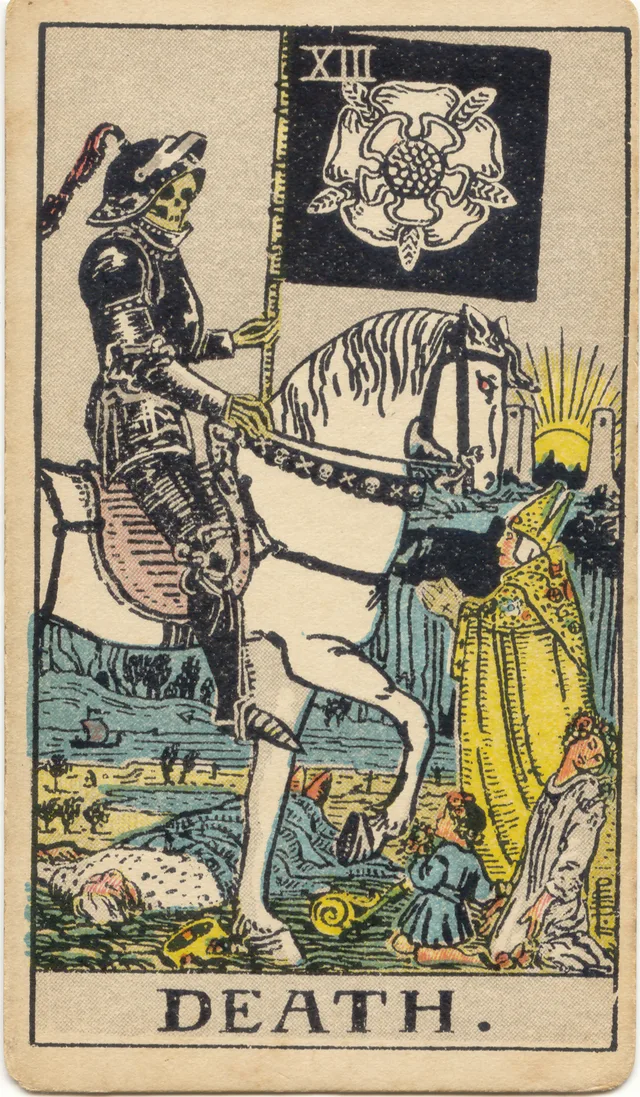
Death
Death examines an ending and change; Temperance examines the gradual adjustment that may follow, without assuming what the new arrangement will be.
Read this card's meaning →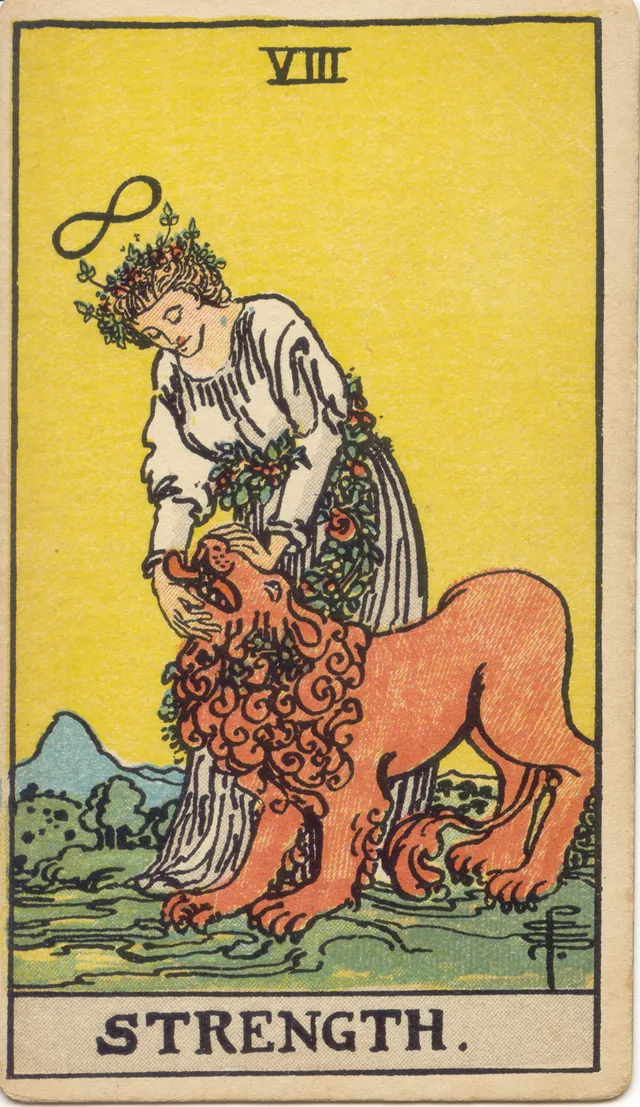
Strength
Strength explores self-regulation in an intense moment; Temperance explores sustainable pace and the adjustment of competing needs.
Read this card's meaning →
The Star
The Star explores hope and renewal; beside Temperance, it can prompt questions about support and balance rather than proving that either has been achieved.
Read this card's meaning →