Eight of Swords Tarot Card Meaning
The Eight of Swords depicts a person blindfolded and loosely bound among swords, an image of restriction, fear, and perceived lack of choice. It can prompt you to separate verified constraints from assumptions, but it cannot prove that a problem is imaginary or that one route out is safe. Identify the support, information, and practical options available to you.

What's pictured on the card
A woman stands bound and blindfolded, wrapped loosely in cloth, with eight swords stuck upright in the ground around her like the bars of a cage. She's on marshy, waterlogged ground before a distant grey castle on a hill. Yet look closely: the swords leave a clear gap, her feet are free, and the bindings are loose. Smith drew a trap that's mostly imagined, real-feeling fear around a way out that was open all along.
Eight of Swords upright: the core meaning
In the Eight of Swords, a blindfolded figure stands loosely bound by swords, feeling trapped though the way out is wide open. Today something might seem far more stuck than it actually is. The cage is mostly in the mind. Loosen the blindfold, question the fearful story, and you'll find you can move more than you thought.
A feeling of being boxed in may hum under today, as though your options have narrowed and every direction is blocked. That sense is real, even if the walls aren't as solid as they seem. Often this comes from a story that's been repeating so long it feels like plain fact. Underneath the stuckness, though, is a restlessness that's actually hopeful: some part of you is testing the ropes, suspecting there's more room to move than you've let yourself believe.
Start by questioning one thought that feels like a wall. Write down what you believe is impossible, then separate constraints you can verify from fears you are inferring. At work, name one next step if you feel cornered. In relationships, ask for help rather than assuming you must solve everything on your own. With money, gather the actual figures instead of relying on a catastrophic guess. A small action can provide information, but it cannot prove that every barrier is imagined.
Three simple ways to work with this card
- Write the thought that feels like a locked door, then list two small things you could still do anyway.
- Ask one trusted person for help with something you've been struggling to solve alone.
- Take one real step today on a stuck situation, even a tiny one, so you can start to feel things loosen up.
What feels trapping today that you actually have room to move through?
What the image actually shows
The bound figure. A person stands wrapped in cloth with their arms pinned, although the binding appears loose. The illustration can represent a felt restriction and the possibility that some options are not visible. It does not prove that a reader could walk away, that the constraint is self-created, or that leaving is safe.
The eight swords. The swords are stuck point-first into the ground around the figure, not against the body. They form an enclosure with a gap, while the blindfold prevents the figure from seeing the whole arrangement. The scene can distinguish a felt barrier from an observable one, but it cannot assess a real reader's options.
The blindfold. The figure cannot see the gap because her eyes are covered. Readers often use this detail to discuss missing information, fear, or a narrowed view of choices. It does not establish that an actual problem is imaginary or that the person has options they can safely use.
The waterlogged ground. The figure stands in shallow marsh before a grey castle on a distant hill. The wet ground makes movement look difficult and uncertain. It can represent practical difficulty alongside fear, but the picture cannot measure the seriousness of a reader's circumstances or distinguish perceived from actual danger.
The number eight. Some readers use eights to discuss movement, skill, or tension between capability and limitation. Comparing the Eight of Pentacles, Eight of Wands, Eight of Cups, and Eight of Swords can be a symbolic exercise, not evidence that a person is imprisoning themselves. Look at the actual constraints and available support.
The upright meaning in detail
The Eight of Swords can be used to discuss a belief that limits perceived choices, while acknowledging that external barriers may also be present. Feeling trapped can be as immediate as a physical fact; the card cannot determine whether the barrier is internal, external, or both. Describe the evidence before interpreting the feeling.
A painful experience can lead someone to form a rule about what is possible: a rejection, failure, or relationship conflict may shape later decisions. The rule may have been useful in one context and less useful in another, but the card cannot identify its cause or current accuracy. Compare the old conclusion with present evidence.
The swords, wet ground, and distant castle make difficulty part of the illustration. The gap is also part of the illustration, but it is not a promise that a real reader has a safe route out. Separate verified constraints from assumptions, identify support, and seek specialist help where the stakes are high.
The Eight is not saying that someone is foolish, that a solution is obvious, or that positive thinking is enough. It can invite a specific review of what has narrowed the available choices, while respecting real barriers, safety concerns, disability, money, and other circumstances.
The reversed meaning
One reversal theme is a restriction becoming easier to examine. A circumstance, conversation, or new piece of information may change how a person understands the situation, but the card cannot show that movement is beginning. Check what has actually changed and what support remains necessary.
A second reading is noticing that some conclusions about the situation may have been reinforced by the person themselves. That possibility should not become blame: external constraints, trauma, discrimination, and safety concerns can be substantial. Compare the conclusion with evidence and ask what support would make review possible.
Sometimes the reversal can frame external pressure being minimised or a restriction being underestimated. In another position it may support reflection on the effects of a past restriction. Neither reading establishes that a constraint is gone; current safety, resources, symptoms, and practical facts matter.
In love & relationships
For someone single, the Eight can frame a protective story built from a painful relationship: expecting unavailable people, poor treatment, or the same ending. The card cannot establish that the story is inaccurate or obsolete. Compare it with present behaviour, boundaries, support, and the actual interactions in front of you.
In an established relationship, it can frame a person who has stopped voicing needs because they expect rejection. The card cannot show what a partner will do or that a conversation will help. If it is safe, state one specific need, ask for a response, and notice what is communicated rather than predicting the outcome.
It can also frame a relationship decision in which reasons to stay and leave are both compelling. Do not treat the card as proof that the relationship is failing or that a person should leave. List the specific concerns, possible changes, safety factors, and support before deciding.
A past protective belief may affect present choices, but the card cannot establish whether it is still useful or whether a new option is safe.
- Checking whether a 'this always happens' story fits current evidence
- Preparing a direct conversation without predicting the response
- Trying one safe, proportionate action and reviewing the result
- Distinguishing a verified barrier from an untested assumption
- Using past pain as certainty about present outcomes
- Deciding the answer before you've asked the question
- Remaining in a situation without checking the constraints or asking for support
- Confusing the end of one option with the end of all options
Career
At work, the Eight can frame questions about what someone believes they can or cannot do: request a promotion, change industries, apply, or take a measured risk. The card cannot establish whether a barrier is accurate. Check policy, qualifications, finances, power dynamics, and advice from people with relevant experience.
It can also frame limited career visibility: a teacher seeing only teaching roles or a lawyer considering only another firm. Specialisation may narrow the search, but the card cannot tell you which alternatives exist. Research transferable skills, speak with qualified career support, and check actual requirements.
Practically, write down the specific 'I can't' and test it: who says this, when did it become true, what evidence supports it, and who can explain a comparable route? The questions may clarify career paralysis, but they do not erase genuine barriers or replace professional advice.
Money
Financially, the Eight can frame a story that has been accepted before checking figures: assuming an expense is impossible, treating money difficulty as an identity, or assuming saving is pointless. The card cannot show that the situation is workable. Review statements, debts, income, benefits, and qualified financial advice.
The practical note is to review the actual account, budget, and obligations rather than relying on a story about them. The figures may be difficult or may reveal options; the card cannot predict which. Specific problems can then be matched with appropriate support and realistic actions.
Health & wellbeing
I never read tarot as diagnosis—the Eight is not a medical card. It can describe the experience of feeling that options have run out, such as thinking 'I've tried everything' or 'this is how it is now.' That experience deserves attention, but the card cannot establish the cause or accuracy of the conclusion. A qualified health professional can help with symptoms, options, and next steps.
For general wellbeing, the Eight can frame stress that feels permanent. The bound figure is an image, not evidence about the body. If appropriate, consider one specific, supportable change at a time, while using symptoms, function, and professional guidance to decide what is safe.
Life events & big decisions
Before a major decision, the Eight can frame a freeze caused by uncertainty or fear. Its comparison with the Two of Swords is symbolic, not a diagnosis of how rational someone is. Separate what you know, what you assume, what you fear, and what information or support would make the options clearer.
It can also frame advice that has been treated as a fixed rule, such as one person's old opinion about suitability for work. The card cannot show whether the advice was wrong or harmful. Check the source, date, evidence, and current requirements before giving that opinion more authority.
On timing, some readers associate the Eight with gradual review rather than a sudden answer. The card cannot set the pace. Use actual deadlines, available support, and the reader's capacity to decide whether a small step or a larger decision is appropriate.
Contracts, deals & signatures
In contract situations, the Eight can frame a feeling of having no negotiating position. That may be accurate or may reflect a past negotiation; the card cannot decide which. Check authority, alternatives, deadlines, and professional advice before accepting terms.
It can also frame signing something without understanding it because the document felt too complex. In a live situation, ask specific questions such as 'what does clause X require?' Request plain-language explanations and independent review rather than treating the card as an interpretation.
Around partnerships, if terms feel restrictive, identify which clause, obligation, cost, or consequence causes concern. Unease may have several sources, so do not assume the card or feeling has identified one. Obtain qualified review where the stakes warrant it before signing.
Entrepreneurship & business
For entrepreneurs, the Eight can frame a fixed story about a market, timing, audience, or founder's ability. A coherent story may still be incomplete, but the card cannot establish that it is false or that growth is possible. Use customer research, financial modelling, and a proportionate test.
It can also frame pricing assumptions: expecting clients to refuse higher rates or relying on one old client's response. Test such assumptions with current market research, clear offers, costs, and a plan for what happens if demand changes; the card cannot assess price sensitivity.
In established businesses, the Eight can frame a team influenced by a past failed initiative. A rule such as 'we don't do that here' may be policy, evidence-based learning, or an unreviewed habit. Check records, current conditions, and the reasons for the rule before changing it.
How it tends to appear in practice
Beside The Devil, the pair can focus on habits, pressure, and perceived restriction without proving that a constraint is unnecessary. Beside The Star, hope and restriction can be discussed together without promising release. With Four of Swords, compare chosen rest with unwanted restriction; neither card diagnoses the cause.
I often use the Eight in a position about obstacles, where it can help separate a reader's story from the circumstances they can verify. That is not permission to assign blame: barriers may involve other people, institutions, money, health, or safety. Name both the actual restriction and the assumptions around it.
What does the Eight of Swords mean in tarot?
What does the Eight of Swords reversed mean?
Is the Eight of Swords a yes or no card?
What does the Eight of Swords mean for love?
Does the Eight of Swords mean mental health problems?
If the Eight of Swords has turned up, write down what you believe is stopping you and label each item as a fact, conclusion, or unknown. The card cannot identify the constraint or prove it is self-created. Add the support, safety information, and practical options you would need to review the situation.
The person in the image stands within loose bindings; that is a visual symbol, not a diagnosis or description of the reader. If you'd like a daily reflective practice, the free daily draw is there each morning. It offers another prompt, not specific information about a constraint.
The Eight of Swords can help separate known, assumed, and changeable constraints. The image cannot identify who created them or which can be dismantled; check evidence.
Related cards and themes
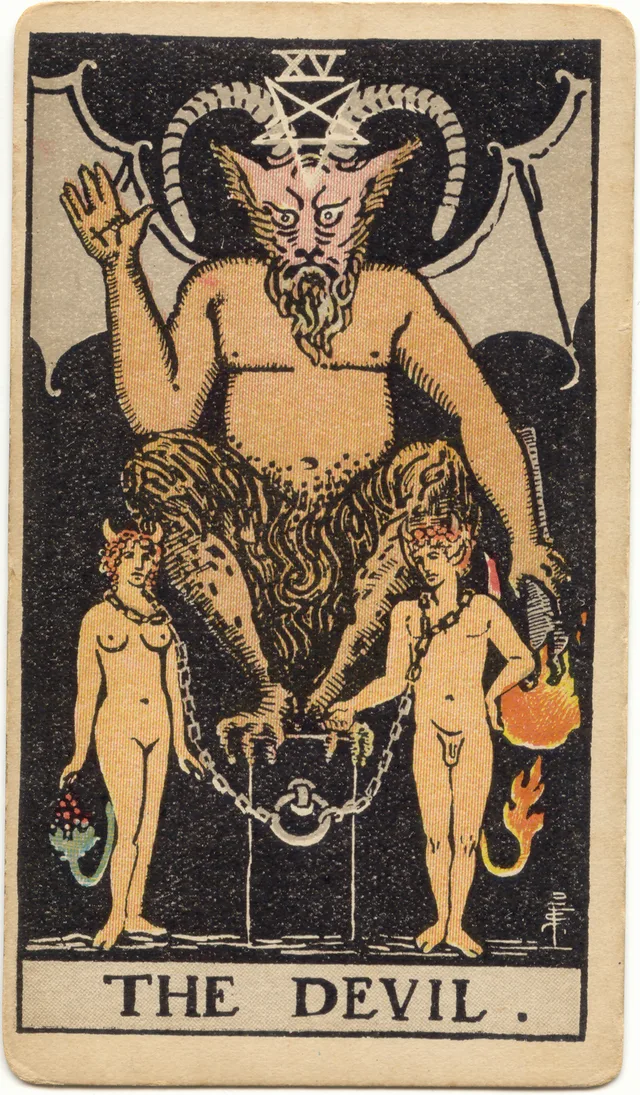
The Devil
The Devil and the Eight of Swords can both prompt questions about restriction, habit, and choice; neither card decides whether a constraint is internal or external.
Read this card's meaning →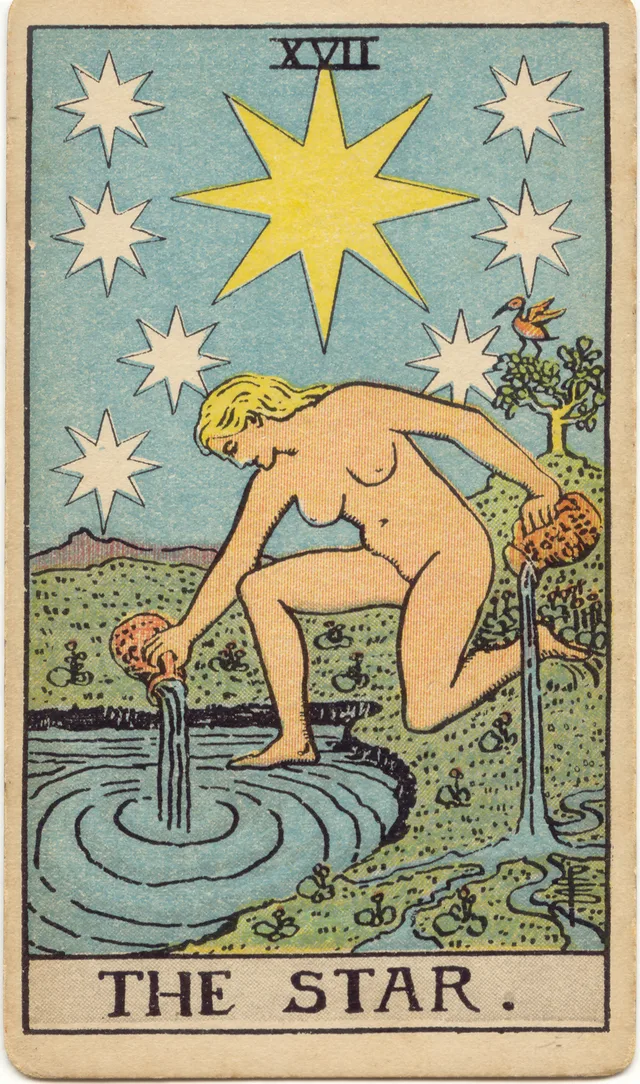
The Star
The Star and the Eight of Swords can contrast hope with perceived restriction; the pairing cannot promise release or show that a difficult situation is ending.
Read this card's meaning →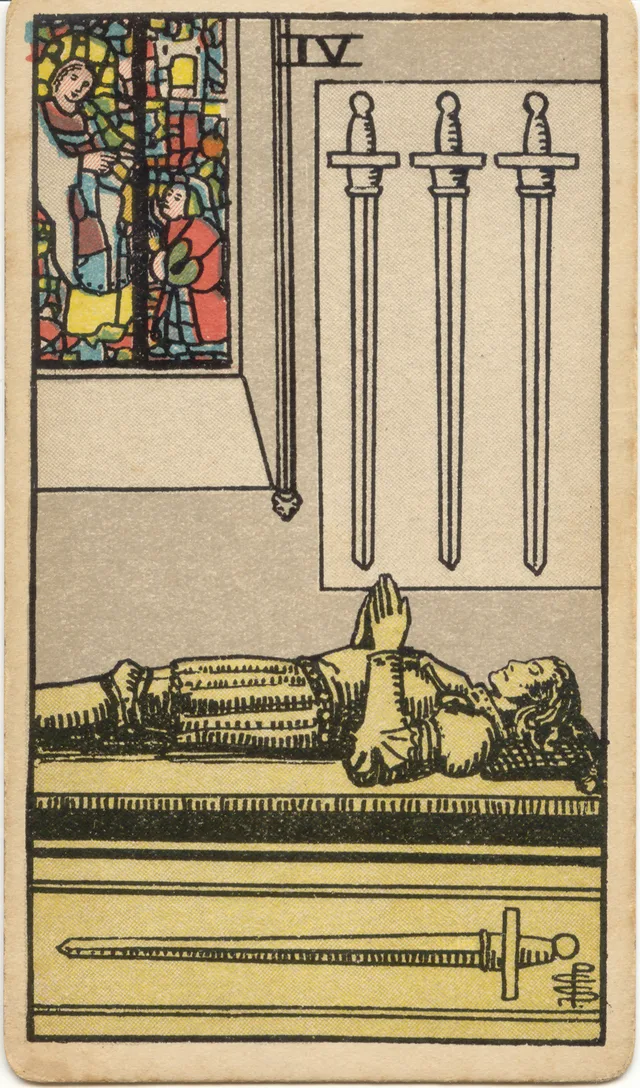
Four of Swords
The Four of Swords and the Eight of Swords both show stillness, so the pair can prompt a useful distinction between chosen rest and unwanted restriction without diagnosing either.
Read this card's meaning →