Nine of Wands Tarot Card Meaning
The Nine of Wands depicts a tired, watchful figure protecting a boundary, representing resilience, caution, and limited capacity. It cannot show that you are near a finish or tell you to continue. Review visible progress, safety, cost, alternatives, and the support available before deciding whether to persist or release.

What's pictured on the card
A figure leans on a single wand, head bandaged, looking wary and worn. Behind them stand eight more wands like a fence they've been guarding. Their posture is tense, glancing sideways as if expecting one more challenge. They're clearly tired, yet still upright, still holding the line. The card doesn't hide the fatigue, it honours it, showing someone who has been through a great deal and is somehow still standing, closer to the end than they realise.
Nine of Wands upright: the core meaning
The Nine of Wands shows a weary but upright figure, bandaged yet still guarding their line of staves. Today you may feel tired or tested, but you're far closer to the finish than you think. Don't give up on the last stretch. Draw on your resilience, protect your energy, and take one more steady step.
There may be a bone-deep tiredness today that you've been pushing through without much acknowledgement. Part of you might feel braced for the next blow, reluctant to hope in case you're let down again. That guardedness is understandable, you've earned it. But underneath the wariness is real strength, the kind you only build by having kept going before. You're not as depleted as the tired voice claims; you're seasoned, and much nearer the finish than this heavy moment makes it feel.
Go easy on yourself today, and do not confuse being worn out with losing. Review visible progress and the cost of continuing rather than assuming you are nearly finished. At work, protect your energy and say no to what is not essential. In relationships, let someone help when that feels safe. If you are tempted to quit, compare one small next step with rest, release, or a different route. Rest is part of resilience.
Three simple ways to work with this card
- Say no to one non-essential demand today, and put that saved energy into what matters most to you.
- Let someone help with a load you've been guarding alone, leaning on people is strength, not weakness.
- Take the last stretch in one small step rather than one big leap, then rest without a shred of guilt.
Where could a little more resilience carry you across the finish today?
Reading every detail of the scene
The bandaged head. The figure's head is wrapped in white cloth, showing that the scene follows an earlier injury rather than depicting an untouched fighter. This detail supports a reading about continuing after a difficult experience, while the card cannot establish what happened to a real person or how much capacity they have now.
The single wand they're holding. The figure leans on one staff while eight more stand planted behind them in a row. The picture separates the object being held from the eight arranged behind the figure, which supports themes of limited effort and a protected boundary. It does not show that a reader must defend a particular position or keep carrying a task.
The backward glance. The figure looks over one shoulder instead of facing forward. That posture can prompt reflection on caution after a painful experience, including the difference between a current concern and a remembered one. It cannot diagnose hypervigilance or show that another problem is approaching.
The fence of wands behind. Eight staves stand in an evenly spaced line, forming a visible boundary. Readers may associate that arrangement with protection, previous effort, or distance already covered, but the image leaves the meaning open. Their number places the card near the Ten in the suit; it does not prove that a real-life task is nearly done.
Nine as a number. Nine comes directly before ten, so it can support a symbolic discussion of an advanced stage and the pressure of sustained effort. In the Wands suit, that association makes stamina a theme, not evidence that a reader's goal is close or that one more effort is required.
The upright Nine of Wands in full
The Nine of Wands can represent resilience after a demanding experience: continuing to make careful choices while tired, cautious, or aware of previous hurt. That is more specific than a general instruction to keep going. A reader can use the theme to examine remaining duties, available support, and the cost of further effort; the card does not decide whether continuation is wise.
A common reading question comes from someone who has worked hard for a sustained period and cannot tell how much remains. The Nine can reflect that uncertainty, but it cannot answer a timeline. Milestones, resources, unfinished tasks, and the actual state of the work provide better information.
The boundary dimension matters too. The image can prompt an assessment of where time and attention go, which requests are agreed to, and which limits can be maintained. It cannot determine who deserves access, infer another person's intentions, or establish whether guardedness fits the reader's situation.
What the Nine is not saying is that difficulty proves an option is wrong or that persistence is always the answer. It cannot identify a final stage or promise that something will end soon. Review visible progress, cost, safety, alternatives, and support before deciding whether to continue, pause, change course, or stop.
The reversed meaning
Reversed, the Nine of Wands can describe persistence that has become rigidity: holding a position because changing it feels costly, embarrassing, or difficult rather than because current evidence supports it. The useful question is whether the position still serves the stated goal and what changing it would require.
A second reversal theme is depletion: concern that another demand could exceed available capacity. Tarot cannot assess physical or mental reserves. Take persistent exhaustion seriously by reviewing workload, seeking practical support, resting where possible, and obtaining qualified health advice where appropriate.
There is also a pattern of interpreting neutral behaviour as threatening. The upright card's caution can become a habit of preparing for conflict before there is evidence of it. If you notice pre-emptive defensiveness, record the observable behaviour, ask a clear question when safe, and seek support rather than treating the card as proof of danger.
Another pattern is stopping abruptly because the remaining work feels too burdensome, even when some tasks may still be manageable. The card cannot show whether completion is near. List the unfinished work, likely benefits, cost, and alternatives before deciding whether any part is worth continuing.
In love & relationships
If you're single, the Nine of Wands can describe caution shaped by earlier hurt. Protective limits may have been useful, while some may now be preventing the kind of connection you would actually welcome. Review each boundary by asking what behaviour it addresses, whether it has been communicated, and whether current evidence supports keeping it.
In an established relationship, the Nine can draw attention to fatigue after a sustained difficult period, such as illness, financial pressure, or a family crisis. It cannot show whether the relationship is healthy, repaired, or nearing an end. Discuss the workload, support, consent, and changes each person needs, and use qualified help when appropriate.
The boundary dimension appears in love too. The Nine can prompt questions about over-giving, absorbing a partner's moods, or being treated as the reliable person by default. Name the specific behaviour, agree on responsibilities, and check whether both people respect the stated limits rather than assuming the card explains the dynamic.
Resilience can matter in a relationship, while the card cannot determine what will improve or how long a difficult period will last.
- Working through a defined difficulty with an agreed review point
- Setting a boundary to protect what you've built rather than yielding further
- Holding on while trust is slowly re-established after hurt
- Making a specific repair effort and checking whether it is mutual
- Mistaking stubbornness for loyalty in a situation that needs to change
- Keeping such careful guard that warmth can't get through either
- Depleting yourself in a relationship without checking reciprocity or change
- Defending against a partner who hasn't actually attacked
Career
At work, the Nine of Wands can reflect a project that has demanded sustained effort and still has unfinished tasks. It does not show that the project is nearly complete or that remaining team members will benefit. Compare the actual schedule, deliverables, staffing, budget, and quality risks before committing more effort.
It also appears for people managing multiple demands while short on capacity — doing two roles, absorbing a colleague's workload, carrying the team. Identify which demands are yours to meet and which have been taken on by default, and start honest conversations about load before the depletion becomes serious.
For career decisions, separate temporary tiredness from a sustained problem without assuming either one. A decision made while depleted may need a pause, but finishing the current task is not automatically best. Record the alternatives, deadlines, income effects, workload, and support before choosing.
Money
Financially, the Nine can symbolise sustained effort during or after a difficult period. It cannot show that a lean period is nearly over, that debt is almost clear, or that savings are sufficient, and it cannot tell someone to stay the course. Use account balances, obligations, cash-flow details, and qualified financial advice.
It can also raise questions about the strain of budgeting and financial vigilance. The card cannot judge whether caution is proportionate or prescribe a financial plan. Affordability, reserves, interest, deadlines, risk, and the reader's priorities provide the evidence.
Health & wellbeing
In a wellbeing reading, the Nine symbolises endurance and limited capacity. It cannot establish a health challenge, recovery stage, pain or mental-health state, nor prescribe how to use that capacity. Symptoms, capacity and qualified guidance matter.
Vigilance and weariness are possible themes, not diagnoses. The card cannot determine that rest is what someone needs. Reported symptoms, function and appropriate professional support should guide the response.
Life events & big decisions
Around a major decision, the Nine raises fatigue and capacity as questions. It cannot diagnose exhaustion, predict what rest will change, or judge the motive behind a choice. Use facts, deadlines, consequences, consent, safety, and support.
The Nine cannot certify that leaving, setting a boundary or making a change is right. Assess the actual situation, consent, safety, alternatives and professional advice where appropriate.
Around long projects, study, or negotiation, the Nine symbolises sustained effort and caution. It cannot show that completion is near or tell someone to push through. Milestones, quality, cost, alternatives, and wellbeing inform the next step.
Contracts, deals & signatures
Beside a contract, the Nine can frame fatigue and persistence. It cannot show that a deal is in its final stretch or explain a party's negotiating position. Review the terms, timetable, alternatives and decision capacity independently.
At signing, define priorities through the agreement's actual risks and qualified review. The card cannot set non-negotiables, direct concessions or predict what will close the deal.
On timing, the Nine cannot show that an agreement is coming or that a delay is nearly over. Ask for an actual timetable, outstanding conditions, and a clear next review point. Whether to continue or stop depends on those facts, the cost of waiting, consent, and qualified advice.
Entrepreneurship & business
For founders and business owners, the Nine can symbolise a sustained period of difficulty. It cannot establish the business stage, promise that it will end or prescribe persistence. Performance, cash reserves, workload and market evidence matter.
The boundary theme can prompt a review of scope, terms and capacity. The card cannot show that a founder struggles to say no or guarantee that boundaries produce growth.
For strategic decisions, the Nine places finishing and expanding side by side. It cannot identify the correct move or tell a business to delay expansion. Compare demand, capacity, cost and alternatives.
How it shows up in real readings
The Nine can support reflection on strain without proving that anyone is struggling. Beside Strength, readers might compare patient self-control with guarded persistence; beside The Hermit, they might examine solitude and support; near The Star, they might consider renewal. These pairings cannot assess reserves, prescribe solitude, or predict recovery.
The Nine may resonate with people in caring professions reviewing workload and reserves. It cannot diagnose exhaustion or tell someone to delegate. Actual capacity, duties, workplace expectations, and available support determine the response.
What does the Nine of Wands mean in tarot?
What does the Nine of Wands reversed mean?
Is the Nine of Wands a yes or no card?
What does the Nine of Wands mean for love?
How is the Nine of Wands different from the Ten of Wands?
If the Nine of Wands has come up for you today, you might name your current level of tiredness without turning it into a verdict about your ability or character. List what remains, what support is available, and what would make the next step safer or more manageable. The image can honour effort without requiring more of it.
A daily draw can provide a brief reflective check-in during a demanding period. The free daily draw takes two minutes each morning; use it to name your current capacity and questions, then compare that reflection with practical information rather than treating the card as an assessment.
The Nine of Wands can reflect fatigue alongside persistence, not proof that one final effort will finish the work. Protect your energy, assess the remaining task, and decide whether rest, support, or a smaller step is wiser.
Related cards and themes
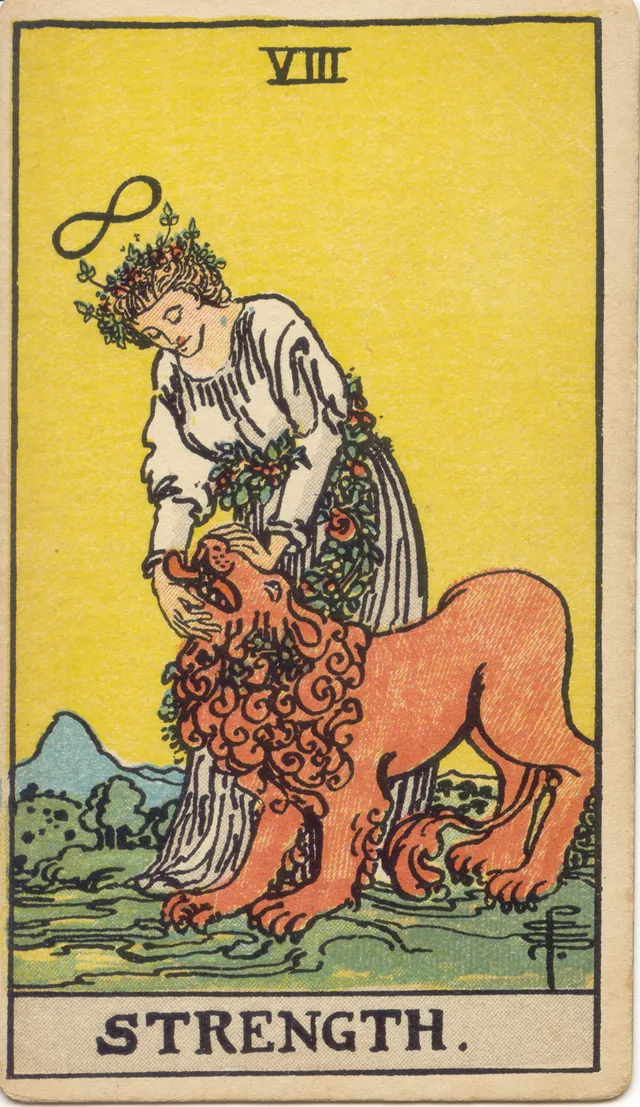
Strength
Strength and the Nine of Wands both examine how someone responds to difficulty. Strength emphasises patient self-control; the Nine focuses on protecting capacity after a demanding experience.
Read this card's meaning →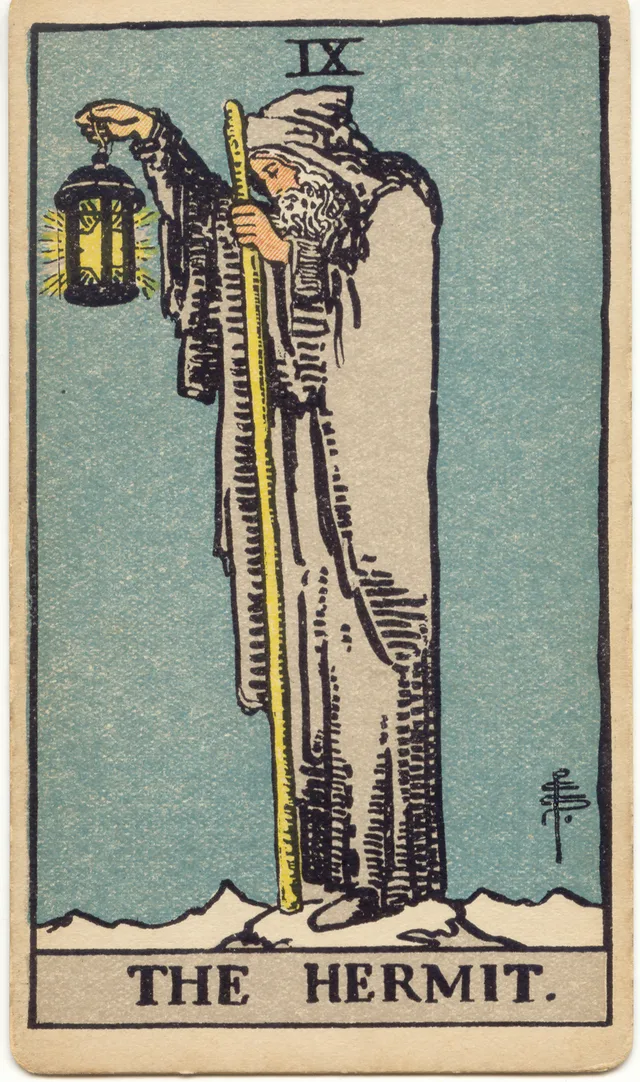
The Hermit
The Hermit considers solitude and careful reflection, while the Nine of Wands considers caution after strain. Together they invite a practical review of support, privacy, and available capacity.
Read this card's meaning →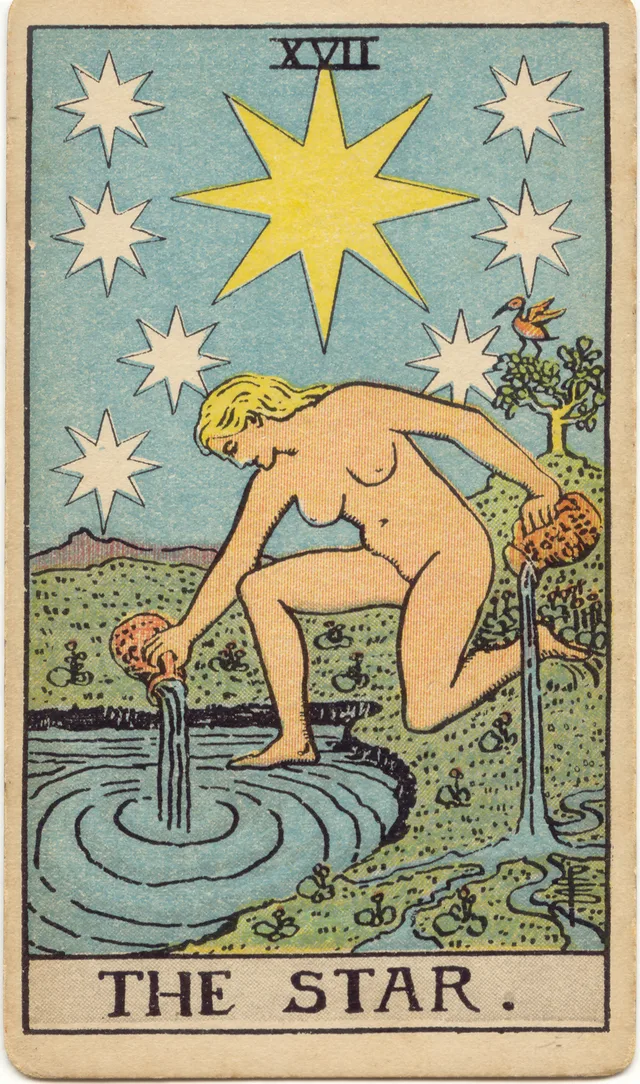
The Star
The Star brings renewal and perspective to the Nine of Wands' guarded response. Read together, they can support questions about what would restore confidence without assuming recovery or a particular outcome.
Read this card's meaning →