Six of Pentacles Tarot Card Meaning
The Six of Pentacles shows resources being exchanged while a merchant holds the scales, bringing generosity, receiving, fairness, and power into view. It can prompt questions about whether support is mutual and whether terms are equitable, but it cannot establish a person's motives or the true balance from appearances alone. Check the agreement, dependence, and freedom to say no.

What's pictured on the card
A merchant in a rich red robe stands between two kneeling figures in need, dropping coins into the hand of one. In his other hand he holds a merchant's balance scale, level and even. The gesture is generous, yet the scales ask a deeper question about who gives and who receives. The image is about the flow of help moving between people, and the fairness that keeps that flow healthy for everyone.
Six of Pentacles upright: the core meaning
The Six of Pentacles shows a figure sharing coins with those in need while holding a balanced set of scales. Today is about the flow of giving and receiving, offering help where you can, and graciously accepting it where you can't do it all alone. Keep the exchange fair and open-handed. Generosity, both ways, keeps everyone steadier.
You may notice a subtle imbalance in your giving today, perhaps you're the one who always helps, hoping someone might tend to you for once. Or maybe you find it far easier to give than to receive, brushing off kindness because accepting it feels vulnerable. Both are small habits worth easing up on. Beneath them sits a wish for exchanges that feel mutual rather than one-sided, relationships where care flows in both directions and you're allowed to be held too.
Let today be about keeping your scales true. If you have a little extra, time, money, attention, encouragement, offer it freely where it's needed, and enjoy how good it feels to be of use. But watch that generosity doesn't tip into over-giving until you're depleted; a gift made from an empty cup helps no one. If you're the one in need right now, practise receiving with grace instead of guilt, letting someone help you is its own kind of generosity. At work, share credit and resources fairly. In relationships, take a moment to check the balance: are you both giving and both being given to? Aim for exchanges that leave everyone a little steadier. True generosity flows in a circle, and today you're allowed to stand anywhere on it.
Three simple ways to work with this card
- Offer one act of help today freely, then let yourself accept one kindness in return without any apology.
- Notice a relationship that feels lopsided, and have a kind conversation about sharing the load more evenly.
- If someone offers you help today, resist saying 'I'm fine' and simply reply with a kind 'thank you.'
Where could you give or receive help more openly today?
What Waite-Smith painted and why it matters
The merchant in scarlet. A figure in a full red robe stands upright between two kneeling figures. The posture gives the merchant more visible power in the scene, while the recipients are shown asking for help. The expression looks measured, but an illustration cannot establish benevolence, motive or the real needs of anyone represented.
The coins being dispensed. Coins drop from the merchant's hand into one outstretched palm while the other figure waits. The image shows a limited distribution decided by one person. It can prompt questions about access, amount and conditions, but it cannot tell us whether the distribution is sufficient, fair or sustainable.
The scales held in the other hand. The balance scales in the merchant's free hand introduce measurement into the scene. The image does not tell us what is being weighed or whether the scales are level. Use them to ask whose standard is being applied, what criteria are written down and who can challenge the decision.
Two recipients, one served at a time. Only one figure's palm receives coins while the other waits. This depicts limited resources and unequal access in a single moment. Whether the delay is reasonable or harmful cannot be decided from the picture; examine criteria, communication and the recipient's ability to decline or seek alternatives.
The number six. In tarot traditions, sixes can suggest attempts to restore balance after the disruption of fives. In the Pentacles suit, that can frame resources moving after hardship. This image remains complex because giving and receiving may involve unequal power, conditions and different ideas of fairness.
The upright Six of Pentacles in full
The Six of Pentacles explores generosity, charity, patronage and resources moving between people with different levels of access. It can frame financial support, mentorship, practical assistance or emotional provision. The image invites examination of that exchange; it cannot affirm that a particular offer merits acceptance or fits the person's circumstances.
Where it becomes important is reciprocity. The scales introduce measurement, value exchanged in different forms and the question of whether a generous gesture is equitable in context. Gratitude, loyalty, labour, creative work and social connection may be treated as forms of return, but they should not be assumed or demanded without discussion. Ask what each party understands the exchange to require.
It can frame either side of an exchange. If you have resources to share, clarify whether the support is voluntary, what you can sustain and whether any conditions apply. If you are receiving, ask whether it is a gift, loan, service or investment, and put important conditions in writing. A gift that later becomes a demand, or help that restricts independence, deserves careful attention.
The reversed meaning
The Six of Pentacles reversed can frame an imbalance in giving and receiving: over-giving until the giver is depleted, support that becomes control or an exchange whose expectations are unclear. The image suggests a tilted measure, but people must identify the actual contribution, condition and impact.
A version is compulsive giving or difficulty receiving help without immediately matching it. The reversal can prompt a review of beliefs about worth, debt and independence. Exchanges do not need to be equal at every moment, but expectations should be named rather than kept to yourself.
There is also support with unspoken conditions: financial help bundled with control over an adult child's choices, or mentorship offered in exchange for ownership of the recipient's future work. Ask what conditions apply, whether they were stated before acceptance and whether the recipient can decline without retaliation.
Financially, the reversal can prompt review of loans that may not be repaid, gifts beyond a person's capacity or giving that creates hardship. Check affordability, written terms, risk and independent advice. Someone exhausted by giving needs a different practical conversation from someone disputing what they believe they are owed; the card cannot choose between them.
In love & relationships
In romantic relationships, the Six of Pentacles can frame practical care: doing, providing, fixing or supplying. Ask whether care is voluntary, how each person contributes and whether material support creates an unspoken debt or limits the other person's choices. The card cannot establish motive or relationship quality.
For someone single, the Six can frame financial or practical support in a potential connection. Discuss money, labour, privacy, repayment and boundaries before any pattern becomes structural. Do not treat a card as evidence that a connection is generous, dependent or safe.
It can also frame relationships where one person earns considerably more. Different incomes are not automatically a problem, but they make conversations about housing, spending, labour, debt and decision-making important. Name what each person contributes and receives rather than assuming the scales balance.
Generosity can express care, but the exchange also needs clear expectations, consent and room for each person to make choices.
- Partners who each give what they can and receive what they need, in a flow that balances over time
- Practical care given freely without the expectation of an identical return
- A couple who can talk openly about money, resources and who carries what
- The genuine pleasure of being able to support someone you love without keeping score
- Support offered in a way that leaves the recipient with little room to build independent resources
- Giving as a way of making yourself indispensable rather than as an expression of care
- The unspoken expectation of gratitude that comes with chronic one-sided provision
- The inability to accept support without immediately feeling obligated or diminished
Career
At work, the Six of Pentacles can frame mentorship between people with different experience or access. A mentor may offer knowledge, introductions and feedback; a mentee may offer effort, questions and fresh perspective. Clarify scope, credit, confidentiality and whether the relationship is paid or voluntary rather than assuming mutual benefit.
A risk is patronage that maintains dependency: a mentor who restricts independence, an employer whose pay is treated as a demand for loyalty beyond the contract or a senior colleague whose help creates an implied debt. Written terms, workplace policy and the ability to decline help clarify the power dynamic.
For job seekers and freelancers, the Six can prompt a review of professional networks, references and mutual support. It cannot show that work or a reference is available or tell someone whom to approach. Actual contacts, fit, boundaries and the risks of asking matter.
Before accepting informal help at work, clarify whether the exchange is mentoring, paid labour, a referral or a favour. Record who owns the work, how credit will be shared and whether the request creates a conflict of interest. A warm introduction can be useful without obliging someone to accept a role, disclose private information or provide unpaid work.
Money
The Six of Pentacles depicts money as a social exchange and can prompt reflection on family support, crowdfunding, grants or gifts. It cannot establish that a giver, grant, support or eligibility exists. Verify availability, criteria, timing and conditions with the relevant people or organisations, and seek qualified financial advice where appropriate.
It also raises questions about personal loans, favours and gifts with unclear conditions. The card cannot determine that a debt exists or that now is the time to discuss it. Written records, direct communication and appropriate advice provide the facts.
For personal budgeting, the Six can raise giving and reciprocity as themes. It cannot establish affordability, financial stability, guilt or motive. Review verified figures, obligations, risks, tax implications and appropriate advice before deciding.
When deciding whether to lend money, write down the amount, purpose, repayment dates, interest if any, and what happens if the borrower cannot pay. Discuss whether the relationship can withstand a refusal or a missed payment. If the amount is significant, independent legal or financial advice may be more useful than relying on goodwill.
Health & wellbeing
In health and wellbeing, the Six of Pentacles can frame the exchange in care relationships: patient and practitioner, person receiving help and person providing it. A useful consultation depends on clear information, informed consent, accessible options and professional standards. The card cannot assess the quality or safety of a particular service.
For carers, the reversed Six can prompt a practical review of workload, respite, money and support. Giving until there is no capacity left can affect both people. Ask who can share tasks, what formal resources exist and when qualified health or social-care advice is needed; the card cannot assess burnout.
In a care arrangement, receiving help may require specific instructions and a realistic rota rather than general offers of support. List medication, transport, appointments, rest and emergency contacts according to the relevant professional guidance. The image's exchange is symbolic; it cannot tell you what care a person needs or whether a provider is suitable.
Life events & big decisions
Around significant decisions, the Six brings financial support into the discussion: a family loan, investor, grant or partner's income. It cannot establish that support is available, affordable or appropriate. Put terms in writing and assess dependency, risk, contingencies and independent advice.
It also brings giving decisions into view: charity, gifts or investment in someone else's project. The card cannot label these good decisions. Check affordability, pressure, risk, tax or legal implications and whether the choice is informed and voluntary.
Contracts, deals & signatures
The Six of Pentacles beside a contract can prompt review of the power difference between the parties. Charity agreements, grant conditions and investment terms may give the better-resourced party more influence over conditions. Compare control, reporting, repayment, termination and dispute terms, and obtain independent advice before relying on an appearance of benevolence.
For personal loans between friends or family, consider written terms and independent advice even when the relationship is close. The card cannot predict whether a friendship or transaction will survive. Clarify amount, repayment, security, boundaries and what happens if circumstances change.
Entrepreneurship & business
For a new or small business, the Six of Pentacles can frame a possible investor, mentor or institutional supporter. It cannot establish that support is available or worthwhile. Clarify what is being offered, what is required in return, who controls decisions and whether the conditions are proportionate.
For an established business, the Six can describe a client relationship as an exchange: expertise, quality and reliability for income, repeat work or referrals. Examine value, price, scope and delivery costs explicitly; neither loyalty nor warmth proves that the arrangement is sustainable.
A business can also receive support through a grant, incubator or community programme. Read eligibility, reporting, intellectual-property and repayment clauses carefully, and calculate the staff time required to comply. Support is not free simply because money does not change hands; the real exchange includes attention, data and control.
When support comes with publicity, ask whether names, images, data or outcomes may be used and for how long. Recognition may be welcome, but consent and ownership still matter. Write down what is being provided, what is expected in return and who can change the arrangement.
It can also frame business philanthropy and community support. Set a budget, disclose conditions and track impact rather than using a generous image as evidence of good motives. A business can give responsibly while recognising its own capacity and obligations.
Pairings and real reading patterns
The Six of Pentacles reads differently beside its neighbours. Next to Justice, standards and accountability become themes to examine; the pairing does not prove an exchange is fair. Near The Devil, dependence, pressure or control may be useful questions, not a finding of entrapment. Alongside The Empress, discuss care, capacity and boundaries rather than assuming generosity has no conditions.
This card can resonate when someone feels constrained in a personal or professional relationship because of financial or practical dependency. A reading cannot verify that dependency or a person's motive. Useful questions include what would change if support ended, what alternatives exist, who can provide advice and whether speaking openly is safe.
What does the Six of Pentacles mean in tarot?
Is the Six of Pentacles a yes or no card?
What does the Six of Pentacles reversed mean?
What does the Six of Pentacles mean for love?
Does the Six of Pentacles mean money is coming to me?
If the Six of Pentacles has come up, look beyond 'Will I receive help?' or 'Should I give more?' Examine the actual exchange: what is moving, in which direction, under what conditions and with what freedom to decline? That review is more useful than treating the card as a yes or no.
Generosity and fairness require clear terms, consent and capacity. If you'd like a small daily prompt for noticing where resources move in your life, the free daily draw is there every morning. Keep the practical review grounded in records and direct conversation.
The Six of Pentacles pairs scales with coins, inviting reflection on fairness, dependence, and power in giving. Generosity is not automatically equitable; check consent, conditions, and whether both people can speak freely.
Related cards and themes
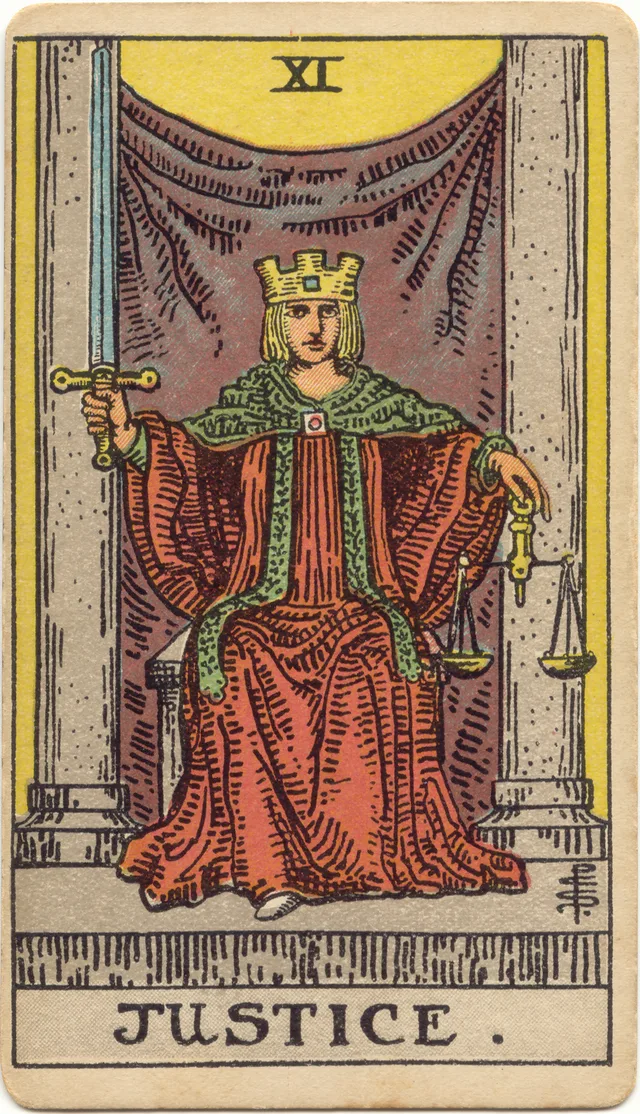
Justice
Justice examines standards and accountability; the Six of Pentacles examines how resources, care and power move between people.
Read this card's meaning →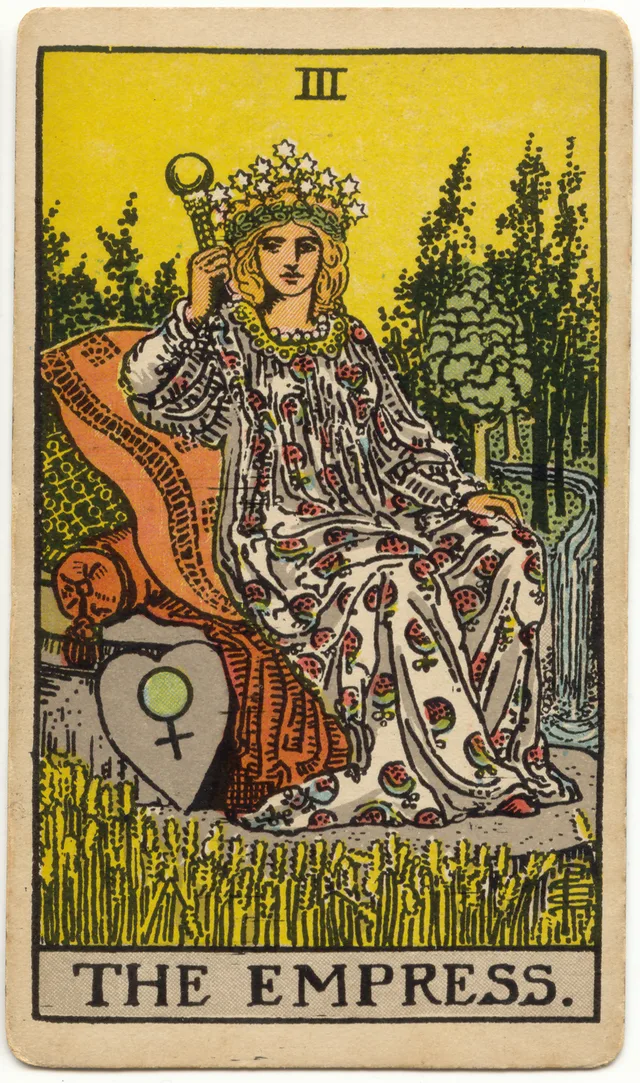
The Empress
The Empress explores nurture and abundance; beside the Six of Pentacles, it can prompt questions about care, capacity and whether giving is freely chosen.
Read this card's meaning →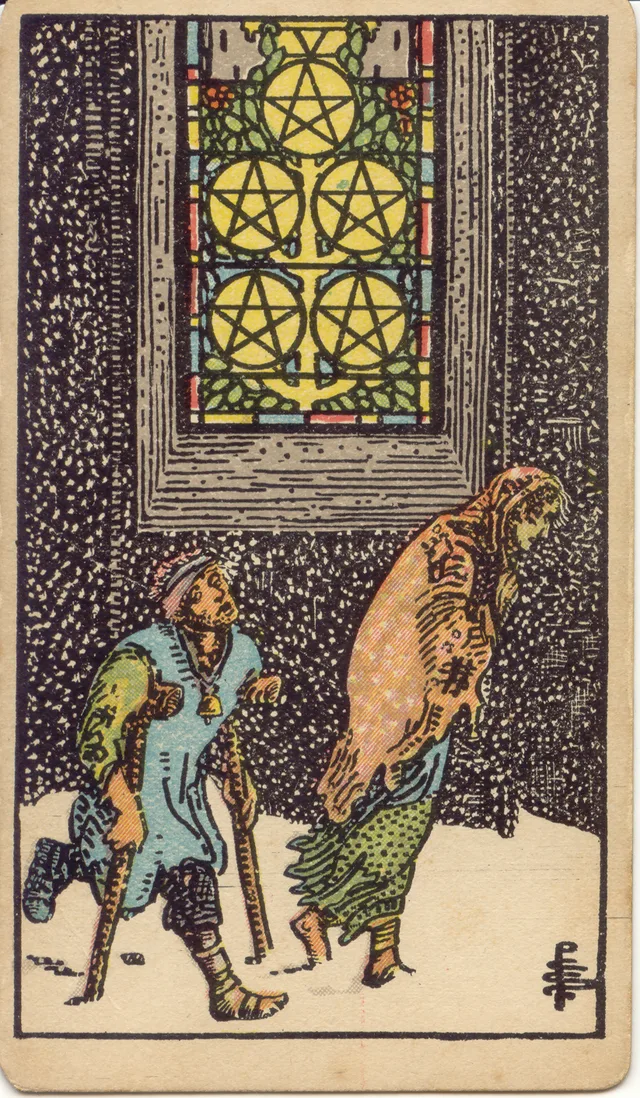
Five of Pentacles
The Five of Pentacles examines exclusion and material hardship; beside the Six, it brings support, access and the conditions of receiving into focus.
Read this card's meaning →