Two of Swords Tarot Card Meaning
The Two of Swords depicts a blindfolded person holding crossed blades, representing indecision, guardedness, and information that has not been faced. It can prompt you to list what you feel, know, and still need to learn, but it cannot identify the right choice or prove that neutrality is safe. Check the facts, consequences, and support before deciding.
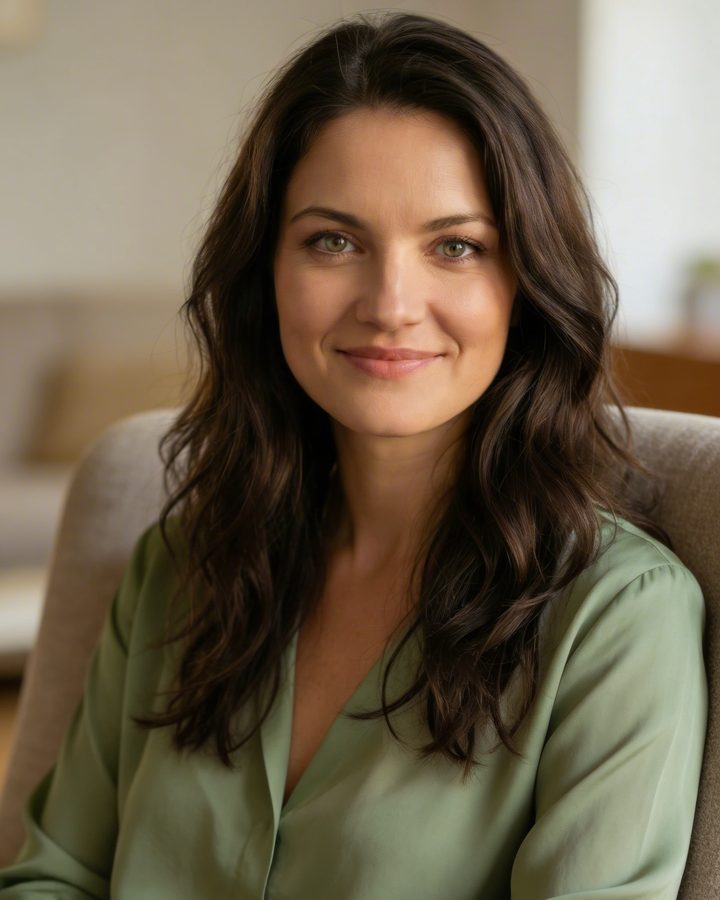
What's pictured on the card
A woman sits on a stone bench with her back to a rippling sea, blindfolded and dressed in grey. She holds two long swords crossed over her chest, arms folded tight. A slim crescent moon hangs in the sky, and rocks break the water behind her. Smith painted a careful, guarded balance, the blindfold that won't look, the crossed blades that keep everything at arm's length, a truce held in place by refusing to feel.
Two of Swords upright: the core meaning
The Two of Swords shows a blindfolded figure holding two crossed swords, stuck squarely between choices. Today you may feel caught in the middle, avoiding a decision by refusing to look at it. Take off the blindfold. Gather what you know, feel what your heart says, and choose; the stalemate ends the moment you're willing to see.
There's a tiredness that comes from holding two things apart so they never touch. Beneath the face you’re showing, part of you is bracing, worn out from the effort of not choosing. You may tell yourself you're being fair or patient, when really you're protecting yourself from how much you already lean one way. That fluttering in your stomach isn't confusion so much as knowing, kept politely at bay. It's alright to let the two sides finally meet.
Use the blindfold as an invitation to examine a decision without rushing to a verdict. List what you feel, what you can verify, and what information is still missing. At work, break a parked decision into a smaller question if that makes it easier to assess. In relationships, ask whether staying neutral is protecting peace or avoiding an honest conversation. With money, open the statement you have been avoiding and record the relevant figures. Reflection may clarify your options, but it does not choose for you.
Three simple ways to work with this card
- Take off the metaphorical blindfold: write down which choice you'd pick if no one else would ever know.
- Choose one small version of the decision you've parked, and make just that call before the day ends.
- Instead of keeping the peace with silence, say one clear sentence to the person you've been tiptoeing around.
What decision are you avoiding by refusing to fully look at it today?
The blindfold and the crossed blades
The blindfold. A seated person wears a blindfold while holding two swords. It limits the information available in the picture and can symbolise uncertainty, privacy, protection, or a choice that has not been faced. It does not prove that the person is deliberately avoiding facts, and it cannot identify the reason for waiting. Ask what is known, missing, or intentionally withheld.
The crossed swords. Two long blades are held across the person's chest, forming an X. The shape can represent two positions kept apart, a boundary, or competing arguments. Swords are often associated with thought and language, so readers may use the image to discuss information and decisions. The illustration cannot show how long a real person has been waiting or whether the position is exhausting.
The stone bench and the sea. The person sits on a stone bench with water behind her. Water is often used in tarot as a symbol for emotion or information outside conscious thought, while the bench gives the scene a firm, public setting. These are interpretive associations, not evidence that the person has an inner answer or is ignoring feelings.
The crescent moon. A slim crescent appears above the scene. Its limited light can symbolise incomplete information, changing understanding, or the need to distinguish facts from assumptions. It cannot show whether important information is missing, internal, or intentionally withheld. Identify the specific evidence needed and who can provide it.
The number two. Twos in tarot are often read through choice, comparison, or a relationship between two forces. The Two of Cups explores exchange, the Two of Wands explores planning, and the Two of Swords places two blades across one another. The number offers a vocabulary for alternatives; it cannot decide which option is best or why a person has not chosen.
The upright meaning in detail
The core image is a decision held between two positions. It can provide a vocabulary for missing information, caution, competing duties, privacy, or avoidance, but it cannot diagnose refusal, hidden knowledge, or motive. The reader's account, records, deadlines, and consequences distinguish those possibilities.
It can frame two options that seem difficult to compare, such as a job offer and a current role, staying and leaving, or competing relationship choices. The crossed blades symbolise tension, not proof that one option is secretly better. Compare evidence, consent, risk, obligations, and priorities.
It can also symbolise a truce or pause in conflict. The card cannot establish what remains unresolved or predict that outside force will end it. Direct communication, conduct, agreements, and any relevant records show the state of the relationship.
The card is not an instruction to rush or to wait. Sometimes more information is needed; sometimes delay has costs. Define the missing facts, decision deadline, authority, and consequences rather than letting the image label the reason for waiting.
The reversed meaning
Reversed, one theme is information becoming available after uncertainty. The card cannot establish that someone refused to look, diagnose anxiety, or identify its source. Check what information arrived and whether it is reliable.
A second reversal theme is doubt after a decision. The card cannot show that an easier option was chosen from fear or predict tension returning. Review the stated reasons, evidence available at the time, and current consequences.
Sometimes the imagery can be read as movement after a stalemate. It cannot show that circumstances are shifting or predict discomfort. Observable changes, messages, decisions, and behaviour provide that evidence.
A reader may be concerned about deceit or withheld information, but surrounding cards cannot establish either. Verify facts through records, direct communication, consent, and appropriate independent advice.
In love & relationships
For someone single, the Two of Swords can prompt reflection on a dating decision that has remained unresolved. List what you know about the connection, what you want, what you need to ask, and what delay costs. Advice you would give a friend may reveal a consideration, but it cannot decide for you or establish another person's intentions.
In an established relationship, the Two can frame an unresolved issue or a conversation that has not happened. It cannot establish that both people know the same thing or that silence is hiding a particular problem. If communication is appropriate and safe, name the subject, listen to each account, and agree what information or boundary is needed.
The image can also be used when a person is considering two relationships or two possible directions. The card does not judge anyone or establish what each person knows. Consider honesty, consent, commitments, and the effects of delay; do not assume that time or pressure will force a particular decision.
The crossed blades can represent a pause, boundary, or unresolved choice; the card cannot decide whether protection or conversation is needed.
- Naming the thing neither of you has said, kindly and directly
- Gathering the one piece of information you actually need before deciding
- Ending the truce by starting the honest conversation
- Noticing a preference while still checking evidence and consequences
- Remaining undecided without naming the cost or deadline
- Keeping a relationship provisional without discussing expectations
- Confusing silence or the absence of conflict with agreement
- Choosing only to stop discomfort without checking the underlying issue
Career
At work, the Two can frame a disagreement between teams, approaches, or people with overlapping authority. It cannot establish that a deadlock exists or identify who should resolve it. Map the decision, authority, evidence, deadline, and consequences; a written agenda or facilitated conversation may help when appropriate.
For an individual, it can frame a choice between a current job and a new opportunity. The card cannot tell you whether the current role is secure, the alternative is aligned, or the weighing has lasted too long. Compare pay, terms, workload, growth, location, obligations, risk, and a decision deadline.
It can also prompt preparation for a difficult professional conversation with a manager, client, or collaborator. Clarify the purpose, documents, desired boundaries, and any relevant policy; schedule it when appropriate rather than assuming a perfect moment is required. The card cannot decide whether a conversation is safe or necessary.
Money
In a financial position, the Two can frame a purchase, investment, or shared arrangement that has not been decided. It cannot establish why a decision is on hold or whether discomfort reflects a real risk. Check figures, fees, terms, affordability, alternatives, and the other parties' stated views.
It can also frame competing priorities such as debt repayment and saving, staying and moving, or security and opportunity. Write each option with numbers, dates, assumptions, and likely consequences. A comparison can reduce uncertainty, but the card cannot determine which priority should win; consider qualified financial advice.
Health & wellbeing
For wellbeing, the Two can symbolise uncertainty or a difficult choice, but it cannot diagnose fatigue or direct a health decision. Symptoms, urgency, consent, and qualified medical guidance determine whether to book, change, or discuss care.
The person's position away from the water can symbolise distance from emotion or information, but it does not prove that a reader is ignoring bodily signals. Record symptoms and questions, and use qualified guidance before a physical-health decision.
Life events & big decisions
Before a move, commitment, or career change, the Two can frame the relationship between deadlines and choice. It cannot show that anyone is avoiding responsibility or tell them to choose now. Use facts, consent, risk, obligations, timing, and support to decide.
It can also raise the question of when more information stops helping. The card cannot establish that a reader has enough information or that research has become avoidance. Define what is material, who can provide it, how reliable it is, and the deadline or cost of delay.
Around family decisions about care, estates, or responsibilities, the Two can symbolise disagreement or a pause. It cannot show what the parties will do or prescribe the kindest intervention. Consider a structured conversation, mediation, consent, and appropriate professional advice according to the circumstances.
Contracts, deals & signatures
In contracts, the Two can symbolise a stalled negotiation. It cannot show why the deal is unsigned or predict that a concession will move it. Identify the disputed term, authority to negotiate, alternatives, deadlines, and advice appropriate to the agreement.
Before signing, the Two can prompt a neutral checklist rather than validate unease. Identify the concern, obtain relevant facts in writing, compare the document with what was discussed, and use independent review where appropriate. The card cannot tell whether doubt reflects a real issue or anxiety.
Reversed beside a contract in motion, the Two keeps uncertainty and communication in view. It cannot predict a breakthrough or problem. Get relevant facts and changes in writing, and let the parties and qualified review determine the next step.
Entrepreneurship & business
In business, the Two can frame a choice between directions, models, markets, or co-founder views. It cannot establish that both options are viable, that the team is paralysed, or that delay is the main cost. Compare evidence, resources, authority, deadlines, and consequences, then record who decides and how.
It can also prompt discussion of keeping or closing an alternative while building a business. A backup may provide income or reduce risk, but divided time may affect delivery. Compare the financial, legal, and personal consequences of each option; the card cannot identify a motive or prove that quality is suffering.
For partnerships, the Two can prompt founders or co-directors to write down the actual disagreement, decision rights, evidence, and options. Use neutral language and a suitable process for conflict. Naming an issue can support discussion, but the card cannot establish that an impasse exists or that writing will solve it.
How it tends to appear
Beside The Hanged Man, a reading may focus on the purpose and cost of a pause. Near The High Priestess, it may raise privacy, intuition, or information not yet shared. These pairings cannot establish avoidance, hidden knowledge, or a person's courage; ask what is known and what still needs checking.
In a position about obstacles, the Two can give language to a choice that has not been resolved. I would ask what information is missing, what deadline applies, what delay costs, and what the reader wants. Advice for a friend may surface an option, but it is not a substitute for evidence or agency.
What does the Two of Swords mean in tarot?
What does the Two of Swords reversed mean?
Is the Two of Swords a yes or no card?
What does the Two of Swords mean for love?
How long does the Two of Swords suggest waiting?
If the Two of Swords appears, write down what you know, what you do not know, what you assume, and what you need to verify. Add the decision deadline and the cost of delay. Reflection can organise a choice, but the card cannot determine when or how you should decide.
Then consider whether the pause concerns missing information, competing obligations, privacy, or fear, without treating the card as proof of motive. The crescent moon can represent limited visibility, so identify a reliable source rather than guessing. If you would like a daily practice while reviewing the choice, the free daily draw is there each morning.
The Two of Swords can reflect postponed decisions, but cannot prove acting now is better. Name missing information, delay's cost, and a date to review the choice.
Related cards and themes
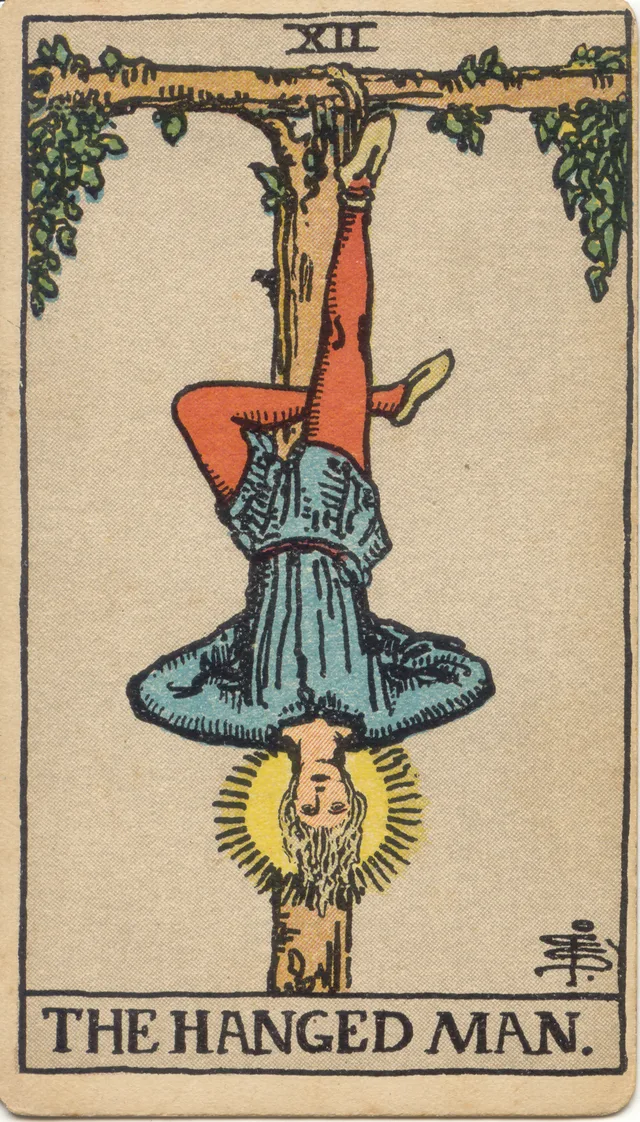
The Hanged Man
The Hanged Man explores a pause and changed perspective, while the Two of Swords explores a choice held between competing positions; neither identifies why someone is waiting.
Read this card's meaning →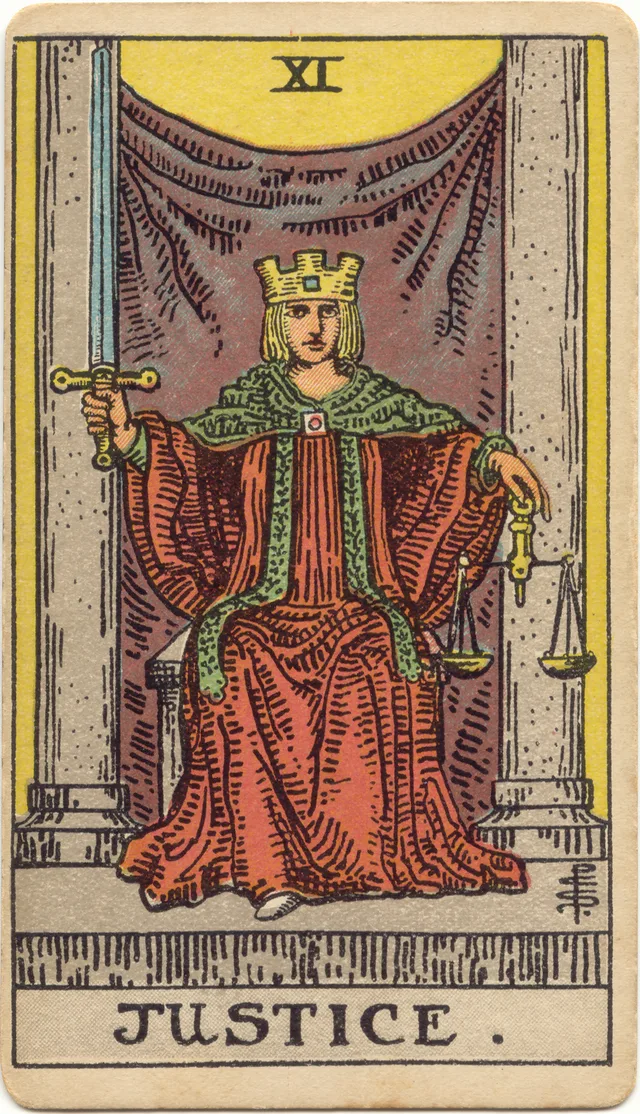
Justice
Justice concerns evidence, responsibility, and proportion, which can be compared with the Two of Swords' themes of uncertainty and suspended choice; the pairing cannot decide a case.
Read this card's meaning →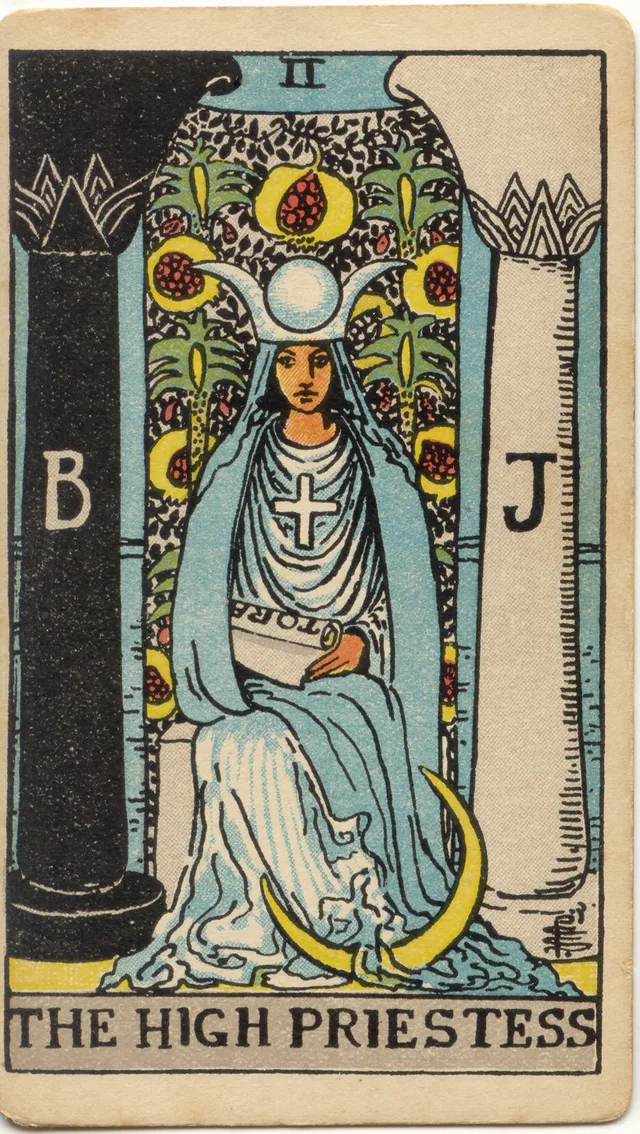
The High Priestess
The High Priestess represents privacy and information not yet disclosed, while the Two of Swords raises questions about what is known and what remains to be checked.
Read this card's meaning →