Five of Cups Tarot Card Meaning
The Five of Cups depicts grief, disappointment, and the difficulty of noticing what remains after a loss. It can make space for sorrow without demanding quick optimism, while inviting you to look at surviving support when you are ready. The image cannot measure the seriousness of a loss or set a timetable for recovery.

What's pictured on the card
A figure wrapped in a long black cloak stands with bowed head, staring at three cups tipped over at their feet, their contents spilled across the ground. Behind them, unnoticed, two cups remain standing and full. Further off, a narrow bridge crosses a river towards a distant house. The picture holds grief plainly, the spilled wine, the turned back, the weight of the cloak, yet insists that something whole is still waiting the moment you turn around.
Five of Cups upright: the core meaning
The Five of Cups shows a cloaked figure grieving three spilled cups, not yet noticing two still standing behind them. Today might bring some disappointment, but it also reminds you that not everything is lost. Feel what you need to feel, then turn around. There is more still intact than sorrow lets you see right now.
You may be carrying a disappointment today that feels heavier than you'd admit out loud, a hope that didn't land, a loss you're still turning over. It's natural to fixate on what went wrong; grief narrows the view to the thing that hurts. Beneath that, though, is a tiredness that comes from looking only backwards. Part of you already senses there is more still standing than sorrow will let you see. You're allowed to feel the ache and, in your own time, allowed to turn towards what remains.
Let today make space for the feeling before it asks anything of you. Do not rush to be fine; a loss deserves to be acknowledged. When you are ready, look at the people, resources, and parts of life that remain steady. At work, a setback is information, not the whole story. In love, attend to the connection that is present rather than comparing it with an absent one. If money slipped, take one small practical step. Grief and recovery have no card-set timetable.
Three simple ways to work with this card
- Let yourself properly feel the disappointment for ten full minutes today, then name one good thing that is still yours.
- Reach out to one person who has stayed steady beside you and tell them you're grateful they're still there.
- Write what this loss taught you, then place the page somewhere closed, a small ritual of setting it down.
What is still standing behind you that grief has kept you from seeing?
What the Waite-Smith image holds
The cloaked figure. A person stands in a long black cloak with head bowed toward what has spilled. The covered face and posture give the illustration a private, heavy mood. Readers may use it to discuss grief or disappointment, but the image cannot measure a reader's loss or establish what they are feeling.
Three spilled cups. At the figure's feet, three cups have fallen and their contents spread across the ground. The drawing shows loss within the scene, but it does not prove that a reader has lost something, identify what it was, or measure its seriousness. It can make room for an account of disappointment without telling anyone to move on.
Two full cups, still standing. Behind the figure, two cups remain upright and full. Within the illustration, this contrasts partial loss with what remains, but the cups do not identify surviving support in a reader's life. Use them to ask what resources, relationships, or choices may still exist, then verify those possibilities and respect the reader's pace.
The bridge and the distant house. Across a river, a narrow bridge leads to a small settlement on the far bank. The bridge and house provide a visible route within the painting, not proof that a reader has a safe path forward. The image can hold hope beside grief without requiring anyone to stop grieving or cross on a timetable.
The number five. Some tarot traditions associate five with disruption and change, as in the Five of Wands, Five of Swords, and Five of Cups. In the Cups suit, that can support discussion of loss and disappointment. It is not evidence of permanent catastrophe or of a specific event in the reader's life.
The Five of Cups upright
The Five of Cups is often used as a grief and disappointment image. It can create space to discuss a relationship, expectation, dream, opportunity, or imagined future, but the card cannot establish that a specific loss occurred or that grief is the only response. A reader's account determines what has happened and what support is needed.
The two standing cups can support a question about what may remain after a setback, while the card cannot identify surviving resources or guarantee that the wider picture is hopeful. It is possible to acknowledge pain and later review what remains without forcing optimism or setting a recovery schedule.
The image can be used for many forms of disappointment: heartbreak, a friendship ending, a meaningful job changing, a former identity, or an unrealised hope. It cannot reveal an unacknowledged loss or decide that a disappointment matters. Let the reader describe the event and its impact without comparing it with someone else's loss.
The card is not telling you to cheer up, count your blessings, or get over anything. The two full cups do not cancel the three spilled cups in the illustration. It also does not predict ongoing loss or establish that the worst has passed. The useful question is what the reader needs after acknowledging the situation.
The reversed Five of Cups
A common reversal theme is turning attention toward what remains, represented by the figure looking toward the upright cups. It can support discussion of recovery or changed perspective, but the card cannot establish that recovery has begun or that hope is appropriate on a particular timetable.
A second pattern is grief or disappointment that has not been acknowledged. It may affect mood or relationships, but the card cannot diagnose suppression or explain current behaviour. If the loss continues to affect daily life, supportive conversation or qualified care may help identify what needs attention.
Sometimes the reversal can frame forgiveness, reconciliation, or a choice to set a boundary around an old injury. It cannot establish that forgiveness is due, safe, or mutual. A reader can distinguish forgiveness from restored trust and choose what contact, if any, respects their needs.
A quieter reversal is the possibility that daily routines are changing after a difficult period. The card cannot show that grief has run its course or that recovery is underway. Look at sleep, functioning, support, and the reader's own description rather than requiring a dramatic turning point.
In love & relationships
In a love reading, the Five of Cups can frame grief after a relationship ends or disappointment within a relationship. It cannot establish that an ending occurred, measure the grief, or set its duration. Acknowledge the reader's account without using optimism about a future person to dismiss the current feeling.
Within an existing relationship, it can frame disappointment about an argument, unmet expectation, or breach of trust. The card cannot establish that a betrayal occurred or decide whether rebuilding is possible. Name the specific event, ask what each person needs, and consider safety and professional support before deciding what comes next.
For someone single, the Five of Cups can frame sadness about an imagined timeline or an unmet wish for partnership. It cannot establish why someone is single or promise that a future relationship will complete the story. The two full cups can prompt an inventory of present support without dismissing the feeling.
The image focuses on grief and what may remain. The question is what the reader has experienced and whether reviewing support feels possible yet.
- Making room for grief or disappointment without minimising it
- Taking the time and support needed before a consequential choice
- Describing what happened without inflating or dismissing it
- Reviewing remaining support when the reader is ready
- Letting a period of grief define every part of identity without checking what support is needed
- Treating the possibility of remaining support as a reason to minimise grief
- Reopening painful conversations without a clear purpose or adequate support
- Premature forgiveness that bypasses the actual feeling
Career
At work, the Five of Cups can frame professional disappointment such as an unsuccessful application, redundancy, a business problem, or a cancelled project. The card cannot establish that a loss occurred or measure its impact. It can support an honest account of the event before practical planning, while evidence and workplace support show what options remain.
It can also frame disappointment after a role changes, a team separates, or a promotion goes elsewhere. The card does not validate a particular interpretation of workplace motives or fairness. Describe the change, review records and options, and seek appropriate workplace support.
In a career context, the two standing cups can prompt an inventory of transferable skills, relationships, and experience. The card cannot show that any asset survived or that it will make a next step possible. Verify each resource and decide how, if at all, it fits future work.
Money
In a money reading, the Five of Cups can frame disappointment about an investment, debt, venture, or inheritance. It cannot show that a financial loss occurred or assess its size. Check statements, contracts, tax duties, and qualified financial advice, while making room for the emotional impact.
The practical note is to audit what remains: stable income, accessible funds, obligations, insurance, and support. The card cannot show what is still available or promise financial recovery. An accurate inventory and appropriate advice can inform the next decision.
Health & wellbeing
In a wellbeing reading, the Five of Cups can frame the physical experience people may associate with grief, such as disrupted sleep, appetite changes, tiredness, or tension. The card cannot establish a cause or diagnose a condition. Notice symptoms, seek qualified care when needed, and do not treat the image as evidence that the body is processing a specific loss.
It can also provide language for grief about changed capacity, injury, or a diagnosis, but it cannot reveal a diagnosis, prognosis, or what activities are unavailable. Support for disability or chronic illness should come from qualified practitioners and appropriate services. A symbolic reading may acknowledge emotion without serving as therapy.
Life events and big decisions
At a major crossroads, the Five of Cups brings grief and loss into the discussion. It cannot assess whether someone is able to decide or prescribe when grief is finished. Consider urgency, support, facts and whether a pause is possible before making a consequential choice.
It can also symbolise a decision that may involve loss or trade-off. The card cannot establish what must be given up or identify the right path. Make those costs explicit and compare them with evidence.
Contracts, deals & signatures
Near a contract, the Five can prompt questions about disappointment, prior agreements or a possible ending. It cannot show that a deal failed, a partnership dissolved or legal unwinding is required. Check records, communicate with counterparties and seek qualified legal advice where appropriate.
It can also be used reflectively when paperwork and grief genuinely coincide, such as an estate or documented separation. The facts come from the event and records, not the card. Build in support and independent review according to the document's stakes.
Entrepreneurship & business
For a founder, the Five can reflect fears or facts around a venture or project that did not meet expectations. It cannot establish failure. Revenue, obligations, customer evidence and formal decisions show the actual status, while emotional impact can still be acknowledged.
The two standing cups can prompt an inventory of what remains: skills, relationships, knowledge, customers or reputation. The image cannot prove any of these survived or predict a durable next venture. Verify each asset and decide what, if anything, can be used again.
Pairings and what I see in practice
The Five of Cups beside The Moon can frame grief alongside uncertainty or changing perceptions; it cannot measure confusion or diagnose its cause. The combination supports patience, reliable information, and professional support where needed. With The Star, hope and loss can be discussed together without predicting renewal or declaring grief complete.
I often use this card when a reader is describing disappointment but has not yet found language for its impact. The relationship, job, or expectation may have changed months ago, or the reader may be unsure whether the loss 'counts.' The card cannot name it for them, but it can create space to describe what happened without immediately forcing a positive interpretation.
What does the Five of Cups mean in tarot?
What does the Five of Cups reversed mean?
Is the Five of Cups about a breakup?
Is the Five of Cups a yes or no card?
What are the two cups behind the figure in the Five of Cups?
If the Five of Cups is in your reading today, use it as a prompt to describe the feeling or disappointment in your own words. There is no need to force an efficient or optimistic response, and the card cannot set a deadline or prescribe what to do with grief. If the feeling affects daily life, seek appropriate support.
When you are ready, inventory what support and options are actually present rather than assuming the two cups identify them. The free daily draw is available every morning if a practice of noticing where you are—not where you think you should be—would help. Use the image as a prompt and let current facts guide any next step.
The Five of Cups can make room for grief without demanding forced optimism or treating either response as a command from the card. Feel the loss honestly, then notice what remains and decide what support or next step would help when you are ready.
Related cards and themes
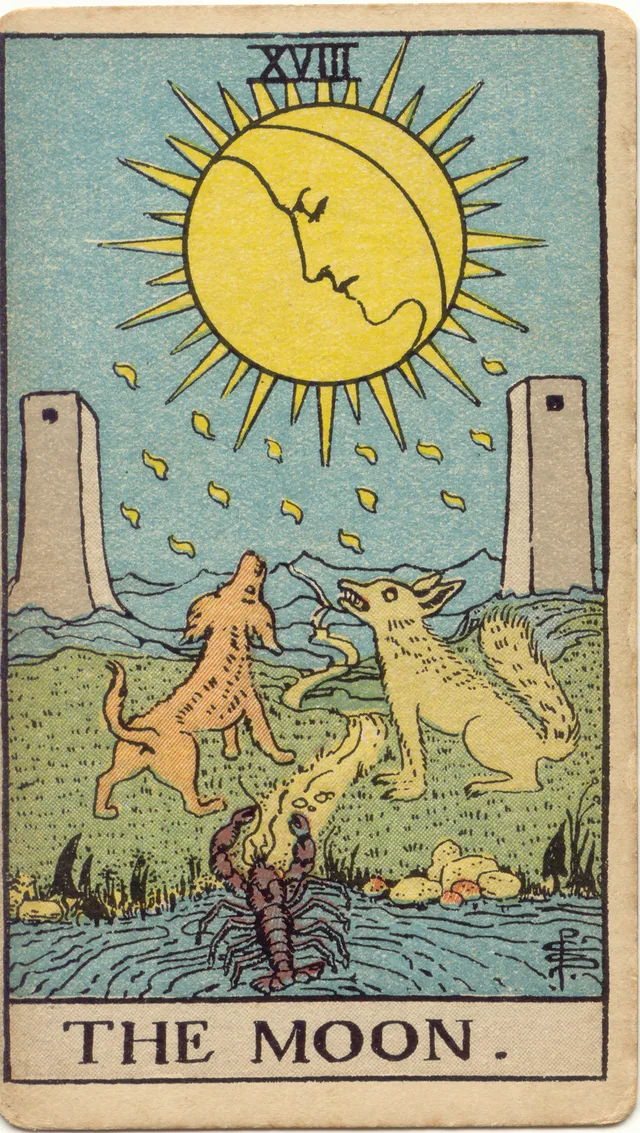
The Moon
The Moon and Five of Cups can both frame uncertainty, grief, and difficult feelings; neither card measures a loss or explains its cause.
Read this card's meaning →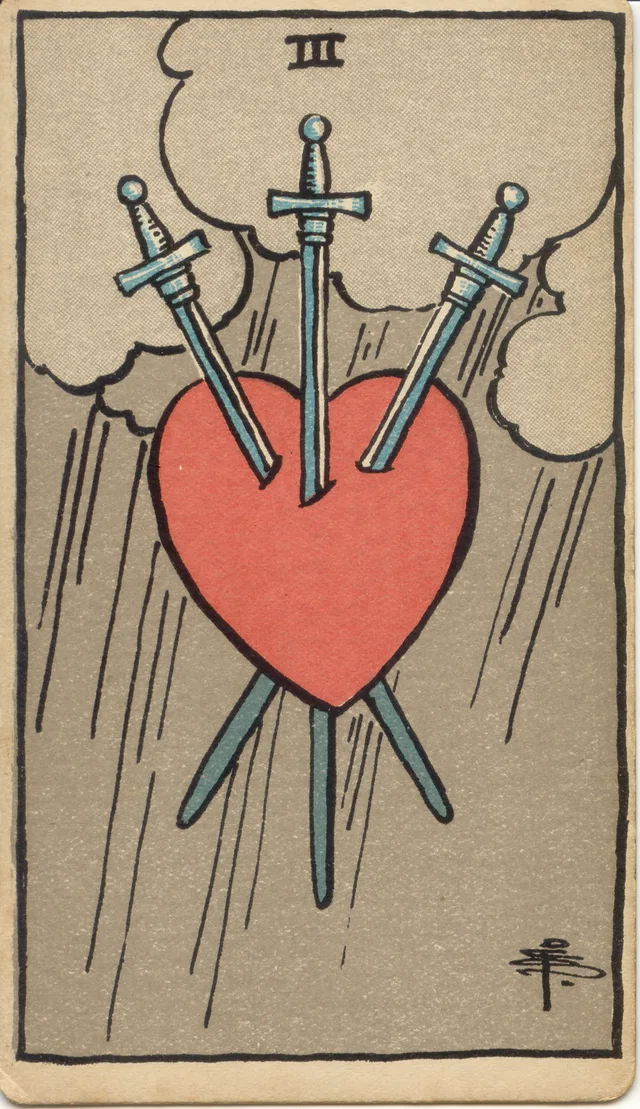
Three of Swords
The Three of Swords and Five of Cups can be read together through hurt and grief, without assigning a fixed sequence or claiming that either card proves what happened.
Read this card's meaning →
The Star
The Star and Five of Cups can place hope and grief in the same reflection; the pairing cannot show that grief has run its course or that restoration is arriving.
Read this card's meaning →