Seven of Cups Tarot Card Meaning
The Seven of Cups depicts many visions suspended in cloud, representing imagination, choices, distraction, and uncertainty about what is feasible. It can encourage dreaming while asking you to test claims and trade-offs. Compare options using evidence, cost, requirements, and your actual priorities; let the imagery prompt reflection while the decision rests on what you can verify.

What's pictured on the card
A shadowy figure stands with their back to us, facing seven cups suspended in cloud, each holding a different vision. One brims with jewels, another a laurel of victory, another a castle; but there's also a shrouded glowing figure, a coiled snake, a dragon and a floating face. Some are treasures, some are traps, and from here they all look equally enticing. The card captures a mind spoilt for choice, dazzled by possibility and unsure which dream is solid and which is only smoke.
Seven of Cups upright: the core meaning
Seven cups float in the clouds of the Seven of Cups, each holding a different tempting vision. Today offers plenty of options, but not all of them are as solid as they look from here. Dream freely, then get real. Sort the real possibilities from the pretty daydreams and choose one thing to actually pursue.
Your mind may be busier than usual today, spinning between options and imagined futures without settling on any of them. Beneath the buzz of possibility is a subtle overwhelm, the tiredness of wanting several things at once and committing to none. You might feel scattered, or seduced by a shiny idea that promises everything. This is often the psyche's way of avoiding the plainer, harder work of choosing. There's nothing wrong with dreaming; you simply sense, somewhere quiet, that it's time to bring one dream down to earth.
Give yourself room to imagine, then compare the options with practical information. Write them down so their costs, requirements, and trade-offs are visible. Ask of each one: is this feasible, or only appealing? At work, choose a priority rather than chasing every possibility. In love, compare the fantasy with the person and behaviour in front of you. With money, check claims that promise a great deal for very little. You do not have to choose your whole future today; one well-informed next step is enough.
Three simple ways to work with this card
- List every option swirling in your head, then cross off the ones that are only daydreams, not real plans.
- Choose one goal today and take a single concrete step towards it, however small, before the day is done.
- Ask a trusted friend to help you sort the realistic choices from the shiny ones, a clear outside view helps.
Out of all your options today, which one is worth committing to?
Seven visions in a cloud
The silhouetted figure. The person in the foreground is shown from behind, facing the cups, so no expression is visible. The anonymous pose supports a reading about a general decision state rather than a portrait of a particular person. It cannot show what a real reader wants, feels, or understands.
The jewels, the laurel, the castle. Three cups hold jewels, a victory wreath, and a castle. These images are attractive symbols of wealth, recognition, and security, but the card places them beside less certain contents. The arrangement supports checking claims and trade-offs; it does not show that any option is good or attainable.
The veiled figure, the dragon, the snake. Three cups hold a veiled form, a dragon, and a serpent. Their meanings are less obvious than the jewels and castle, so they can support questions about uncertainty, risk, and information that is hidden or incomplete. The images do not establish danger, deception, or a person's ambition.
The face in the seventh cup. The last cup holds a human face looking toward the figure. Readers often associate it with self-knowledge or examining one's own assumptions. It can prompt that question, but the card cannot establish a person's motives, identity, or level of self-understanding.
The cloud. The cups float rather than resting on a shelf, making uncertainty and untested possibility central visual subjects. The arrangement supports a practical question: which claims, costs, requirements, and consequences still need checking? The cloud does not mean that every option is false or that any option will become available.
The Seven of Cups upright
The Seven of Cups can describe having several possibilities and insufficient information or priority to choose among them. Keeping options open may be sensible early in a decision, but it can also delay useful testing. List the criteria, deadline, reversibility, and cost of waiting before deciding what needs attention.
The card can prompt a check for imagined futures that have not been tested: a detailed relationship plan with someone whose intentions are unknown, a business idea researched without customer contact, or a lifestyle considered without a budget. Imagination can reveal priorities, but a small evidence-gathering step is needed before treating it as a plan.
It can also describe several plausible options: job offers, relationships, or creative directions that each require comparison. Do not assume all options are equally strong or that the card has ranked them. Compare requirements, values, cost, timing, risks, and information from the people involved.
What the card is not saying: imagination is not foolish, and the picture does not classify an option as real or false. Translate a vision into requirements and a limited test, then use feedback to decide whether to invest more. A possibility is not evidence of feasibility or outcome.
The reversed Seven of Cups
Reversed, the Seven can symbolise narrowing options or a wish for clarity. It cannot establish that confusion has resolved, a priority has emerged, or capacity is available. Evidence, priorities, deadlines, and constraints determine readiness.
A second reversal theme is deepening confusion or overwhelm. The card cannot diagnose paralysis or prescribe reducing options. The reader's reported experience, decision context, and available support matter.
Reversed, reality-testing can also be a theme. The card cannot prove projection, business-plan failure, or deliberate avoidance. Check actual conduct, metrics, assumptions, and the limits of the available information.
Another possibility is a decision becoming more specific after a period of uncertainty. The card cannot establish that clarity has arrived; document the criteria and evidence behind the choice, then set a review point if circumstances change.
In love & relationships
In a love reading, the Seven of Cups can prompt a check for projection: assigning qualities or intentions to a new person before there is enough information. Separate what they said and did from what you imagine it means, then ask direct questions and allow time for consistent behaviour. The card cannot establish whether feelings or intentions are genuine.
For someone considering several potential connections, the Seven of Cups can frame genuine uncertainty without telling you to choose quickly. Define values, boundaries, pace, and information needed from each person. Ask what would make a connection worth more attention, while remembering that other people are not options to rank without their consent.
In an established relationship, it can prompt discussion of imagined alternatives, dissatisfaction, or uncertainty about commitment. Ask what need the fantasy represents and whether it has been communicated. The card cannot establish relationship quality or tell someone whether to stay; conduct, consent, safety, and shared decisions matter.
Imagination can identify wishes in love, while communication and observed behaviour test whether those wishes fit the relationship.
- Clearer language about values and relationship needs
- The freedom to imagine possibilities before committing to one
- A distinction between observed behaviour and projected qualities
- A deliberate comparison of pace, boundaries, communication, and conduct
- Assigning a relationship or intention before direct evidence exists
- Keeping every option open without setting a review point or communicating expectations
- Treating an imagined future as though it were evidence about a real person
- Idealising a connection instead of discussing ordinary responsibilities and conflict
Career
Professionally, the Seven of Cups can describe several possible directions: skills that transfer to different fields, a possible industry change, a business idea, or a creative project. Compare requirements, income, training cost, workload, support, and reversibility. The card cannot identify the best direction or set a decision deadline.
It can also prompt a check for career plans that have not met practical evidence: a role not researched, qualifications not verified, or a business plan without customer conversations. Choose the smallest test that would answer a specific question, then use the result rather than treating planning as proof.
For someone in a stable but unfulfilling role, it can frame early option generation. Research the most appealing alternative at a practical level: daily tasks, schedule, income, training, location, and likely trade-offs. The card does not say stay or leave.
A beginner can compare options with a simple table rather than trying to decide from mood alone. Give each direction rows for required training, weekly schedule, money needed, people affected, evidence already collected, and the smallest reversible test. Add a column for what would make the option unsuitable, not only what sounds attractive. For example, an evening course may offer a useful subject but conflict with care duties, transport, or a fixed budget. The table does not choose; it makes unknowns visible so the next research question is specific.
Money
In a financial reading, the Seven of Cups can prompt a check for unrealistic expectations. A symbol of jewels is not the same as a real investment instrument. Review fees, liquidity, volatility, taxes, ownership, and downside risk; the card cannot identify a suitable investment or establish that a proposal is deceptive.
It can also frame financial delay caused by too many choices, such as postponing a budget or savings decision while circumstances remain uncertain. Set a review date, compare fees and flexibility, and use qualified advice. A symbolic image cannot choose the best financial plan.
Health & wellbeing
For wellbeing, the Seven of Cups can prompt reflection on too much health information or too many possible routines. Do not use the card to choose a diet, treatment, or exercise plan. Ask a qualified professional which options are relevant, check safety and access, and track agreed information over a defined period.
There can also be a mental-health reflection on multiple imagined scenarios competing for attention. The card cannot diagnose anxiety or say that scenarios are unreal. Use grounding techniques that are appropriate for you and seek qualified support if thoughts interfere with daily life or safety.
Life events and big decisions
At a decision point, the Seven of Cups can prompt a reality check when options have not been tested or practical details have not been investigated. For each option, list required actions, affected people, cost, timing, risk, and reversibility. The card cannot identify which option should be chosen.
It can also describe a legitimate early stage of considering alternatives. Open exploration is different from treating imagined outcomes as facts. Set a date for gathering information, involve people whose consent is needed, and review whether any option has been tested before committing.
Contracts, deals & signatures
The Seven of Cups before a signature can prompt a check for assumptions, incomplete comparison, or excitement that is doing more work than the written terms. Review scope, price, duties, risks, cancellation, and alternatives in plain language before signing. The card cannot classify the deal or tell you to walk away.
It can also appear when several offers are being compared. Use explicit criteria such as price, obligations, timing, flexibility, risk, and values rather than ranking based on appearance alone. Ask what information would change the comparison and get it in writing.
Entrepreneurship & business
For entrepreneurs, the Seven of Cups can symbolise an ideation phase with many possible directions. It cannot show that the phase has run too long or tell a founder to launch. Customer research, cost, risk and a deliberately limited test determine the next step.
It can also mark scope creep: adding products or markets before the current offer has been tested. Define one customer group, problem, price, cost, and success measure for a limited trial. Expand only when customer evidence and capacity support it.
What I notice in practice
The Seven of Cups beside The Moon can intensify questions about ambiguity, projection, and unverified information without diagnosing anyone's state. With The Magician, compare possible options with available tools and a limited test. The pairing cannot show that options will resolve or that readiness has arrived.
This card can help explore the tension between imagining options and accepting the consequences of a choice. Define decision criteria, missing evidence, reversibility, affected people, and the cost of delay. The card cannot show that a delay is final or that a choice is ready.
What does the Seven of Cups mean in tarot?
What does the Seven of Cups reversed mean?
Is the Seven of Cups a yes or no card?
Does the Seven of Cups mean I'm deluding myself?
What does the Seven of Cups mean for love?
If the Seven of Cups is in your spread, write the options down and separate facts, assumptions, wishes, and unknowns. For each one, list the first practical task, cost, risk, affected people, and information it would produce. This comparison can clarify what deserves further attention without making the card responsible for the decision.
Dreaming can reveal values and possibilities, while evidence and practical action show whether a plan fits. The free daily draw is there each morning if a brief prompt would help you name what is known, what is assumed, and what question to investigate next.
The Seven of Cups presents many attractive possibilities without proving that any is solid or suited to you. Name your criteria, verify each option, and take time to choose rather than letting imagination make the decision.
Related cards and themes
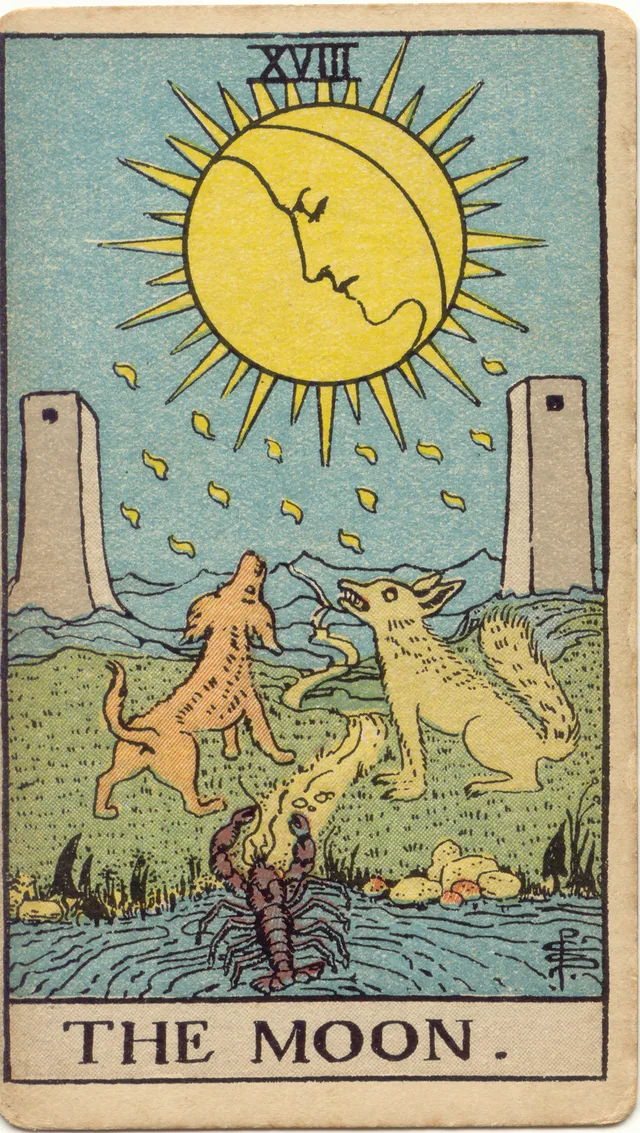
The Moon
The Moon and Seven of Cups both invite a check on uncertainty, projection, and information that has not been verified. Neither card proves that a person is confused or that an option is deceptive.
Read this card's meaning →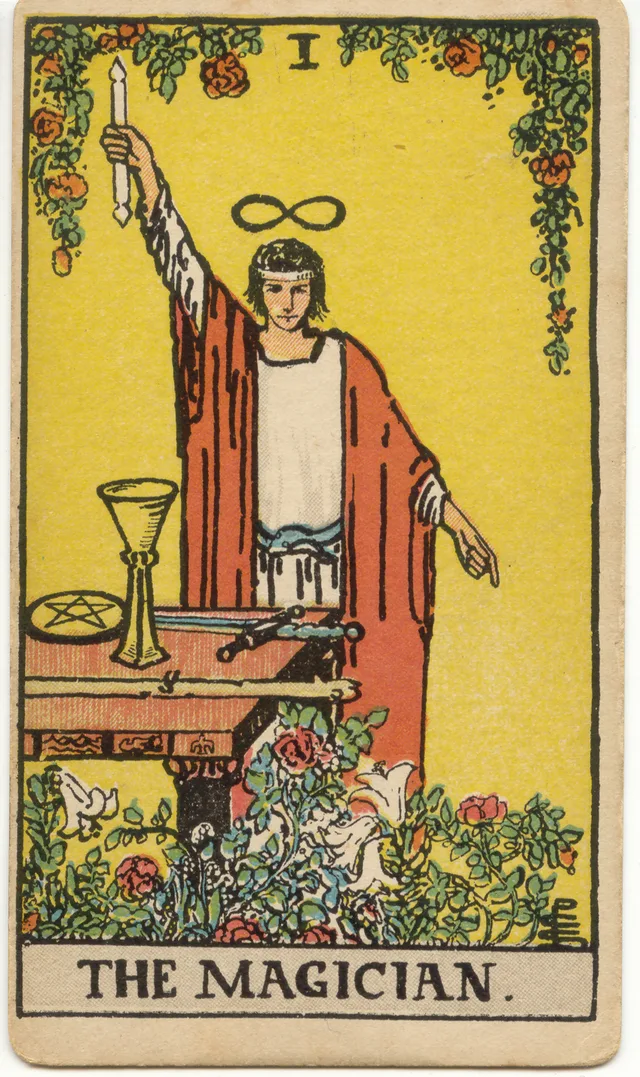
The Magician
The Magician focuses on using tools and attention, while the Seven of Cups focuses on comparing possibilities. Together they can prompt a small test of one option without declaring it viable.
Read this card's meaning →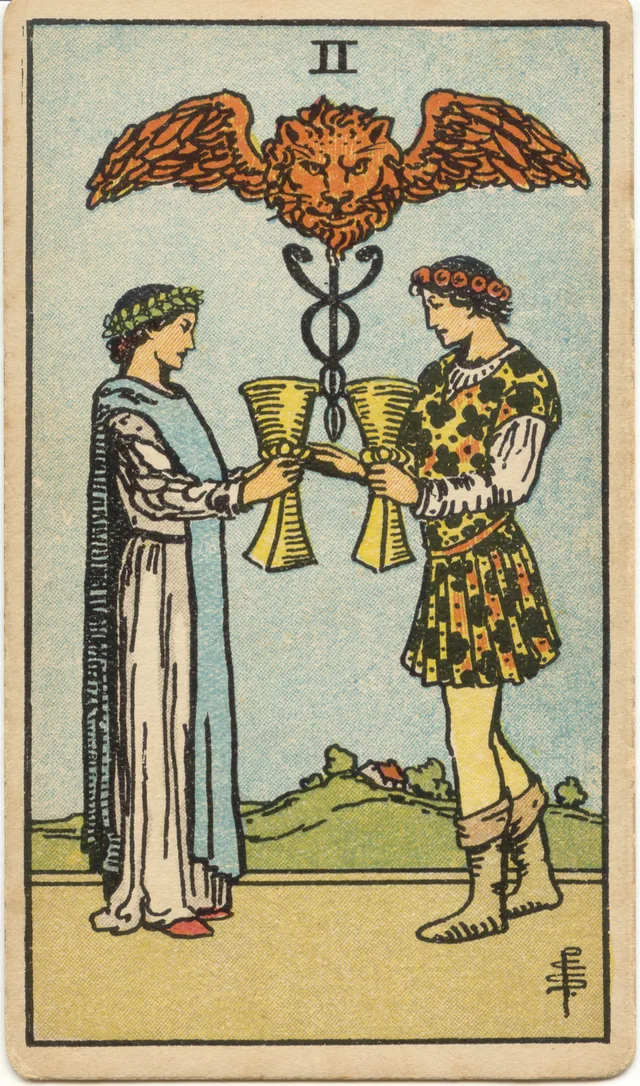
Two of Cups
The Two of Cups focuses on a mutual connection, while the Seven of Cups considers several possibilities and projections. Together they can prompt questions about direct communication, choice, and what has actually been agreed.
Read this card's meaning →