The Devil Tarot Card Meaning
The Devil is the card of habits and attachments that have a bit too much hold over us, and it isn't literal, or evil, or any kind of curse. It usually points to something you keep going back to: overspending, drinking, a job that drains you, or a relationship that feels more like a trap than a choice. It's a kind card, really, because it reminds you the chains are looser than they look.

What's pictured on the card
A horned, bat-winged figure crouches on a black pedestal, one hand raised and a torch lowered in the other. Below, a naked man and woman stand chained by the neck, small horns hinting they're slowly becoming what binds them. Yet the chains hang loose, easily lifted over their heads. The scene speaks of temptation, attachment, and self-imposed limits, the habits and fears that feel like cages until you notice the lock was never fastened.
The Devil upright: the core meaning
In the Devil, two figures wear loose chains they could actually lift off any time they chose. Today names something that feels binding, a habit, a fear, a story you keep telling yourself. Look closely at what’s really holding you; the grip is looser than it seems, and noticing it is the first step out.
You may feel today the tug of something you know isn't quite good for you, a habit, a craving, a story that keeps you small. Underneath, there's a part of you that's tired of the pattern and ready to be free of it. That heaviness isn't a life sentence; it's awareness beginning to dawn. Simply noticing the chain, and admitting it doesn't serve you, is the loosening already under way. You're far less trapped than you feel.
Look closely at what's been holding you today, without any shame. Naming the habit, fear, or attachment robs it of half its power. At work, notice where you're staying stuck out of comfort rather than genuine need. In love, watch for the patterns that feel like passion but leave you drained, and choose differently. With money, spot the impulse spending or the I-deserve-it story and pause before acting on it. If a family dynamic keeps hooking you, remember you can step back. The chains are looser than they look. You don't have to break free all at once, one true choice today, one small refusal of the old pattern, and the door is already opening.
Three simple ways to work with this card
- Name one habit that isn't serving you, and choose a single small way to loosen its grip today.
- Notice the story you tell to justify a pattern, and ask yourself if it’s actually true.
- Pause before one tempting impulse today and ask whether it frees you or cages you further.
What chain are you wearing today that you actually have the power to loosen?
Every symbol, explained
The loose chains. The chains around the two figures' necks are wide, slack loops. Their shape can represent an attachment that appears changeable, but the illustration cannot show that leaving is easy or possible. Addiction, coercive control, financial dependence, and unsafe circumstances can require substantial support.
The two figures, and the horns. The two people resemble the figures on the Lovers card, but now have small horns and tails bearing fruit and flame. These changes can prompt reflection on how a habit, relationship, or role affects identity. They do not prove that a person has been changed, corrupted, or controlled.
The inverted torch. In his left hand, a torch points down toward the man's tail. The direction can represent energy directed toward a repetitive or harmful pattern rather than a chosen purpose. A card cannot identify what someone spends, drinks, or does, so use actual behaviour and its effects.
The raised hand, pentagram, and half-cube. The figure raises one hand and wears an inverted pentagram. Traditional interpretations use these details to discuss authority, appetite, and material concerns, but symbols are not evidence of evil or external control. He sits on a black half-cube, an incomplete-looking base, against a plain black background. The sparse setting keeps attention on the figures and their attachment rather than proving that the situation has no way forward.
Fifteen, and Capricorn. Fifteen reduces to six, linking the card numerically with the Lovers in some tarot systems. The Devil is traditionally associated with Capricorn, often connected with ambition, work, and material structures. Those associations can support questions about discipline and attachment; they cannot establish that ambition has become a trap or that a person is responsible for every constraint.
The upright meaning in detail
The central theme is an attachment or repeated behaviour that may have more influence than a person wants. Some patterns begin with a choice, while others involve dependence, coercion, trauma, illness, or unequal power. Do not reduce every difficulty to personal responsibility. Look at what happens, what choice is available, and what support would make change safer.
When the card appears, some readers immediately think of a habit, relationship, debt, or work pattern. Others find the image irrelevant or unsettling. Both responses are valid; the card cannot identify a private issue without the person's own account. In twenty-five years of reading, I have had perhaps three clients puzzled by it and hundreds name a concern before I finish the sentence, but their words—not the image—provide the useful information.
Possible subjects include alcohol, gambling, compulsive phone use, overspending, debt, overwork, a relationship affected by control, or a belief that shapes decisions. These examples are prompts, not diagnoses. Ask what is happening, how often, what it costs, and whether the person can choose differently without punishment.
The Devil is not evidence of evil, a curse, or a supernatural force. It is also not a moral judgement. If a pattern involves addiction, coercion, violence, severe distress, or financial danger, use qualified support and safety planning rather than blaming the person or asking the card to explain a cause.
The reversed meaning
One reversed theme is a change in an attachment: reducing a behaviour, ending an account, leaving a relationship, or seeking help. These steps can be difficult and may require medical, financial, legal, or domestic-abuse support. The card cannot confirm that someone is free or that change will be safe.
A second theme is recognising a pattern without changing the conditions around it. Insight can be useful, but it does not establish that someone is able to act; dependence, money, housing, health, and safety may limit choices. Identify one supported, realistic step rather than using shame.
A third theme is an attachment described in flattering terms: dependence called devotion, overwork called passion, or control called care. These are questions to test against conduct and consent, not claims about a person's motives. Ask whether each person can disagree, pause, or leave without retaliation.
A serious possibility is an attachment involving coercion, financial control, fear, or another person's threat. A card cannot assess safety or identify an abuser. Move from tarot to practical support: contact a trusted person or specialist service, protect confidential information, and follow local emergency guidance when there is immediate danger.
Read the reversal as a set of questions rather than a forecast. What has changed in the behaviour or arrangement? What support exists? Is the person describing a pattern clearly, or defending it because alternatives feel costly? A past position may invite recognition of an earlier attachment, but current evidence matters more than the card's position.
In love & relationships
If you're single, the Devil can prompt a review of repeated dating patterns, checking an ex's messages, an undefined connection, or attraction that conflicts with your stated needs. Chemistry does not establish compatibility or mutual care. Look at communication, boundaries, conduct, and whether you can make choices freely.
In an established relationship, the Devil can focus discussion on repetitive conflict, jealousy, unequal management, or intimacy affected by resentment. It does not predict an ending or prove either person's motives. Describe the behaviour, its effects, consent, and the support available to both people.
Practical constraints can affect a relationship: a mortgage, visa, children's school, housing, or the cost of separating. Name those constraints without assuming they explain every feeling. If control, threats, or fear are involved, prioritise specialist and safety support rather than confronting the situation alone.
A useful conversation names observable actions and effects rather than labelling a person: what happens, how often, and what each person needs to change. If there is control over money, isolation, threats, or fear of a reaction, speak with someone outside the relationship who understands safety and coercive control. Do not treat a private card reading as a substitute for support.
Intensity can coexist with care or with restriction; examine choice, consent, conduct, and practical constraints rather than treating the card as a verdict.
- Naming the loop out loud, straight, unsoftened
- Saying plainly what practical reasons are keeping you here
- Owning your half of the dynamic instead of cataloguing theirs
- Asking what you would choose if practical barriers were removed, without assuming the answer
- Mistaking intensity and drama for depth
- Waiting for them to change while changing nothing
- Staying for the flat, the routine or fear of starting again
- Calling jealousy or control a sign that they care
Career
On a job hunt, the Devil can focus attention on financial dependence, status, a bonus, or a title that makes leaving difficult. These are concrete constraints, not proof that a job is harmful or that another role will improve things. Compare income, benefits, health, rights, alternatives, and the amount you would need to transition.
In a workplace, possible themes include normalised overwork, unpredictable management, pressure outside hours, or an identity built around the job. The card cannot establish a manager's motives or diagnose a culture. Keep records, review policy and rights, and seek appropriate workplace or professional support.
For leaving a job, list what you would lose—income, status, structure, benefits, identity, or a visa—and what alternatives exist. The Devil cannot decide whether to resign or predict that a pattern will recur. Check finances, notice terms, health, and support before acting.
Money
The Devil can bring debt and recurring payments into focus: credit cards, buy-now-pay-later accounts, overdrafts, or interest that continues after the original purchase is forgotten. List balances, rates, fees, due dates, and essential costs. The card cannot determine affordability or the best repayment order.
A spending pattern may involve a difficult feeling, a purchase, brief relief, and a later financial cost. Rising income can also be absorbed by rising commitments. Track dates, amounts, triggers, and effects without shame, then seek financial or clinical support if spending feels uncontrollable.
Gambling and gambling-like behaviour can include betting, in-app spending, frequent speculative trades, or sports apps. The card cannot diagnose a disorder. Record the real amounts and seek specialist gambling, financial, or mental-health support; use account blocks and other safeguards where appropriate.
Health & wellbeing
In wellbeing discussions, the Devil can represent repetitive behaviour: alcohol, smoking, compulsive phone use, eating for reasons other than hunger, or scrolling that displaces sleep. The image is not a diagnosis and cannot establish a cause. Notice frequency, triggers, impact, and support needs; qualified care can assess the pattern.
For mental wellbeing, the card can prompt reflection on rumination, harsh self-talk, shame, and secrecy. It cannot diagnose depression, anxiety, addiction, or trauma. If you are distressed, contact a GP, therapist, crisis service, or other appropriate support; if there is immediate danger, use local emergency services.
Life events & big decisions
For a move, the Devil can prompt a review of a place that is expensive, familiar, tied to history, or difficult to leave. Compare housing, work, care, immigration, finances, rights, and support. The card cannot establish that staying is a trap or that moving is the safer choice.
Around family, possible themes include obligation, guilt, undocumented loans, and roles learned in childhood. The card cannot infer a relative's motives or tell you to cut contact. Clarify money and care arrangements, set boundaries you can maintain, and seek support if someone uses threats or control.
Around commitment, the card can prompt questions about fear of being alone, sunk costs, social pressure, or hopes that a major event will repair a relationship. Those questions do not establish that a relationship is wrong. Discuss consent, expectations, finances, and support before making a commitment.
Contracts, deals & signatures
In a contract, the Devil can draw attention to automatic renewal, exclusivity, minimum terms, long notice periods, personal guarantees, and exit costs. Read the whole agreement and obtain qualified advice. Whether a contract is suitable depends on its wording and your circumstances, not on the card.
Also review generous-looking terms: a retainer that occupies all your time, an advance with repayment duties, an investment with control rights, or a deal whose later terms differ from its first-year appeal. Ask what each party gives, controls, and can change. Do not infer bad faith without evidence.
For timing, some traditions associate the Devil with persistent patterns and late December to January, but a card cannot set a contract's schedule. Record every notice, renewal, payment, and review date when you sign so an accidental extension is less likely.
Entrepreneurship & business
For a new business, the Devil can prompt review of concentrated dependency: a partner seeking broad control, funding with restrictive terms, or a client providing ninety per cent of income. This does not prove that an opportunity is a trap. Read terms, model alternatives, and obtain legal or financial advice.
For growth, examine revenue that depends on one product, client, market, or contract; also examine whether the work remains consistent with the owner's goals and capacity. Review cash flow, concentration risk, contracts, and exit options rather than assuming that size or revenue is success.
For hiring, review key-person dependency, decision rights, access to information, and whether a founder can delegate safely. For risk, list borrowing, guarantees, repayment terms, and downside scenarios. Business debt is not automatically personal debt; qualified legal and financial advice can clarify liability.
How it shows up in real readings
The surrounding cards can broaden the questions. Beside The Lovers, compare stated values with actual freedom and consent. Next to The Tower, review instability and contingency plans rather than assuming an ending is inevitable. With The Star, discuss support and restoration in observable terms; the pairing cannot promise release or recovery.
A client expected a reading about career concerns and described hours, commuting, and management. She then mentioned using a credit card for two years without knowing the total or discussing it with her husband. The useful next step was to record the actual balance and seek appropriate financial support. The card did not reveal the debt; her own information did.
What does the Devil mean in tarot?
What does the Devil reversed mean?
Is the Devil a yes or no card for love?
How soon do things happen with the Devil?
Does the Devil card mean addiction?
If the Devil has found you, describe the observable pattern to a trusted person without minimising it: the balance, frequency, amount, behaviour, or effect on daily life. Shame can make disclosure difficult, but the card cannot identify a cause. Choose someone who can respond safely and connect you with appropriate support.
Then identify one supported, practical change: add an account block, remove an app, arrange a financial appointment, set a communication boundary, or contact a specialist service. The right step depends on health, money, consent, and safety. If a daily reflective anchor helps, the free daily draw is there each morning; use it alongside real support, not instead of it.
The Devil can symbolise habits, relationships, or beliefs that feel trapping without proving that a person has no choices. Name the benefit and cost of the pattern, then examine boundaries and support before trying to change it.
Related cards and themes
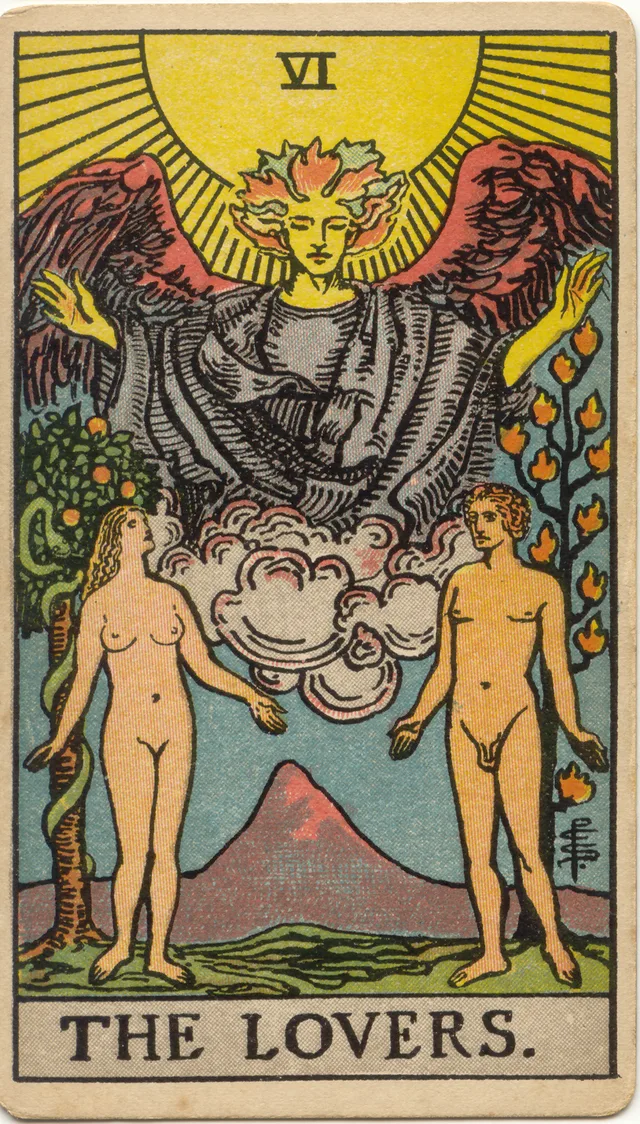
The Lovers
The Lovers explores values and choice; beside the Devil, it can help distinguish a freely chosen attachment from a pattern that limits choices.
Read this card's meaning →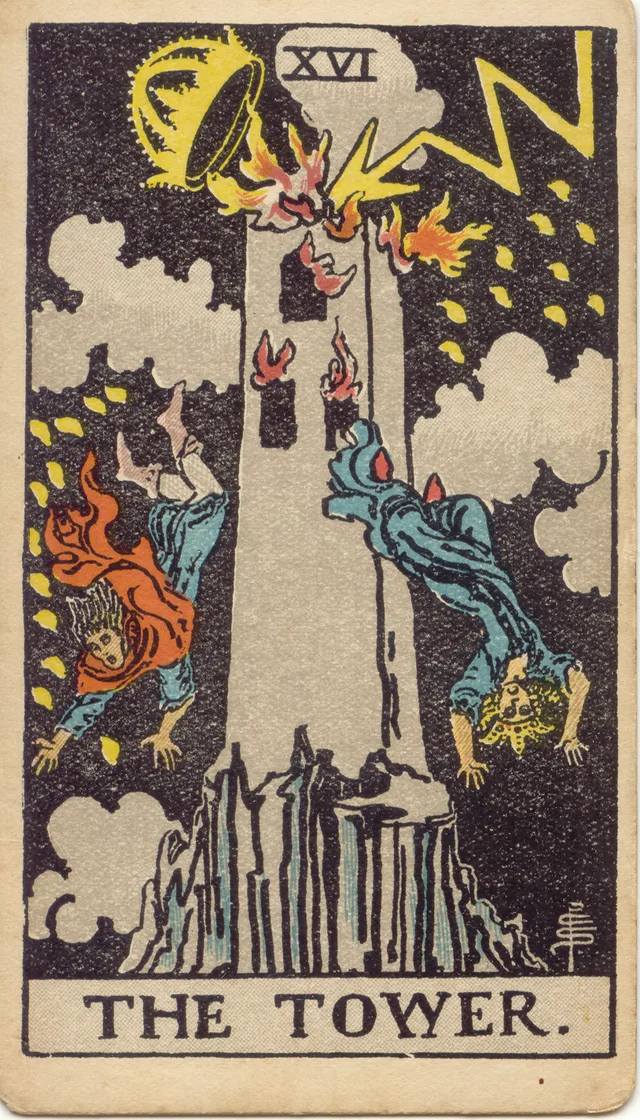
The Tower
The Tower explores sudden disruption; beside the Devil, it can prompt a review of an arrangement before pressure or change makes the review unavoidable.
Read this card's meaning →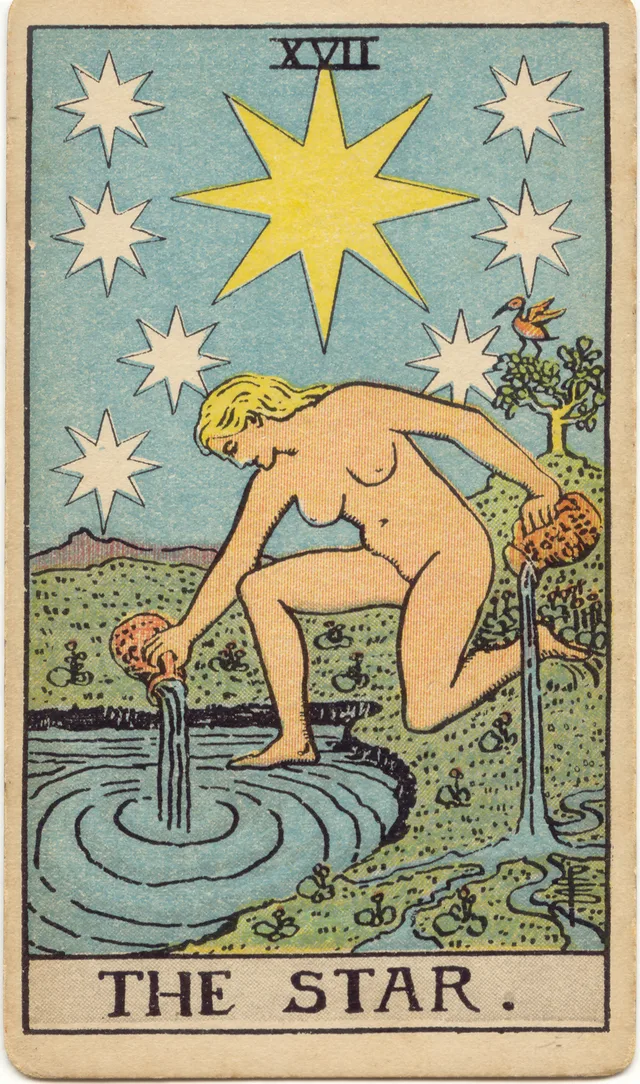
The Star
The Star explores hope and restoration; beside the Devil, it can support questions about recovery, support, and rebuilding without promising release.
Read this card's meaning →