Seven of Swords Tarot Card Meaning
The Seven of Swords shows someone leaving a camp with swords while looking back, an image associated with strategy, secrecy, and indirect approaches. It can prompt you to examine whether a shortcut protects safety or avoids a necessary conversation, but it cannot prove deceit or another person's motive. Check records, agreements, and direct communication before drawing conclusions.

What's pictured on the card
A man tiptoes away from a striped camp of tents, carrying five swords bundled awkwardly in his arms while two remain planted in the ground behind him. He glances back over his shoulder, half-smiling, thinking he's got away with it. Kind yellow fills the sky, and figures stand in the distance, unaware. Smith drew cleverness with a catch, the plan that avoids the direct route, and the two swords left behind that undo it.
Seven of Swords upright: the core meaning
The Seven of Swords shows someone slipping away carrying several swords, clever but not quite straight. Today asks for honesty, with others and with yourself. Notice where you might be cutting corners or avoiding a direct conversation. A little strategy is fine, but the cleanest path today is the one you don't have to hide.
You might feel a subtle tug to take the easier, quieter route around something today, to avoid a conversation, sidestep a task, or keep a small thing to yourself. It rarely comes from bad intent; more often it's tiredness, or a wish to dodge friction. Underneath, though, there's a part of you that would breathe easier telling it straight. That faint discomfort isn't guilt exactly, more your own integrity nudging you toward the choice that lets you sleep at night.
Favour the straightforward path today, even when the clever shortcut tempts you. If there's a conversation you've been avoiding, a plain and kind version of it will cost you far less than the workaround. At work, resist the urge to fudge a detail or carry something you should have flagged; owning it early keeps it small. In relationships, honesty offered with warmth builds the trust that half-truths slowly erode. Where money is concerned, read the fine print and be square with yourself about what you can afford. A bit of smart planning is actually useful, so don’t mix this up with never being strategic. Just make sure your strategy is one you'd happily explain out loud. Release what you've been hiding, and enjoy how much lighter honesty feels.
Three simple ways to work with this card
- Have the direct conversation you've been tiptoeing around, keeping it plain and kind rather than clever or evasive.
- Notice one corner you've been tempted to cut today, and choose the slightly harder route instead.
- Write down anything you've been carrying alone, then decide who you could tell to lighten the load.
Where would being fully straightforward serve you better than being clever today?
The backward glance at the camp
The figure and his expression. He carries five swords and glances back with a self-satisfied expression. The face gives the scene a feeling of confidence in a plan, but an illustration cannot establish whether the plan is wise, dishonest or successful. That gap between a person's confidence and the available facts is a useful question for a reading.
Five carried, two left behind. He is taking most of the swords but not all. The two left in the camp make incomplete plans and omissions visible within the scene. In practical life, list what has been withheld, what remains undocumented and who may be affected; the card cannot say whether anyone will notice or what the consequences will be.
The tented camp, figures in the distance. The camp and distant figures show that the person is leaving a social setting rather than acting in an empty landscape. The people in the background may represent observers, affected parties or simply the wider context. The image cannot establish what anyone knows; check records and direct communication instead of assuming secrecy has been detected.
The golden yellow sky. Unlike many Swords scenes, the sky is soft yellow rather than grey or turbulent. That contrast can frame the situation as open to examination, but it does not set a deadline or show that consequences have not begun. If a conversation or correction matters, consider the relevant facts, duties and safety needs directly.
Seven, and the Moon in Aquarius. Some traditions associate this card with the Moon in Aquarius, a symbolic combination of emotional life, ideas and social structures. It can prompt questions about rationalising discomfort or prioritising a social strategy over a direct conversation; it cannot diagnose avoidance or describe a particular person's inner state.
The upright meaning in full
The Seven of Swords gets simplified too easily. It is often read as 'someone is deceiving you' or 'you are doing something dishonest,' but a card cannot establish either claim. Its wider subject is the indirect route around a direct problem: privacy, careful timing, conflict avoidance, selective disclosure or a plan that has not been tested against the full facts.
Strategic behaviour is a legitimate part of what this card can describe. Not every issue needs to be addressed immediately, and privacy can be responsible when it protects someone from harm or preserves confidential information. Gather information, check duties and decide who needs to know what before choosing a route.
It becomes a caution when the strategy mainly protects a person's comfort rather than the situation. Examples include delaying a necessary conversation, presenting a technically true but misleading account, or withholding information from someone with a legitimate claim to know it. Ask what the method protects, who bears the cost, and what a clear account would require.
There is also a self-accounting version: a convenient story that does not include the full picture. When the Seven appears in a position about the self, use it to check assumptions against dates, documents, spending, messages or other observable information. It cannot reveal a hidden truth on its own.
For a beginner, a useful distinction is privacy versus deception. Privacy limits access to information that is yours to protect; deception gives a misleading account when another person needs accurate information to make a decision. Circumstances involving children, shared finances, work duties or legal obligations need particular care and may require qualified advice.
The reversed meaning
One reversal theme is choosing fuller disclosure: sharing something withheld, having an avoided conversation or replacing a managed account with a clearer one. The swords are set down rather than carried away in the image. In practice, consider consent, safety, responsibilities and the support needed before disclosing anything consequential.
A second is a strategy losing its usefulness: an incomplete plan, missing record or unspoken condition becomes harder to maintain. The two swords left in the camp illustrate unfinished business, not a prediction that someone will be exposed. Review the facts and repair what can responsibly be repaired.
The third is recognising that you received a carefully limited account rather than the full one. That does not establish malicious intent. Ask what can be verified, what question is still unanswered and what boundary or professional advice would help before you respond.
There is also a confused, exhausted reversal: maintaining different accounts for different people has become a burden. The practical cost of tracking messages, promises and omissions may now exceed whatever privacy the strategy was meant to protect. Simplify with accurate records and appropriately direct communication.
In love & relationships
In relationships, the Seven most commonly appears around something being withheld — not necessarily a dramatic secret, but the ongoing pattern of managing what one person tells another. Hiding the extent of a financial situation, keeping a connection private, or presenting a partner a version of events curated in ways you'd be uncomfortable naming if asked directly.
It can also describe avoidance — the partner who deflects difficult conversations with humour or distraction, who never quite lies but consistently withholds the parts of their experience that would require engagement. Over time this erodes intimacy, because you can't be known while managing what someone knows about you.
For single people, the Seven can frame a dating pattern that has become more about performance than connection: careful self-presentation, impression management or avoiding any detail that feels vulnerable. Ask whether that approach matches the connection you want, while keeping appropriate privacy and personal safety boundaries.
The same instinct for self-protection can keep someone safe in difficult circumstances or keep them from genuine connection, depending on where it's applied.
- Protecting genuinely private information before trust is established
- Timing a difficult conversation to give it the best chance
- Reading a situation carefully before committing rather than rushing
- Not sharing everything with everyone — boundaries are not deception
- Withholding information someone has a genuine claim to know
- Managing the impression rather than being present in the relationship
- Using indirectness to avoid a long-overdue conversation
- The exhaustion of maintaining a story at the cost of closeness
Career
At work, the Seven has a legitimate range. Competitive industries require people to read a situation carefully, protect confidential information and choose appropriate moments. Openness and privacy are not opposites; follow workplace duties, confidentiality rules and the boundaries of the people involved.
It becomes a caution around managing up: presenting projects or performance in a technically accurate but selectively assembled way that creates a misleading impression. Keep source data, limits and contributions visible, and distinguish a concise summary from an omission that changes the meaning.
It can also frame intellectual honesty: analysis shaped to fit a preferred answer, a report written to a predetermined conclusion or expertise used to conceal uncertainty. Record methods, competing explanations and limits so a reader can assess the work rather than relying on a confident presentation.
Money
Around finances, the Seven can prompt a review of situations where the full picture is managed rather than presented to a partner, institution or yourself. Gather statements, debts, fees, tax obligations and written terms; do not treat a symbolic image as evidence that someone is hiding money or that a workaround is lawful.
It can also prompt due diligence when an offer is described with selective information. Ask what documents, fees, risks, eligibility rules and independent reviews are missing, and why. Verify the proposal with the relevant institution or qualified adviser before transferring money or accepting obligations.
Health & wellbeing
In wellbeing the Seven most often speaks to the energy cost of maintaining a strategy — the quiet depletion of keeping track, of managing what different people know, of being slightly on guard against being caught out. This is a specific tiredness, not always visible. People who carry it often don't know how tired they are until straightforward honesty becomes possible, and they notice the sudden lightness of no longer having to manage.
There's also a self-deception dimension: the story you tell yourself about habits, health choices or patterns that you know isn't quite accurate. The Seven doesn't require dramatic dishonesty — just noticing where you're fudging the picture in your own accounting, and what it might feel like to drop that management.
Make that review concrete: write down sleep, substance use, missed appointments, spending or messages as they actually occurred, without using the record to shame yourself. If keeping information secret is connected to fear, coercion or risk, do not disclose impulsively; speak with a qualified practitioner or trusted support person about a safer plan.
Life events & big decisions
Around major decisions, the Seven invites you to check whether you have the information needed to decide. Interested parties may describe events from their own standpoint; that does not make their accounts false, but it does make source-checking useful. Verify important facts independently before accepting a major obligation.
It can also frame a decision made to manage appearances rather than address a genuine priority. Ask which values, duties, constraints and conversations are shaping the choice, and whether the option would still make sense if it could not be presented attractively.
At a crossroads where one path involves more exposure, the Seven can prompt a comparison of direct and indirect routes. Consider safety, privacy, obligations, effort and likely consequences; a simpler route may be useful, but the card cannot label it safer or wiser.
Contracts, deals & signatures
The Seven beside a contract is a prompt to engage with the specifics of what you are signing. Contracts reflect the parties' interests, so compare definitions, exclusions, fees, obligations, data use, termination rights and remedies. An omission may matter, but the card cannot establish that it was deliberate or unfair.
It is also a prompt to be precise about your own representations. A technically true but incomplete disclosure can change how the other party understands a deal. State relevant limits and assumptions, and obtain legal or professional advice where disclosure duties apply.
For negotiations, document your priorities, alternatives, constraints and risks before you begin. A position is easier to assess when it includes its weaknesses instead of depending on the other side not asking about them.
After a negotiation, send a concise written summary of the points agreed, the points still open and the date for the next review. This reduces the need to maintain different versions of the conversation. If the matter has legal, employment or financial consequences, have the relevant professional check the wording before relying on it.
If a disclosure could put someone at risk, honesty does not require an impulsive confrontation. Choose the safest channel, preserve relevant records and ask a qualified service how to proceed. The card's focus on indirect routes can make room for a protective plan without turning secrecy into a virtue.
In every case, keep the difference between what you know and what you infer visible.
Entrepreneurship & business
For businesses, the Seven spans legitimate competitive strategy and corner-cutting that undermines trust. Brand positioning, competitive intelligence, protection of proprietary information and launch timing can all be appropriate when they comply with law, agreements and honest marketing standards.
The caution concerns practices that rely on customers, partners or staff not having the full picture: a technically supportable but misleading marketing claim, an agreement that hides consequential costs, or need-to-know access where people have a genuine stake. Review claims, terms and communications for material omissions.
For sole traders and small businesses, the Seven can raise questions about pricing and scope. It cannot establish that work is underpriced or tell someone to renegotiate. Compare the contract, costs, market rates, risks and communication options.
How indirect approaches appear
Beside The Magician, the Seven combines skill with questions about transparency and boundaries. Beside Justice, disclosure and accountability become themes. Neither pairing proves dishonesty or unfairness; verify facts and duties through appropriate records and advice.
Someone may ask whether to disclose something, but the card cannot answer. Assess consent, duties, personal safety, likely consequences and qualified legal or professional advice where appropriate; do not treat the reading as reassurance about the outcome.
What does the Seven of Swords mean in tarot?
What does the Seven of Swords reversed mean?
Does the Seven of Swords mean someone is lying to me?
Is the Seven of Swords a yes or no card?
What does the Seven of Swords mean for love?
If the Seven of Swords has appeared for you, ask whether a conversation or record is being delayed by an indirect approach. That does not automatically mean dishonesty: privacy, timing and safety may matter. Name what must be communicated, who needs it and what support would make a direct step responsible.
The figure leaves two swords in the camp, so the image keeps unfinished details in view. Before acting, list the loose ends, records and people affected by the situation. If you'd like a daily prompt for reviewing communication and boundaries, the free daily draw is there each morning.
The Seven of Swords can prompt a distinction between strategy and avoidance. Ask whether an indirect route protects a legitimate interest or merely postpones a necessary conversation, then consider the honest and practical consequences. A plan can be private without being deceptive, but the card cannot settle which description applies.
Related cards and themes
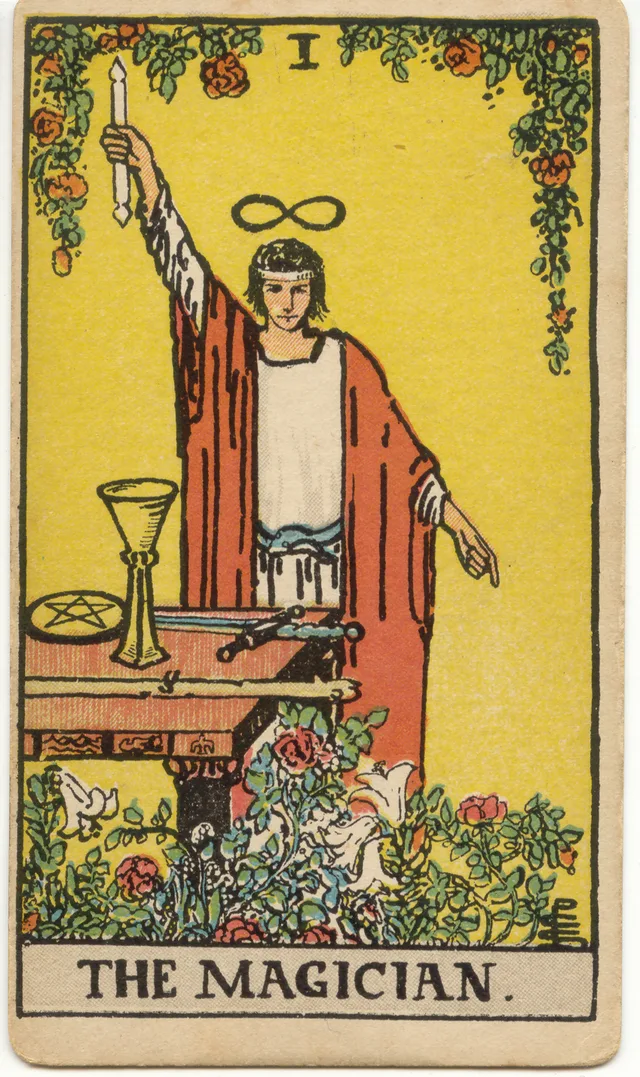
The Magician
The Magician focuses on using available tools deliberately; the Seven of Swords adds questions about privacy, strategy and what has not been communicated.
Read this card's meaning →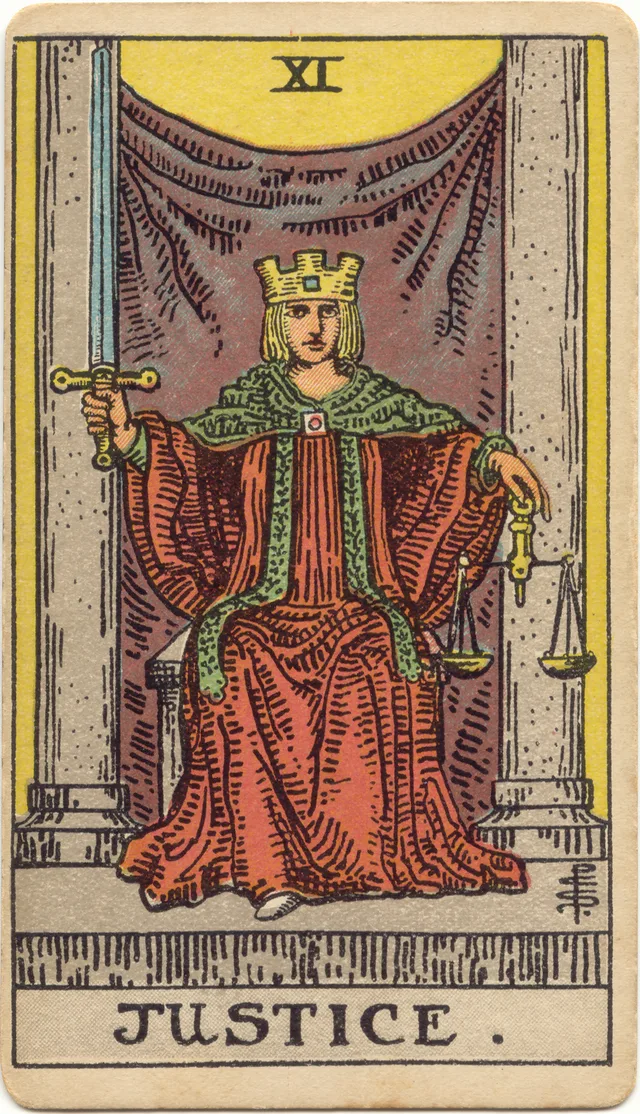
Justice
Justice focuses on clear standards and accountability; the Seven of Swords invites a closer look at disclosure, omissions and indirect methods.
Read this card's meaning →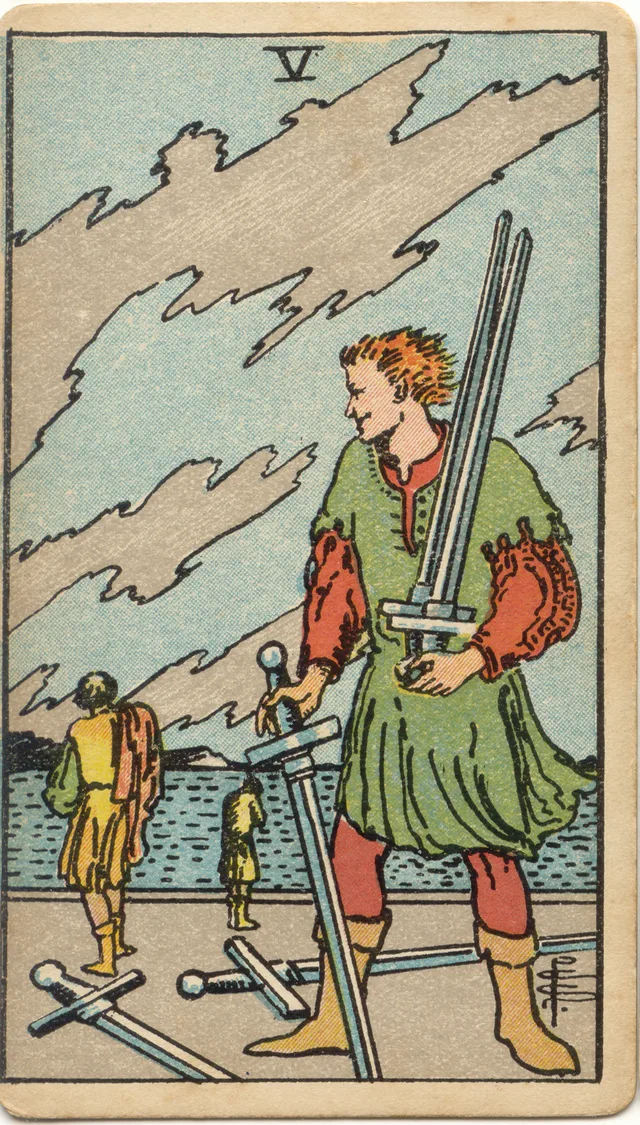
Five of Swords
The Five of Swords examines conflict and its aftermath; the Seven of Swords examines the indirect choices that may precede a difficult conversation.
Read this card's meaning →